
White Day, celebrated on March 14, is often introduced as a “Japan-only custom.” But is it truly unique to Japan—and why did it develop there in the first place? Unlike Western Valentine’s Day, where couples exchange gifts on the same day, Japan split the tradition into two separate events. This article explores how that structure reflects Japanese social norms, gender roles, and commercial culture—and how the tradition is changing today.




What Does “Japan-Only Custom” Really Mean?

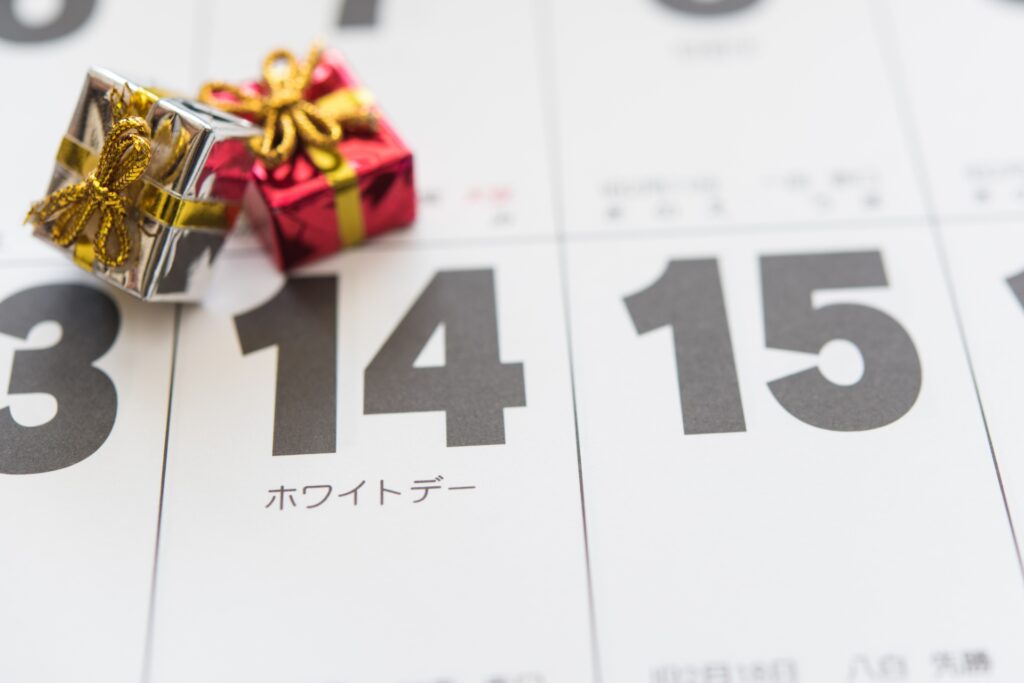
White Day is often introduced as a “Japan-only custom,” but the most accurate phrasing is “a Japan-originated custom.” The holiday began in Japan and was shaped by Japan’s particular way of celebrating Valentine’s Day (women give first on February 14; men reciprocate one month later on March 14).
However, White Day is not practiced exclusively inside Japan today. After taking root domestically, the custom spread to parts of East Asia, including South Korea, Taiwan, and China, where it developed local variations. That’s why calling it strictly “Japan-only” can be slightly misleading. It is more precise to say that it originated in Japan and remains most strongly associated with Japanese culture, even though it later expanded regionally.
In Western countries such as the United States, Valentine’s Day typically functions as a same-day, mutual exchange of gifts between couples. Because the Western structure doesn’t separate the act of giving and reciprocating into two distinct dates, there was never a cultural need for a follow-up holiday like White Day.
If you’re explaining it to an American audience, a clear and accurate description would be:
White Day is a Japan-originated gift-return holiday celebrated on March 14. While it later spread to parts of East Asia, it remains uniquely tied to Japan’s two-step Valentine’s system.
Why Japan Split Valentine’s Day into Two Holidays
To many Americans, splitting Valentine’s Day into two separate holidays seems unusual. Why not simply exchange gifts on the same day?
In Japan’s modern custom, Valentine’s Day evolved into a structured system where women give chocolates first on February 14. These gifts may be romantic, friendly, or workplace-related. White Day, on March 14, was established as the official moment for men to respond.
This structure aligns with a broader Japanese social pattern centered on reciprocity. When someone gives you something—even a small seasonal gift—there is often an expectation that you will acknowledge it with a return gesture. White Day formalizes that return, placing it on the calendar and making expectations clearer in social and professional settings.
You may also encounter the term sanbai gaeshi, often translated as “triple return.” Traditionally, it suggested that the return gift should be worth about two to three times the original gift’s value. Today, this idea is more symbolic than strictly enforced, but it reflects how strongly balance and thoughtful reciprocation have been associated with White Day.

The Role of Social Obligation (Giri Culture)
A key concept behind this split system is giri, often described as a sense of social obligation or duty. In Japan, especially in workplaces and group-oriented environments, maintaining harmony and balance is important. Seasonal gift-giving can function as social maintenance—an acknowledgment of appreciation, respect, or connection.
When someone receives Valentine’s chocolate, returning something on White Day is not always purely romantic. It may simply be a polite way to restore balance and prevent social awkwardness. The logic is straightforward: a gift creates a small social debt; reciprocation clears it.
This contrasts with American Valentine’s culture, which is usually framed as an individual, romantic expression between partners. In the United States, the holiday emphasizes personal feelings and spontaneous gestures. In Japan, the structure historically included clearer social expectations.
Here is a simplified comparison:
| Japan | United States | |
| Gift timing | Women give first | Mutual exchange |
| Reciprocation | Return gift later | Same-day exchange |
| Social obligation | Often present | Mostly romantic |
Even within Japan, reactions to this system vary. Some people appreciate the clarity and ritual, while others feel pressured by expectations—particularly in workplace settings.
How White Day Differs from American Valentine’s Day

Both Japan and the United States have highly commercial Valentine’s seasons. Stores promote chocolates, sweets, flowers, and themed merchandise. However, the function of the holiday differs significantly.
In the United States, Valentine’s Day is generally positioned as a mutual romantic event. Couples exchange gifts, plan dinners, and celebrate together on February 14. The exchange happens on the same day, reinforcing equality and shared participation.
In Japan, Valentine’s Day and White Day form a structured reciprocity system. February 14 initiates the giving (traditionally by women), and March 14 completes the exchange (traditionally by men). White Day is not simply “a second Valentine’s Day.” It is the response phase of a two-part cultural script.
From an American perspective, this may seem transactional. From a Japanese perspective, it can be interpreted as thoughtful and balanced. Understanding White Day requires recognizing this structural difference rather than viewing it solely through a Western romantic lens.
Is White Day Still Relevant in Modern Japan?
White Day remains widely recognized in Japan, but its meaning has evolved. In recent years, there has been visible decline in mandatory-feeling workplace gift culture. Many people—especially younger generations—are less interested in participating in obligation-based exchanges.
Generational change has influenced both Valentine’s Day and White Day. Some younger couples now prefer mutual exchanges on February 14 rather than strictly following the traditional “women first, men later” model. Gender roles have become more flexible, and participation increasingly feels optional rather than required.
Workplace policies have also shifted in some companies. To avoid pressure or awkwardness, certain organizations discourage office-wide Valentine’s gifting. As remote work expands and social norms change, traditional practices naturally adapt.
This does not mean White Day is disappearing. Instead, it is evolving into a more personalized, choice-based celebration. The focus is gradually moving from obligation to voluntary expression.
Why White Day Fascinates Foreigners
White Day often fascinates Americans because it highlights Japan’s tendency to structure social interaction around the calendar. Japan has many seasonal customs that provide clear guidance on what to do, when to do it, and how to maintain harmony.
The idea of splitting a romantic holiday into two coordinated steps feels unusual from a U.S. perspective. Americans are accustomed to spontaneity and same-day exchanges. A delayed return date feels formal and systemized.
Foreign observers are also intrigued by the blend of culture and commerce. While White Day was shaped by marketing campaigns, it succeeded because it aligned with existing social patterns of reciprocity and balance. Like many holidays worldwide, commercial promotion and cultural meaning became intertwined.
Additionally, discussions about White Day often lead to conversations about gender roles. The traditional script—women initiate, men reciprocate—reflects social norms of a particular era. Watching how that structure evolves provides insight into broader cultural shifts happening in modern Japan.
Conclusion: Is White Day Truly a “Japan-Only” Custom?
White Day is best described as a Japan-originated custom with a uniquely Japanese structure. Although it later spread to parts of East Asia, it remains most closely associated with Japan’s two-step Valentine’s system.
The contrast can be summarized clearly:
- Japan: February 14 (give) → March 14 (return)
- United States: Mutual exchange on February 14
White Day reflects long-standing Japanese values of reciprocity, balance, and social harmony. At the same time, it continues to evolve alongside changing attitudes about gender, obligation, and personal expression.
Ultimately, White Day offers a fascinating example of how global traditions can be adapted into something distinctly local.
And here’s a thought worth considering:
Would a two-step Valentine’s system—give first, return later—ever feel natural in the United States?