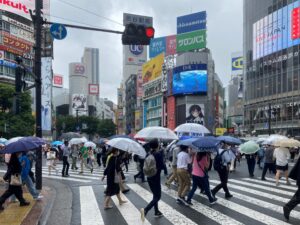
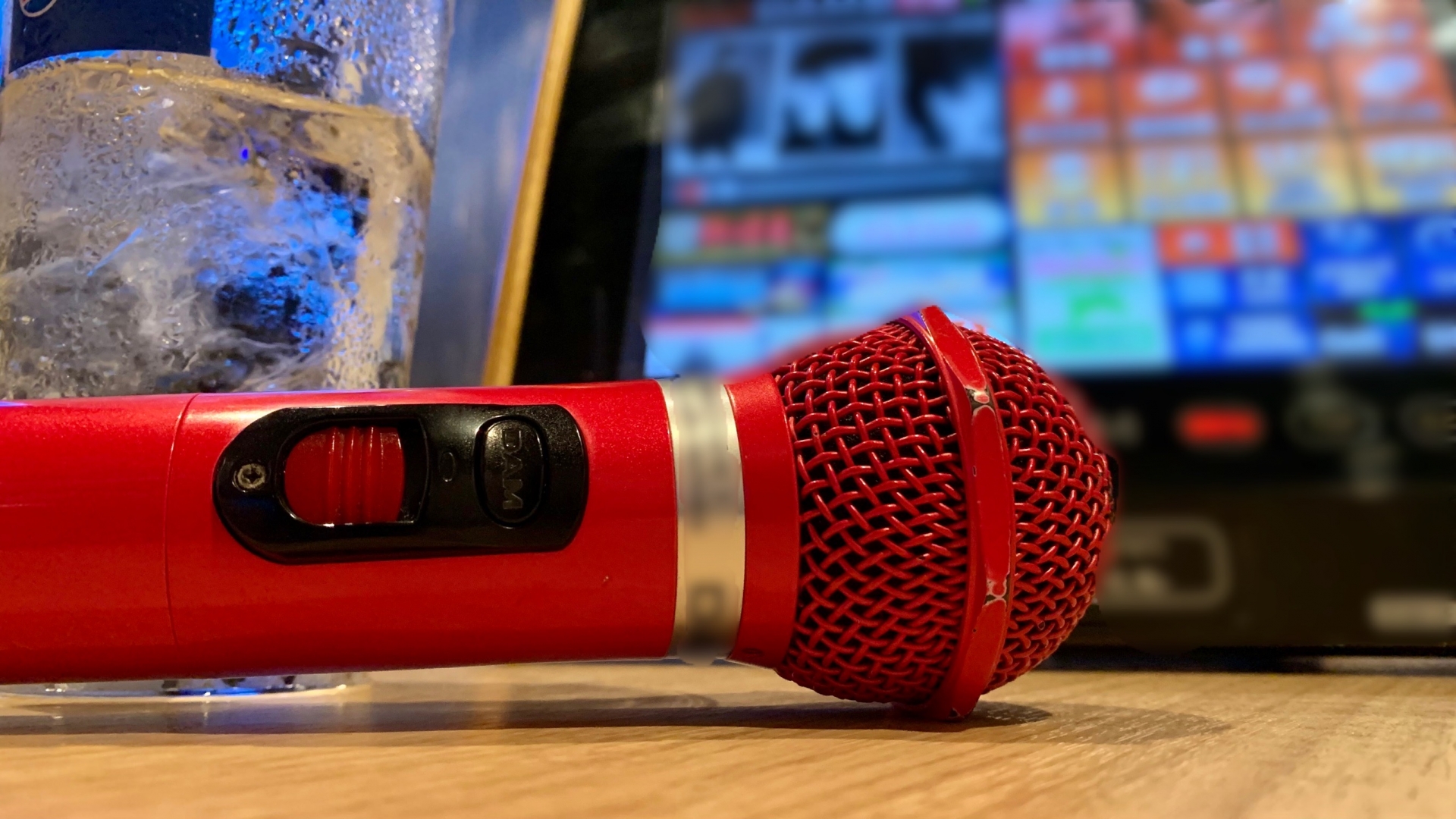
Karaoke in Japan is less about showing off your voice and more about settling into a small room with friends, passing microphones around, ordering too many fries, and losing track of time somewhere after the third song. It can be loud and chaotic, but it can also be oddly relaxing. People go after work, after dinner, after missing the last train — or sometimes just because it’s raining outside and they need somewhere to sit for a while.
For many visitors, karaoke ends up feeling much more approachable than expected. You are usually not standing on a stage in front of strangers. Instead, you are inside a private room where nobody really cares if you miss notes or forget lyrics halfway through a chorus.
This guide covers what karaoke actually means in Japan, how it became such a huge part of everyday life, how karaoke boxes work, and a few practical things that make a first visit smoother.


What Is Karaoke?
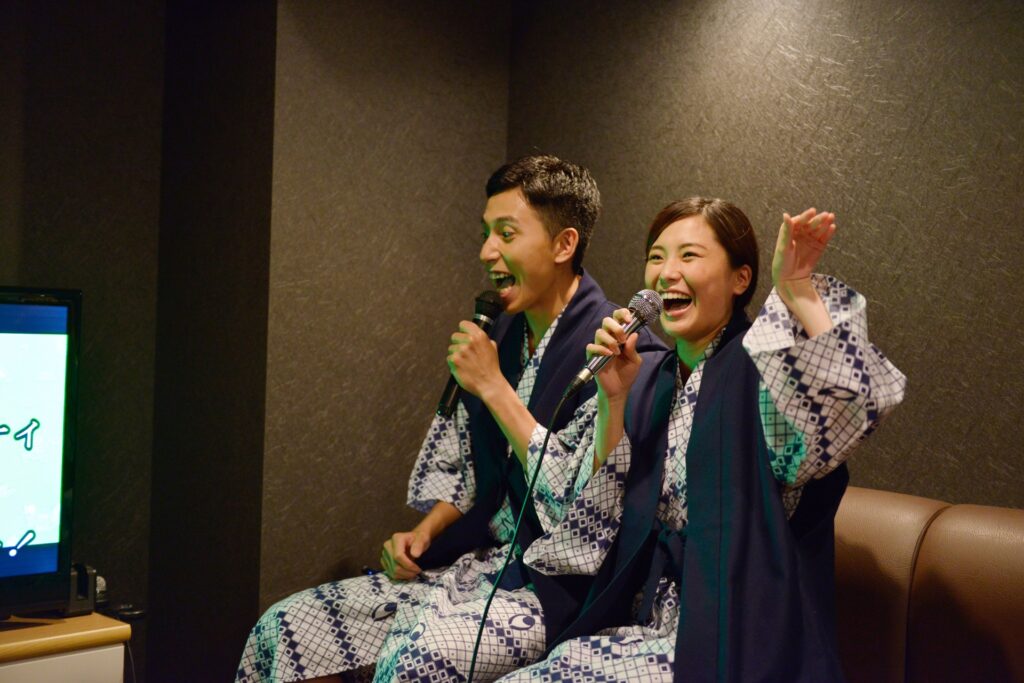
Karaoke is a style of entertainment where people sing along to instrumental tracks while lyrics appear on a screen. The word itself comes from two Japanese words: kara (“empty”) and oke (short for orchestra).
In simple terms:
kara (empty) + oke (orchestra) = karaoke
Outside Japan, karaoke is often associated with bars, small stages, and singing in front of strangers. In Japan, though, the standard setup is usually a private room — known as a karaoke box — rented by the hour.
Once inside, the atmosphere feels more casual than many first-time visitors expect. Someone scrolls through songs on a touchscreen tablet, another person adjusts the tambourine volume a little too enthusiastically, drinks arrive, and eventually the room turns into a mix of solo performances and everyone shouting the chorus together.
Perfection is not really the point.
One reason karaoke became so deeply woven into Japanese social life is that the private-room format removes a lot of pressure. Even quiet or reserved people tend to participate eventually, especially once the room settles into its own rhythm. Some sing seriously. Others mostly laugh through old pop songs from the early 2000s.
Either way, it works.
Why Is Karaoke So Popular in Japan?
Karaoke fits naturally into the way people socialize in Japan. It gives groups a place to relax without needing a complicated plan, and unlike bars or clubs, everyone participates in some way.
For office workers, karaoke often appears as part of nijikai — the “second party” after dinner or drinks. A group might start the evening at an izakaya near the station, then drift toward a karaoke building around 10 or 11 p.m. The mood usually changes once the door closes behind the group. The serious coworker suddenly picks an old rock song. Someone who barely spoke during dinner ends up singing anime openings at full volume.
Students use karaoke differently. During the day, especially around university neighborhoods, karaoke chains fill up with small groups splitting cheap free-time packages and drink bars. It is common to stay for hours. Sometimes nobody sings for ten straight minutes because everyone is eating, scrolling through songs, or talking.
The privacy matters too. Singing in front of close friends feels very different from standing under spotlights in a crowded bar. For people who are shy — and for travelers nervous about embarrassing themselves — Japanese karaoke tends to feel forgiving.
Solo karaoke, known as hitokara (“hitori karaoke”), has also become completely normal. Some people use it to practice singing. Others just want a quiet private room for an hour or two. Around big stations in cities like Tokyo or Osaka, it is not unusual to see office workers stopping into karaoke alone before heading home.
Karaoke in Japan is rarely treated as a talent competition. It works more like a shared release valve.
A Brief History of Karaoke
Early Development (1960s–1970s)
Karaoke began taking shape in Japan during the late 1960s and early 1970s, when musicians and inventors started experimenting with machines that allowed people to sing along with recorded backing tracks.
Several names are connected to its development.
- Daisuke Inoue created an early machine for customers who wanted instrumental accompaniment.
- Shigeichi Negishi developed a similar singing-machine concept around the same period.
- In the Philippines, Roberto del Rosario later patented a “sing-along system” connected to karaoke technology.
Because different people contributed to its evolution, karaoke does not have a single universally accepted inventor.
Expansion Across Japan (1980s)
Karaoke spread rapidly during the 1980s as audio systems improved and businesses realized people preferred private rooms over public stages.
That shift changed everything.
Buildings near train stations began filling with compact karaoke rooms stacked floor above floor. New technologies like laserdiscs, remote controls, and eventually digital song systems made libraries dramatically larger and easier to use. By the end of the decade, karaoke had become part of ordinary nightlife across Japan rather than a novelty activity.
Global Popularity (1990s–Present)
By the 1990s, karaoke had spread well beyond Japan into the rest of Asia, North America, and Europe.
Today, karaoke exists in several forms:
- Karaoke bars
- Private-room venues
- Home karaoke systems
- Smartphone apps
- Streaming platforms
Even people who have never visited Japan usually recognize karaoke scenes from movies, TV dramas, anime, or music-focused shows. The format traveled surprisingly well.
How Karaoke Works in Japan
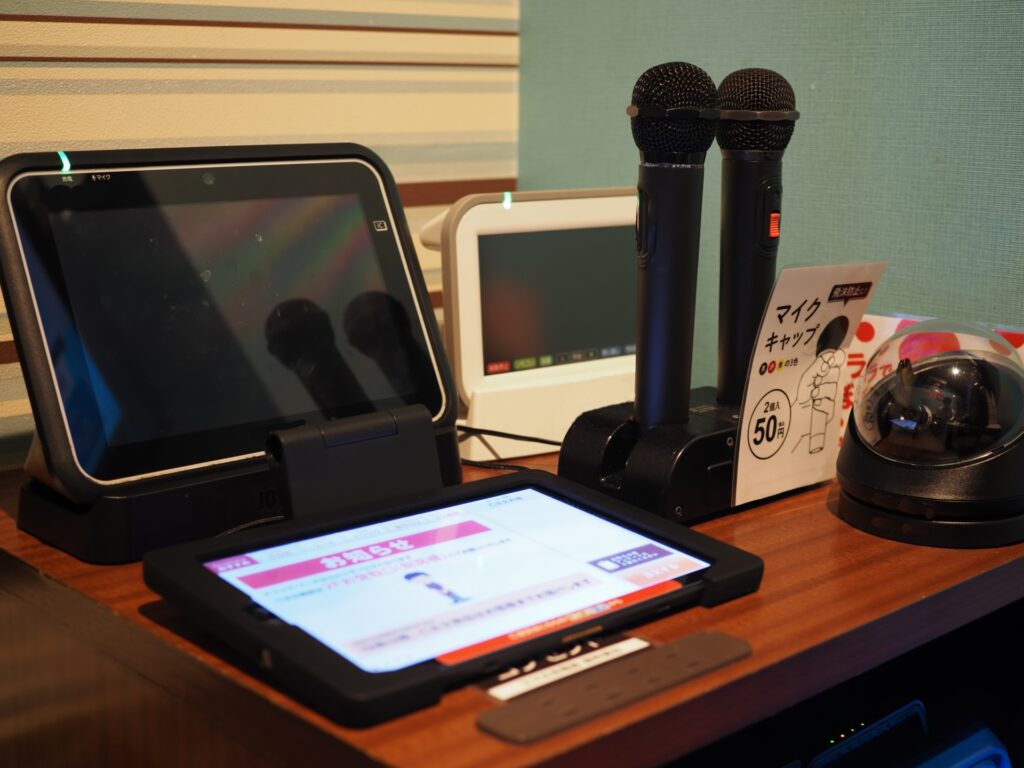
If you have never entered a Japanese karaoke venue before, the process can feel slightly confusing for about five minutes. After that, it becomes pretty straightforward.
Step-by-Step Guide
Enter the venue
Most karaoke chains sit near stations, nightlife streets, or shopping areas. The buildings are usually hard to miss — bright signs, photo-heavy menus outside, and elevators packed with song advertisements.
Choose your plan
At the front desk, staff usually ask:
- How many people are in your group
- How long you want the room
- Smoking or non-smoking
Most venues offer options like:
- One-drink minimum
- Nomihodai (all-you-can-drink)
Late-night pricing is often very different from daytime pricing, so it helps to check carefully.
Go to your room
Rooms typically include:
- Sofas or benches
- Microphones
- Speakers
- Touchscreen tablets
- Tambourines or small percussion instruments
Some older rooms feel oddly retro in the best way possible — dark wallpaper, neon lighting, and couches that look untouched since the early 2000s.
Search for songs
Systems like JOYSOUND and DAM let users search by:
- Song title
- Artist
- Language
- Anime category
- Popular rankings
English songs are usually easy to find, especially at larger chains.
Order food and drinks
Karaoke in Japan often overlaps with casual dining. It is normal to order fries, karaage, desserts, beer, cocktails, or soft drinks directly from the tablet and stay much longer than originally planned.
Pay at checkout
When your session ends, you return to the front desk to pay. Some venues automatically extend sessions if you stay past your booked time, so checking the rules beforehand can save surprises later.
Karaoke Box vs. Karaoke Bar
| Feature | Japanese Karaoke Box | Western Karaoke Bar |
| Privacy | Private room | Public stage |
| Atmosphere | Relaxed and casual | Performance-focused |
| Beginner Friendliness | Very beginner-friendly | Can feel intimidating |
| Group Style | Friends and private groups | Public audience |
| Food & Drinks | Extensive menus | Usually bar-centered |
For many travelers, the biggest difference is psychological. Singing feels easier when the audience is just your own group.
How Much Does Karaoke Cost in Japan?
Prices depend heavily on location, time of day, and whether drinks are included.
| Plan Type | Approximate Price |
| Daytime hourly rate | ¥300–¥800 |
| Evening hourly rate | ¥800–¥2,000 |
| Free-time package | ¥1,500–¥3,500 |
| Nomihodai add-on | ¥1,000–¥2,500 |
Daytime karaoke can be surprisingly cheap, especially on weekdays. Around university districts, students sometimes stay for entire afternoons for less than the cost of dinner elsewhere.
At night — particularly Friday and Saturday evenings in areas like Shinjuku, Namba, or around major station districts — prices climb quickly. Some venues also require at least one drink order per person.
The details vary enough between chains that it is always worth double-checking the pricing system before heading upstairs.
Karaoke Etiquette: How to Sing Like a Local
Japanese karaoke etiquette is mostly built around reading the room and making sure everyone stays comfortable.
One person dominating the microphone for an hour straight will usually feel awkward pretty quickly. Groups tend to rotate naturally, and even people who claim they “don’t sing” often end up joining choruses or group tracks eventually.
There is also less emphasis on technical singing ability than many visitors expect. Encouraging reactions matter more. People clap, wave tambourines, shout backup vocals, and laugh when someone chooses an unexpectedly dramatic song.
Criticizing another person’s singing is generally avoided. Karaoke works best when the room stays easygoing.
At the same time, there are a few basic courtesy rules:
- Handle microphones and equipment carefully
- Avoid shouting in hallways
- Respect time limits
- Follow drink policies
The atmosphere inside the room can get chaotic. Outside the room, things stay fairly controlled.
What Not to Do at Karaoke in Japan
A few mistakes tend to stand out quickly:
- Being extremely loud outside your room
- Damaging equipment or dropping microphones
- Bringing outside food or drinks without permission
- Ignoring the session time
- Mocking somebody’s singing
- Controlling every song choice
Even if you are nervous, participating a little usually helps. In many groups, singing part of a chorus is enough.
Best Karaoke Songs for Beginners
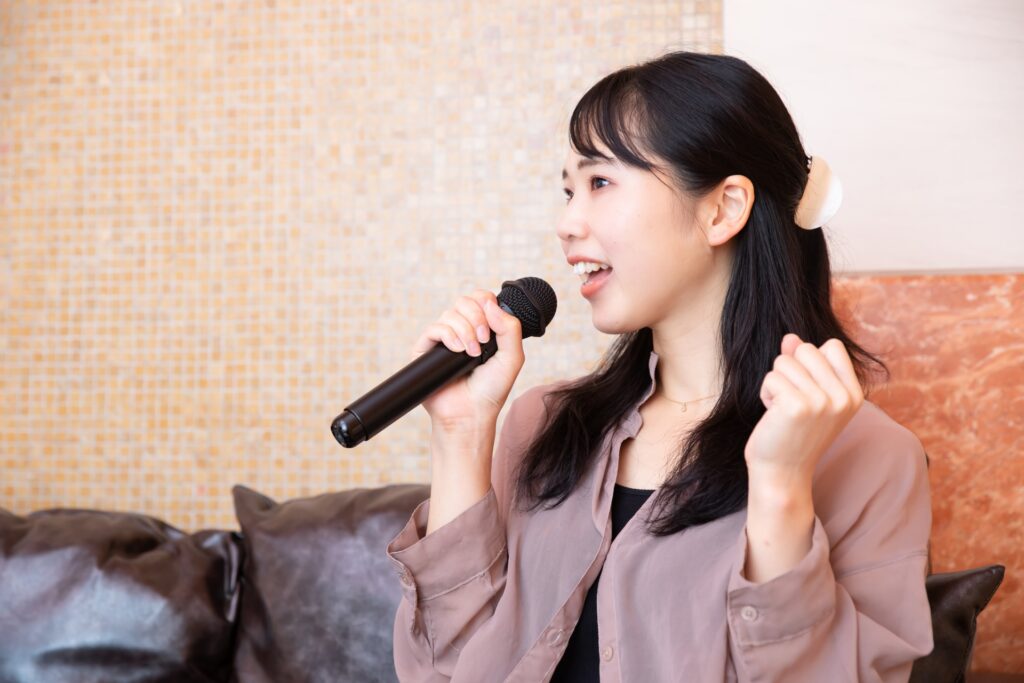
Picking the first song is often the hardest part.
Songs that people already know tend to work best because the room naturally joins in. Slow songs also help if you are nervous.
Easy English Songs
- “Stand By Me” — Ben E. King
- “Country Roads” — John Denver
- “Let It Be” — The Beatles
- “Shake It Off” — Taylor Swift
Crowd-Pleasing Classics
- “Bohemian Rhapsody” — Queen
- “Sweet Caroline” — Neil Diamond
- “Livin’ on a Prayer” — Bon Jovi
Popular Anime Songs
- “Gurenge” from Demon Slayer
- “A Cruel Angel’s Thesis” from Evangelion
- Songs from Studio Ghibli movies
Beginner-Friendly J-Pop Artists
- YOASOBI
- Kenshi Yonezu
- Official HIGE DANdism
How to Pick Your First Karaoke Song
A good first choice usually feels familiar rather than impressive.
Some practical tips:
- Pick a song you already know well
- Start with slower tempos
- Avoid difficult vocal ranges
- Shorter songs help if you feel nervous
- Duets and group songs reduce pressure immediately
Most people remember energy and enthusiasm far longer than perfect vocals.
Popular Karaoke Chains in Japan
Japan has countless karaoke venues, but a few chains appear almost everywhere and are generally easy for travelers to use.
| Chain | English Support | Tourist Friendly | Features |
| JOYSOUND | Strong | Very good | Huge anime & multilingual library |
| Karaoke Kan | Moderate | Good | Featured in Lost in Translation |
| Big Echo | Strong | Very good | Comfortable interiors and food menus |
| Jankara | Moderate | Good | Affordable and popular in Kansai |
JOYSOUND is especially popular with anime fans because of its enormous catalog and multilingual search options. Karaoke Kan became internationally recognizable after appearing in Lost in Translation, while Big Echo tends to feel straightforward and comfortable for first-time visitors.
In the Kansai region — especially around Kyoto and Osaka — Jankara is known for relatively affordable pricing and relaxed rooms.
Weekend nights can get crowded fast, particularly near major stations, so reservations help more than many travelers expect.
Can You Do Karaoke Alone?
Absolutely.
Solo karaoke, or hitokara, is now common enough that nobody really pays attention to it anymore.
For some people, it is vocal practice. For others, it is simply a quiet room with air conditioning, music, and no expectations. In dense cities where personal space can feel limited, that alone has value.
Some karaoke chains even have compact one-person booths designed specifically for solo customers. Around rush hour, you will sometimes spot people slipping into them still wearing office badges.
For travelers, solo karaoke can work surprisingly well during gaps in the day — escaping sudden rain, resting tired feet, or waiting for late trains after sightseeing.
It does not always feel like a nightlife activity. Sometimes it just feels convenient.
Useful Japanese Phrases for Karaoke
Even a few simple phrases help.
| English | Japanese | Romaji |
| One hour, please. | 1時間お願いします。 | Ichijikan onegaishimasu |
| Do you have English songs? | 英語の曲はありますか? | Eigo no kyoku wa arimasu ka? |
| Can we extend our time? | 延長できますか? | Enchou dekimasu ka? |
| How much is it? | いくらですか? | Ikura desu ka? |
| Non-smoking room, please. | 禁煙ルームお願いします。 | Kin’en ruumu onegaishimasu |
| Thank you very much. | ありがとうございます。 | Arigatou gozaimasu |
At larger chains, staff are generally used to helping international visitors, even if communication becomes a mix of simple English, gestures, and pointing at screens.
Karaoke with Kids, Friends, or Coworkers
The atmosphere changes quite a bit depending on who you go with.
Families with Kids
Daytime karaoke can be surprisingly family-oriented. Some venues offer:
- Kids’ menus
- Large sofa rooms
- Toy rentals
- Cheap daytime packages
On rainy afternoons, karaoke sometimes turns into an easy fallback for traveling families who need an indoor break.
Friends
Friend groups often lean toward:
- Anime songs
- Nostalgic pop tracks
- Joke duets
- Loud party songs everyone can yell together
In these rooms, technical singing ability usually disappears as a concern within the first half hour.
Dates
Karaoke dates are common because private rooms create space to talk between songs without the pressure of crowded bars or restaurants.
Coworkers and Nijikai
Workplace karaoke can feel formal at first, especially when senior coworkers are present. But participation usually matters more than performance quality.
For foreign students or employees living in Japan, joining karaoke after work can quietly become one of the more revealing social experiences — partly because people loosen up enough to show sides of themselves that rarely appear during the daytime.
Final Tips for Your First Karaoke Experience in Japan
Before heading into your first karaoke session, a few things are worth remembering:
- Bring ID for late-night entry
- Check the last train time
- Confirm drink policies beforehand
- English song search is usually available
- Ask about extension fees
- Reserve ahead on weekends
- Keep your phone charged for translations
Most importantly, do not overthink the singing itself.
Japanese karaoke culture is built to lower the pressure. Some people sing seriously. Some barely sing at all. Some spend half the session choosing songs they never actually perform.
That uneven, slightly messy atmosphere is part of why karaoke works so well here.
And for many travelers, it becomes one of those nights they remember long after the trip ends.