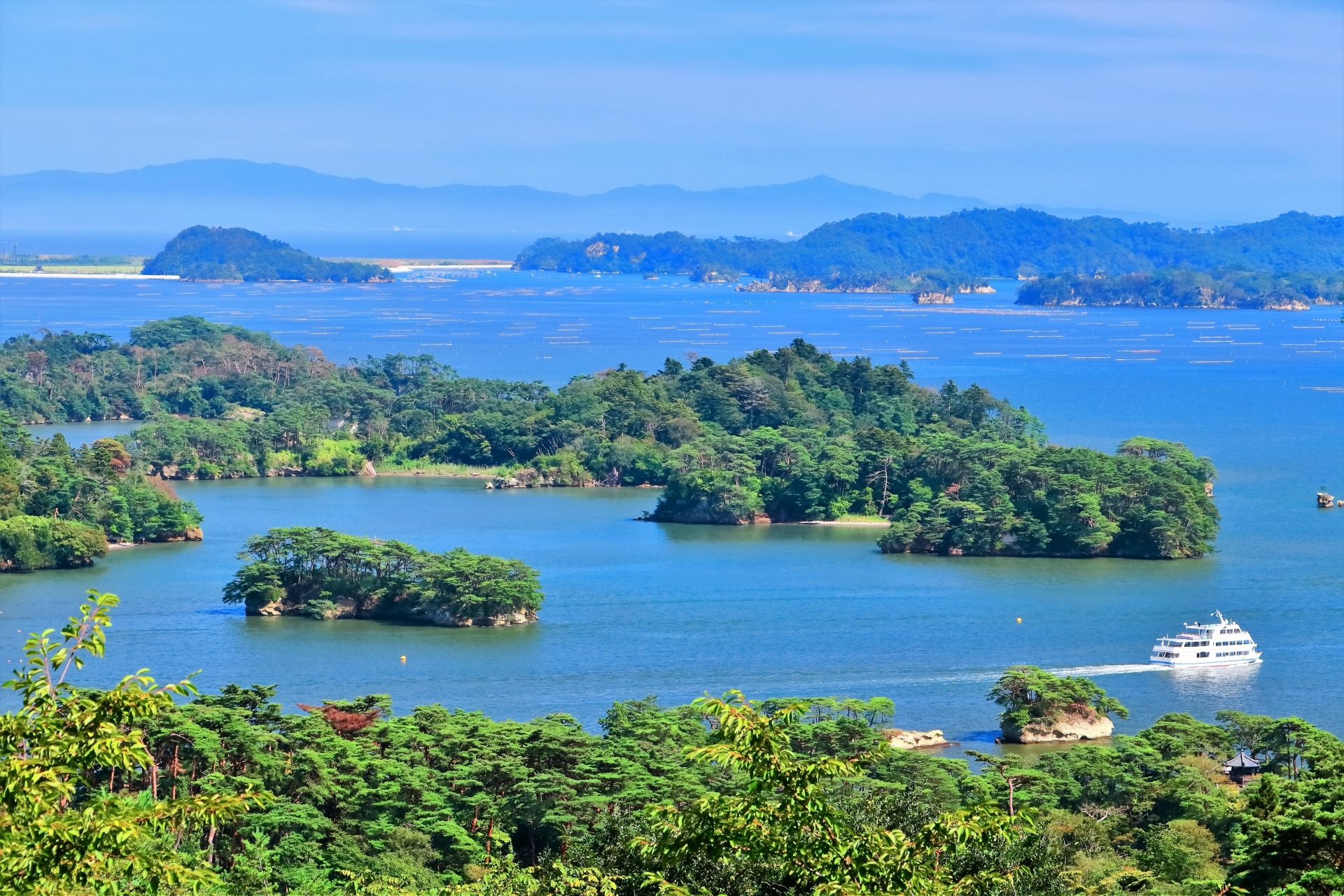
Located in Miyagi Prefecture, Matsushima Bay is celebrated as one of Japan’s Three Scenic Views. With more than 260 pine-covered islets scattered across calm waters, it offers one of the country’s most iconic coastal landscapes.
This guide is designed for English-speaking travelers—especially those planning a trip from Sendai—who want a practical, efficient plan: how to get there, which cruise to choose, where to find the Four Great Views, what to explore on foot, what to eat, and what else to see nearby.


What Is Matsushima Bay and Why Is It Famous?
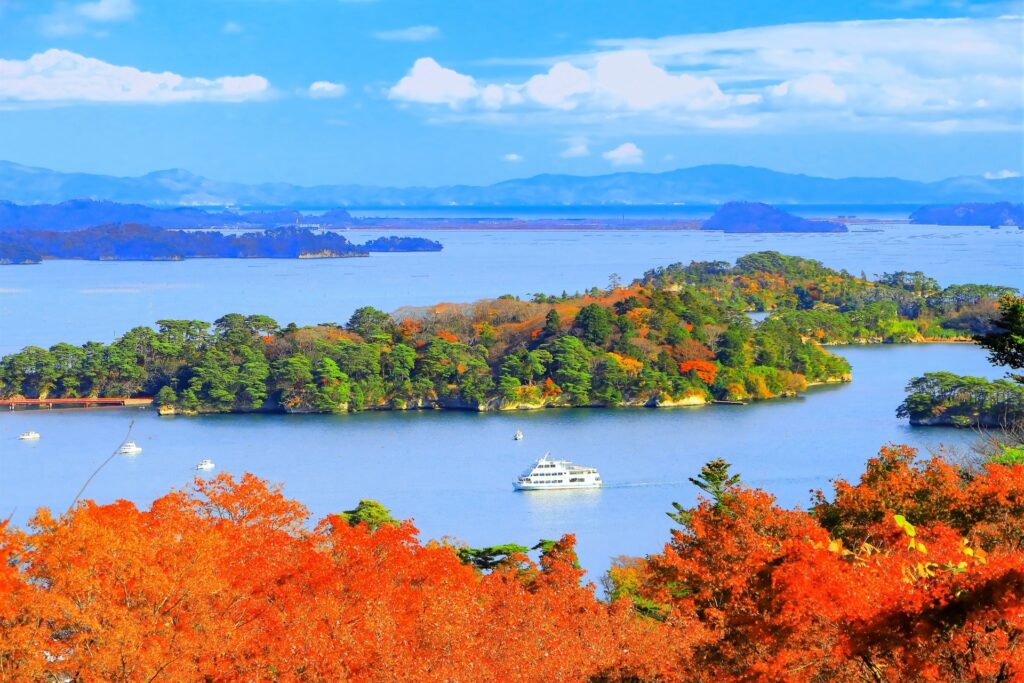
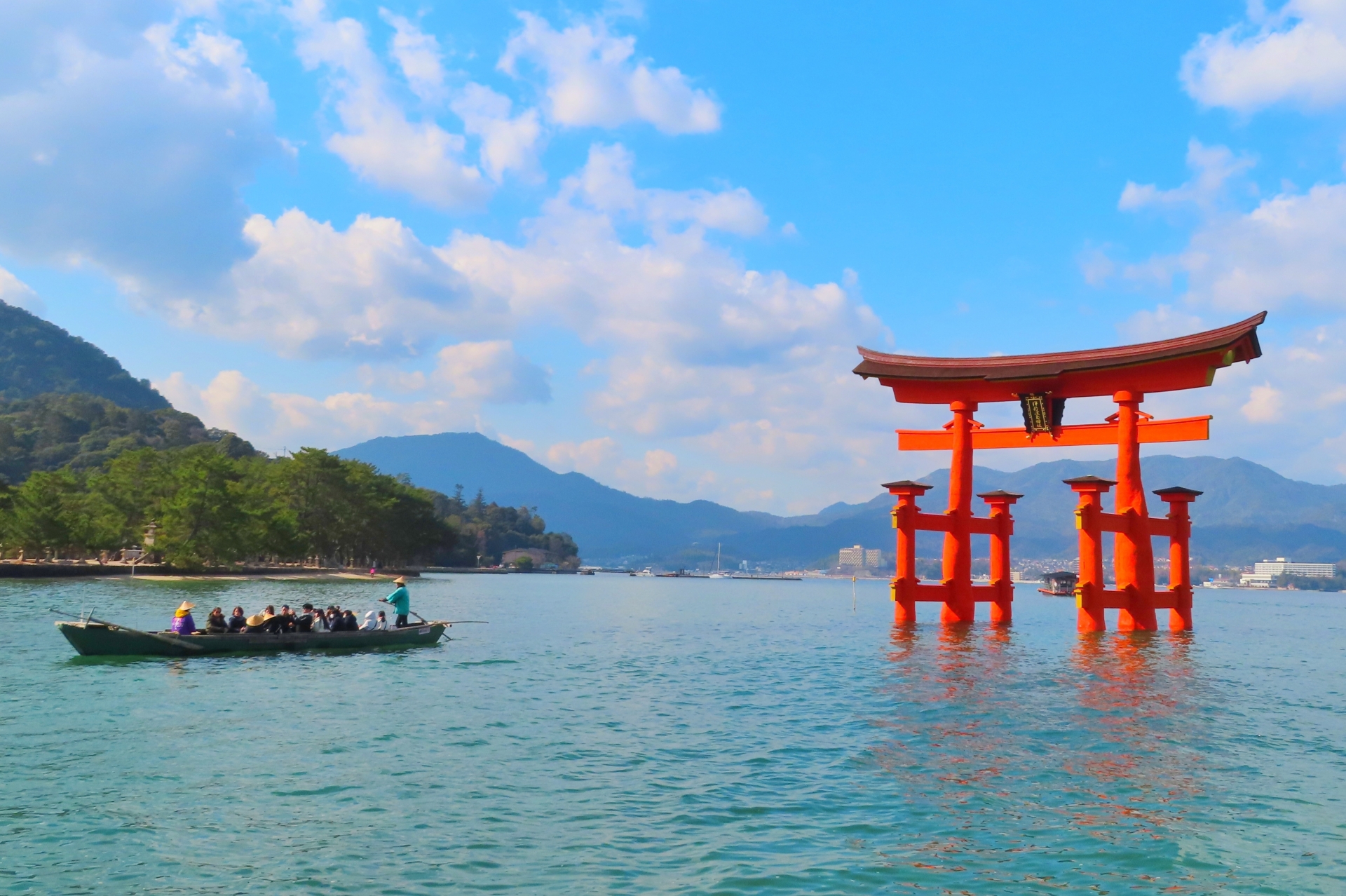
Matsushima Bay is widely recognized as one of the “Nihon Sankei,” or the Three Scenic Views of Japan—a designation dating back to the Edo period. Alongside Amanohashidate in Kyoto Prefecture and Miyajima in Hiroshima, Matsushima represents a classic coastal landscape that has inspired poets, monks, and artists for centuries.
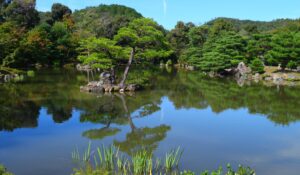
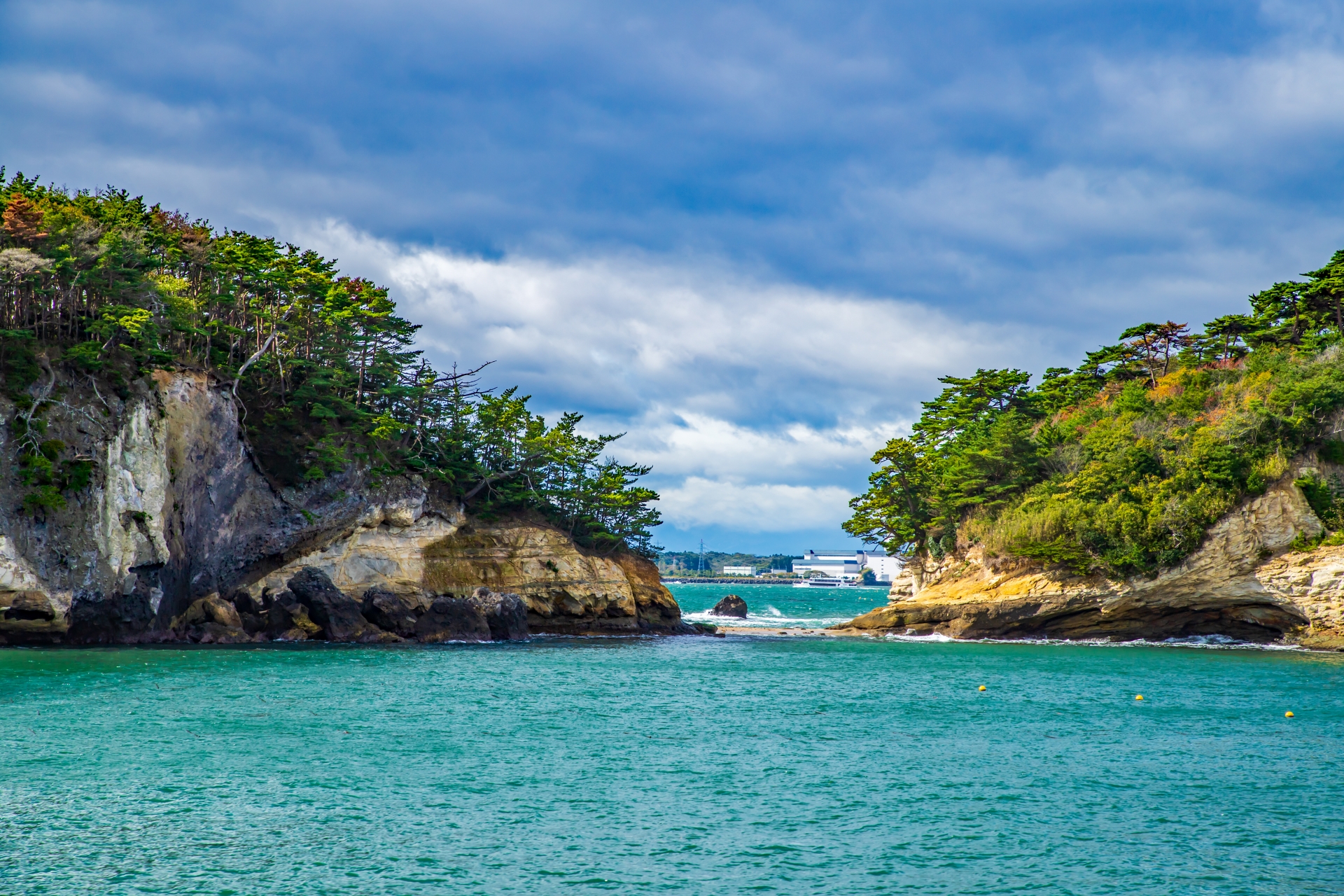
What makes Matsushima Bay distinctive is its extraordinary concentration of small, pine-clad islands. Commonly described as “over 260 islands,” the bay is filled with rocky islets shaped by centuries of wind and tide erosion. Many are topped with naturally growing Japanese black pines, creating a layered composition of green silhouettes rising from calm blue water. The scenery feels both dramatic and refined—less rugged than open-ocean cliffs, more intricate than a single sweeping beach.
The atmosphere is also part of its appeal. The waters of the bay are relatively calm due to the protection provided by the islands, which makes sightseeing cruises smooth and accessible even for visitors who are not fond of rough seas. Historically, Matsushima has been praised by the haiku master Matsuo Basho, further cementing its status as a cultural as well as natural landmark.

Quick Facts
- Location: Miyagi Prefecture, about 26 minutes from Sendai by rapid train
- Number of islands: Commonly described as “over 260”
- Typical first-time experience: Cruise + waterfront walk + temple visit + viewpoint
For many travelers, Matsushima Bay offers one of the easiest ways to experience a timeless, “classic Japan” landscape without traveling far from a major city.
How to Get to Matsushima Bay: Easiest Access from Sendai (and Tokyo)
One of Matsushima Bay’s greatest strengths is how easy it is to reach—especially from Sendai.
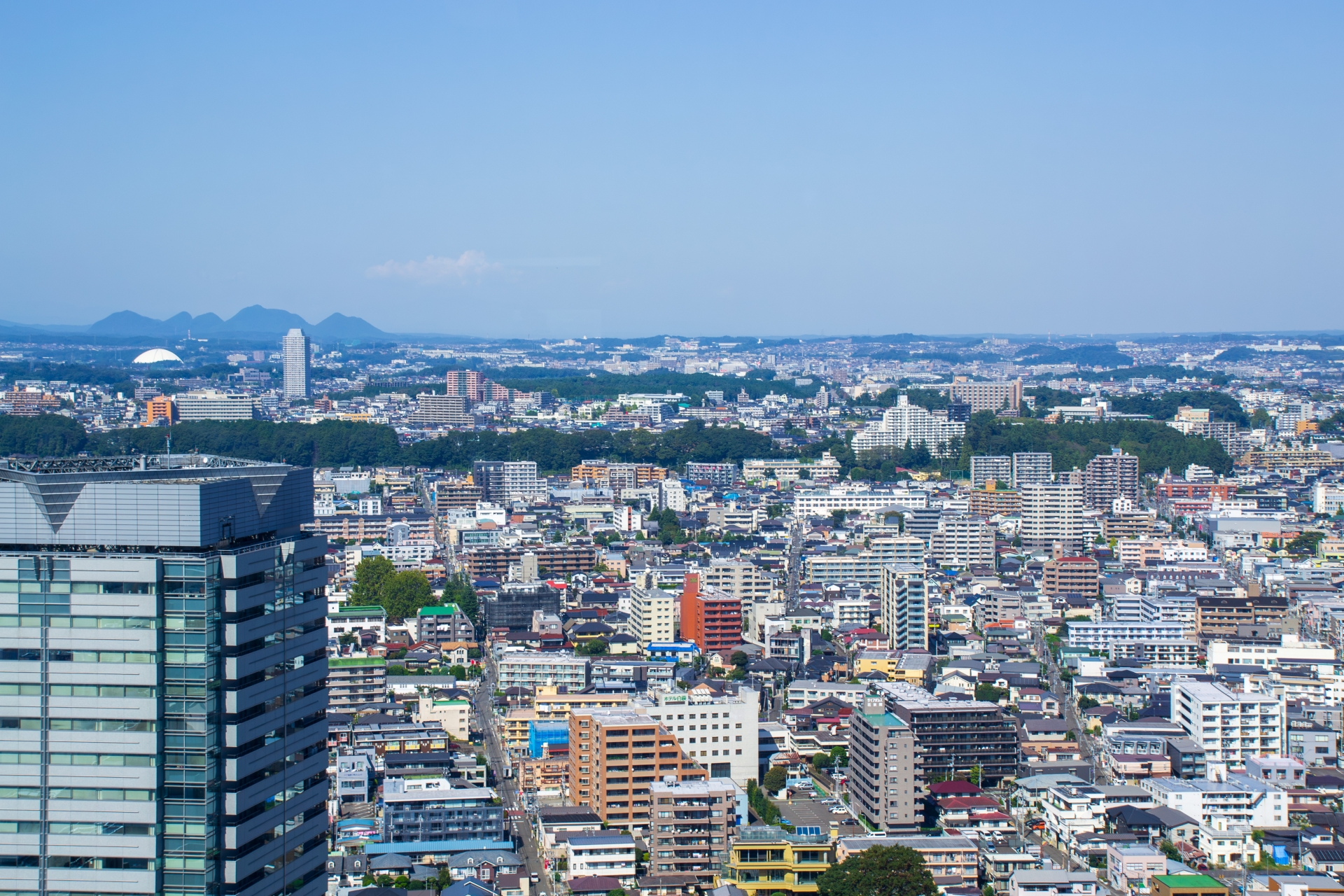
From Sendai
- Start at Sendai Station.
- Take the JR Senseki Line to Matsushima-Kaigan Station.
- Travel time is approximately 26 minutes by rapid train, or about 35–40 minutes on a local service.
- From Matsushima-Kaigan Station, it is a short 5–10 minute walk to the waterfront and cruise pier area.
The route is direct, requires no transfers, and is clearly signposted. Trains run frequently, making Matsushima one of the most convenient scenic day trips in Japan.
From Tokyo
From Tokyo, take the Tohoku Shinkansen to Sendai (approximately 1.5 hours). Then transfer to the JR Senseki Line as described above. This makes Matsushima Bay an easy addition to a Tokyo–Tohoku travel itinerary.
How Much Time Do You Need?
- Half-day trip (4–5 hours): Cruise + waterfront walk + quick oyster lunch
- Full-day relaxed visit (6–8 hours): Cruise + temples + island walk + viewpoint + lunch
Mini Planning Checklist
- Start early on weekends and holidays.
- Check the weather forecast—visibility greatly affects the scenery.
- Carry an IC card for trains and small cash for local shops.
- Wear comfortable walking shoes; some paths are uneven.
With its short travel time and compact layout, Matsushima is ideal even for travelers with limited schedules.
Choose Your Matsushima Bay Cruise: Which Route Is Best?
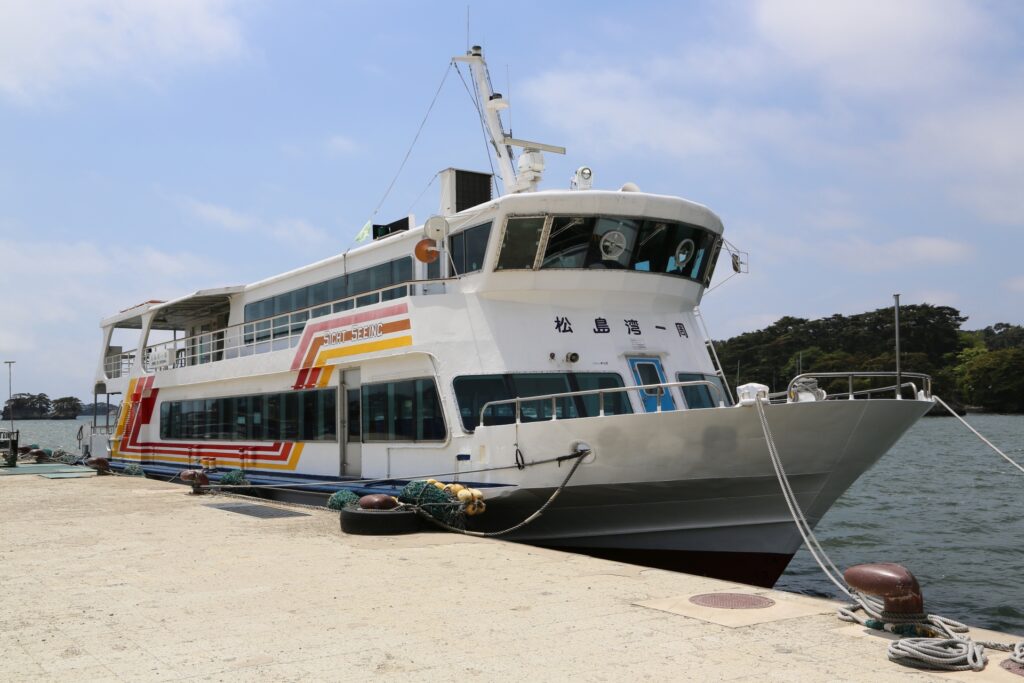
A sightseeing cruise is the signature experience of Matsushima Bay. Seeing the islands from water level reveals their unusual shapes, natural arches, and pine-covered ridgelines.
Cruise Comparison
| Cruise Type | Description | Boarding Area | Duration | Best For |
| Loop Sightseeing Cruise | Circular route around major islands | Matsushima | ~50 minutes | Families, short visits |
| Matsushima ⇄ Shiogama Cruise | One-way scenic route connecting Matsushima and Shiogama Port | Matsushima or Shiogama | ~50–60 minutes | Photographers, seafood lovers |
The loop cruise is the most convenient option if you are short on time and plan to return to Sendai the same day. It departs and returns to the same pier, simplifying logistics.
The Matsushima–Shiogama route adds variety and allows you to explore Shiogama, a port town famous for its seafood market and sushi culture. It’s an excellent choice if you want to combine scenic cruising with a culinary stop.
How to Choose
- Limited time → Choose the loop cruise.
- Planning to visit Shiogama → Choose the one-way route.
- Sensitive to motion → Sit on the lower deck for greater stability.
Practical Tips
- Arrive 15–20 minutes early during peak seasons.
- Secure hats and loose items on the windy open deck.
- Confirm the last departure time, especially in winter.
A cruise offers the most immersive introduction to Matsushima’s island-dotted seascape.
Cruise + Viewpoints Combo: The “Do Both” Strategy
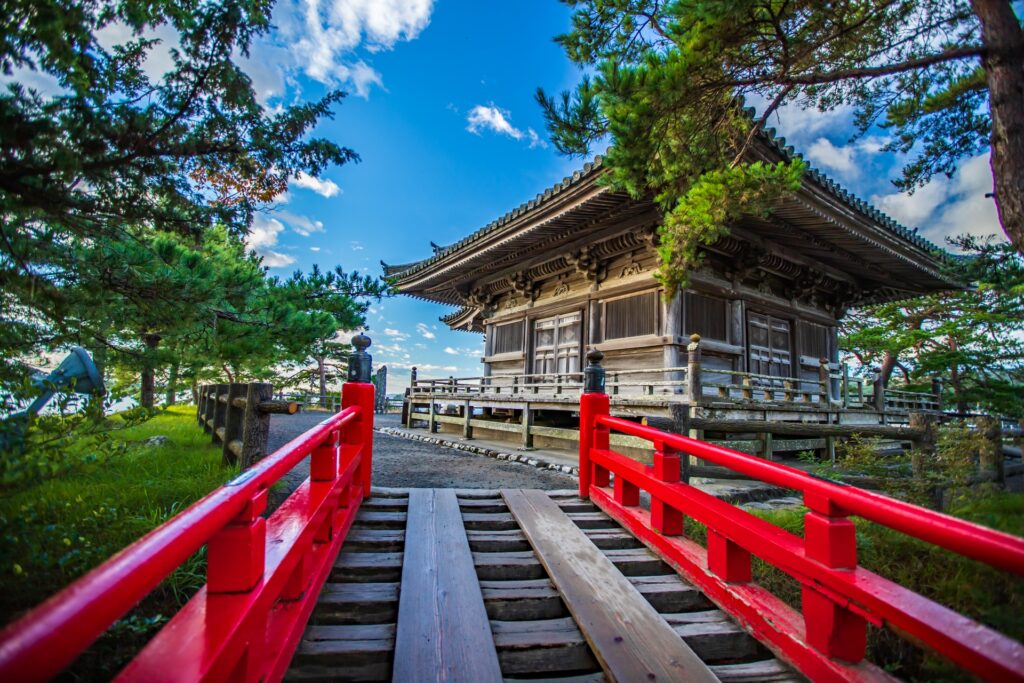
For the most complete experience, combine a cruise with at least one elevated viewpoint.
Option 1: Morning-Light Photographer
- Early visit to a viewpoint for soft morning light
- Late-morning cruise for calm water reflections
- Oyster lunch afterward
Option 2: Relaxed Traveler
- Midday cruise
- Afternoon café break near the waterfront
- Sunset viewpoint for warm, golden tones
Experiencing both perspectives—sea level and elevated panorama—creates a fuller understanding of Matsushima’s layered beauty.
The Four Great Views of Matsushima: Where to Get the Best Panorama
The “Shidaikan,” or Four Great Views of Matsushima, are traditional viewpoints offering panoramic perspectives of the bay.
| Viewpoint | What It’s Best For |
| Ogitani | Classic layered island panorama |
| Tomiyama | Elevated sweeping view |
| Tamonzan | Dramatic wide-angle scenery |
| Sokanzan | Easily accessible iconic look |
Each viewpoint presents the islands from a different angle, historically associated with distinct poetic impressions. Some require uphill walking or short hikes, while others are reachable by car or taxi.
From these elevated positions, the islands appear scattered like stepping stones across the sea. The interplay between sky, water, and pine silhouettes becomes especially striking during golden hour.
If You Only Have Time for One Viewpoint
- No car → Choose the most accessible viewpoint near town.
- With car or taxi → Select the most panoramic elevated option.
- Sunset priority → Choose a west-facing viewpoint.
Even one viewpoint paired with a cruise offers a balanced experience.
What to Do on Foot: Waterfront Walk, Islands with Bridges, and Cultural Stops
Matsushima is compact and highly walkable. Beyond cruising, strolling the waterfront reveals charming shops, cafés, and temple entrances.
A classic walking loop includes:
- Waterfront promenade
- Bridge-access island (Fukuurajima)
- Temple area
- Snack stops and souvenir shops
Fukuurajima Island is connected by a long red bridge and offers forested walking trails with scenic coastal lookouts. It provides a tranquil contrast to the lively waterfront.
Cultural highlights include:
- Zuiganji Temple, a historic Zen temple with ornate interiors
- Entsu-in Temple, known for its seasonal gardens and autumn foliage
Route Options
- Easy route (2–3 hours): Waterfront + one temple + lunch
- Fast route (1–1.5 hours): Cruise + brief waterfront stroll
The town’s scale allows for flexibility without feeling rushed.
One-Day Matsushima Bay Itinerary (Sendai Day Trip)
| Time | Activity |
| 8:30 | Depart Sendai |
| 9:00–9:10 | Arrive Matsushima (rapid train) |
| 10:00 | Cruise |
| 11:30 | Oyster lunch |
| 13:00 | Temple visits & island walk |
| 16:00 | Viewpoint (optional) |
| 18:00 | Return to Sendai |
Rain Plan: Focus on temple interiors, small museums, and cozy cafés along the waterfront.
What to Eat: Matsushima Oysters and Other Miyagi Seafood
Matsushima Bay is famous not only for its scenery but also for oysters. The calm, nutrient-rich waters provide ideal conditions for oyster farming.
Oyster Season
Oysters are generally at their best from autumn through winter, when they are plump and flavorful.
Popular dishes include:
- Grilled oysters
- Fried oysters
- Raw oysters (seasonal)
- Oyster set meals
Beyond oysters, visitors can enjoy fresh sashimi, sushi, and other Miyagi seafood specialties. Restaurants range from casual eateries to mid-range dining spots near the waterfront.
Food + Cruise Pairing: Make It a Micro-Adventure
- Morning cruise + oyster lunch near the pier
- Cruise to Shiogama + seafood breakfast or market visit
Whether affordable or slightly upscale, seafood is central to the Matsushima experience.
Best Time to Visit Matsushima Bay: Seasons, Light, and Crowds
| Season | Highlight | Experience | What to Bring |
| Spring | Cherry blossoms | Temple walks | Light jacket |
| Summer | Green islands & blue sea | Boat deck views | Hat & sunscreen |
| Autumn | Fall foliage | Viewpoints | Layers |
| Winter | Crisp air clarity | Quiet atmosphere | Warm coat |
Spring and autumn are particularly popular due to mild weather and seasonal colors. Winter offers clearer air and fewer crowds, while summer provides vivid contrasts between sea and pine.
Photography Tips
- Golden hour enhances island silhouettes.
- Overcast skies deepen green tones.
- Early morning provides softer light and lighter crowds.
Light conditions dramatically shape Matsushima’s mood.
Practical Tips: Accessibility, Etiquette, and Responsible Travel
Some viewpoints involve stairs or uneven terrain. If mobility is limited, focus on the cruise and the flat waterfront area.
When visiting temples:
- Maintain quiet behavior.
- Follow posted photography rules.
- Stay on marked paths.
Responsible travel ensures Matsushima remains beautiful for future visitors. Avoid littering, respect wildlife, and support local businesses whenever possible.
Nearby Attractions: What to See Around Matsushima Bay
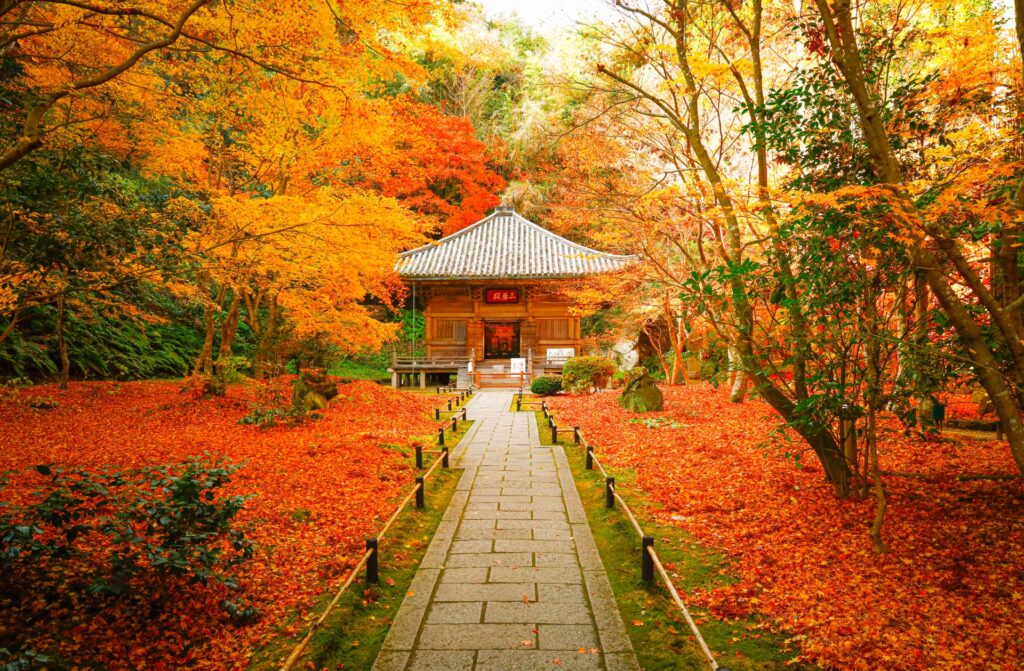
Within walking distance:
- Zuiganji Temple
- Entsu-in Temple
- Fukuurajima Island
Extend by cruise or short trip:
- Shiogama for seafood and port-town atmosphere
Stay overnight:
- Return to Sendai for city dining, museums, and cultural experiences
Matsushima works well as a half-day highlight or as part of a broader Tohoku coastal journey.
FAQ: Matsushima Bay Quick Answers
How many islands are in Matsushima Bay?
It is commonly described as having over 260 pine-covered islands.
Is Matsushima worth a day trip from Sendai?
Yes. With a rapid train travel time of about 26 minutes, it is one of the easiest and most rewarding scenic excursions in the region.
Which cruise is best?
The loop cruise is ideal for short visits. The Matsushima–Shiogama cruise suits travelers wanting to combine scenery with seafood exploration.
What is the best viewpoint?
It depends on access and timing, but pairing any one of the Four Great Views with a cruise offers balance.
When is oyster season?
Generally autumn through winter.
How long should I stay?
Plan 4–8 hours depending on whether you include temples and viewpoints.
Can I visit without a car?
Yes. The main waterfront and cruise area are easily accessible by train and on foot.
Conclusion: Is Matsushima Bay Worth Visiting?
Matsushima Bay remains one of Japan’s Three Scenic Views for good reason. Its pine-covered islands, calm coastal waters, and historic temples create a landscape that feels both refined and timeless.
By combining a sightseeing cruise with at least one panoramic viewpoint—and adding a meal of fresh oysters—you can experience the essence of this celebrated bay in just half a day. With only a 26-minute rapid train ride from Sendai, it fits effortlessly into most Tohoku itineraries.
Yes—especially if you appreciate scenic coastlines, historic temples, and relaxed seaside atmospheres—Matsushima Bay is absolutely worth visiting.