Japanese traditional tattoos tend to get reduced to their surface—bold lines, mythical creatures, full-body impact. But spend a little time looking closer, and it becomes clear they’re not just visual. They carry stories, and those stories are structured, intentional, and often centuries old.
This guide walks through what those designs actually represent—where they come from, how they’re built, and what to keep in mind if you’re thinking about getting one yourself.


What “Japanese Traditional Tattoo” Actually Refers To
In English, it’s easy to lump everything under “Japanese-style tattoo.” In Japan, the distinction is sharper.
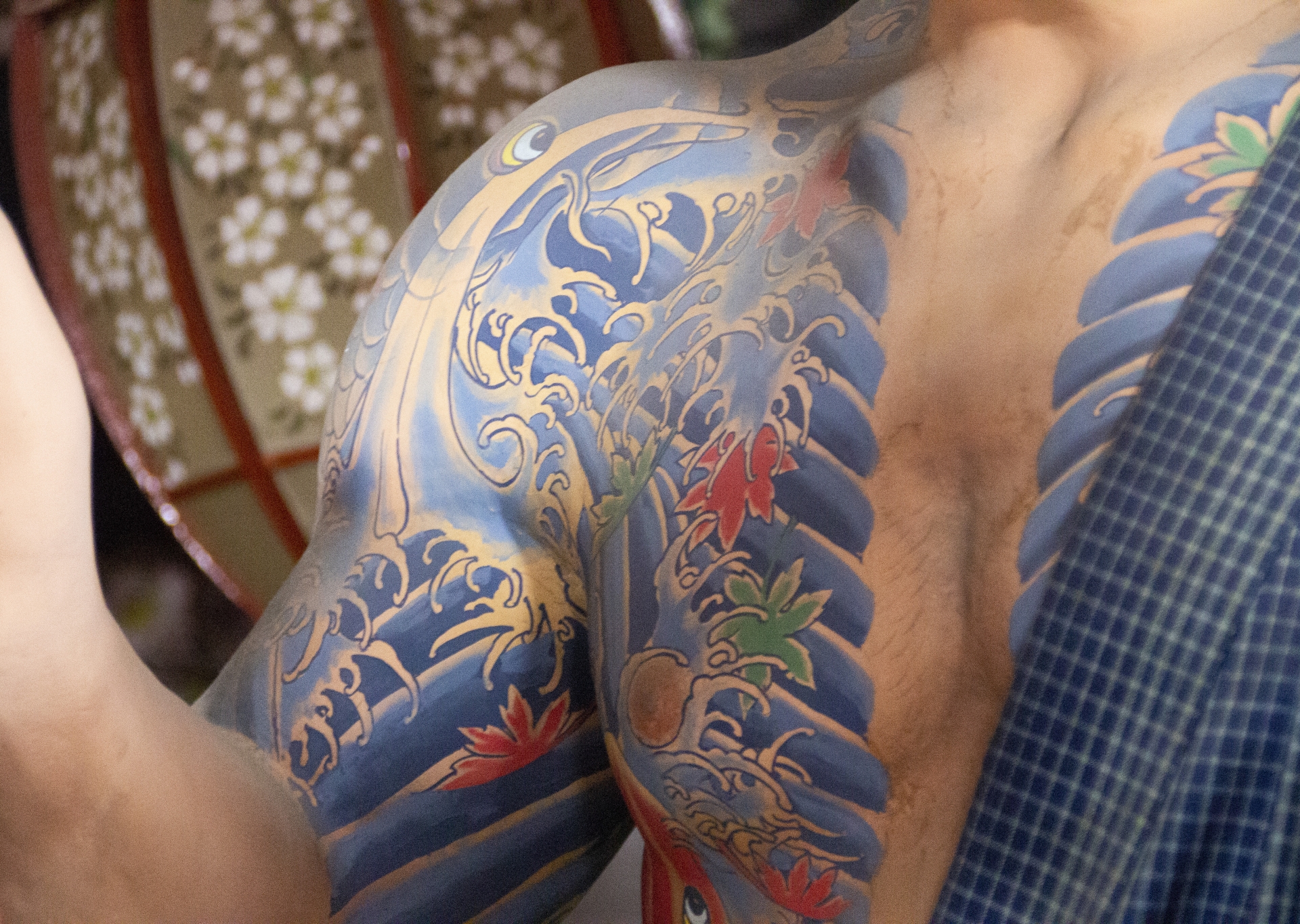
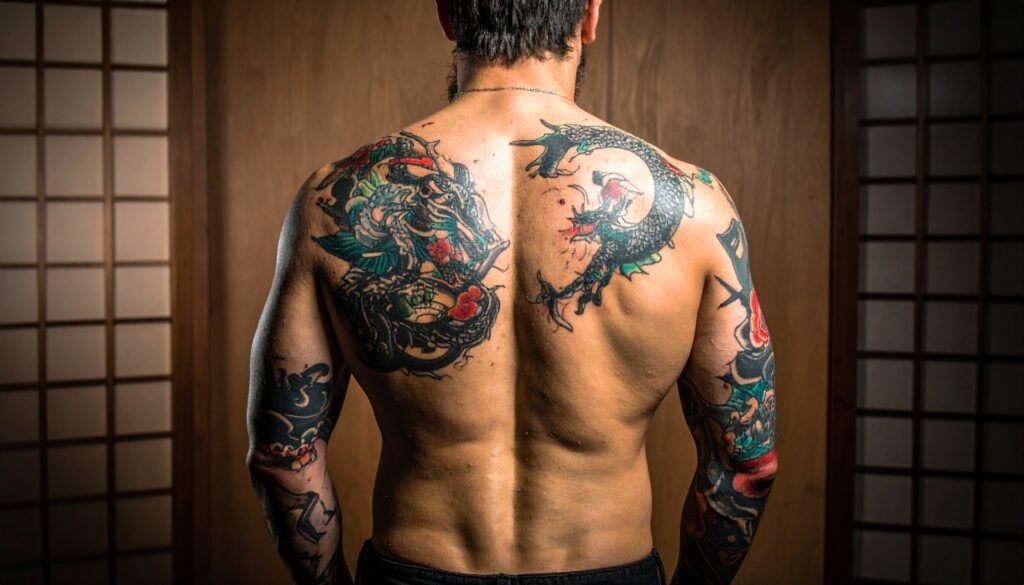
Traditional work—often called irezumi, wabori, or horimono—follows a set of artistic rules that didn’t come out of nowhere. These tattoos are composed, not assembled. A dragon isn’t just placed on the skin; it moves through wind bars and clouds, interacting with the rest of the design.
There’s also a sense of scale that can feel surprising at first. Small, isolated pieces aren’t really the norm here. Sleeves, back pieces, even full bodysuits—these formats allow the design to flow across the body, almost like a continuous scene rather than separate images.
You start to notice it when you see a well-done piece in person. Nothing feels accidental.
Tattoo vs. Irezumi vs. Horimono
The terminology can get confusing, especially if you’re new to it.
- Tattoo is the broad, global term—used casually, often tied to modern styles and personal expression.
- Irezumi refers specifically to traditional Japanese tattooing, with its cultural and historical weight.
- Horimono leans more toward the artistic side, often used when talking about large-scale, highly traditional compositions.
In practice, people use these interchangeably at times. But if you’re speaking with an artist who specializes in traditional work, choosing the right term can make the conversation smoother—and shows you’ve done your homework.
A Brief History, in Layers
Tattooing in Japan didn’t start as decoration.
There’s evidence of early tattooing tied to spiritual or tribal identity. But things shifted dramatically over time. During the Edo period (1603–1868), tattooing developed into a full-fledged art form, heavily influenced by ukiyo-e woodblock prints. Heroes, folklore, and dramatic scenes began appearing on skin instead of paper.
At the same time, tattoos were also used as punishment in some regions—marking criminals permanently. That contradiction never fully disappeared.
In the late 1800s, during the Meiji era, tattoos were banned as Japan tried to present a more “modern” image internationally. The practice didn’t vanish—it just moved underground.
Today, tattoos are legal again, and globally admired. But in Japan, the social perception is still a little complicated. That tension is part of the story too.
Why Tattoos Became Linked to the Yakuza
If you’ve heard that tattoos in Japan are associated with organized crime, that’s not entirely wrong—but it’s also not the full picture.
During the years when tattoos were restricted or frowned upon, they became a form of identity among marginalized groups. The yakuza adopted large-scale tattooing as a marker of loyalty and endurance. Traditional methods were slow and painful, which only reinforced that symbolism.
That image stuck.
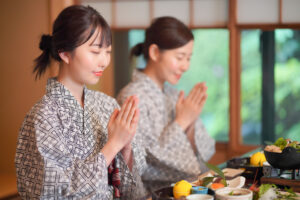
Even now, you’ll run into places—onsen, gyms, public pools—where visible tattoos aren’t allowed. It’s less about the design itself and more about what it has historically represented.
If you’re traveling:
- Check policies in advance
- Bring cover patches or clothing
- Look for places that explicitly welcome tattooed guests
It’s manageable, just something to be aware of.
Motifs That Show Up Again and Again (And Why)
In traditional Japanese tattooing, motifs aren’t random. They carry meaning, and more importantly, they interact with each other.
Animals and Mythical Creatures
These are often the centerpiece of a design.
- Dragon — power, wisdom, protection
- Tiger — strength, courage, a kind of grounded force
- Snake — transformation, healing, cycles
- Phoenix — rebirth, especially after hardship
- Wolf — loyalty, guardianship
- Koi fish — persistence, pushing through difficulty
They’re usually shown in motion—swimming upstream, twisting through clouds—so the meaning isn’t just symbolic, it’s visual.
Flowers and Seasonal Elements
Floral motifs do more than fill space. They set the tone.
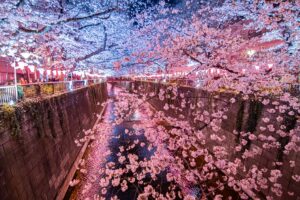
- Cherry blossoms (sakura) — brief beauty, the idea that things don’t last
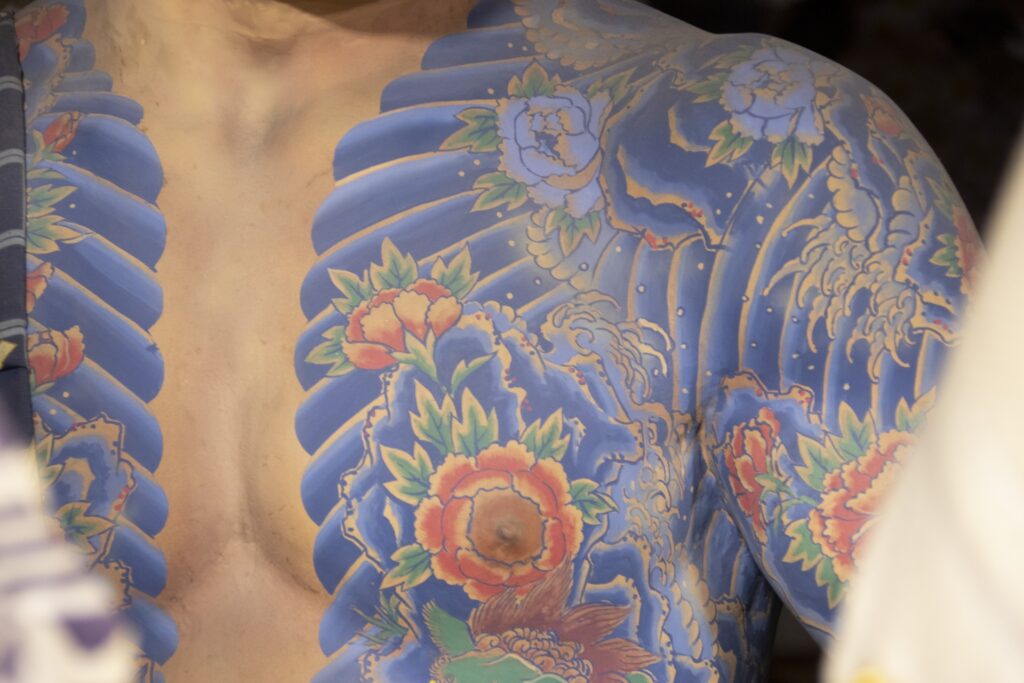
- Peony — elegance, sometimes a kind of bold confidence
- Lotus — purity, rising from difficult conditions
- Wisteria — softness, grace, often a quieter presence
They also hint at seasonality. A design with sakura feels different from one built around autumn leaves. It’s subtle, but it shifts the mood.
The Hannya Mask
This one gets misunderstood a lot.
At first glance, it looks demonic. But the Hannya mask represents a woman consumed by jealousy and grief—something intensely human. It’s not just anger; it’s what happens when emotion spirals out of control.
Because of that, it can also function as a protective symbol. There’s a duality to it—pain and strength existing at the same time.
That tension is part of why people are drawn to it.
Composition: Why One Image Isn’t the Whole Story
One of the biggest differences between traditional Japanese tattoos and many modern styles is composition.
These designs are built as complete scenes. A main figure sits at the center, but it’s supported by background elements—waves, clouds, wind bars, flames—that guide how your eye moves across the body.
Those backgrounds aren’t decorative filler. They create rhythm. Without them, the piece feels incomplete.
That’s also why placement matters so much. A sleeve isn’t just a convenient format—it’s part of how the story unfolds.
Choosing a Design Without Missing the Point
It’s easy to pick a design based on how it looks. But with irezumi, that’s only part of it.
A few things that tend to make the process smoother:
- Look into the meaning behind each element
- Work with artists who actually specialize in traditional Japanese work
- Avoid random kanji unless you’re certain of the context
- Think about how different elements connect, not just individually
The result usually feels more cohesive—and more personal—when you approach it this way.
Tebori vs. Machine: Two Different Rhythms
Traditionally, tattoos in Japan were done using tebori, a hand-poked technique.
It’s slower. More deliberate. And in some cases, surprisingly gentle when it comes to shading. The gradients tend to feel softer, almost layered into the skin rather than sitting on top.
Machine tattooing is more common today—faster, more accessible, and consistent in line work.
Both are valid. But tebori carries a certain texture, and a connection to history, that’s hard to replicate.
Tattoos in Japan Today
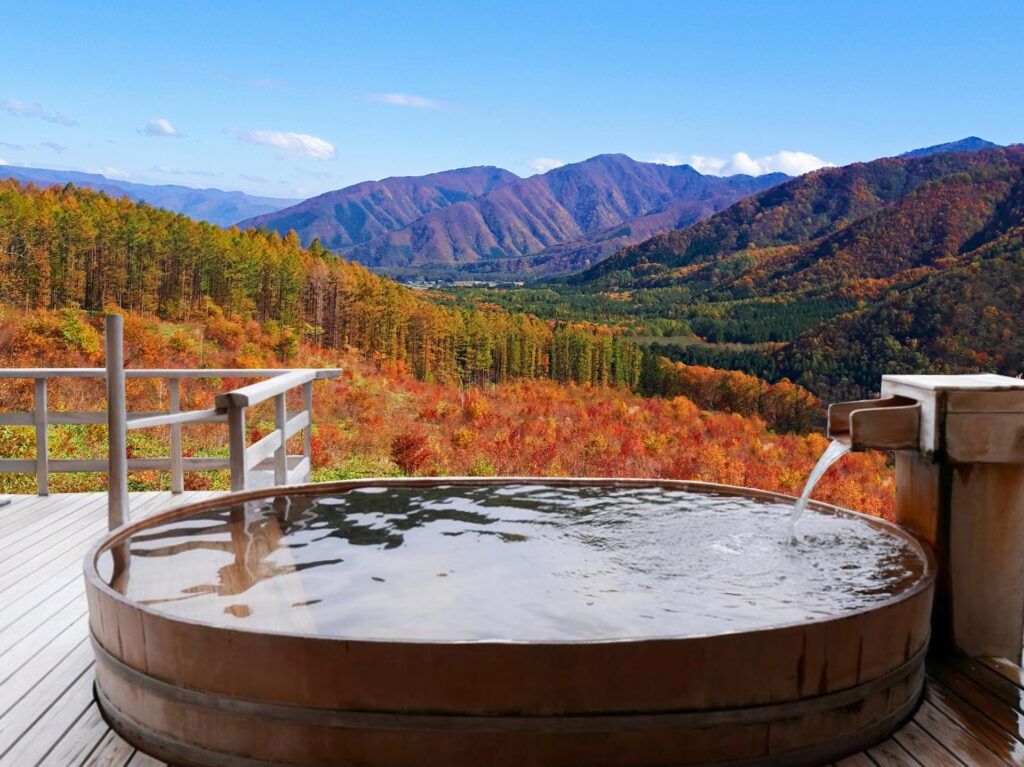
Legally, tattoos are fine.
Socially, it depends on where you are.
You’ll still find restrictions in:
- Onsen
- Public baths
- Gyms
- Swimming pools
It’s not universal, but it’s common enough that it’s worth planning around. The good news is that tattoo-friendly spaces are becoming easier to find, especially in areas used to international visitors.
Placement: How the Body Shapes the Design
Placement isn’t just about visibility—it changes how the tattoo reads.
- Full sleeve — allows for layered storytelling
- Half sleeve — more compact, but still structured
- Back piece — often the most traditional format
- Chest panel — usually integrated with sleeves
- Leg sleeve — dynamic, slightly less exposed
- Small pieces — possible, but often simplified versions
Traditional designs tend to feel most natural at a larger scale. That’s where the flow really comes through.
A Few Practical Questions
Is it disrespectful to get one?
Not inherently. It depends on how much thought you put into it.
What designs are most common?
Dragons and koi show up often, largely because their meanings are widely understood.
How long does it take?
A sleeve can take dozens of hours, spread over multiple sessions.
Can visitors get one in Japan?
Yes—many artists work with international clients.
Can you enter an onsen with tattoos?
Sometimes, but you may need to cover them or choose specific locations.
Final Thoughts
A Japanese traditional tattoo isn’t just a collection of symbols. It’s a composition—built from history, shaped by rules, and carried on the body over time.
If you take the time to understand how those pieces fit together, the design tends to feel different. Not louder, necessarily. Just more grounded.
And that’s usually what stays with you.