Hanami is often described as cherry blossom viewing, but that only tells part of the story. In practice, it’s a seasonal pause—something that blends sitting outdoors, eating with others, and paying attention to a very short window in the year. For many travelers, it ends up being less about the flowers themselves and more about how people gather around them. This guide walks through what hanami means, where it comes from, when to catch it, and how to take part without feeling out of place.


What Is Hanami?
Hanami (花見) literally translates to “flower viewing,” though in everyday use it almost always points to cherry blossoms. It sits somewhere between a cultural custom and a casual social habit—structured enough to have shared rules, loose enough that people shape it however they like.
Hanami meaning in simple terms
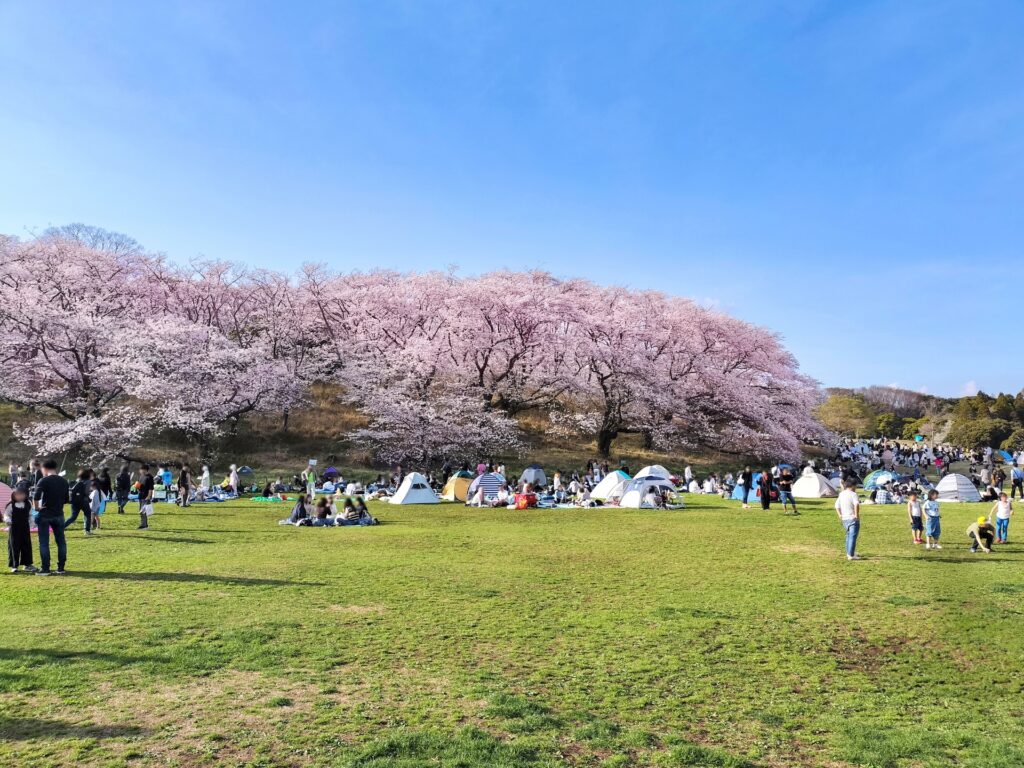
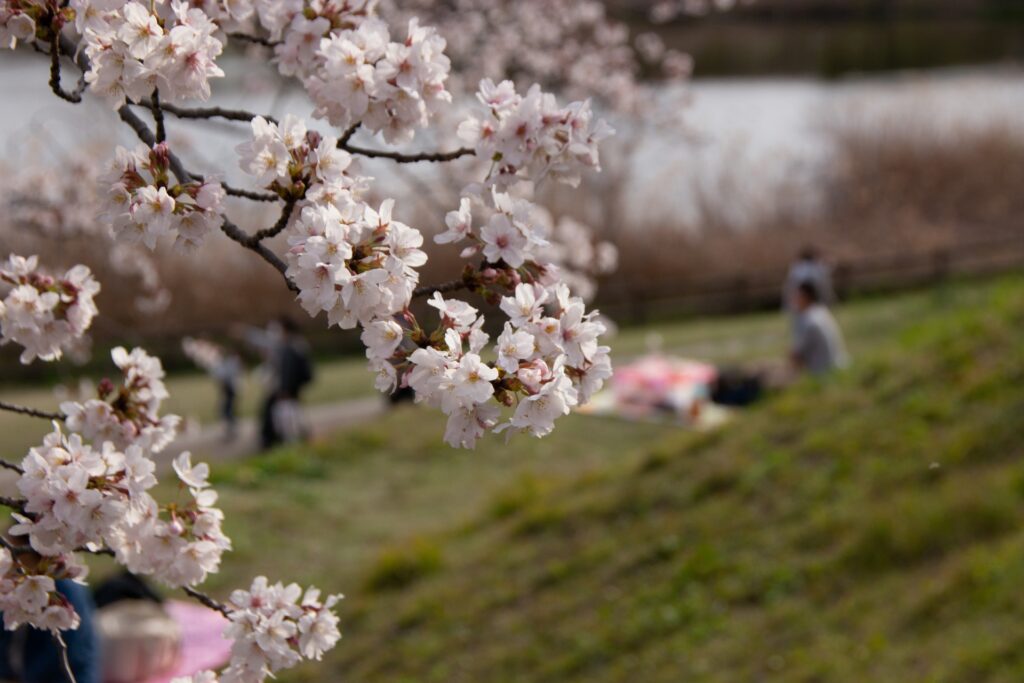
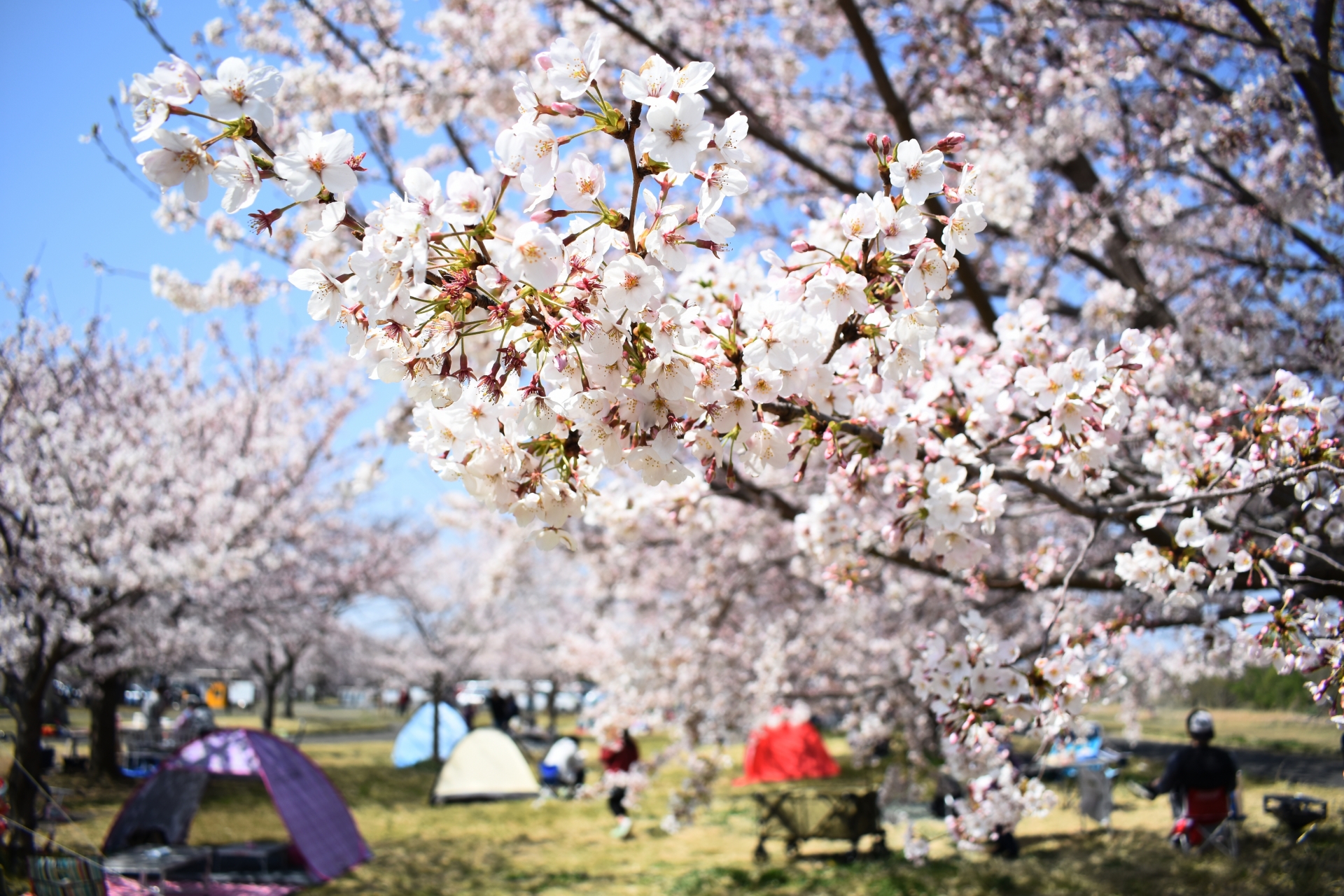
At its simplest, hanami means spending time under blooming sakura trees. People lay out picnic sheets, unpack food, open drinks, and settle in. Some groups stay for hours; others drift through on foot, stopping only briefly.
What stands out isn’t just the blossoms overhead, but how the space underneath them gets used—office workers on lunch breaks, families with kids, groups of friends who arrived early to claim a spot. It’s a shared scene more than a fixed activity.
Is hanami only about cherry blossoms?
Technically, no. The word itself doesn’t limit the type of flower. But in modern Japan, hanami and sakura are almost inseparable. Plum blossoms had their moment historically, but cherry blossoms—partly because they bloom all at once and disappear quickly—gradually took over as the focus.
Why Hanami Is Important in Japanese Culture
Hanami tends to reveal a few underlying patterns in how seasons are experienced in Japan. It’s not treated as a one-off event, but as something people return to every year, with small variations.
The beauty of impermanence
Cherry blossoms don’t last long. A tree might look full one week and start shedding petals the next, sometimes faster if there’s wind or rain. That short peak is part of the appeal.
This connects to mono no aware, the idea that fleeting things carry their own kind of weight. It’s not framed as something sad, exactly—more like a quiet reminder to notice what’s there while it lasts.
Hanami as a social spring ritual
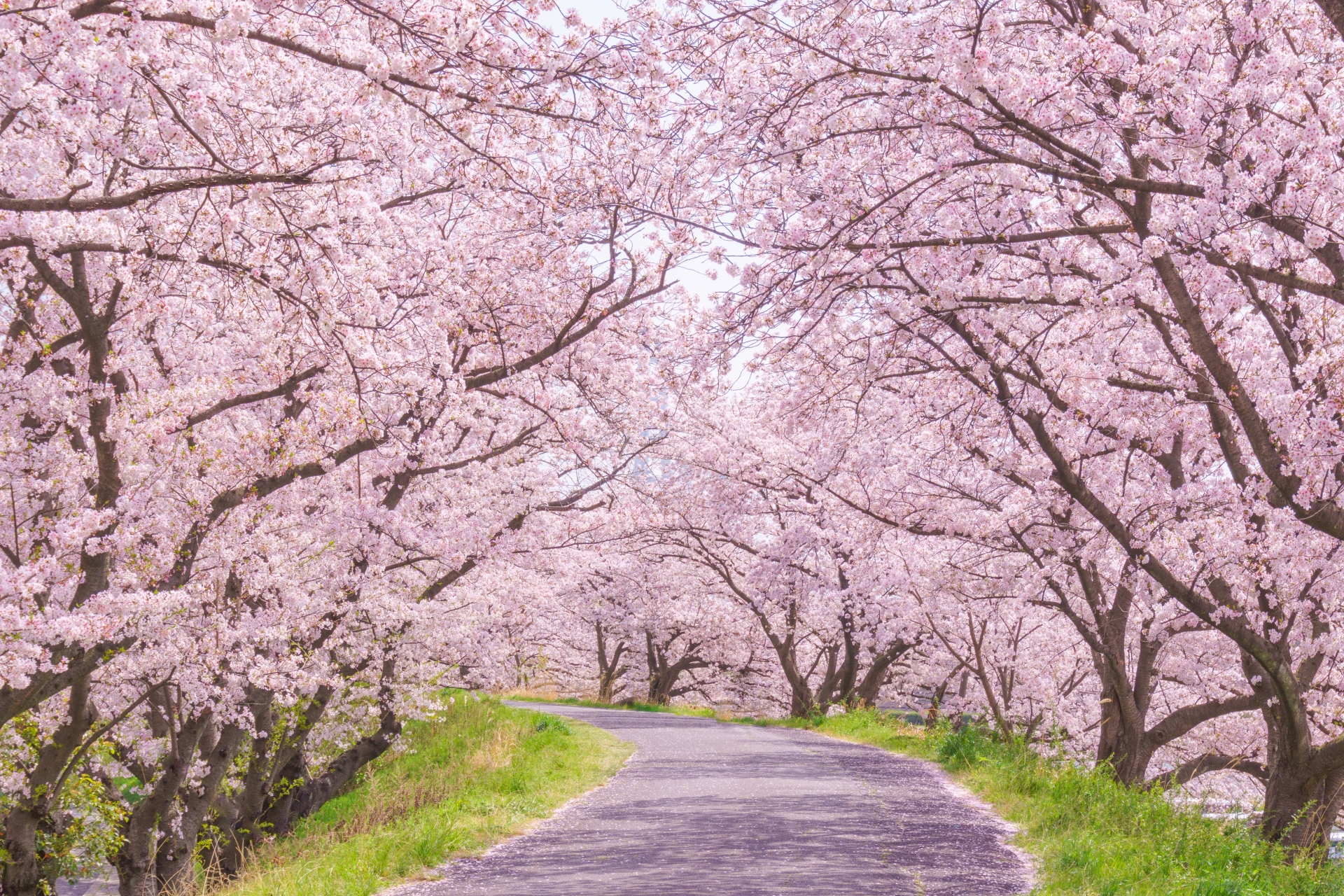
In many parks, especially in cities, hanami leans toward the social side. Groups arrive early to reserve space, sometimes sending one person ahead with a tarp to hold a spot. By afternoon, the area fills in.
That said, it doesn’t have to be communal. You’ll also see people walking alone along rivers lined with trees, or stopping on a bridge just long enough to look up. Both approaches sit comfortably within the same idea of hanami.
The History of Hanami: From Ume to Sakura
Hanami didn’t always revolve around cherry blossoms. Its focus shifted gradually over time, shaped by changes in taste and culture.
Hanami began with plum blossoms
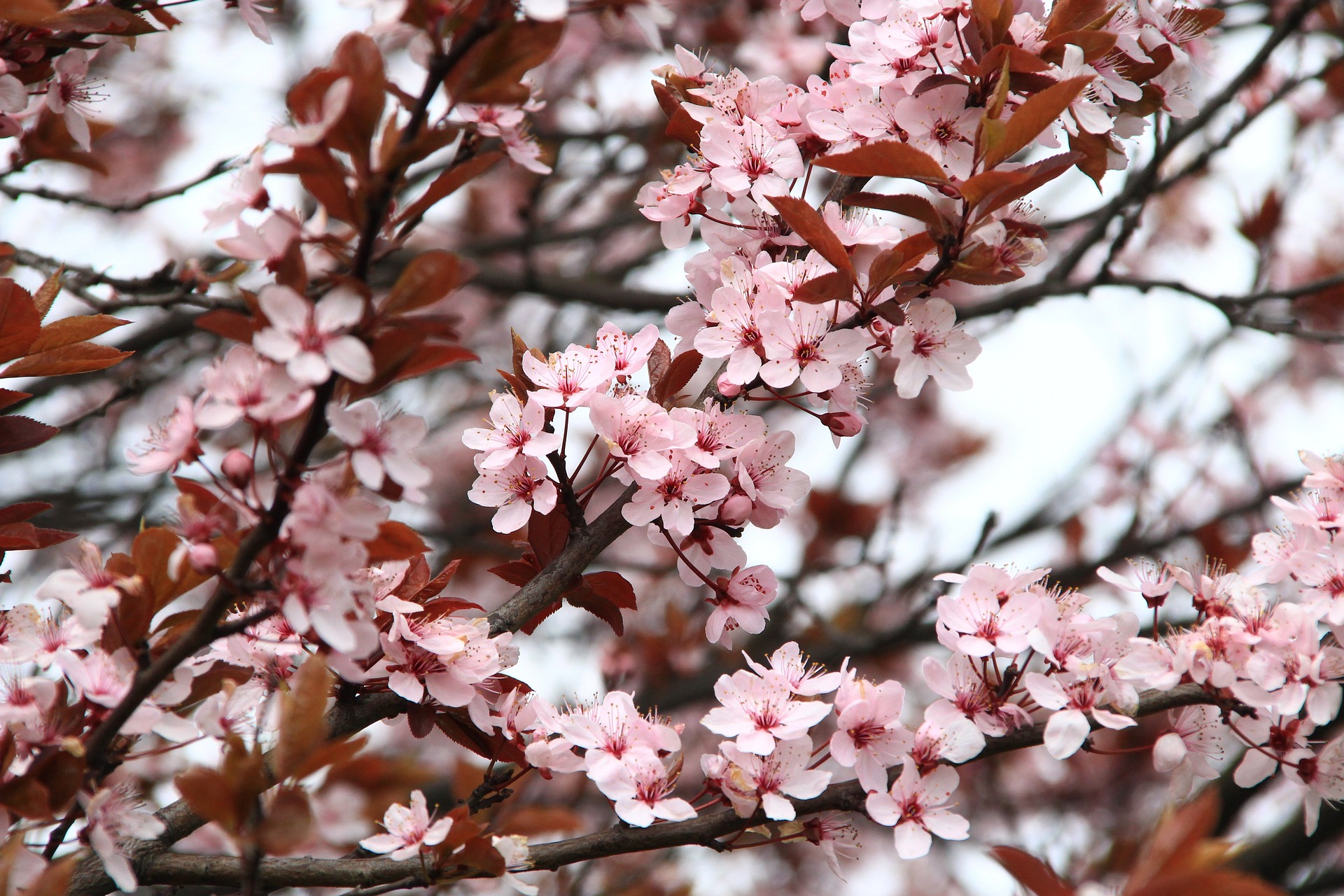
In earlier periods, especially during the Nara era, plum blossoms (ume) were the main attraction. This was partly due to influence from China, where plum blossoms held cultural significance.
How hanami became a cherry blossom tradition
By the Heian period, attention moved toward cherry blossoms. Members of the imperial court gathered under sakura trees, composing poetry and marking the arrival of spring in a more symbolic way.
Later, during the Edo period, the practice spread beyond aristocratic circles. Common people began organizing their own gatherings, closer in spirit to what you see today—food, drinks, and long afternoons under the trees.
When Is Hanami Season in Japan?
Timing matters more than people expect. Cherry blossoms don’t bloom all at once across the country, and missing the peak by a few days can make a difference.
Why cherry blossom timing changes by region
Japan’s length from south to north creates a kind of rolling schedule:
- Okinawa: January–February
- Central Japan (Tokyo, Kyoto): Late March–early April
- Tohoku: Mid–late April
- Hokkaido: Late April–early May
Some travelers actually follow this progression, moving north as the bloom advances.
How to read the sakura forecast
The movement of the blossoms is tracked as the sakura zensen, or cherry blossom front. Forecasts usually break it down into:
- First bloom date
- Full bloom date
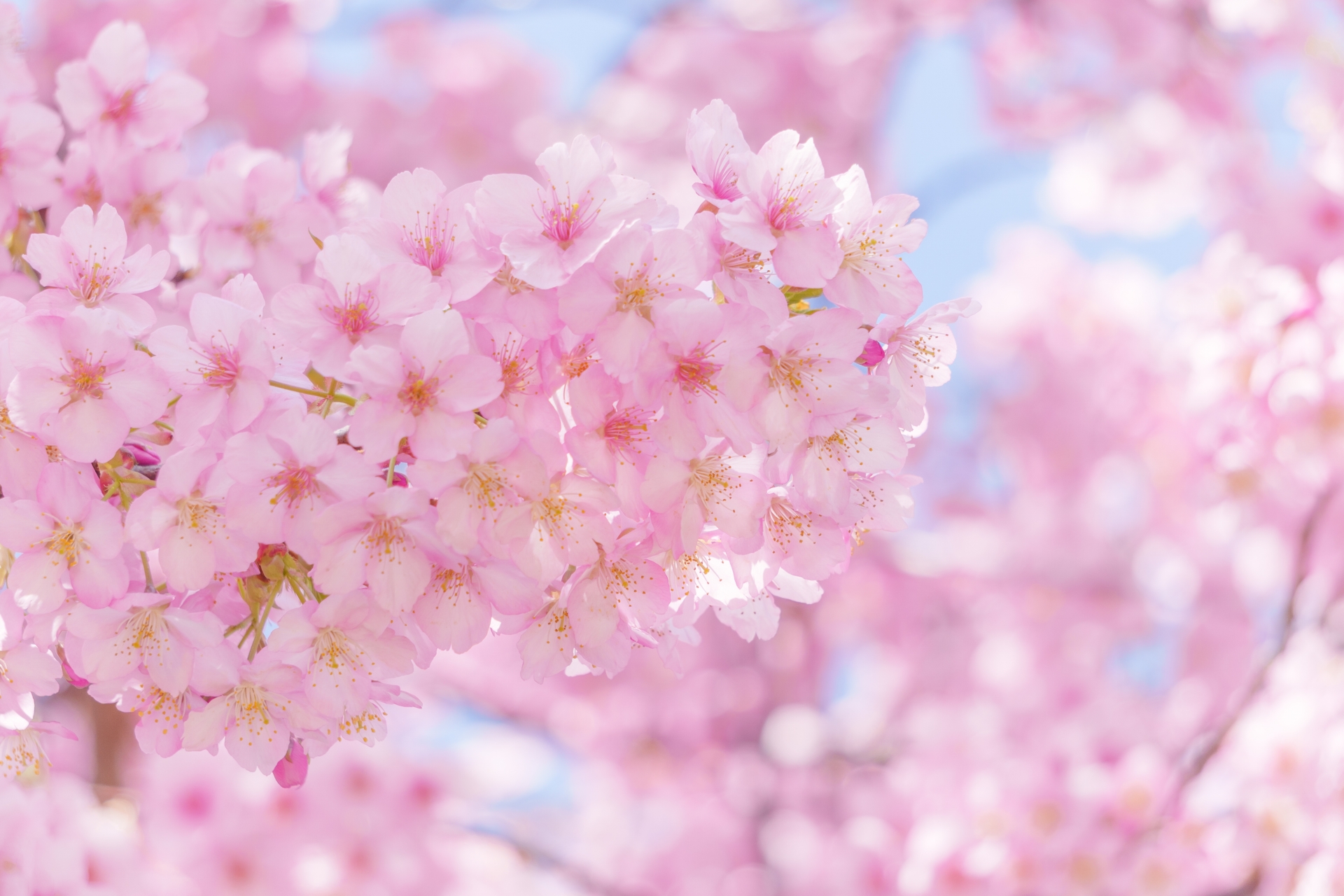
The first bloom is just that—the opening of the earliest flowers. Full bloom tends to arrive about a week later and is when most people aim to visit.
How to Enjoy Hanami Like a Local
There isn’t a single correct way to do hanami, but a bit of context helps you settle into it more naturally.
Picnic hanami vs strolling hanami
- Picnic hanami: Sitting under the trees with food and drinks
- Strolling hanami: Walking through parks, paths, or riversides
In cities like Tokyo, you’ll often see both happening side by side—one group settled in for hours, another just passing through.
What to bring to hanami
| Item | Why it matters | Where to buy |
| Picnic sheet | Essential for sitting | Convenience stores |
| Trash bags | Public bins are limited | Convenience stores |
| Wet wipes | Clean hands before eating | Drugstores |
| Warm layers | Evenings can be cold | Clothing stores |
| Food & drinks | Core of the experience | Supermarkets / depachika |
You don’t need anything elaborate. Even a simple convenience store setup works.
What to wear during hanami
Spring can be uneven. Warm during the day, cooler once the sun drops. There’s even a word for that lingering chill—hanabie. A light jacket or an extra layer usually comes in handy.
Hanami Food: What People Eat and Drink Under the Blossoms
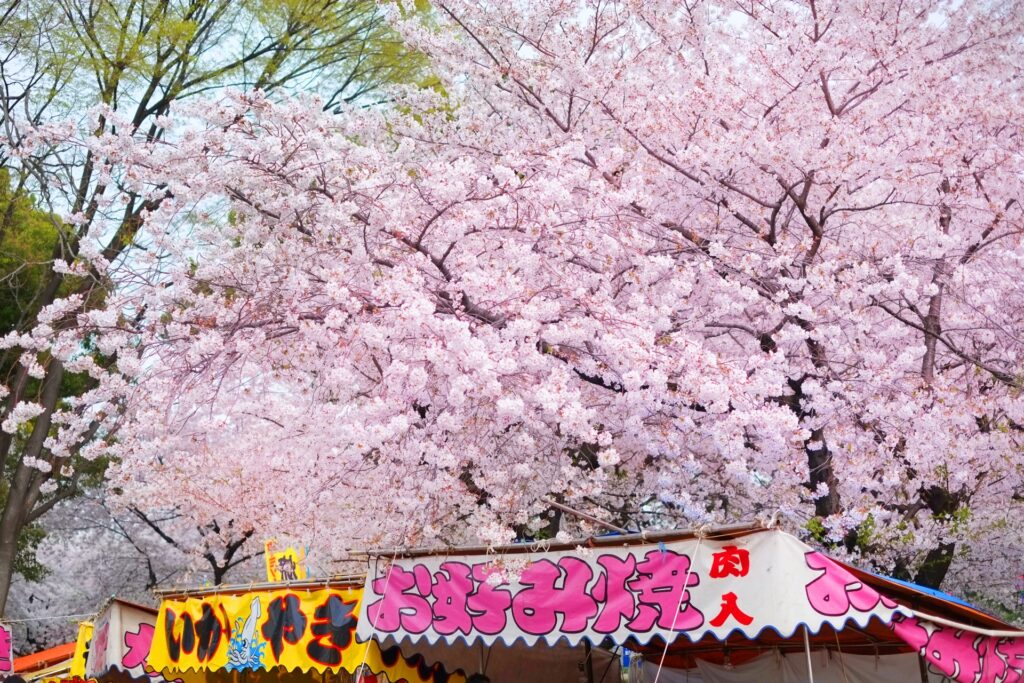
Food tends to anchor the whole experience. It gives people a reason to stay put.
Popular hanami foods
- Hanami bento (seasonal lunch boxes)
- Onigiri (rice balls)
- Sushi
- Karaage (fried chicken)
- Seasonal sweets and snacks
Department store food halls (depachika) often prepare special spring sets, which are easy to carry and designed for sharing.
Drinks, alcohol rules, and family-friendly options
Beer and sake are common, especially in group settings. Some parks allow alcohol freely, while others have restrictions, so it’s worth checking ahead.
Non-alcoholic options—tea, soft drinks—are everywhere, and plenty of gatherings stay completely alcohol-free.
Hanami Etiquette: Rules Visitors Should Know
The rules are fairly straightforward, but they’re taken seriously in busy spots.
Respect the trees
- Do not damage the trees
- Do not shake branches
- Do not pick blossoms
- Do not climb trees
- Avoid stepping on roots
The trees are treated as something to be observed, not interacted with directly.
Clean up properly
Public trash bins are limited, sometimes intentionally so. People are expected to take their garbage with them. It’s a small thing, but noticeable when done right.
Spot reservation and crowd manners
- Stay within your reserved area
- Do not take excessive space
- Avoid blocking walkways
In crowded parks, space becomes part of the etiquette.
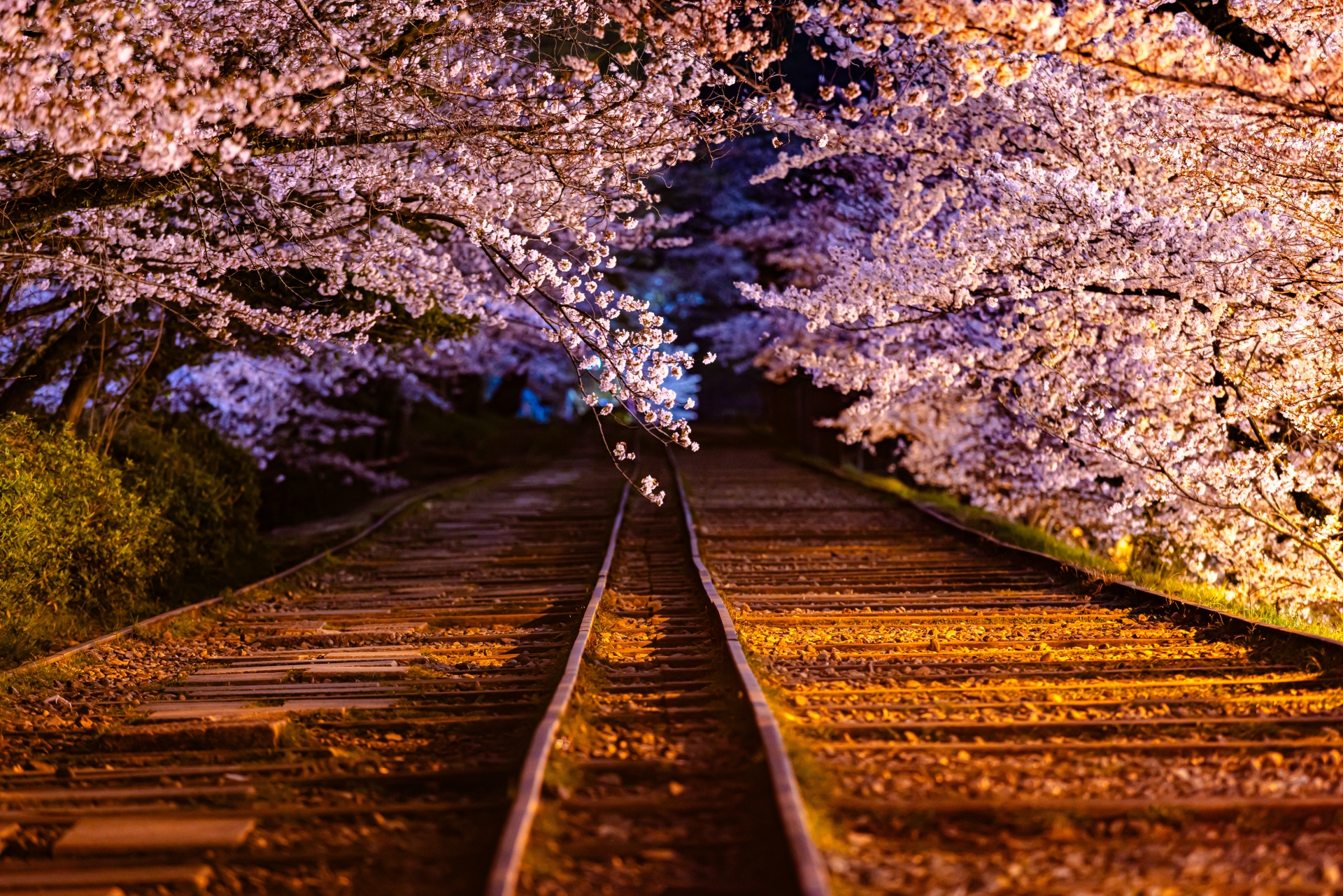
Night Hanami: What Is Yozakura?
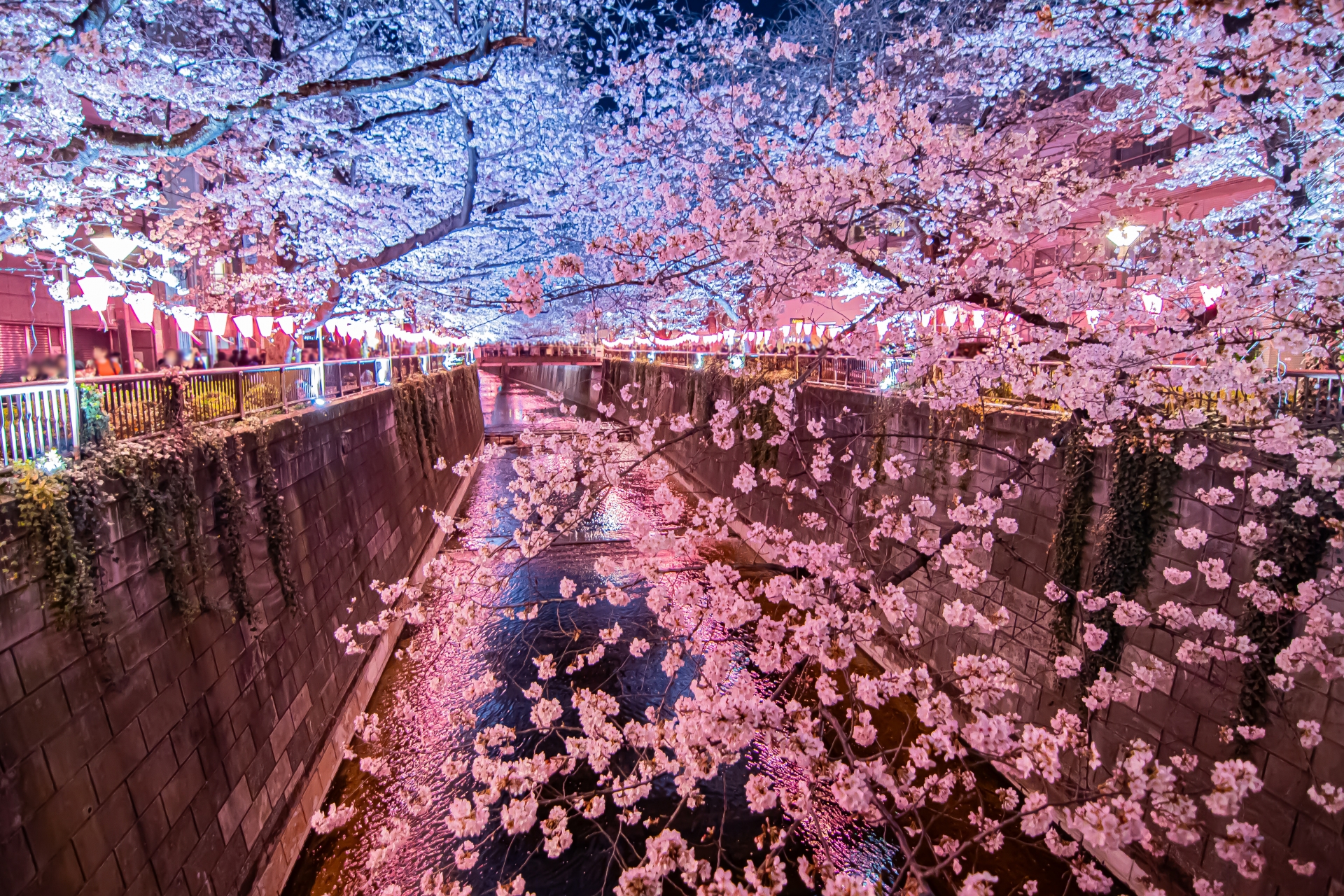
Yozakura refers to viewing cherry blossoms after dark, often under artificial lighting.
Why some travelers prefer yozakura
Illuminated trees take on a different character at night—less about color, more about contrast and shadow. It can feel quieter in tone, even when there are still plenty of people around.
That said, temperatures drop, and popular spots don’t necessarily get less crowded. It’s a different mood, not always a calmer one.
Hanami vs Sakura: What’s the Difference?
- Sakura = the cherry blossom itself
- Hanami = the act of viewing the blossoms
It’s a simple distinction, but useful when reading signs or guides.
FAQs About Hanami in Japan
Is hanami only in Japan?
It’s most closely associated with Japan, though similar flower-viewing traditions exist elsewhere.
Can tourists do hanami?
Yes. Parks are open to everyone.
When is the best time to do hanami in Japan?
In central regions, late March to early April is the usual peak.
Do you need to reserve a hanami spot?
In busy parks, especially for groups, it’s common.
What should I bring to hanami?
A picnic sheet, food, drinks, and trash bags cover the basics.
Is drinking alcohol allowed at hanami?
Often yes, depending on the park.
Final Tips for First-Time Hanami Visitors
If it’s your first time, a few small choices make a difference:
- Check the sakura forecast carefully
- Aim for the full bloom window if possible
- Bring something warm for later in the day
- Carry your trash out with you
And then, once you’re there, don’t overthink it. Sit for a while. Or walk. Either way works.