
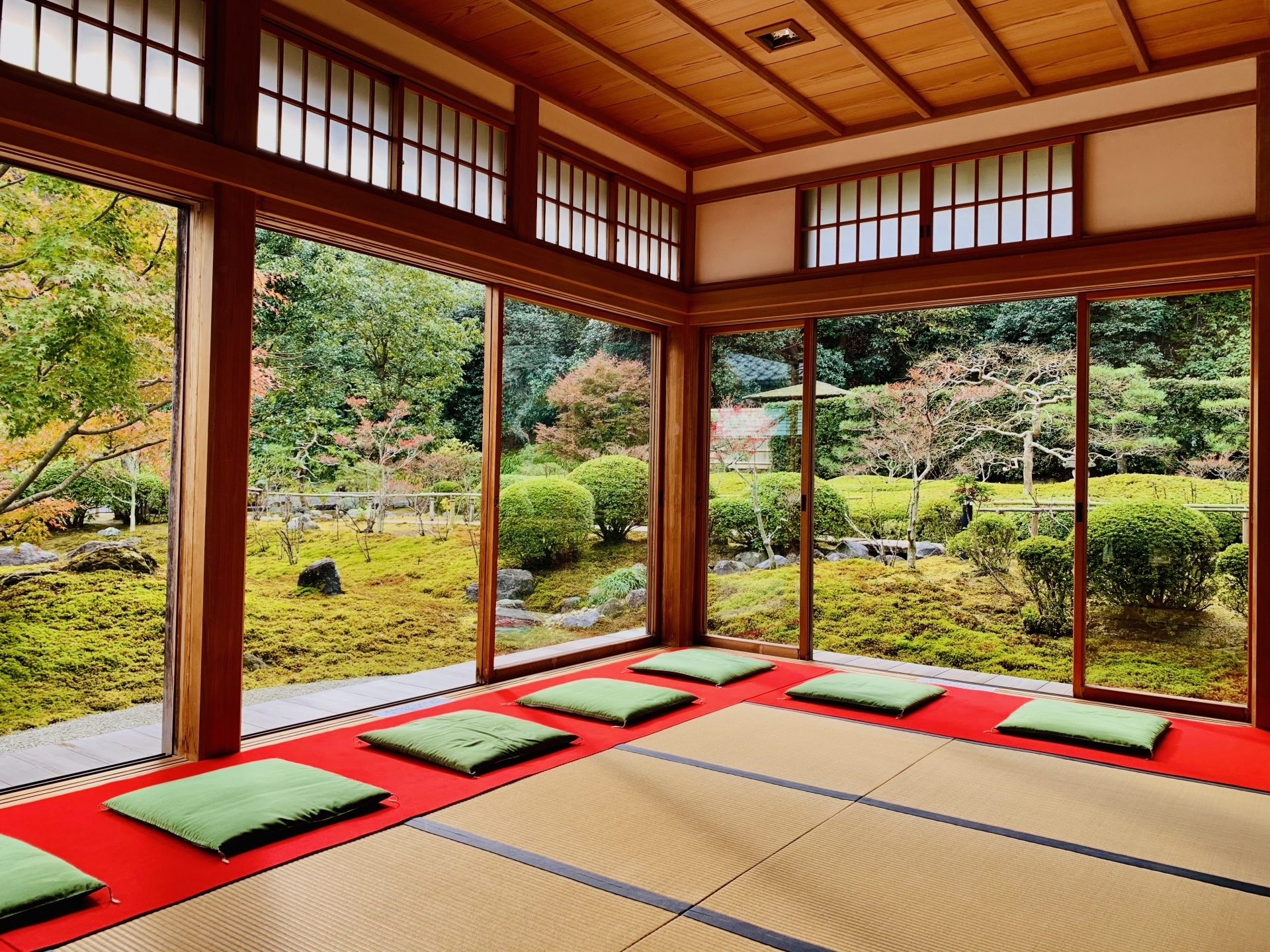
Tatami tends to show up in places travelers remember—ryokan rooms, quiet tea spaces, maybe that one apartment listing that looked surprisingly empty. You see it often enough, but what it actually is, or why it matters, isn’t always explained in a way that sticks.
This guide takes a closer look. Not just definitions, but how tatami is used, how it feels to live with, and what to keep in mind when you come across it in Japan—or try bringing it into your own space.


What Is Tatami?
Tatami refers to traditional Japanese flooring made from rectangular mats that are arranged to cover a room. Instead of thinking of them as rugs or panels, it’s easier to picture them as the floor itself—modular, but intended to function as one continuous surface.
You’ll most often encounter tatami in a washitsu, or Japanese-style room. These spaces are typically kept simple: low furniture, sliding doors, and enough open floor area to sit, eat, or sleep directly on the ground.
Historically, tatami carried a certain status. It wasn’t always something people walked across casually. Today, it’s more accessible, but it still tends to signal a different way of using space—one where the floor is part of daily life, not just something you stand on.
It’s also worth clearing up a common point of confusion. The word “tatami” gets used in English to describe martial arts mats, but those are built very differently. Traditional tatami in homes prioritize texture, scent, and comfort over impact resistance.
What Is Tatami Made Of?
A tatami mat is built in layers, and each one has a distinct role. At the center is the tatami-doko, the core. Traditionally, this was made from compressed rice straw, giving the mat a slight springiness. In newer versions, you’ll sometimes find wood-based boards or synthetic cores designed to last longer and resist warping.
Wrapped over that is the tatami-omote, the surface layer. This is woven from igusa, a type of soft rush grass. If you’ve ever stepped into a tatami room and noticed a faint, grassy smell—that comes from this layer. It’s subtle, but it lingers in a way that’s hard to mistake.
Running along the edges is the tatami-beri, a fabric border. It protects the corners from fraying and adds a small visual accent. In older homes, the pattern on this border could even hint at status or formality, though today it’s usually quite understated.
Together, these layers create a surface that feels firm but slightly forgiving underfoot. Not soft like carpet, not hard like wood—something in between. And beyond comfort, the materials do practical work too. Natural tatami can absorb moisture and help regulate humidity, which makes a difference during Japan’s damp summers.
Why Tatami Became So Important in Japan
Tatami didn’t become standard by accident. It fits the environment and the way people traditionally used their homes.
Japan’s climate is a big part of the story. Summers are humid, and air circulation matters. The woven igusa surface allows moisture to move through the mat instead of getting trapped, which helps rooms feel less sticky. At the same time, the layered structure provides a bit of insulation when the floor gets cold.
But climate alone doesn’t explain it. Lifestyle plays just as large a role. In a tatami room, daily activities happen close to the ground—sitting, eating, even sleeping. Chairs and beds aren’t necessary, which means the room can shift functions throughout the day. A space that’s a living room in the afternoon can become a bedroom at night with the addition of a futon.
There’s also the custom of removing shoes indoors, which ties directly into tatami. Keeping the surface clean isn’t just practical; it’s part of a broader sense of how indoor space should be treated. You notice it quickly if you step onto tatami—there’s a quiet expectation to move a little more carefully.
The History of Tatami: From Aristocratic Luxury to Everyday Japanese Life
Tatami wasn’t always as common as it is now. In its early days, it was something you brought into a room rather than something that defined it. Aristocrats would place tatami mats only where they sat, almost like movable seating platforms.
Over time—particularly through the medieval period—tatami spread among samurai households and temples. It became both practical and symbolic, tied to order and hierarchy within a room.
By the Edo period (1603–1868), the shift was more or less complete. Entire rooms were covered wall to wall, and layouts became standardized. This is also when spatial rules—like where guests sit or how rooms are arranged—became more formalized, especially in relation to tea culture.
These days, you won’t find tatami in every home, especially in cities. But even a single tatami room in an otherwise modern apartment tends to carry that sense of continuity with older ways of living.
Tatami Room Size Explained: What 4.5-Jo, 6-Jo, and 8-Jo Mean
In practice, you don’t need to memorize exact dimensions to understand tatami room sizes. After seeing a few examples—whether in apartment listings or a ryokan—you start to get a feel for what each layout means in terms of space and how it might be used.
Common examples:
4.5-jo: Small room, often used as a tea room or compact bedroom
6-jo: Standard-sized room in many homes and apartments
8-jo: Larger, more spacious room
If you prefer thinking in square meters or feet, there are rough conversions, though they vary slightly depending on the region.
Approximate conversions:
1 tatami ≈ 1.5–1.6 square meters (about 16–17 square feet)
6-jo room ≈ 9–10 square meters (around 96–107 square feet)
This measurement system is still widely used in real estate listings and ryokan descriptions, making it essential for travelers and residents alike.
Tatami Etiquette: What Not to Do in a Tatami Room
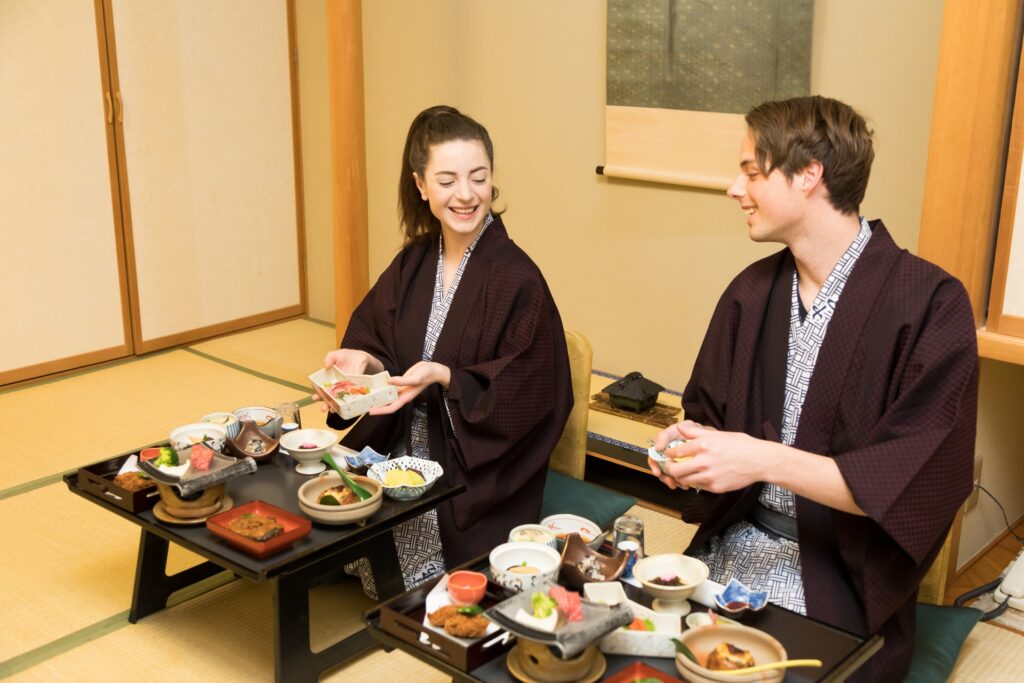
Stepping into a tatami room comes with a few unspoken rules, and they’re easy to follow once you’re aware of them.
Shoes are the obvious one—they always come off before you step onto tatami. Slippers, too. Even though they’re meant for indoor use, they’re not meant for tatami surfaces. You’ll usually see people pause right at the edge to remove them.
Movement matters as well. Dragging a suitcase across the floor or shifting heavy furniture can leave marks or dents. The surface looks durable, but it’s more delicate than it seems.
At the same time, you’re meant to use the space directly. Sitting or kneeling on the mats isn’t just acceptable—it’s the point. The material is designed for it, and after a while, it starts to feel natural.
Tatami Etiquette in Ryokans and Traditional Restaurants
In places like ryokan or traditional restaurants, these small details become more noticeable.
The flow is usually straightforward: you remove your shoes at the entrance, switch to slippers in hallways, and then take those off again before stepping onto tatami. It’s a small sequence, but missing a step tends to stand out.
Luggage is another thing to watch. Rolling a suitcase directly onto tatami is generally avoided. Staff will often handle it for you, or you can lift it carefully into place.
None of this is overly strict, but paying attention to it changes how you move through the space. You become a bit more aware of where you step, what you touch, how you sit.
How Tatami Is Used in Modern Homes Today
Tatami hasn’t disappeared—it’s just used differently now.
In many homes, instead of covering entire floors, tatami appears in smaller, more flexible areas. A single room might be set aside for it, or modular mats might be added to part of a living space.
People use these areas in different ways. Some treat them as quiet corners for reading or meditation. Others use them as bedrooms with futons that can be folded away during the day. In design terms, tatami also shows up in what’s often called “Japandi” interiors, where Japanese and Scandinavian ideas overlap.
Because modular tatami is widely available, it’s also something people experiment with outside Japan. Not always in a traditional layout, but as a way to change how a room feels underfoot.
Natural vs Synthetic Tatami
Choosing between natural and synthetic tatami comes down to what you value more—atmosphere or practicality.
Natural tatami, made with igusa, has a softer texture and that distinctive scent. It feels closer to what you’d experience in a traditional setting, but it does require more care. Moisture and wear can affect it over time.
Synthetic tatami, on the other hand, is built for durability. It resists stains, holds its shape more easily, and is generally simpler to clean. What you lose is some of the texture and subtle sensory details.
Neither is strictly better—it depends on how you plan to use the space.
How to Clean and Care for Tatami
Tatami doesn’t need complicated maintenance, but it does respond to how you treat it day to day.
Cleaning usually means vacuuming along the grain of the weave and wiping with a dry or slightly damp cloth. Too much water is a problem—it can seep into the layers and lead to mold.
Ventilation matters just as much as cleaning. Opening windows, letting air move through the room, even shifting furniture occasionally—these small habits help keep the mats in good condition.
Most issues come from neglect rather than difficulty. A room that stays closed and humid will show it over time.
How to Prevent Mold, Odors, and Damage
Because tatami is made from natural materials, it reacts to its environment.
In humid conditions, a dehumidifier can make a noticeable difference. Direct sunlight, on the other hand, can fade the surface if it’s too strong or prolonged. It’s a balance—air and light are helpful, just not in extremes.
Heavy furniture can leave dents, so protective pads are often used if you’re placing anything substantial on top. And again, airflow helps with everything—from preventing odors to extending the life of the mats.
Tatami vs Martial Arts Mats: Are They the Same?
Despite the shared name, traditional tatami and martial arts mats are built for completely different purposes.
Tatami in homes focuses on comfort, texture, and how a room is used day to day. Martial arts mats are designed to absorb impact, which means they’re typically made from foam and have a very different feel.
They may look similar at a glance, but once you step on them, the difference is immediate.
Is Tatami Right for You?
Tatami can change how you use a space, sometimes in subtle ways.
It works well if you’re interested in a more floor-based way of living—whether that’s for sleeping, sitting, or simply having a quieter kind of room. It also fits naturally into minimalist interiors where flexibility matters.
At the same time, it’s not ideal everywhere. High-traffic areas, heavy furniture, or consistently damp environments can be challenging unless you’re prepared to manage them carefully.
In the end, tatami isn’t just a design choice. It’s a shift in how you relate to the space around you—how you sit, where you rest, how the floor itself becomes part of daily life.
FAQ About Tatami
Is tatami comfortable to sleep on?
Many people find it firm but comfortable, especially when paired with a futon. It’s a different kind of support than a mattress, but it works once you get used to it.
Why do Japanese people remove shoes on tatami?
To keep the surface clean and prevent damage. It’s also part of a broader habit of separating outdoor and indoor spaces.
How long does tatami last?
The surface layer typically lasts around 5–10 years. The core can last longer if it’s well maintained.
Does tatami smell?
Natural tatami has a light, grassy scent. It’s not strong, but it’s noticeable in a fresh room.
Can you put tatami on wood floors?
Yes. Modular tatami mats are often placed directly on top of existing flooring without major changes.
Final Note
This article is structured with clear H2 and H3 hierarchy to improve readability and SEO performance, aligning with best practices for both users and search engines.
It also follows a people-first approach by addressing real user needs—travel etiquette, home use, and practical care—rather than just definitions.