Japan’s Emperor’s Birthday may appear to be a simple celebration of a monarch’s birth. Yet its deeper history reveals a transformation from elite court ritual to state ceremony, and finally to a modern national holiday defined by postwar constitutional law.
This article focuses exclusively on the historical evolution of the Emperor’s Birthday — examining how its name, political meaning, and legal foundation have changed from ancient times through the Meiji state-building era and into Japan’s contemporary constitutional framework.
Editorial note: Practical guidance on visiting the Imperial Palace or attending modern ceremonies is intentionally omitted to avoid overlap with Japambience’s existing guide. A brief internal link to that article may be included.


Scope and Definitions: What “Emperor’s Birthday” Means Across History
When discussing the Emperor’s Birthday in Japan, it is important to understand that the term does not describe a single, unchanging holiday. Rather, it refers to a historical concept that has evolved across centuries, adapting to shifts in political authority, state structure, and constitutional law.
Broadly speaking, the observance can be divided into three major phases:
Court observance (pre-modern era) – A ritual event within the imperial court, focused on longevity and cosmic harmony.
State-centered national holiday (Meiji–prewar period) – A public ceremony integrated into the modern nation-building process.
Postwar constitutional national holiday (1948–present) – A legally codified public holiday under Japan’s democratic constitution.
Two pivotal transitions define this evolution:
- Ritual and naming shift: From early longevity rites to the formalized term Tenchōsetsu (天長節).
- Legal transformation: The passage of the 1948 Act on National Holidays, which redefined the observance in the framework of a constitutional monarchy.
Today, the Emperor’s Birthday (天皇誕生日, Tennō Tanjōbi) is recognized as a national holiday under Japanese law. However, its meaning has changed significantly over time. Readers seeking details about attending modern ceremonies or visiting the Imperial Palace may consult Japambience’s dedicated guide on contemporary observance.
Understanding this layered historical development allows us to see the Emperor’s Birthday not as a static tradition, but as a mirror reflecting Japan’s changing political and cultural landscape.
Ancient Roots: Longevity Rituals and the Birth of Tenchōsetsu
The earliest forms of imperial birthday observances date back to Japan’s classical court society, particularly during the Heian period (794–1185). At that time, the emperor was regarded not merely as a political ruler but as a figure embedded in cosmic order and ritual authority.
Birthday ceremonies were associated with:
- Longevity (天長, Tenchō) – Literally meaning “heavenly longevity.”
- Cosmic harmony – Reinforcing the idea that the emperor’s well-being ensured national stability.
- Imperial legitimacy – Demonstrating continuity of divine lineage.
These early observances were not public holidays in the modern sense. They were elite court rituals conducted among aristocrats and officials. Participation was limited, and there was no nationwide civic celebration.
Key Terms
- Tenchō (天長): “Heavenly longevity.”
- Tenchōsetsu (天長節): The formalized imperial birthday observance in prewar Japan.
- Tennō Tanjōbi (天皇誕生日): The modern term for the Emperor’s Birthday.
Over time, Tenchōsetsu became the established name for the emperor’s birthday celebration. Yet even then, its meaning was ritualistic rather than civic. The transformation into a national public holiday would not occur until the modern era reshaped Japan’s political institutions.
The Meiji Transformation: From Imperial Rite to National Symbol
The turning point came with the Meiji Restoration in 1868. As Japan modernized and centralized its state apparatus, imperial rituals were reorganized and nationalized. The emperor became the symbolic and ideological core of the emerging modern nation-state.
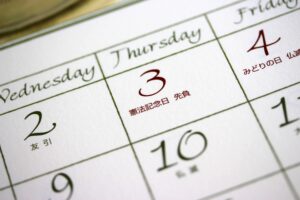
Under Emperor Meiji (r. 1867–1912), his birthday—November 3—was institutionalized as a national observance. The government integrated imperial ceremonies into the civic calendar, encouraging public participation and patriotic sentiment.
Timeline: 1868–1870s Institutional Developments
- 1868: Meiji Restoration reestablishes imperial authority.
- Early 1870s: Formal recognition of imperial ceremonies within the modern state framework.
- Late 19th century: Expansion of civic observances tied to imperial symbolism.
In this period, the Emperor’s Birthday transitioned from a court-centered ritual to a public event tied to national identity. Schools, government offices, and communities participated in commemorative activities. The holiday reinforced loyalty to the emperor as sovereign under the Meiji Constitution (1889).
This transformation illustrates how premodern ritual was adapted to serve modern nation-building goals.
Naming and Politics: Tenchōsetsu, Meiji-setsu, and the Prewar Civic Calendar
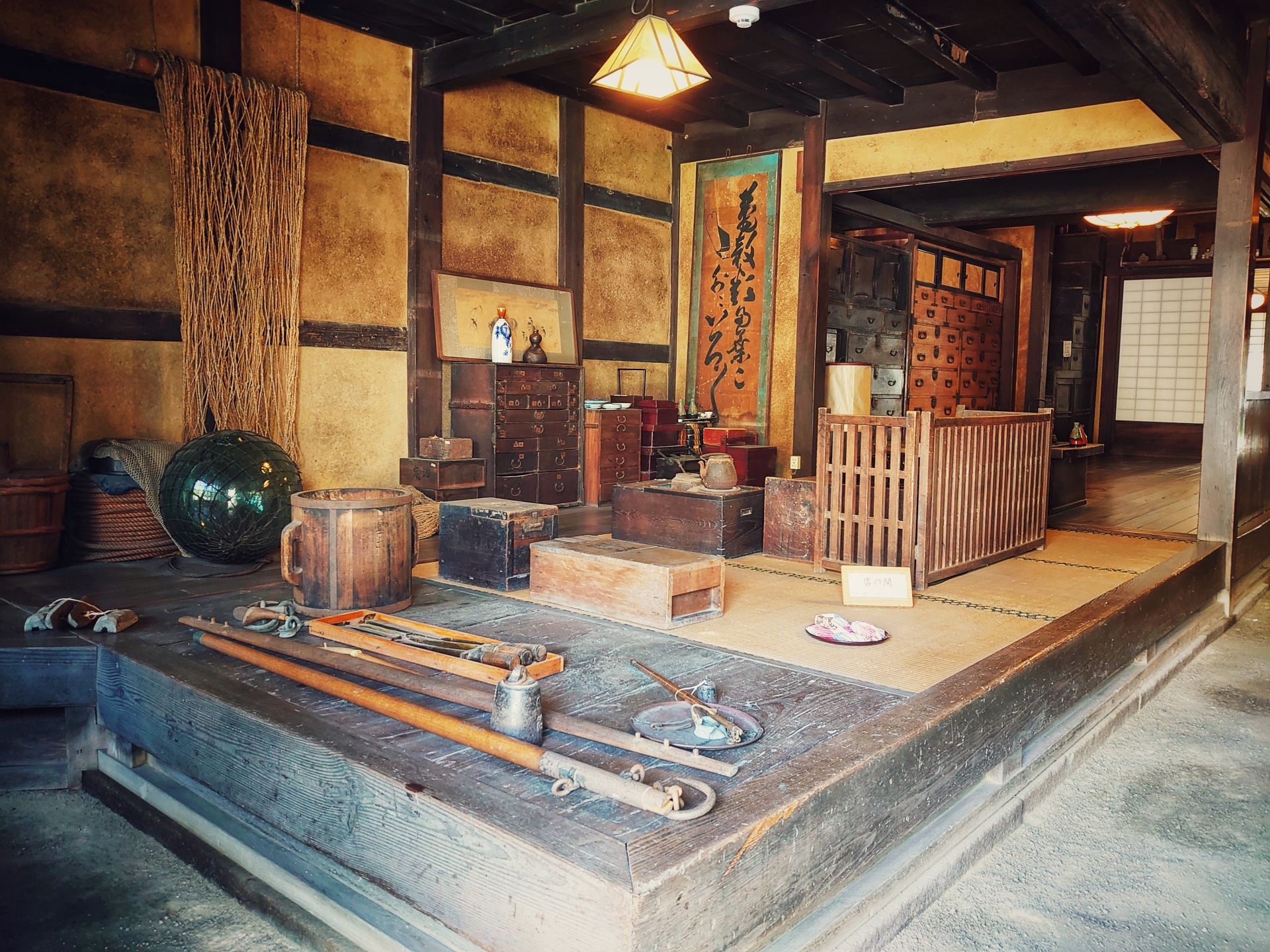
Holiday names in Japan have historically reflected political and ideological contexts. During the prewar era, Tenchōsetsu was one of several emperor-centered observances within the civic calendar.
Another example was Meiji-setsu, commemorating Emperor Meiji and symbolizing modernization and imperial sovereignty. Together, these holidays structured a calendar emphasizing imperial continuity and national unity.
| Name | Approx. Era | Emphasis |
| Tenchōsetsu | Pre-1948 | Imperial longevity & loyalty |
| Meiji-setsu | Prewar | Commemoration of Meiji rule |
| Tennō Tanjōbi | Post-1948 | Constitutional national holiday |
The terminology change after World War II was not cosmetic; it reflected a broader political transformation. The emperor’s role, once sovereign ruler, would be redefined under a new constitutional order. The holiday’s name and meaning shifted accordingly.
Postwar Reorientation: From Sacred Sovereign to Constitutional Symbol
After Japan’s defeat in World War II, sweeping constitutional reforms redefined the emperor’s position. The 1947 Constitution described the emperor as “the symbol of the State and of the unity of the people.”
This redefinition marked a fundamental shift. The emperor was no longer a sovereign ruler but a symbolic figure without governing authority.
Consequently, the Emperor’s Birthday was transformed from an ideological state ceremony into a civic commemoration within a democratic framework. The emphasis moved away from loyalty to imperial sovereignty and toward recognition of the emperor’s symbolic role.
The holiday continued, but its meaning adapted to the postwar order. Rather than reinforcing state ideology, it became one of Japan’s officially designated public holidays under secular law.
The 1948 Act on National Holidays: The Legal Framework Behind the Date
The Emperor’s Birthday was formally codified under the 1948 Act on National Holidays. This law established Japan’s modern public holiday system and specified that the Emperor’s Birthday would be observed on the reigning emperor’s birth date.
In practical terms, when a new emperor ascends the throne and his birthday differs from that of his predecessor, the official holiday date is revised accordingly in the legally designated list of national holidays. The observance is therefore directly tied to the reigning monarch, and any change in succession results in a corresponding adjustment of the calendar.
A notable anomaly occurred in 2019. Following Emperor Akihito’s abdication in April and before Emperor Naruhito’s first birthday as emperor in February 2020, Japan temporarily had no Emperor’s Birthday holiday that year. This gap illustrates how closely the holiday’s existence depends on the reigning monarch’s status under law.
Historical Timeline: Meiji → Taishō → Shōwa → Heisei → Reiwa
The Emperor’s Birthday has shifted dates according to each emperor’s birth date. Below is a concise historical overview:
| Reign (Years) | Birthday Used as Holiday | After Reign | Key Historical Note |
| Meiji (1867–1912) | Nov 3 | Became Culture Day | Nationalized imperial observance |
| Taishō (1912–1926) | Aug 31 | Discontinued | Short reign |
| Shōwa (1926–1989) | Apr 29 | Renamed Greenery Day / Showa Day | Longest 20th-century reign |
| Heisei (1989–2019) | Dec 23 | Discontinued after abdication | First abdication in modern era |
| Reiwa (2019– ) | Feb 23 | Current date | Modern constitutional framework |
The brief absence of the holiday in 2019 highlights the unique situation created by abdication and succession timing.
This timeline demonstrates that while the observance persists, its calendar placement reflects the historical continuity of individual reigns.
Changing Meanings: From Loyalty Ritual to Civic Commemoration
Across Japanese history, the Emperor’s Birthday has maintained symbolic continuity while undergoing profound reinterpretation.
Phase 1: Court-Centered Longevity Ritual
Originally a ceremonial affirmation of imperial longevity and cosmic order, participation was limited to court elites.
Phase 2: Nation-State Ceremony (Meiji–Prewar)
The observance became a public civic event supporting national identity and imperial sovereignty. It functioned as part of state ideology.
Phase 3: Constitutional Civic Holiday (Post-1948)
Redefined within democratic law, the holiday commemorates the emperor as a symbolic figure rather than a ruling sovereign.
Despite these shifts, one element remains consistent: the birthday marks continuity of the imperial institution. Its meaning adapts to political structures while retaining historical resonance.
Conclusion: Continuity Through Transformation
The history of the Emperor’s Birthday reveals three major transformations:
- Ritual origins in ancient court society.
- Nationalization during the Meiji state-building era.
- Constitutional redefinition after 1945 under democratic law.
Rather than representing an unchanging tradition, the Emperor’s Birthday demonstrates how institutions endure by adapting. As the role of the emperor evolved—from sacred sovereign to constitutional symbol—so too did the holiday’s meaning.
Its historical significance lies not in fixed ceremonial practice, but in its capacity to reflect Japan’s broader political and cultural transformations.
For readers interested in how the holiday is observed today, including modern ceremonies and public participation, please see Japambience’s dedicated guide to the contemporary Emperor’s Birthday celebration.
FAQ (History-Focused)
Q1. When did the Emperor’s Birthday become a national holiday?
It became a national observance in 1868 during the Meiji era. However, its current legal basis comes from the 1948 Act on National Holidays.
Q2. What was Tenchōsetsu and why was the name changed?
Tenchōsetsu referred to the emperor’s birthday celebration in prewar Japan. After World War II, the name shifted to Tennō Tanjōbi to reflect the emperor’s new constitutional role.
Q3. Why was there no Emperor’s Birthday in 2019?
Emperor Akihito abdicated in April 2019, and Emperor Naruhito’s first birthday as reigning emperor occurred in February 2020. As a result, no date qualified during the 2019 calendar year.
Q4. Were other imperial birthdays historically observed?
Yes. Each reigning emperor’s birthday was observed during his reign, though the form and meaning of the observance changed over time.
Q5. Where can I learn about modern ceremonies?
For practical details about attending celebrations or understanding present-day customs, please refer to Japambience’s dedicated article on the modern Emperor’s Birthday observance.