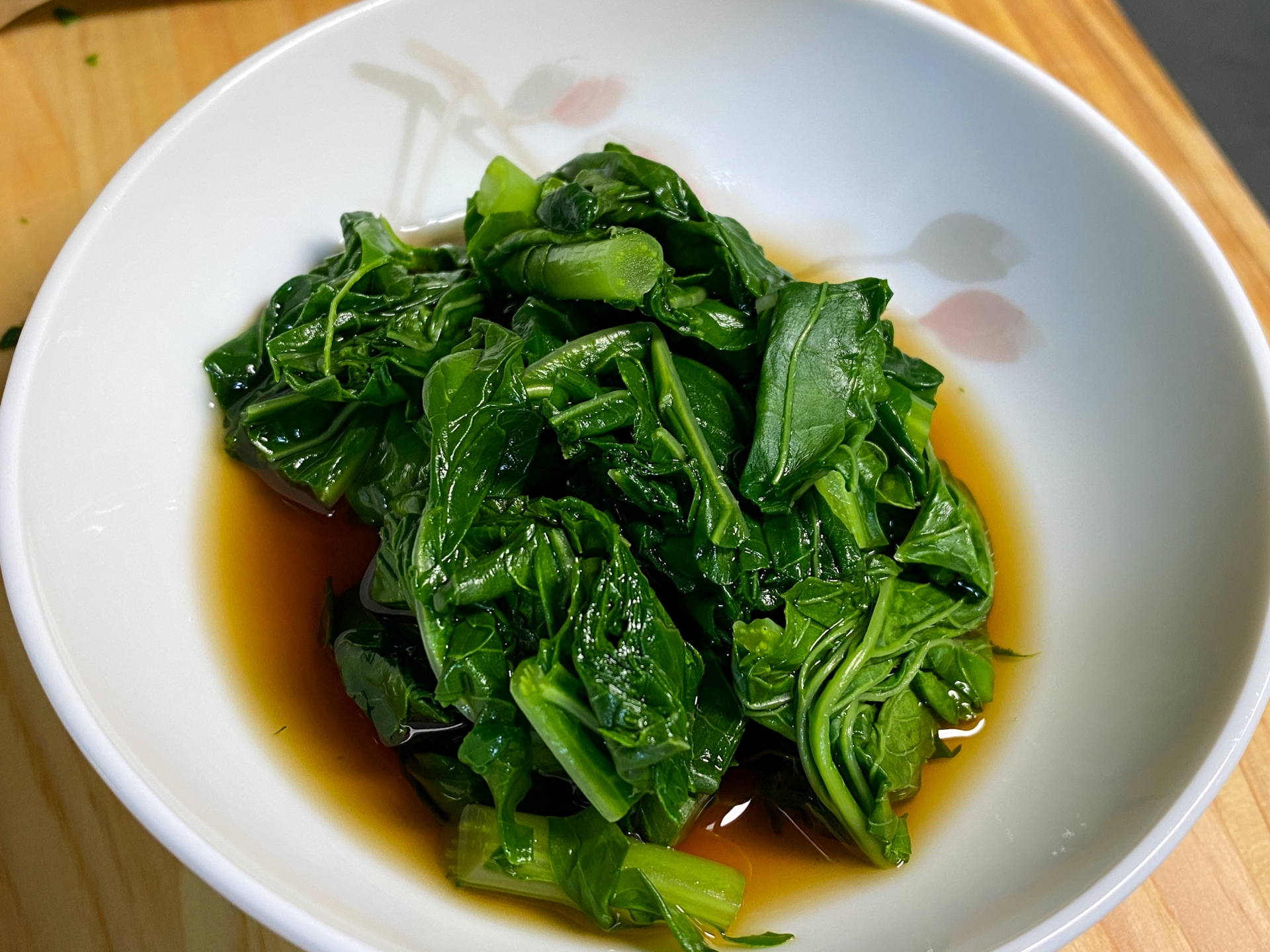
Ohitashi (お浸し) is both a Japanese cooking method and a dish name: vegetables are briefly blanched, cooled, then soaked in a seasoned broth—typically dashi and soy sauce (sometimes mirin)—so they absorb clean umami flavor while staying bright and tender. It’s a staple small side dish in Japanese home cooking and restaurants, and it’s especially popular for leafy greens like spinach.


What Is Ohitashi?
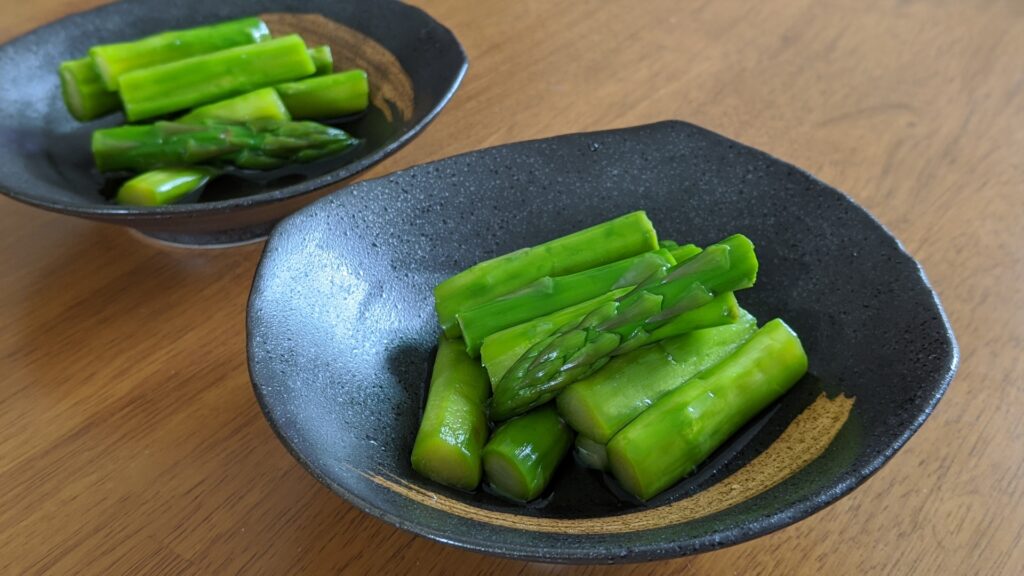
At its simplest, ohitashi is a three-step technique: blanch → cool → soak in seasoned dashi. Vegetables are quickly cooked in boiling water, shocked in cold water to stop the cooking, then immersed in a light, savory broth. Instead of coating the vegetables in sauce, the broth gently seeps in, seasoning them from within.
Importantly, ohitashi is both a technique and the name of the finished dish. Much like “teriyaki,” it can describe a cooking method as well as a prepared plate. When you see “spinach ohitashi” on a menu, it refers to vegetables prepared using this soaking method.
How It Differs from Similar Japanese Dishes
- Aemono: Vegetables are dressed or mixed with a sauce (such as sesame dressing), rather than soaked.
- Nimono: Ingredients are simmered in broth until cooked and infused.
- Sunomono: Vinegared dishes with a refreshing, acidic flavor.
Ohitashi stands apart because the vegetables are not simmered in the broth nor tossed in a thick dressing—they are gently soaked after blanching.
Pronunciation & Japanese Writing
お浸し (ohitashi) — pronounced: oh-hee-tah-shee
What Does “Ohitashi” Mean?
The word “ohitashi” comes from a Japanese verb meaning “to soak” or “to immerse.” That meaning reflects the heart of the technique: vegetables are immersed in seasoned broth so they can absorb flavor naturally.
Rather than heavily seasoning the outside, soaking allows for subtle flavor penetration. The result is balanced and clean—never overpowering.
| Term | Meaning | What You Do |
| Ohitashi | To soak | Soak blanched vegetables in seasoned broth |
This soaking step is what distinguishes ohitashi from simply boiling greens and drizzling soy sauce on top. Time in the broth creates depth without heaviness.
What Does Ohitashi Taste Like?
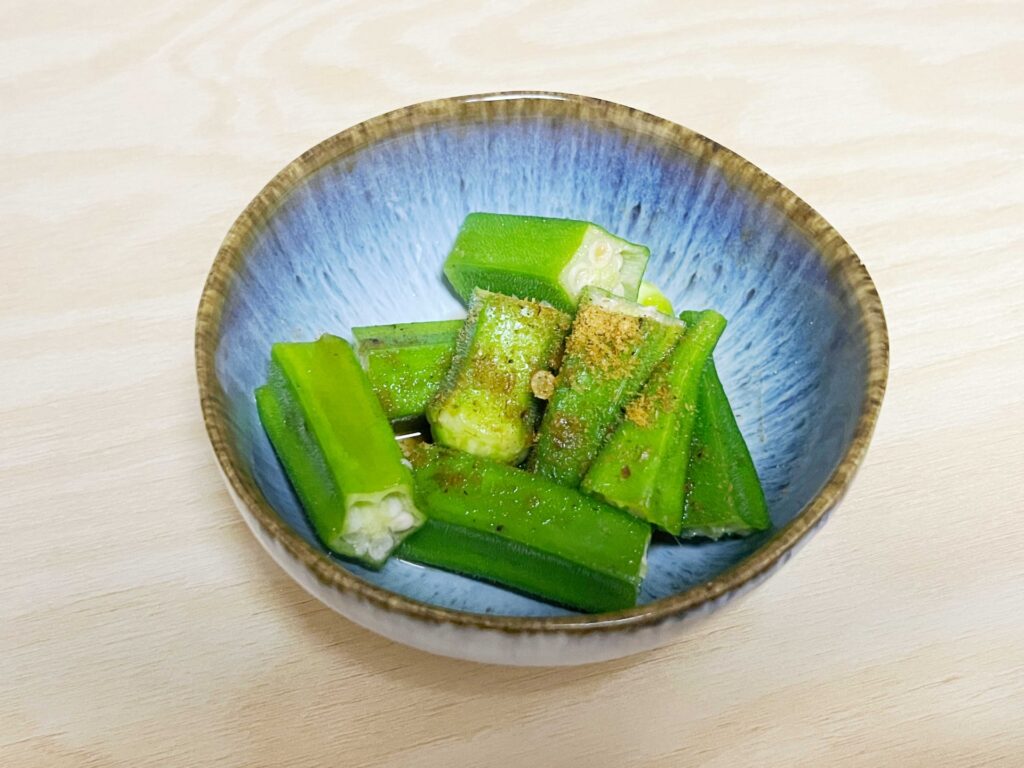
For American palates, ohitashi tastes light, savory, and clean. It’s driven by umami from dashi and soy sauce, but it’s not sweet like teriyaki sauce and not tangy like pickled vegetables. The flavor is subtle, allowing the natural taste of the vegetable to remain front and center.
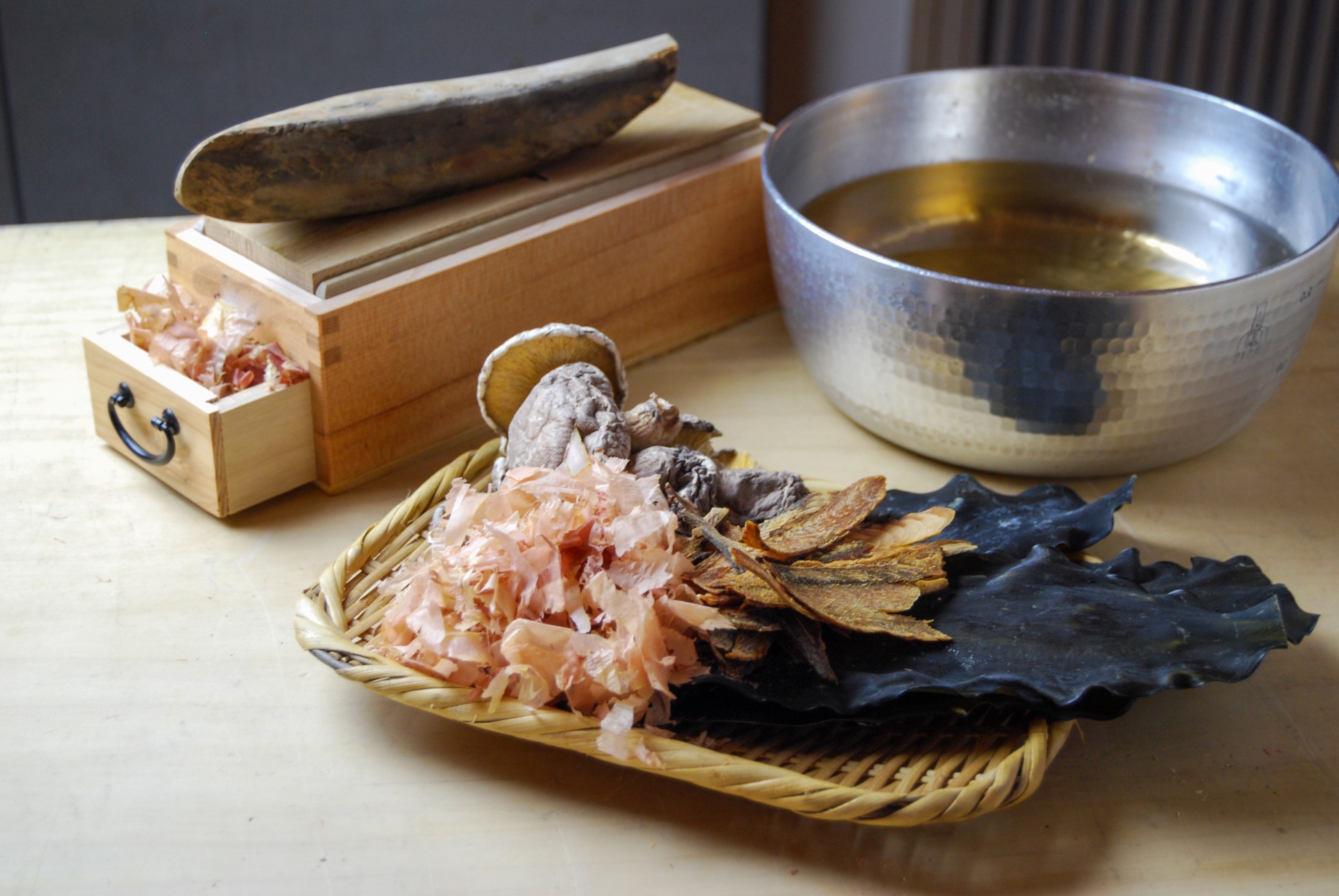
Traditional versions use katsuobushi (bonito flakes), which add smokiness and extra umami. A sprinkle of toasted sesame seeds adds aroma and texture. The broth itself is usually made from dashi—often based on kombu (kelp) and bonito flakes.
For vegetarian or vegan versions, kombu-only or shiitake mushroom broth provides similar savory depth without fish.
Ohitashi is typically served chilled or at room temperature, making it refreshing and ideal as a make-ahead side dish.
Classic Example: Spinach Ohitashi (Hourensou no Ohitashi)
The most iconic version is spinach ohitashi, known in Japanese as hourensou no ohitashi. It’s simple, quick, and perfect for beginners.
Prep time: About 10 minutes (plus soaking time)
Ingredients
- Fresh spinach
- 1 cup dashi
- 2 teaspoons soy sauce
- 1 teaspoon mirin (optional)
- Bonito flakes (optional topping)
Steps
- Bring water to a boil and blanch spinach briefly (30–45 seconds).
- Transfer immediately to an ice bath to stop cooking.
- Squeeze out excess water thoroughly.
- Cut into neat 2-inch bundles.
- Soak in seasoned broth for at least 20–30 minutes.
- Plate and garnish with bonito flakes or sesame seeds.
Visual Flow:
Blanch → Shock → Squeeze → Soak → Plate
Proper squeezing is crucial—too much retained water will dilute the broth and make the dish watery.
Ohitashi Broth Ratio (Quick Guide)
| Style | Dashi | Soy Sauce | Mirin | Best For |
| Light | 1 cup | 1 tsp | None | Delicate greens |
| Standard | 1 cup | 2 tsp | 1 tsp | Spinach |
| Stronger | 1 cup | 1 tbsp | 1 tsp | Bitter greens |
If using light (usukuchi) soy sauce, reduce the quantity slightly as it can be saltier than regular soy sauce despite its lighter color. Adjust sweetness depending on preference.
Common Mistakes (And Fixes)
- Watery texture → Not squeezed thoroughly enough after blanching.
- Dull green color → Overcooked or not shocked in ice water.
- Too salty → Too much soy sauce or too little dashi.
- Bland flavor → Weak broth or insufficient soaking time.
Prep tip: If using mature spinach, wash carefully to remove grit near the stems before blanching.
Best Vegetables for Ohitashi (Beyond Spinach)
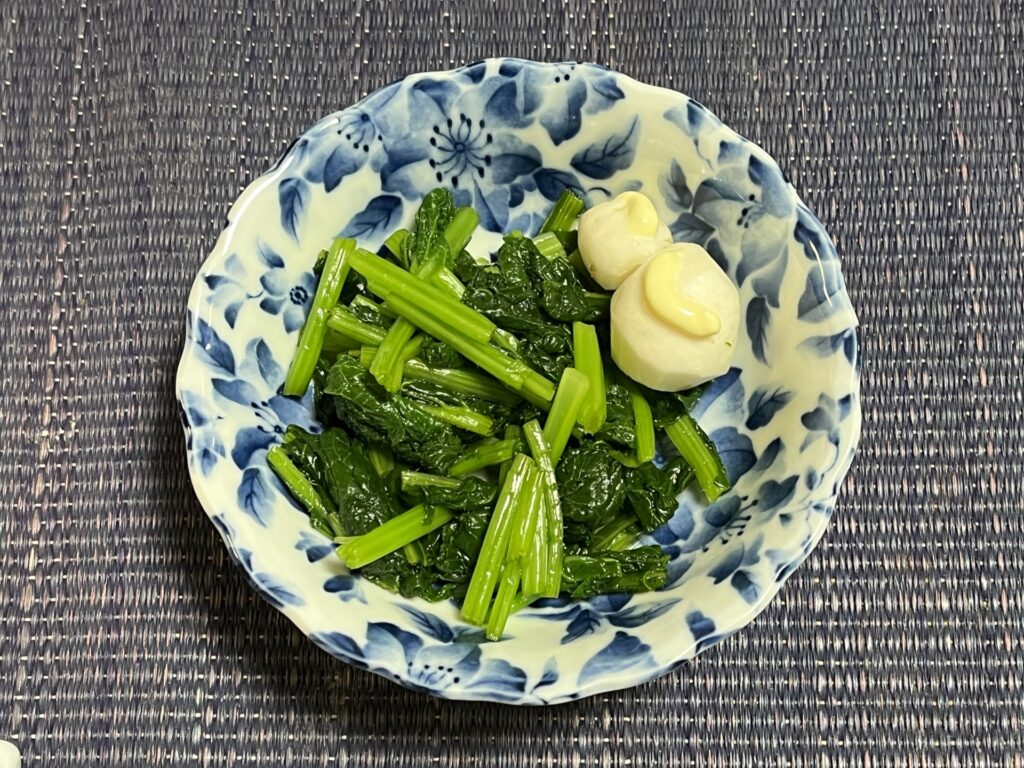
Ohitashi works best with leafy or quick-cooking vegetables that absorb broth easily.
| Vegetable | Prep Notes | Blanch Time | Texture Goal |
| Okra | Trim stem, keep whole | 1–2 min | Tender-crisp |
| Mizuna | Quick blanch | 30 sec | Soft but bright |
| Rapini | Trim stems | 1–2 min | Slightly bitter |
| Green Beans | Trim ends | 2–3 min | Crisp-tender |
| Turnip Greens | Chop stems small | 1–2 min | Tender leaves |
Leafy greens and slender vegetables work best because they soak evenly and maintain a pleasant bite.
Vegan & Allergy-Friendly Ohitashi
Traditional dashi often contains bonito flakes (fish), but vegan alternatives are easy.
Vegan dashi options:
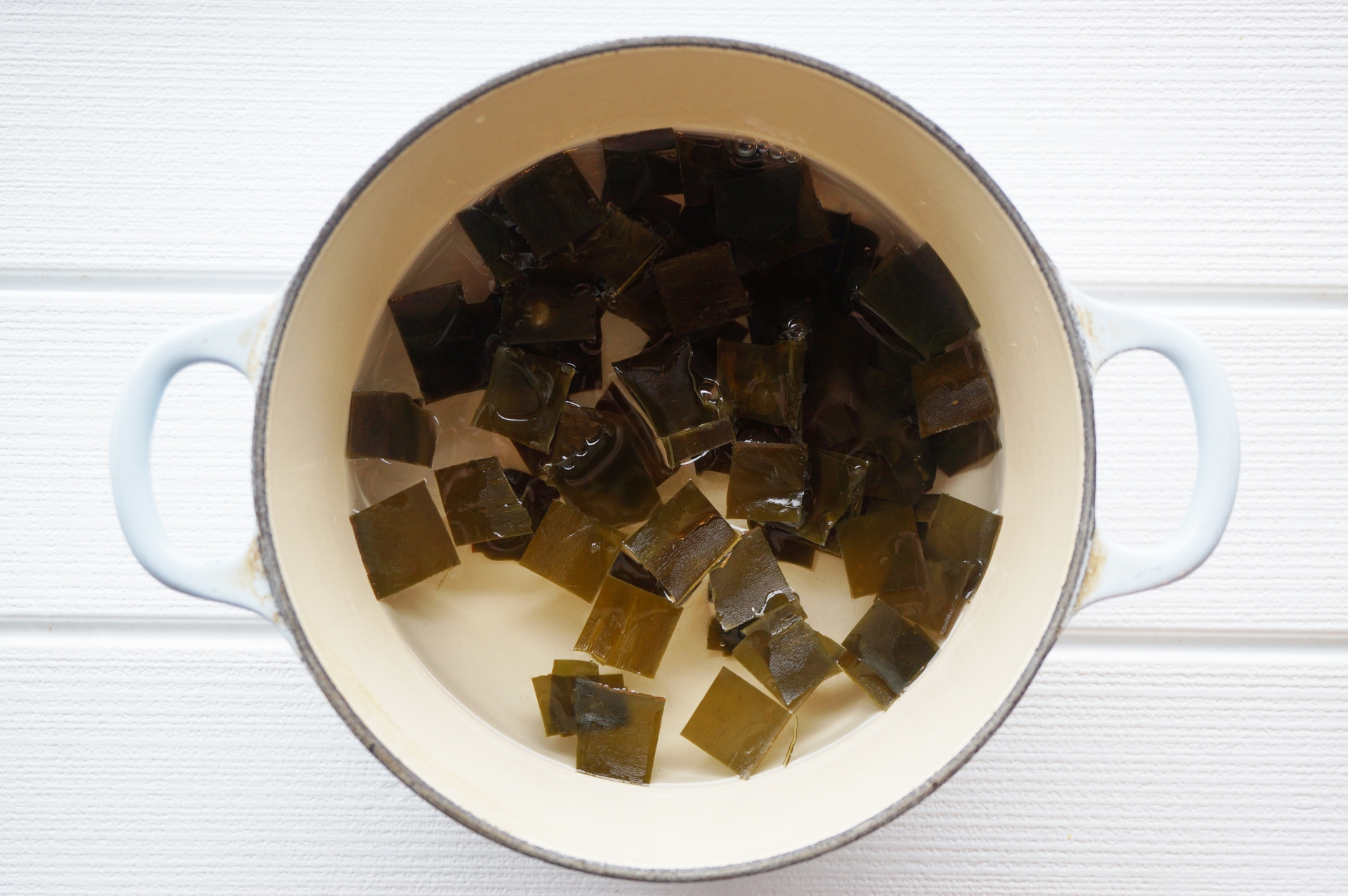
- Kombu (kelp) broth
- Shiitake mushroom broth
- Kombu + dried shiitake combination
Substitutions:
- Bonito dashi → Kombu or shiitake dashi
- Soy sauce → Tamari (gluten-free option)
Allergen Note:
Traditional dashi contains fish (bonito). Regular soy sauce may contain wheat. Always check labels if avoiding fish, soy, or gluten.
These substitutions maintain the essence of ohitashi while making it suitable for plant-based or allergy-conscious diets.
How to Serve Ohitashi Like a Japanese Meal
In Japan, ohitashi is served as a kobachi—a small side dish that balances the meal. It’s not meant to overpower the main course but to complement it.
Serving Ideas
- As a small chilled side dish (kobachi).
- In a bento (drain thoroughly).
- With steamed rice, grilled fish or tofu, and miso soup.
Plating Tips
- Cut into uniform 2-inch lengths.
- Align neatly into bundles.
- Spoon a little broth over.
- Top with bonito flakes or sesame seeds.
Presentation matters: simple, tidy plating enhances the sense of calm balance central to Japanese home cooking.
FAQ
Is ohitashi served cold or hot?
Usually chilled or at room temperature. It can be slightly warm when freshly made, though it’s most commonly served cool.
How long should you soak?
At least 20–30 minutes for flavor absorption. Overnight soaking deepens flavor and makes it ideal for meal prep.
Can you use frozen spinach?
Yes, but thaw completely and squeeze very well to prevent excess water.
What’s the difference between ohitashi and goma-ae?
Ohitashi soaks vegetables in broth. Goma-ae dresses vegetables in a sesame-based sauce.
Conclusion: Why Ohitashi Is Worth Adding to Your Cooking Repertoire
Ohitashi is both a technique and a dish built on a simple but elegant principle: blanch vegetables, then let them soak in a light, umami-rich broth. The result is clean, subtle, and deeply satisfying.
It works with many vegetables, is easy to make vegan or gluten-free, and is perfect for meal prep and balanced meals. With minimal ingredients and short prep time, it delivers maximum flavor without heaviness.
Ohitashi reflects a core principle of Japanese home cooking—enhancing natural flavors rather than overpowering them.
Try the spinach version first, then experiment with seasonal greens. Once you understand the technique, you’ll see that ohitashi is less a single recipe and more a versatile approach to vegetables that you can return to again and again.