Every spring in Japan, colorful carp-shaped streamers known as koinobori flutter in the wind. These vibrant decorations are displayed to celebrate Children’s Day on May 5, symbolizing parents’ hopes that their children will grow strong, brave, and successful.
But why are carp used as symbols? What do the different colors represent? And what ancient legend inspired this tradition?
In this guide, we explore the symbolism of koinobori, from the Chinese Dragon Gate legend to the meaning behind each carp in the family. Along the way, you’ll discover how this beautiful tradition reflects deeper values in Japanese culture—perseverance, courage, and hope for the future.



What Are Koinobori?
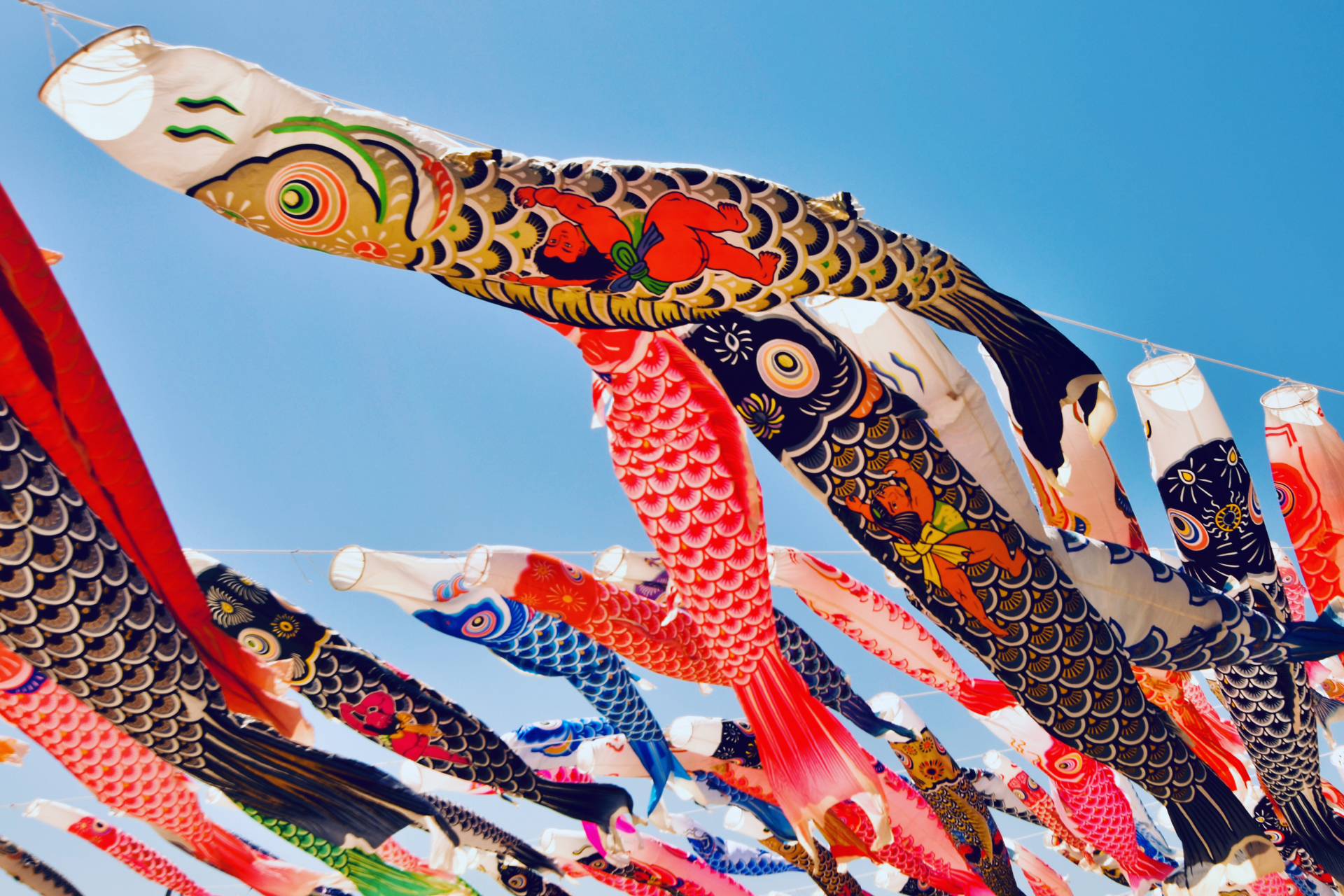
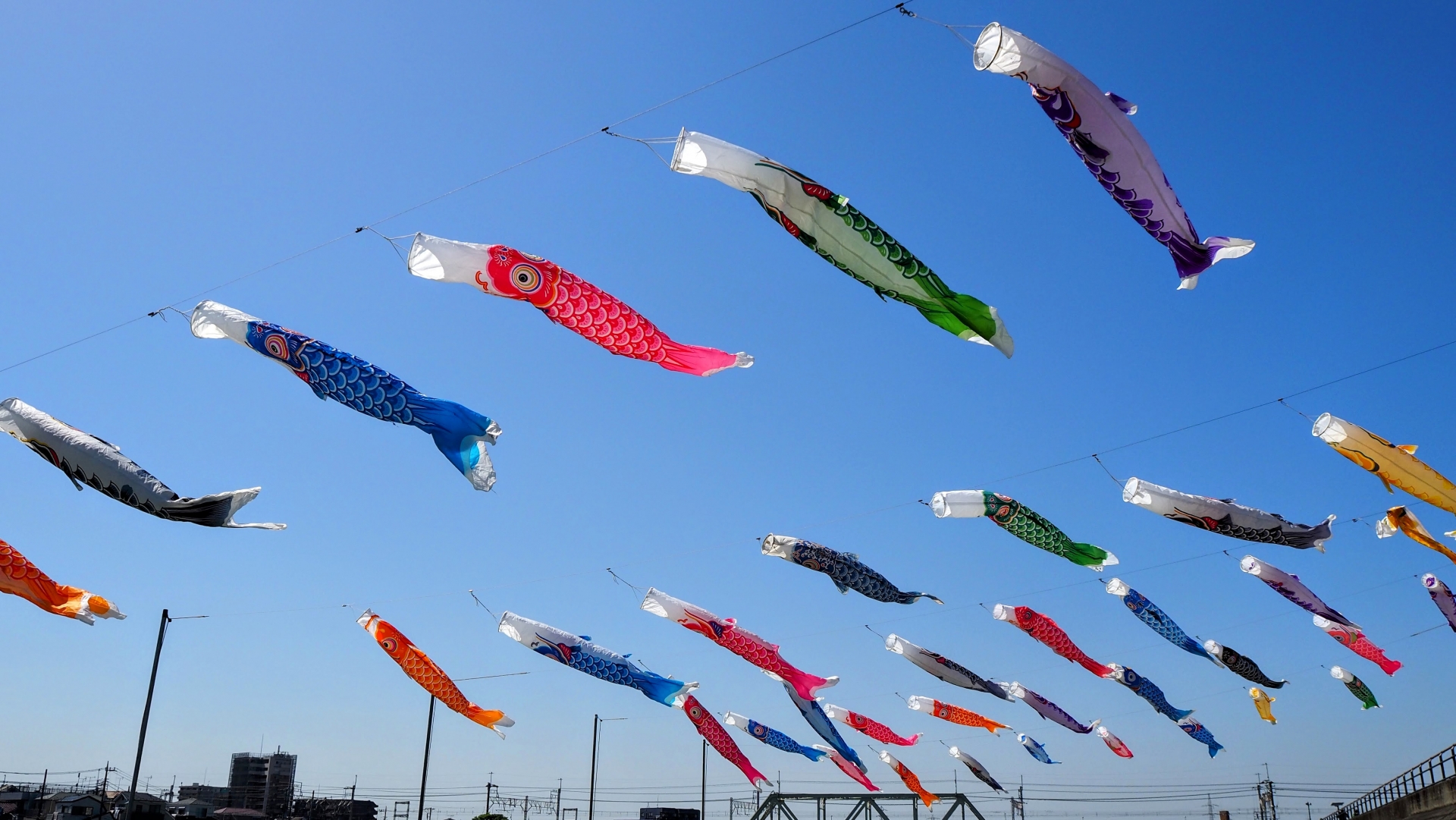
Koinobori are carp-shaped windsocks traditionally flown in Japan to celebrate Children’s Day, which takes place annually on May 5. These colorful streamers are typically displayed from late April until the holiday, creating vibrant scenes across neighborhoods, riversides, and public parks.
The word koinobori literally means “carp streamer.” Each streamer is designed like a tube-shaped windsock that fills with air and appears to swim through the sky when the wind blows. This motion gives the impression of fish swimming upstream in a river, an image closely tied to the deeper symbolism of strength and perseverance.
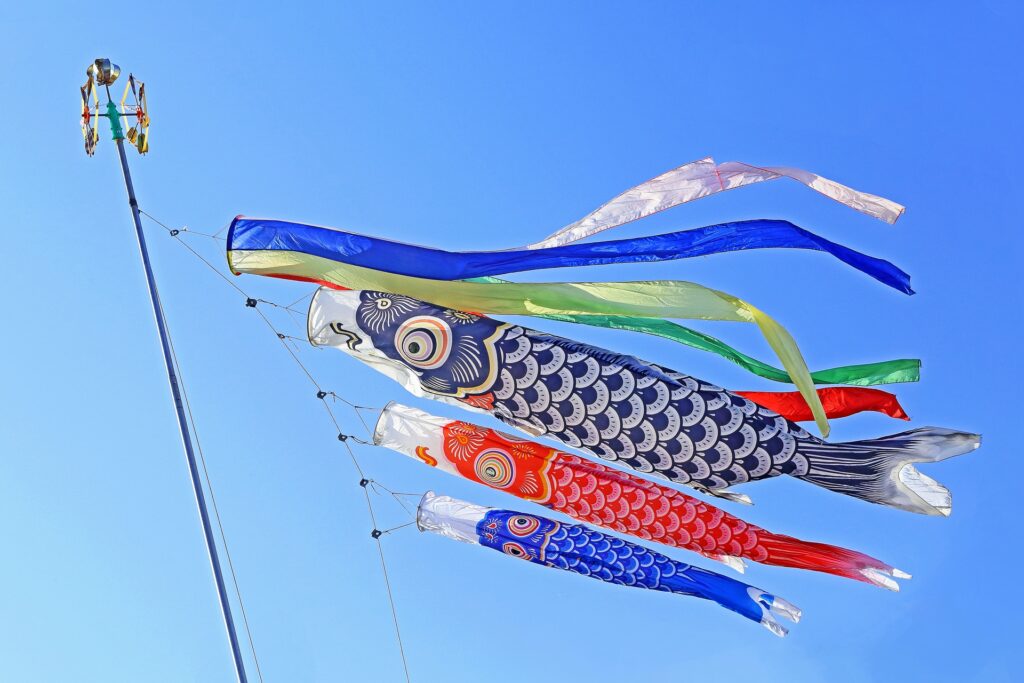
Families traditionally display koinobori on a tall pole outside their homes. When fully arranged, the decorations create a vertical display that represents both nature and the structure of the family.
A typical koinobori pole includes several important components.
Yaguruma (Wind Spinner)
At the very top of the pole sits the yaguruma, a spinning wheel with small blades that rotate in the wind. Traditionally, the yaguruma was believed to act as a sign to invite the gods from heaven, guiding them to the household.
It is also associated with protection against evil spirits, serving as a symbolic charm to ward off misfortune and ensure the well-being of the children in the home.
Fukinagashi (Five-Color Streamer)
Just below the spinner hangs the fukinagashi, a long streamer made of five colored stripes. This streamer is also believed to have a protective meaning, functioning as a charm to ward off evil.
The five colors are traditionally connected to seasonal symbolism and natural elements. They are often interpreted as representing:
- Blue – Spring
- Red – Summer
- White – Autumn
- Black – Winter
- Yellow – The seasonal transition period (Doyo)
Together, these colors reflect the harmony of nature and the changing seasons, reinforcing the wish that children will grow safely under the balance of nature.
Carp Streamers (Koi Windsocks)
Below the fukinagashi hang the carp-shaped streamers themselves. Each carp represents a member of the household. As the wind fills them, they appear to swim in the sky, creating a striking visual symbol of life, movement, and family unity.
When seen together, the entire display resembles a school of fish swimming upward toward the sky—an image that perfectly captures the hopes parents have for their children’s growth and success.
The Symbolism of Koinobori
The symbolism of koinobori centers on strength, perseverance, courage, and success in life. These meanings come from both natural observations of carp and centuries of cultural storytelling.
Carp are known for their remarkable ability to swim upstream against strong currents. Unlike many fish, they can travel long distances and push through powerful flows of water. Because of this, the carp became a symbol of determination and resilience in East Asian culture.
In Japan, this trait carries a powerful metaphor for human life. Just as a carp pushes upstream despite obstacles, children are encouraged to grow strong, overcome difficulties, and achieve their goals.
Parents display koinobori as a way of expressing these hopes. The flying carp represent the wish that children will:
- Develop courage and inner strength
- Persevere through challenges
- Grow into successful and independent adults
- Live healthy and prosperous lives
The upward movement of the carp in the wind also symbolizes progress and ambition. Rather than drifting passively with the current, the carp fights forward—an inspiring image of determination.
This symbolism connects closely with traditional Japanese values that emphasize discipline, resilience, and self-improvement. In this way, koinobori are more than decorative streamers; they are visual expressions of parental love and encouragement.
The Dragon Gate Legend Behind the Carp Symbol
One of the most important origins of carp symbolism comes from an ancient Chinese legend known as the Dragon Gate myth.
According to the story, many carp swim upstream along the Yellow River each year. Along their journey they encounter a powerful waterfall called the Dragon Gate. The current is so strong that most fish cannot reach the top.
However, a few determined carp manage to leap over the waterfall. In reward for their extraordinary perseverance, these carp are transformed into mighty dragons.
This legend became a powerful metaphor for success achieved through determination. In traditional East Asian thought, it symbolized individuals who overcome great difficulties to achieve greatness.
Myth Summary
- Carp swim upstream along a powerful river
- They reach the waterfall known as the Dragon Gate
- Most fish fail to pass the obstacle
- A few strong carp leap over the falls
- Those carp transform into dragons
The story resonated deeply in Japan, where the carp came to represent ambition, perseverance, and transformation. By displaying koinobori, families symbolically encourage children to pursue their dreams and overcome life’s obstacles—just like the carp that becomes a dragon.
Meaning of Each Koinobori Color
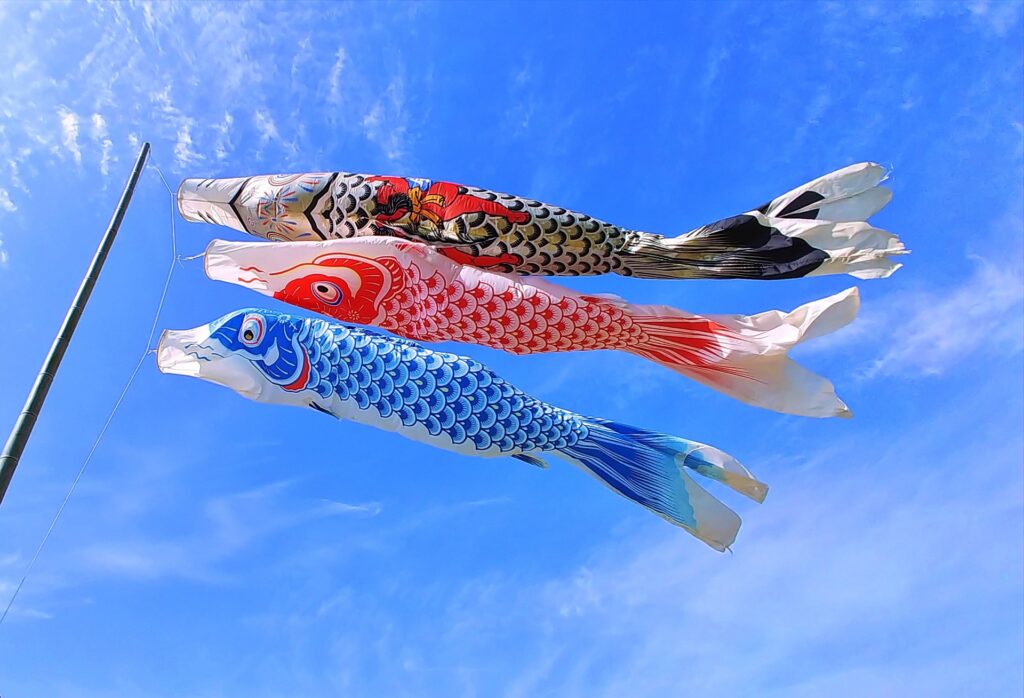
In traditional koinobori displays, each carp represents a specific member of the family. The colors and sizes typically follow a hierarchy, with the largest fish representing the father and smaller ones representing the children.
| Color | Japanese Name | Represents |
| Black | Magoi | Father |
| Red / Pink | Higoi | Mother |
| Blue | Koi | First child |
| Green / Orange / Purple | — | Additional children |
The black carp (magoi) is traditionally placed at the top of the carp group. As the largest fish, it symbolizes the father and the strength of the household.
Below it flies the red or pink carp (higoi) representing the mother. Historically, earlier versions of koinobori sometimes displayed only a black carp and one child carp, but modern traditions expanded to include the mother as well.
The blue carp typically represents the eldest child. Additional children are represented by other colors such as green, orange, or purple.
In modern Japan, families often display multiple colors for all children regardless of gender. This reflects the evolution of the holiday itself—from a celebration originally focused on boys to a broader celebration of all children’s happiness and growth.
Why the Carp Is a Powerful Symbol in Japanese Culture
The symbolic power of the carp extends far beyond the tradition of koinobori. In Japanese culture, koi fish are widely associated with perseverance, prosperity, and strength in adversity.
One reason for this symbolism comes from the natural behavior of carp. These fish are known for their ability to survive difficult environments and swim long distances upstream. This resilience made them an ideal metaphor for determination and success.
Because of these traits, carp imagery appears frequently in Japanese art, folklore, and symbolism.
Traditional paintings and woodblock prints often depict koi swimming through water currents or leaping over waterfalls. These scenes represent ambition and the pursuit of achievement.
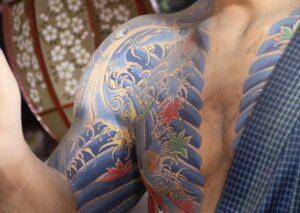
Koi symbolism is also widely seen in Japanese tattoo culture. A koi swimming upstream represents someone striving to overcome challenges, while a koi that has reached the top symbolizes accomplishment and transformation.
The imagery also resonated strongly with samurai values. Samurai admired the carp for its courage and resilience. According to folklore, a carp facing capture remains calm and dignified, much like the ideal warrior confronting fate.
Because of these cultural associations, the carp became an enduring symbol of strength, bravery, and perseverance. Koinobori continue this tradition by applying those qualities to the hopes parents have for their children’s future.
Koinobori and Children’s Day in Japan
Koinobori are most closely associated with Children’s Day, a national holiday in Japan celebrated on May 5.
Historically, this day was known as Tango no Sekku, or Boys’ Day. The holiday originally focused on celebrating the health and success of boys, particularly in samurai families.
During this time, families displayed symbols of strength and protection, including:
- Kabuto (samurai helmets)
- Gogatsu dolls depicting warriors
- Koinobori carp streamers
In 1948, Japan officially renamed the holiday Children’s Day (Kodomo no Hi) and expanded its meaning to celebrate the happiness and well-being of all children, regardless of gender.
Alongside flying koinobori, several other traditions are observed.
Families may prepare kashiwa mochi, a sweet rice cake filled with red bean paste and wrapped in an oak leaf. The oak leaf symbolizes family continuity because old leaves do not fall until new ones grow.
Another custom is shobu-yu, a bath infused with iris leaves. The sharp leaves resemble swords and are believed to bring strength and protection.
Together, these traditions celebrate children’s growth, health, and future success.
Modern Koinobori Traditions
While the symbolism of koinobori remains rooted in tradition, the way they are displayed has evolved with modern life.
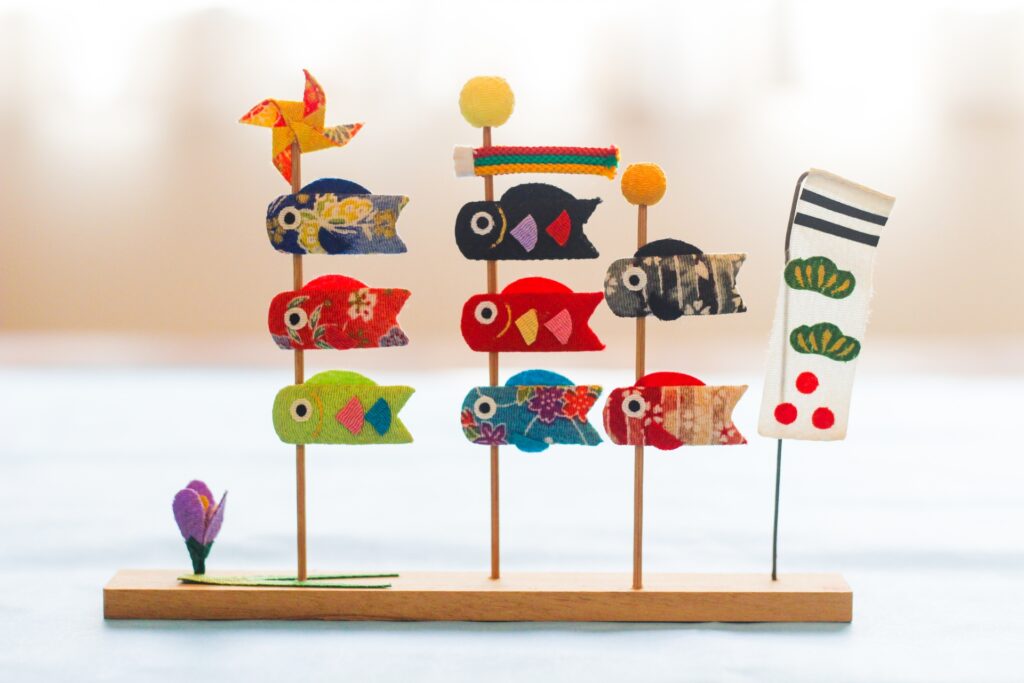
In the past, large koinobori poles were commonly installed in spacious yards. However, many families today live in urban apartments where outdoor space is limited. As a result, smaller or indoor koinobori decorations have become increasingly popular.
Miniature streamers can be hung from balconies, windows, or even inside homes. These compact designs allow families to continue the tradition even in densely populated cities.
Public displays have also become an important part of modern celebrations. Across Japan, communities organize festivals where hundreds or even thousands of koinobori are displayed together.
Rivers, parks, and tourist areas are often filled with colorful carp streamers floating above the water or suspended across the sky. These large-scale displays attract visitors and photographers each spring.
Despite these modern adaptations, the underlying meaning of the tradition remains the same: celebrating children and expressing hope for their strength and success in life.
Frequently Asked Questions About Koinobori Symbolism
What does koinobori symbolize?
Koinobori symbolize strength, perseverance, and success. Families display them to express their hopes that children will grow up healthy, courageous, and capable of overcoming life’s challenges.
Why are carp used for Children’s Day in Japan?
Carp are known for their ability to swim upstream against strong currents. This resilience made them a powerful symbol of determination and ambition, qualities parents wish for their children.
What do the colors of koinobori mean?
Each carp color traditionally represents a family member. The black carp symbolizes the father, the red or pink carp represents the mother, and blue or other colors represent the children.
When are koinobori displayed?
Koinobori are usually displayed from late April until May 5, which is Children’s Day in Japan.
Are koinobori only for boys?
Historically the tradition celebrated boys during Boys’ Day. However, since 1948 the holiday has been officially known as Children’s Day and celebrates the happiness and growth of all children.
Conclusion: The Meaning of Koinobori in Japanese Culture
Koinobori are more than colorful decorations—they are powerful cultural symbols representing strength, perseverance, and hope for the future.
Inspired by the ancient Dragon Gate legend, the carp represents the ability to overcome obstacles and achieve success through determination. Each carp in a koinobori display also reflects the structure of the family, symbolizing parents’ wishes for the growth and happiness of their children.
Today, these vibrant streamers continue to fill Japan’s skies each spring during Children’s Day celebrations. Whether displayed outside homes or across entire rivers at festivals, koinobori remind people of timeless values: resilience, courage, and the belief that every child has the potential to rise like the carp that becomes a dragon.