The Nihon Shoki (日本書紀), completed in 720 CE, is one of the earliest historical texts in Japan. Often translated as The Chronicles of Japan, it records the country’s mythological origins and early imperial history.
Compiled by Prince Toneri and court scholars under imperial order, the chronicle begins with the creation of the Japanese islands by the gods and continues through the reigns of early emperors until the late 7th century.
Because it combines mythology with political and historical narratives, the Nihon Shoki is both a key source for Shinto mythology and an important document for understanding ancient Japan.


What Is the Nihon Shoki?

The Nihon Shoki, meaning Chronicles of Japan, is one of the oldest official histories of the country. It was completed in 720 CE during the Nara period under the direction of Prince Toneri, the son of Emperor Tenmu.
The work was written in classical Chinese, the scholarly language widely used across East Asia. Using Chinese allowed Japan to present its history in a format similar to Chinese dynastic histories and demonstrate the sophistication of its political system.
The Nihon Shoki consists of 30 volumes covering events from the mythological creation of Japan to 697 CE, during the reign of Empress Jitō.
The title reflects its function: “Nihon” means Japan and “Shoki” means chronicle or historical record. The text served as an official state history explaining Japan’s origins, imperial lineage, and early political development.
Nihon Shoki Summary (Short Version)
The Nihon Shoki begins with the mythological creation of Japan. According to the text, the gods Izanagi and Izanami created the Japanese islands and many deities associated with natural forces.
After Izanami died, Izanagi performed a purification ritual that produced several important gods, including Amaterasu, the sun goddess and one of the central deities in Japanese mythology.
The narrative then traces the divine lineage from Amaterasu to Ninigi-no-Mikoto, who descended from heaven to rule the earth. His descendants eventually led to Emperor Jimmu, the legendary first emperor of Japan.
Jimmu is said to have traveled from Kyushu to the Yamato region, establishing the imperial line in 660 BCE, traditionally considered the founding year of Japan.
The chronicle then describes the reigns of later emperors, the rise of the Yamato state, political reforms, and diplomatic relations with China and Korea. The narrative ends around 697 CE, combining mythological origins with early historical records.
The Creation Myth in the Nihon Shoki
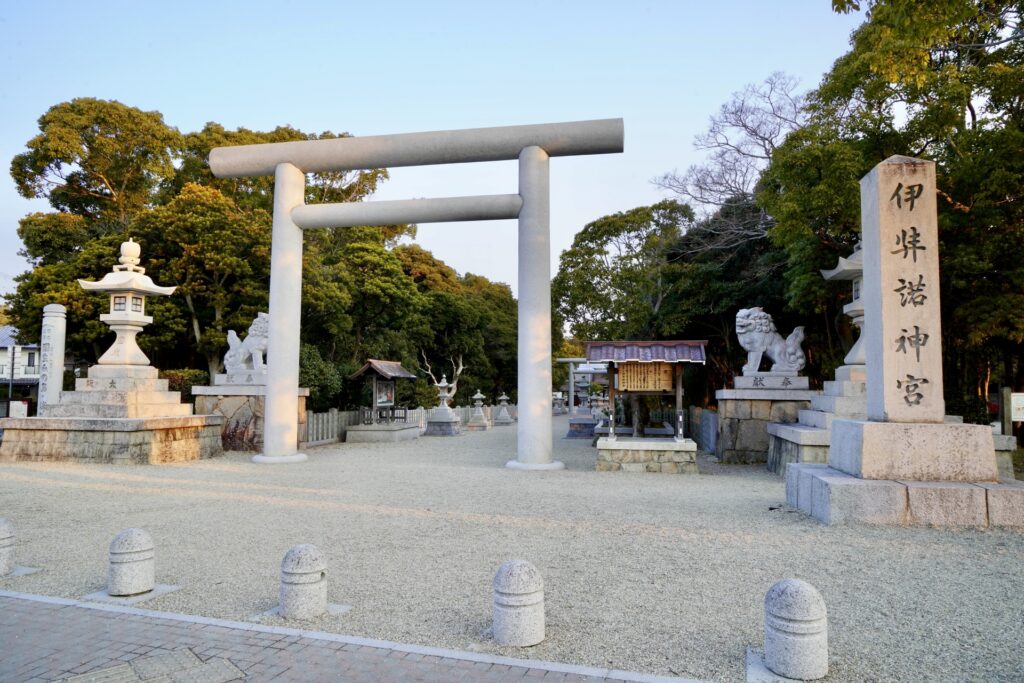
The Nihon Shoki begins with myths describing the origin of the world and the creation of Japan, forming a central part of Shinto cosmology.
The gods Izanagi and Izanami were assigned to create the land. Standing on the Floating Bridge of Heaven, they stirred the ocean with a jeweled spear. Drops falling from the spear formed the first island, from which the Japanese archipelago was created.
The pair then gave birth to many gods representing natural elements such as mountains, rivers, and wind. However, Izanami died after giving birth to the fire god, leading to one of the most dramatic episodes in the myth.
Izanagi traveled to the underworld to retrieve her but fled after discovering she had already become a being of that realm. After returning to the world of the living, he performed a purification ritual.
From this ritual emerged several important deities, including Amaterasu, the sun goddess. These myths establish the belief that Japan and its ruling line have divine origins.
Amaterasu and the Divine Origin of the Imperial Family
Amaterasu, the sun goddess, is the most important deity described in the Nihon Shoki and the mythical ancestor of the Japanese imperial family.
One well-known story describes how she hid inside a heavenly cave after a conflict with her brother Susanoo, plunging the world into darkness. The gods gathered outside the cave and performed a celebration, placing a mirror near the entrance to lure her out. When she emerged, light returned to the world.
Later, Amaterasu sent her grandson Ninigi-no-Mikoto from heaven to rule the earth, an event known as the descent of Ninigi.
Ninigi’s descendants eventually led to Emperor Jimmu, traditionally considered the first emperor of Japan. Through this lineage, the Nihon Shoki presents the imperial family as descendants of the sun goddess, reinforcing the divine legitimacy of the emperor.
Emperor Jimmu and the Founding of Japan
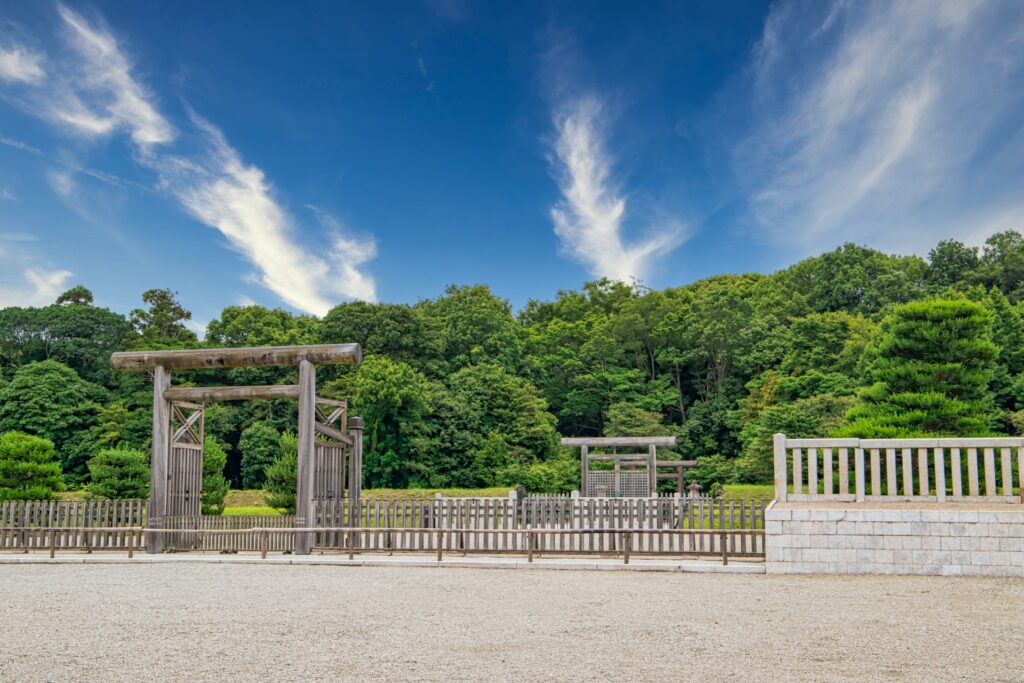
The Nihon Shoki describes Emperor Jimmu as the first ruler of Japan and a descendant of Amaterasu.
According to the chronicle, Jimmu began his journey in Kyushu and led an expedition eastward. After overcoming several battles, he reached the Yamato region, where he established his rule.
The text dates this event to 660 BCE, which later became the traditional founding year of Japan.
Modern historians generally regard the story of Jimmu as legendary rather than historically verified. However, the narrative reflects the importance of the Yamato region as the political center of early Japan.
The legend helped connect the imperial family to divine ancestry and provided a symbolic origin for the Japanese state.
Historical Records in the Nihon Shoki
While the early sections focus on mythology, the later volumes contain more substantial historical records.
These chapters describe the growth of the Yamato court, which gradually expanded its authority across the Japanese islands. The text also records diplomatic exchanges with China and the Korean Peninsula, including contacts with kingdoms such as Baekje and Silla.
Another major development described in the chronicle is the introduction of Buddhism in the 6th century, which had a profound influence on Japanese religion and politics.
The Nihon Shoki also records administrative reforms inspired by Chinese political models that strengthened centralized government.
The narrative concludes during the reign of Empress Jitō around 697 CE, and these later sections are generally considered more historically reliable.
Nihon Shoki vs Kojiki: Key Differences
The Nihon Shoki is often compared with the Kojiki, the other earliest chronicle of Japan.
The Kojiki was completed in 712 CE, slightly earlier than the Nihon Shoki, which was finished in 720 CE. Although both texts contain similar myths, their purposes differ.
The Kojiki focuses mainly on mythology and oral traditions about the gods and the early imperial family.
In contrast, the Nihon Shoki was written entirely in classical Chinese and structured like Chinese historical chronicles, suggesting it was intended as a formal state history.
As a result, the Nihon Shoki includes more political events, diplomatic relations, and chronological records, while the Kojiki emphasizes mythological storytelling.
Why Was the Nihon Shoki Written?
The Nihon Shoki was compiled for both political and cultural purposes.
One major goal was to strengthen the legitimacy of the imperial family by tracing its lineage to the sun goddess Amaterasu.
Another purpose was to present Japan as a civilized state comparable to China. Writing the chronicle in classical Chinese and following Chinese historiographical traditions helped achieve this.
The text also created a unified narrative of Japan’s origins, combining mythology, genealogy, and historical events into a single national history.
For these reasons, the Nihon Shoki functioned not only as a historical record but also as a political and diplomatic statement.
How Reliable Is the Nihon Shoki as a Historical Source?
The Nihon Shoki contains a mixture of mythological narratives and historical records, and its reliability varies across the text.
The earliest sections, which describe the creation of the world and the activities of the gods, are clearly mythological.
However, the later chapters covering the 6th and 7th centuries align more closely with archaeological discoveries and records from China and Korea.
Because of this, historians treat the Nihon Shoki as both a mythological text and an early historical document that provides valuable insight into ancient Japan.
Why the Nihon Shoki Still Matters Today
The Nihon Shoki remains an important source for understanding Japanese mythology, religion, and early political history.
Many famous myths about gods such as Izanagi, Izanami, and Amaterasu are preserved in the text and continue to influence Shinto traditions.
The chronicle also provides valuable information about the development of the Japanese imperial system and early diplomatic relations in East Asia.
For historians and researchers, it remains one of the most important sources for studying the cultural and political foundations of Japan.
Conclusion: Understanding the Nihon Shoki
The Nihon Shoki, completed in 720 CE, is one of the oldest chronicles of Japan.
It combines creation myths, imperial genealogy, and early historical records, tracing the origins of Japan from the age of the gods to the development of the early Japanese state.
Although the earliest sections are mythological, later chapters provide valuable insights into ancient Japanese politics and society.By reading a Nihon Shoki summary, modern readers can better understand the myths, traditions, and historical foundations that shaped Japan’s early history.