Shibuya Crossing is one of those places that almost feels overfamiliar before you even arrive. Most people have already seen it in films, livestreams, anime, or someone else’s Tokyo reel online. But standing there in person — especially once the lights come on and the crowd starts moving — has a very different weight to it.
This guide covers how to reach the crossing from Shibuya Station, where to find the best elevated views, when the atmosphere changes most noticeably, and how to turn the area into a walkable route including Hachiko, SHIBUYA SKY, Center-Gai, PARCO, and MIYASHITA PARK.


What Is Shibuya Crossing?
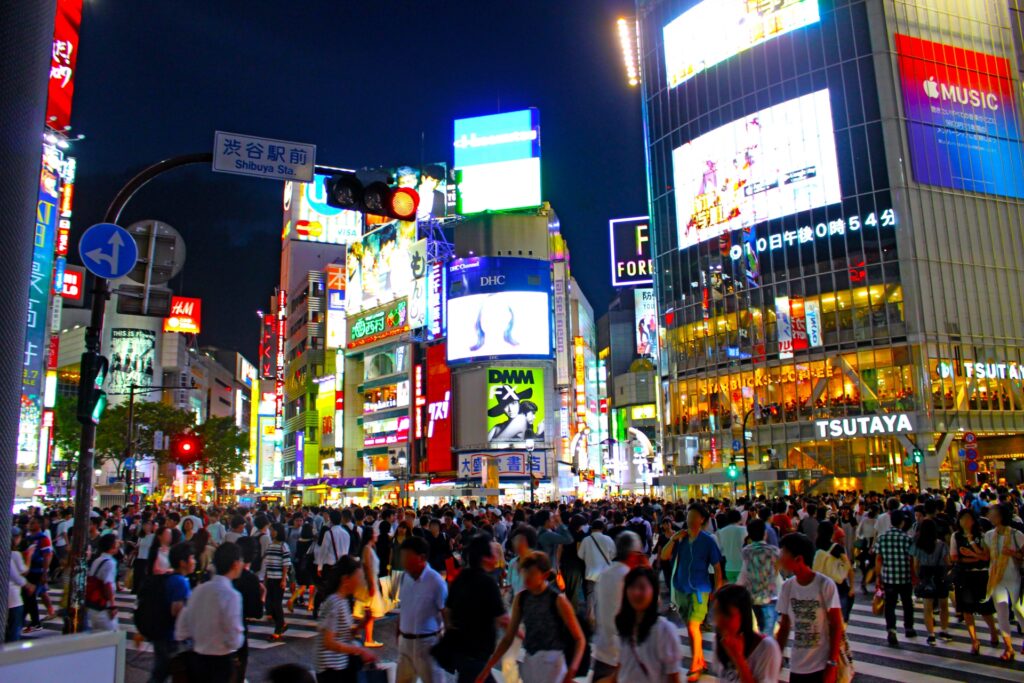
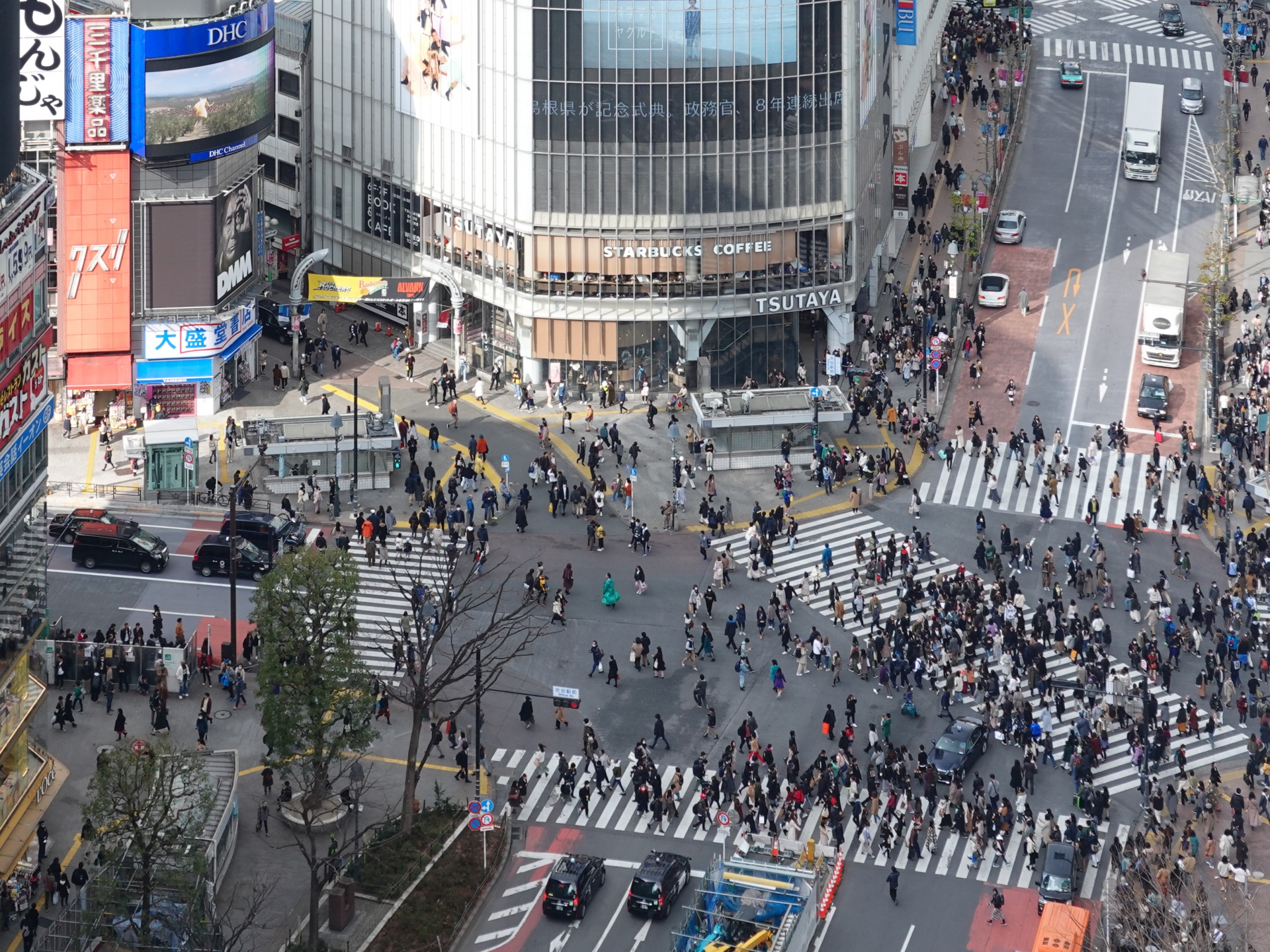
Shibuya Crossing is the large multi-directional intersection directly outside Shibuya Station’s Hachiko Exit. Once the pedestrian lights change, people cross from every direction at the same time — diagonally, horizontally, sometimes in quick waves that somehow never fully collide.
The scale surprises people first. Then the sound does.
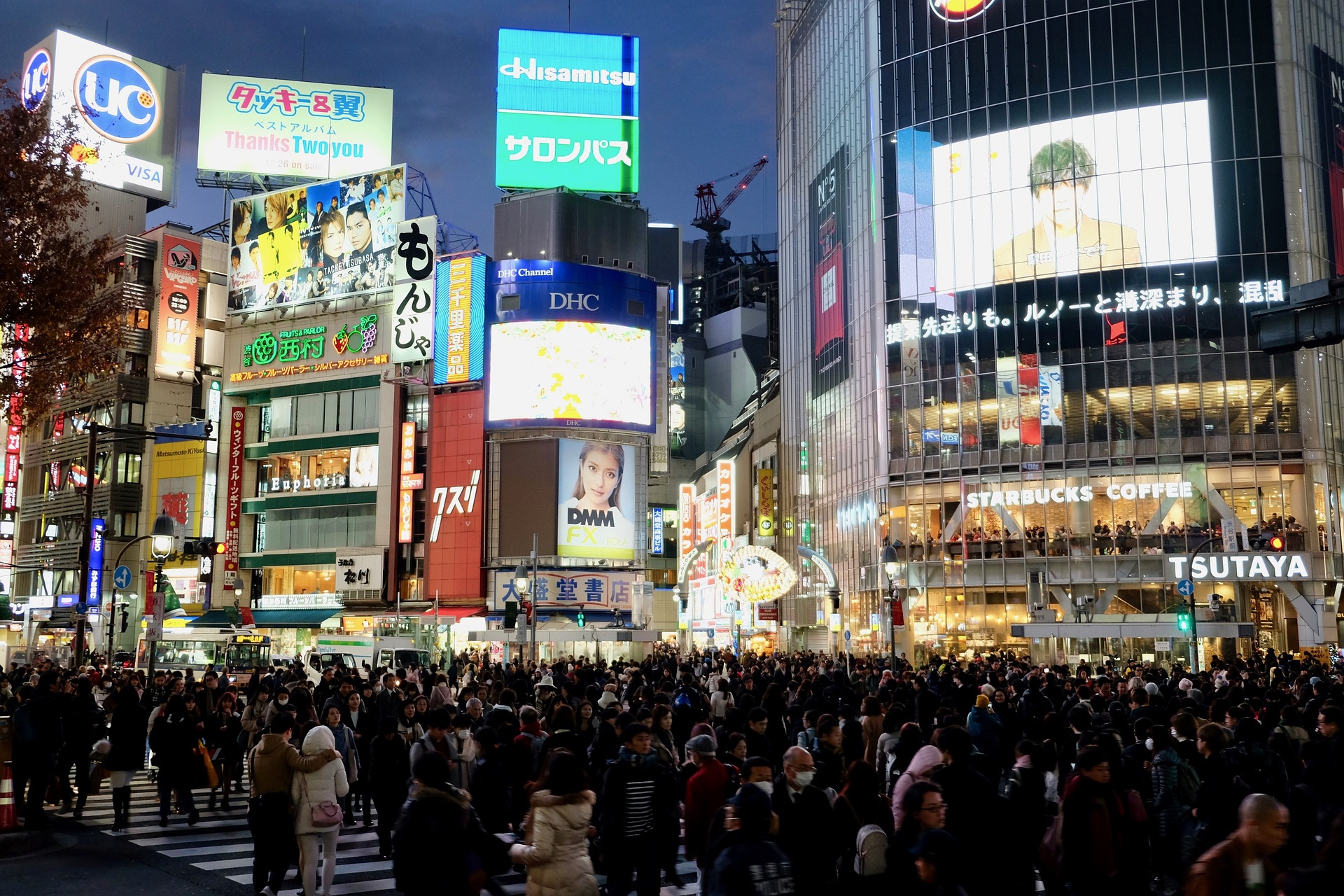
Advertising screens loop endlessly overhead while station announcements echo behind the crowd. You hear crossing signals, snippets of music from nearby shops, conversations in multiple languages, delivery trucks edging through side streets. Around evening rush hour, office workers, students, tourists, shoppers, and nightlife crowds all blend together into one moving current.
After rain, the whole area changes again. Wet pavement catches reflections from LED billboards and headlights, and transparent convenience-store umbrellas start filling the intersection in every direction. It’s one of the few places in Tokyo that can feel cinematic without trying too hard.
What makes the crossing memorable isn’t simply that it’s crowded. Tokyo has plenty of crowded places. It’s the strange balance between intensity and order. Even at peak times, the movement rarely feels chaotic for long.
Unlike attractions built for visitors, this intersection still functions primarily as part of everyday commuter life. People here are usually just trying to get somewhere.
Location: Near Shibuya Station Hachiko Exit, Shibuya City, Tokyo
Access: JR Yamanote Line, Saikyo Line, Shonan-Shinjuku Line, Tokyo Metro Ginza Line, Hanzomon Line, Fukutoshin Line, Tokyu Toyoko Line, Den-en-toshi Line, and Keio Inokashira Line
Hours: Open 24 hours
Price: Free
Why Is Shibuya Crossing So Famous?
Shibuya’s rise as a youth and entertainment district during the late 20th century played a major role in turning the crossing into a global symbol of Tokyo. Through the 1970s and 1980s, the neighborhood became associated with fashion culture, music, nightlife, arcades, and department stores aimed at younger crowds. Naturally, the intersection at the center of it all became part of that image too.
Today, it’s often introduced as one of the busiest pedestrian crossings in the world. That’s true, but first-time visitors tend to remember something else: how strangely coordinated it feels.
Hundreds of people begin walking at once, yet the flow usually works. People sidestep each other almost instinctively. From above, it can look less like traffic and more like choreography.
The crossing’s visibility in films, advertisements, anime, and social media pushed it even further into global pop culture. Many travelers arrive already knowing exactly what it looks like. Still, phone screens flatten the experience. In person, the giant displays feel larger, the station noise sharper, and the crowd denser than most people expect.
Part of its appeal is also how easy it is to access. No tickets, no planning, no queue. You leave the station and you’re already inside it.
Who Is Hachiko?
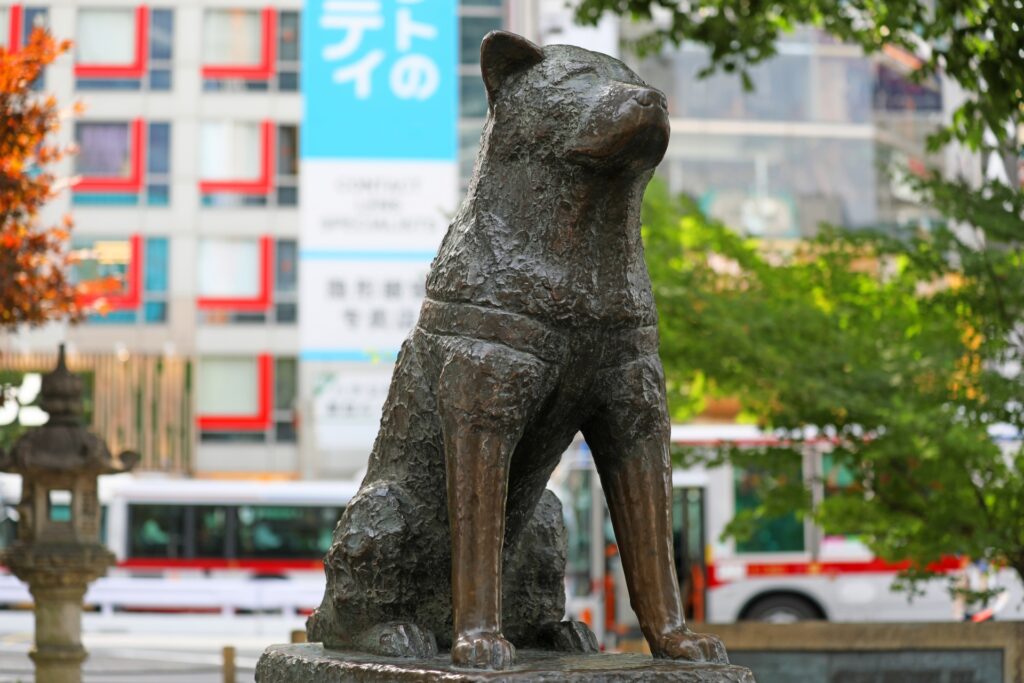
Just beside the crossing stands the Hachiko Statue, still one of Tokyo’s best-known meeting points.
The bronze statue commemorates Hachiko, an Akita dog remembered across Japan for continuing to wait at Shibuya Station each day after the death of his owner, Professor Hidesaburo Ueno, in 1925. The story gradually spread nationwide and eventually turned Hachiko into a symbol of loyalty that most people in Japan recognize immediately.
Today, the statue functions in two ways at once. For visitors, it’s a sightseeing landmark. For locals, it’s still an extremely practical place to meet someone before heading elsewhere in Shibuya.
The atmosphere around it shifts depending on the hour. During the day, people queue for photos while groups gather under the station signage trying to find friends. Later at night, the lighting from surrounding buildings gives the statue a softer look, even while crowds continue streaming past toward the crossing behind it.
Because it sits directly outside Hachiko Exit, it’s usually the first landmark travelers encounter after arriving at Shibuya Station.
Location: Near Hachiko Exit, 2 Chome Dogenzaka, Shibuya City, Tokyo
Access: Immediately outside JR Shibuya Station Hachiko Exit
Hours: Open 24 hours
Price: Free
How to Get to Shibuya Crossing from Shibuya Station
Shibuya Station can feel confusing the first time through it. Several railway companies share the station complex, and ongoing redevelopment has added layers of walkways, escalators, and underground passages that don’t always feel intuitive.
The simplest strategy is still the best one: follow signs for Hachiko Exit.
Once you reach that side of the station, the crossing is directly outside. You won’t need to navigate hidden corridors or walk several blocks to find it.
JR users should look for Hachiko Exit signs immediately after leaving the platform area. Travelers arriving via Tokyo Metro can usually access the crossing through exits connected to the Hachiko side, including A8 in many cases.
Even with English signage throughout the station, the area becomes crowded quickly during commuter hours. If you lose your bearings, following the general flow of pedestrians toward Hachiko usually works surprisingly well.
Access from major Tokyo areas is relatively straightforward:
- From Shinjuku: JR Yamanote Line, approximately 7 minutes
- From Tokyo Station: JR Yamanote Line, approximately 25 minutes
- From Asakusa: Tokyo Metro Ginza Line, approximately 35 minutes
- From Haneda Airport: Keikyu Line and JR connection, approximately 40–50 minutes
- From Narita Airport: Narita Express, approximately 80–90 minutes
The station is busiest from late afternoon into the evening, especially between roughly 5:00 PM and 8:00 PM. Around that time, stopping suddenly near ticket gates tends to create immediate bottlenecks.
Location: Near Hachiko Exit, Shibuya City, Tokyo
Access: Directly connected to Shibuya Station
Hours: Accessible all day
Price: Free
Best Time to Visit Shibuya Crossing
Shibuya Crossing changes personality depending on the hour, weather, and even the season.
Late mornings and early afternoons usually feel the easiest to navigate. The area is active, but the crowd leans more toward shoppers, students, and visitors rather than full commuter density. Sunlight reflects sharply off the glass towers surrounding the station, and photos tend to come out cleaner and brighter.
Toward sunset, the atmosphere starts shifting almost block by block. Advertising screens become more noticeable, building lights switch on, and office workers begin pouring out of the station exits. Between roughly 5:00 PM and 8:00 PM, the crossing reaches the version most people imagine before arriving in Tokyo.
Rain changes everything again.
Light reflecting across wet streets intensifies the neon colors, and umbrellas create layers of movement that look especially good in video. Even short phone clips can end up looking surprisingly cinematic on rainy evenings.
After around 10:00 PM, the mood becomes less commuter-oriented and more nightlife-driven. You’ll notice louder groups around Center-Gai and Dogenzaka, particularly on Fridays and weekends.
Travelers visiting during Halloween or New Year should check local announcements in advance. Shibuya City occasionally introduces crowd-control measures and alcohol restrictions when the area becomes excessively crowded.
Day vs Night vs Rainy Day
| Timing | Crowd Level | Atmosphere | Best For |
| Daytime | Moderate | Bright and active | Casual sightseeing |
| Night | Heavy | Neon-filled and energetic | Tokyo city atmosphere |
| Rainy Evening | Heavy | Cinematic reflections | Photography and videos |
Best Places to View and Photograph Shibuya Crossing
A lot of first-time visitors assume the best photos come from standing directly in the middle of the intersection. Usually, they don’t.
Street level works well for capturing the feeling of being inside the crowd — faces passing close by, giant screens overhead, the rhythm of people crossing around you. But elevated viewpoints reveal the scale much better.
Even smartphones work surprisingly well here at night because there’s constant motion and light in every direction.
Best Shibuya Crossing Viewpoints
| Viewpoint | Height | Price | Reservation | Best Time |
| SHIBUYA SKY | High | Paid | Recommended | Sunset and night |
| MAGNET by SHIBUYA109 | Mid-level | Paid | Usually not required | Evening |
| Street Corners | Ground level | Free | No | Anytime |
| Station Area | Slight elevation | Free | No | Rush hour |
SHIBUYA SKY
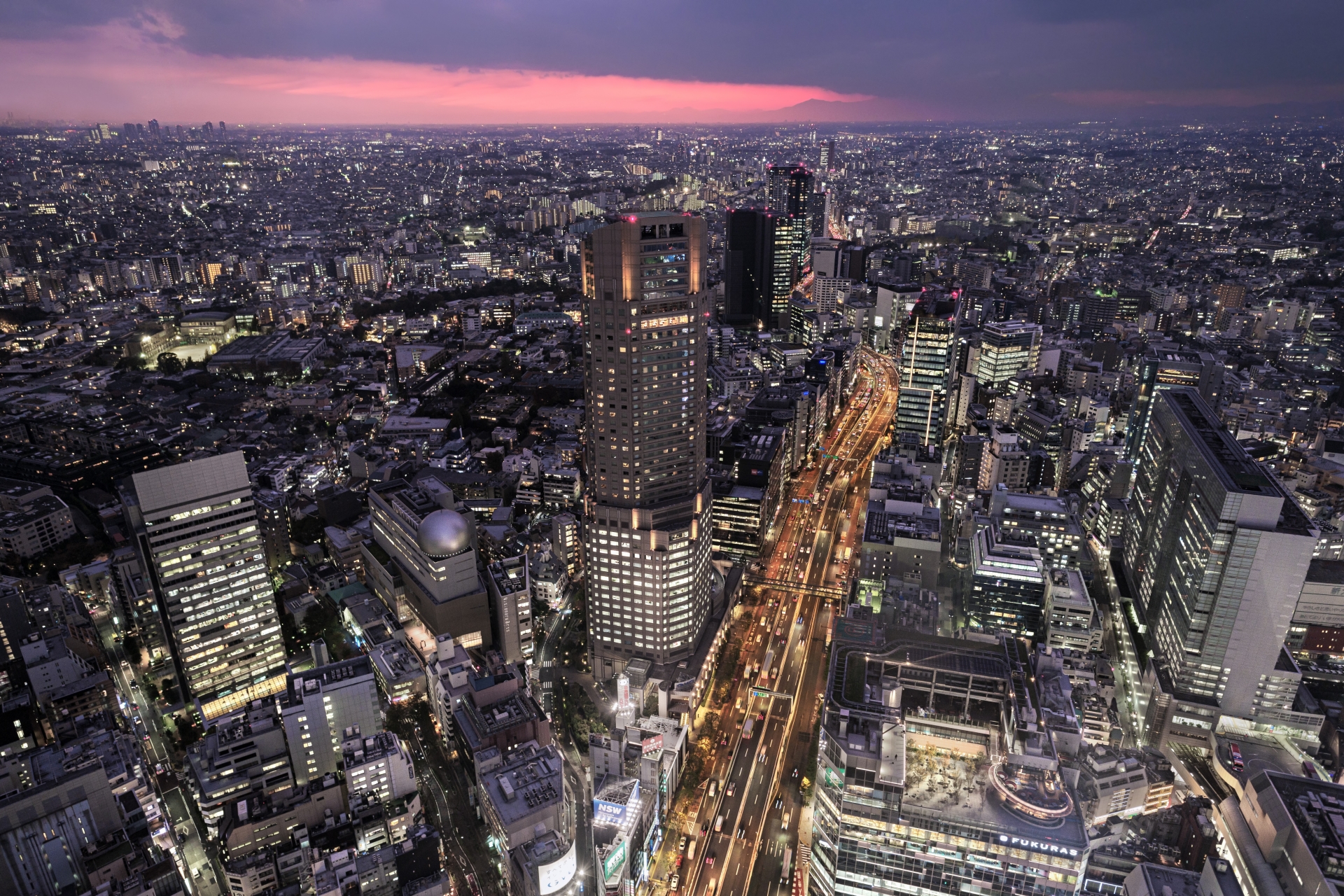
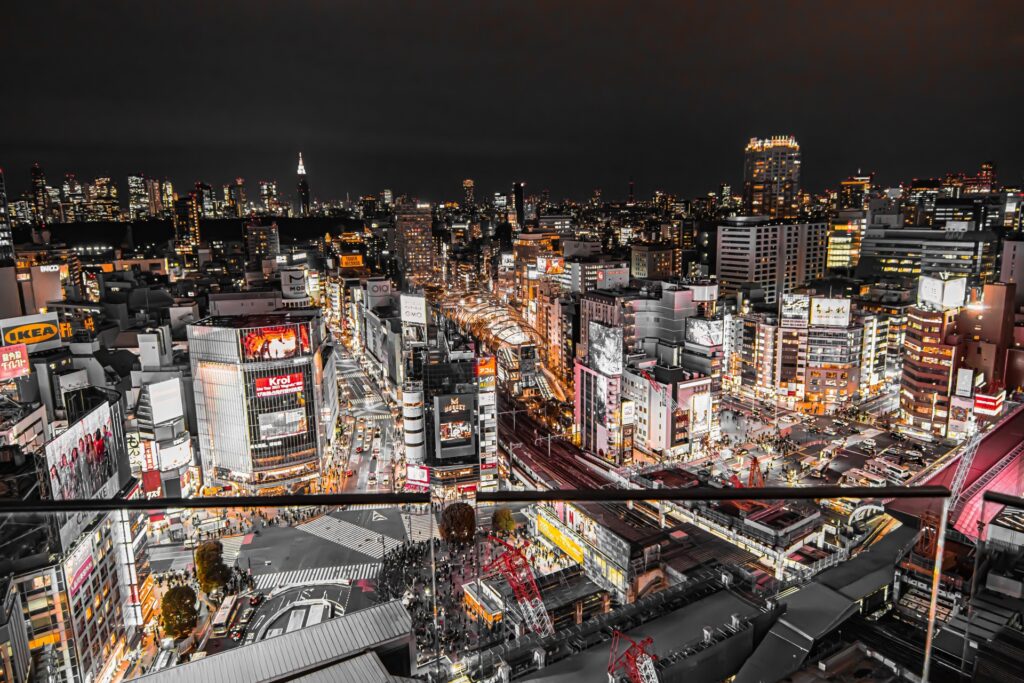
SHIBUYA SKY is still the most impressive overall viewpoint for seeing the crossing from above. The observation deck sits on top of Shibuya Scramble Square and gives you a wide panorama over central Tokyo while also looking directly down onto the intersection below.
Sunset slots tend to disappear quickly, partly because you can watch the city transition from daylight into neon within the same visit. On clearer days, you may spot Tokyo Tower, Tokyo Skytree, and even Mount Fuji far beyond the city skyline.
Once darkness settles in, the crossing below starts looking almost mechanical from above — streams of headlights, moving umbrellas, flashing screens, and pedestrian waves repeating every few minutes.
Strong wind or bad weather can occasionally limit rooftop access, though indoor viewing areas generally stay open.
Location: 2-24-12 Shibuya, Shibuya City, Tokyo
Access: Directly connected to Shibuya Station
Hours: 10:00 AM – 10:30 PM
Price: Paid admission
Official Website: SHIBUYA SCRAMBLE SQUARE Official Site
MAGNET by SHIBUYA109 and Other Nearby Viewpoints
If SHIBUYA SKY tickets are sold out, MAGNET by SHIBUYA109 is usually the next-best option.
Because the building sits closer to the street, the crossing feels louder and more immediate from here. You can hear the crossing signals, the advertising music, the crowd noise rising from below. For short-form video especially, the slightly lower angle often works better than ultra-high rooftop shots.
A few nearby cafés also have crossing-facing windows, though getting a good seat can depend heavily on timing and luck.
Location: 1-23-10 Jinnan, Shibuya City, Tokyo
Access: Approximately 3 minutes on foot from Hachiko Exit
Hours: Varies by facility
Price: Some areas may require purchases or admission fees
Official Website: MAGNET by SHIBUYA109
Things to Do Around Shibuya Crossing
One reason Shibuya works well for first-time visitors is how compact the central area actually feels once you start walking. Many of the main spots are within 5 to 15 minutes of each other, so it’s easy to turn the crossing into part of a longer wandering route without needing another train ride.
The neighborhood also changes noticeably over the course of a day. Afternoon Shibuya leans toward shopping and cafés. After dark, the district becomes louder, brighter, and much more nightlife-focused.
Hachiko Statue
The Hachiko Statue works naturally as a first stop because nearly everyone passes it after leaving the station.
Crowds gather around it throughout the day, so nighttime can actually be the better moment for photos. The surrounding signage lights up the area while the crossing continues moving behind it.
Location: Outside Hachiko Exit, Shibuya City, Tokyo
Access: Directly outside Shibuya Station
Hours: Open 24 hours
Price: Free
Center-Gai and Dogenzaka
Center-Gai is one of those Tokyo streets that feels immediately recognizable even if you’ve never visited before.
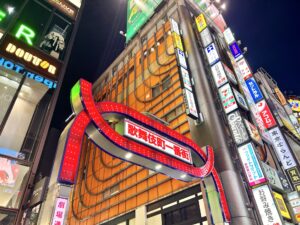
The narrow roads extending away from the crossing are packed with ramen shops, karaoke buildings, arcades, bars, chain restaurants, fashion stores, and glowing signboards stacked several floors high. During evenings, music spills onto the street from multiple directions at once.
Dogenzaka, nearby, has a noticeably heavier nightlife atmosphere. The further uphill you walk, the more bars and clubs begin replacing shopping-focused storefronts. Late at night, street touts can become persistent in some sections, so it’s worth staying aware of that.
For food, though, the area is convenient. You can drift between quick ramen counters, sushi chains, izakaya, and yakiniku restaurants without planning very much in advance.
Location: Udagawacho area, Shibuya City, Tokyo
Access: About 1 minute on foot from Shibuya Crossing
Hours: Varies by business
Price: Free to explore
Shibuya PARCO
Shibuya PARCO has become a major stop for travelers interested in gaming, anime, fashion, and newer sides of Tokyo pop culture.
Nintendo TOKYO draws long lines on busy days, while Pokémon Center Shibuya and specialty character shops pull in both tourists and local fans. The atmosphere inside feels very different from older department stores elsewhere in Tokyo — more contemporary, more tied to entertainment culture.
Even visitors who aren’t especially into gaming often end up staying longer than expected once they start browsing floor by floor.
Location: 15-1 Udagawacho, Shibuya City, Tokyo
Access: Approximately 5–7 minutes on foot from Shibuya Crossing
Hours: Usually 11:00 AM – 9:00 PM
Price: Free entry
Official Website: Shibuya PARCO Official Site
MIYASHITA PARK
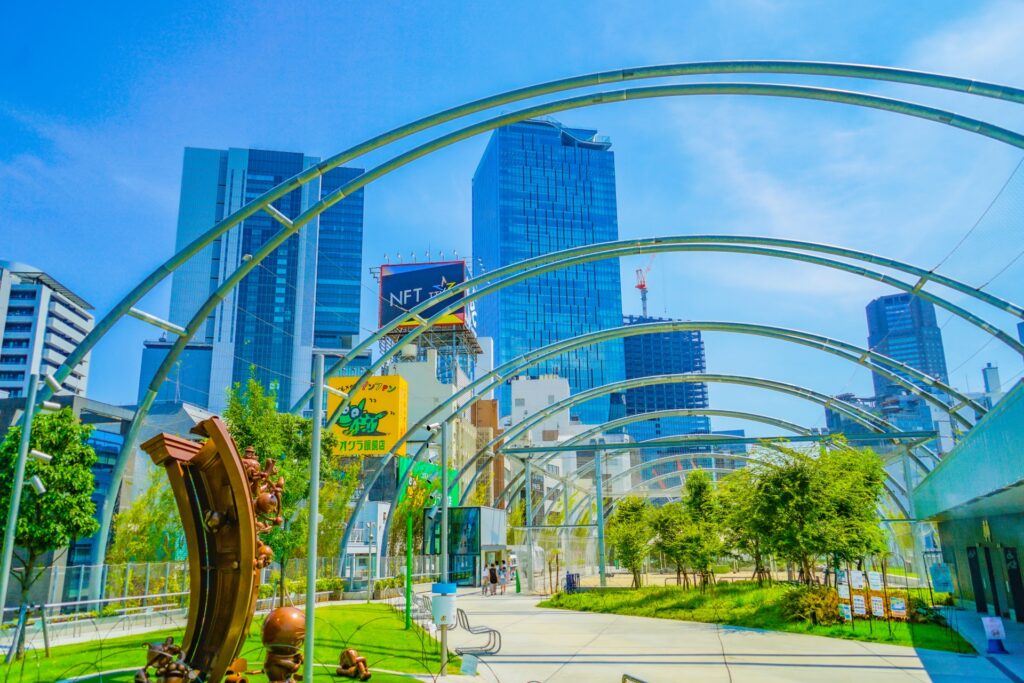
MIYASHITA PARK offers a noticeable change of pace from the intensity around the crossing.
Built above street level between Shibuya and Harajuku, the complex mixes restaurants, shopping areas, rooftop seating, and open walkways that feel calmer than the station side of Shibuya. In the evening, people tend to linger here longer rather than rush through it.
The rooftop becomes especially pleasant once city lights start appearing across the skyline. Compared with the noise around Center-Gai, the atmosphere feels more relaxed and slightly more local.
It also connects naturally into walks toward Harajuku or Omotesando if you want to continue exploring on foot.
Location: 6-20-10 Jingumae, Shibuya City, Tokyo
Access: Approximately 3 minutes on foot from Shibuya Station
Hours: Varies by facility
Price: Free entry to public areas
Official Website: MIYASHITA PARK Official Site
Suggested Walking Itineraries
Suggested Walking Routes
| Route | Duration | Main Attractions | Best For |
| Quick Visit | 30 minutes | Hachiko, Crossing, Center-Gai | Short sightseeing stop |
| Classic Route | 2 hours | Crossing, SHIBUYA SKY, PARCO | First-time visitors |
| Evening Photo Route | 3 hours | Crossing, SKY, MIYASHITA PARK | Photography and nightlife |
30-Minute Quick Visit
Start at Hachiko Exit and spend a few minutes around the statue before crossing the intersection from different directions at least once or twice. Afterward, continue briefly into Center-Gai.
The shift between the station frontage and the narrower entertainment streets happens almost immediately, which is part of what makes Shibuya interesting even during a short visit.
This route works particularly well for travelers fitting Shibuya into a larger Tokyo sightseeing day.
2-Hour Classic Shibuya Route
Begin around Hachiko and the crossing before heading toward Shibuya Scramble Square. Spend time at SHIBUYA SKY, then continue into Center-Gai and eventually Shibuya PARCO for shopping, cafés, or dinner.
The route stays fully walkable and covers most of the district’s best-known spots without feeling overly rushed.
Evening Photo Route
Arriving before sunset usually works best for photography.
Start at street level while there’s still some natural light, then head up to SHIBUYA SKY during golden hour. After dark, return to the crossing once the billboards and headlights become brighter and more reflective.
Finish with a slower walk through Center-Gai before settling into MIYASHITA PARK for dinner or rooftop seating.
Rain tends to make this route even more memorable.
Practical Tips and Etiquette
One of the easiest ways to stand out badly at Shibuya Crossing is stopping suddenly in the middle of pedestrian traffic for photos.
Quick snapshots are normal, but it’s much easier — and safer — to move to the sidewalk first before filming. Crossing multiple times from different corners usually produces better photos anyway.
Tripods are sometimes restricted on observation decks and can become inconvenient in dense crowds. Phones and small handheld stabilizers generally work better here.
During busy periods, keep bags close and stay aware of pedestrian flow around you. The area is considered very safe overall, though the constant movement can become tiring after a while.
Rain also makes sidewalks noticeably slippery near the crossing, especially at night. Waterproof shoes help more than people expect.
If you visit during Halloween or New Year celebrations, check official announcements beforehand since crowd-control restrictions are sometimes introduced.
Quick Summary: Is Shibuya Crossing Worth Visiting?
For most first-time Tokyo visitors, yes.
The crossing itself only takes a short time to experience, but the surrounding neighborhood turns it into something much larger — part transportation hub, part entertainment district, part nighttime city spectacle.
Many people remember it most vividly after dark, when the billboards brighten, trains continue arriving behind the station, and the crowds keep moving through the intersection in repeating waves.
Combined with SHIBUYA SKY, Center-Gai, PARCO, and MIYASHITA PARK, the area becomes one of the easiest places in Tokyo to explore entirely on foot while still feeling unmistakably urban.
FAQ About Shibuya Crossing
Is Shibuya Crossing free?
Yes. The crossing itself is a public intersection and completely free to visit.
Which exit is closest to Shibuya Crossing?
The JR Hachiko Exit is the closest and easiest exit for first-time visitors.
Can you see Shibuya Crossing from SHIBUYA SKY?
Yes. SHIBUYA SKY provides one of the best panoramic views overlooking the crossing.
How long should I spend at Shibuya Crossing?
Most travelers spend anywhere from 30 minutes to a few hours in the immediate area depending on whether they also visit nearby attractions.
Is Shibuya Crossing worth visiting at night?
Yes. Evening is when the area feels most visually intense, with illuminated billboards, dense pedestrian traffic, and the classic Tokyo city atmosphere many travelers come to see.