If you celebrate Valentine’s Day the “American way”—cards, flowers, mutual gifts, romantic dinners—Japan can feel like the rules are flipped (or like there are invisible rules nobody explained). This guide uses the United States as the “abroad” baseline and shows how Japan differs in who gives, what it means, and when reciprocity happens, plus what to do in real-life situations so you don’t create awkwardness by accident.



What Valentine’s Day Looks Like “Abroad” (U.S. Baseline)
“Abroad” varies a lot by country, but when Americans say Valentine’s Day, they usually mean a broad, open celebration of affection—not only romantic partners. Couples often exchange gifts mutually on February 14, and it’s common to pair that with a dinner date, flowers, chocolate, or even jewelry. Public gestures (like surprise flowers delivered to work, big dinners, or proposals) are socially legible in the U.S. in a way they often aren’t in Japan.
Another key “U.S. default” that surprises people in Japan: school culture. Many American children exchange Valentine cards (and sometimes candy) with classmates, and the holiday can feel like a community event, not just a couples’ night. That’s why Americans may instinctively think, “If it’s Valentine’s Day, everyone does something.” In Japan, the social signal is narrower and more coded—especially around workplaces and gendered expectations.
Typical U.S. model (quick snapshot)
| Who | What | When | Where |
| Romantic partners | Cards, flowers, chocolate, dinner, sometimes jewelry | Feb 14 (mutual) | Restaurants, home, workplaces (deliveries) |
| Friends | Cards/candy, “thinking of you” gifts | Feb 14 (or nearby) | Social gatherings, school, home |
| Family | Cards, candy, small gifts | Feb 14 | Home, mailed/hand-delivered |
| Classmates (kids) | Card exchange + candy | School day near Feb 14 | Classrooms/school events |
The Japan–Abroad Difference in One Table (Quick Scan)
If you only read one section, make it this table. The “shock” for many Americans isn’t chocolate itself—it’s that meaning is encoded into roles, timing, and reciprocity, and you can accidentally send a stronger signal than you intended.
| Topic | U.S. baseline (“abroad”) | Japan baseline | What foreigners often misread |
| Primary audience | Couples + friends + family | Historically women → men; now broader but still coded | Assuming it’s automatically mutual on Feb 14 |
| Default gift type | Cards + flowers + candy + dinner | Chocolate is the main “language” | Treating chocolate as a minor add-on |
| Public gestures | Normal (flowers at work, big surprises) | Less default; context-sensitive | Going “big” in semi-public settings |
| Kids/school culture | Major classroom card exchange | Not an equivalent nationwide tradition | Expecting classmates/teachers exchanges |
| Workplace involvement | Usually minimal or informal | Historically obligation-giving; now shrinking | Bringing gifts without reading office norms |
| Gender expectations | Less fixed; mutual norms | Traditionally women give Feb 14 | Assuming men must give Feb 14 |
| Follow-up holiday | None required | White Day (return-gift structure) | Forgetting reciprocity timing (Mar 14) |
| Emotional tone | Open affection, direct messages | Social signaling: relationship + obligation cues | Accidentally implying “confession-level” intent |
| Reciprocity timing | Same day exchange | Often delayed to March 14 | Feeling “unreciprocated” too soon |
| Social pressure points | Couples expectations; school inclusion | Office expectations + category meanings | Overthinking categories, or ignoring them entirely |
(For deeper Japan-side basics, see Japambience’s internal guides on Japanese Valentine customs and handmade chocolate traditions.)
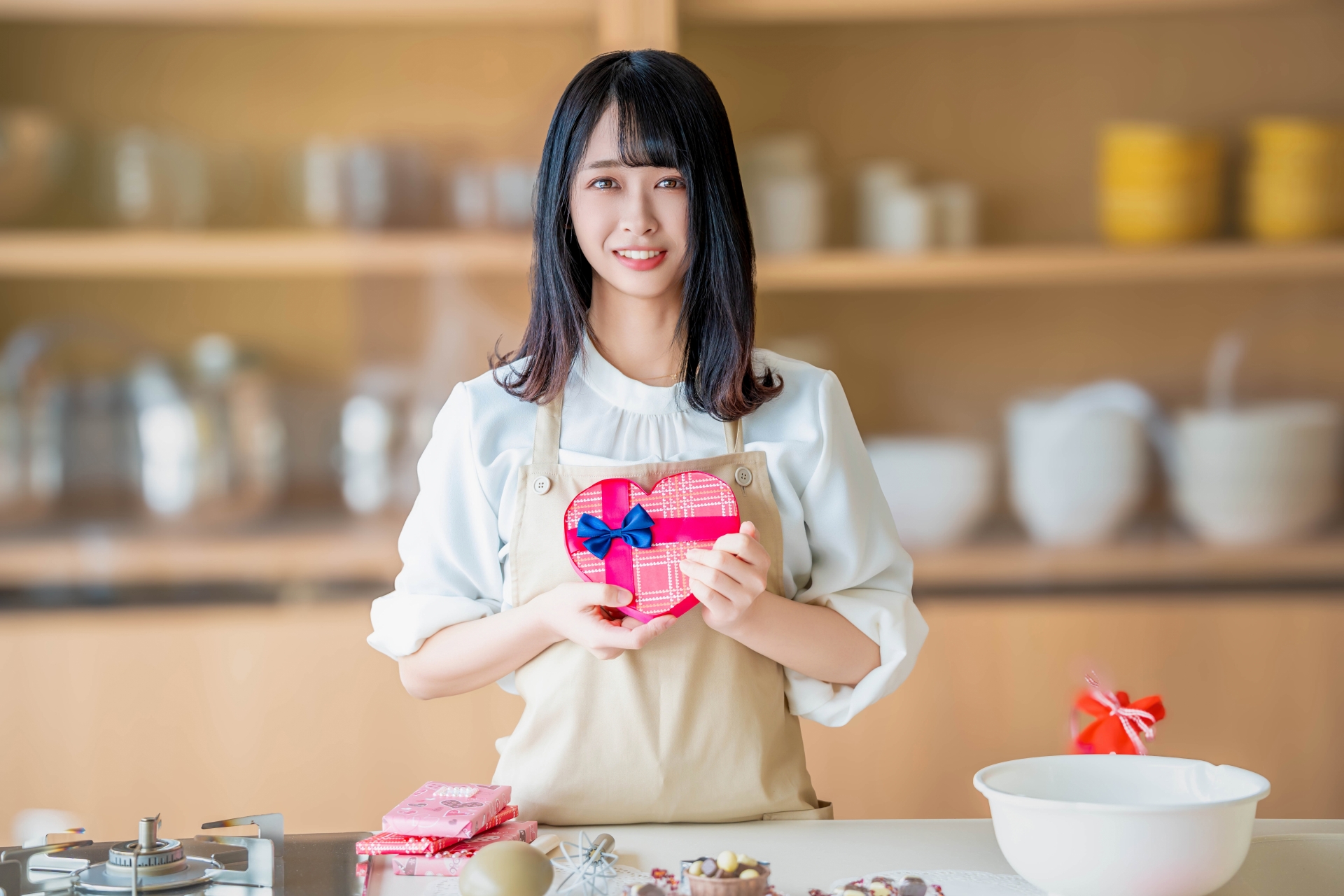
Why Japan Became Chocolate-Centered (Without Repeating the Full History)
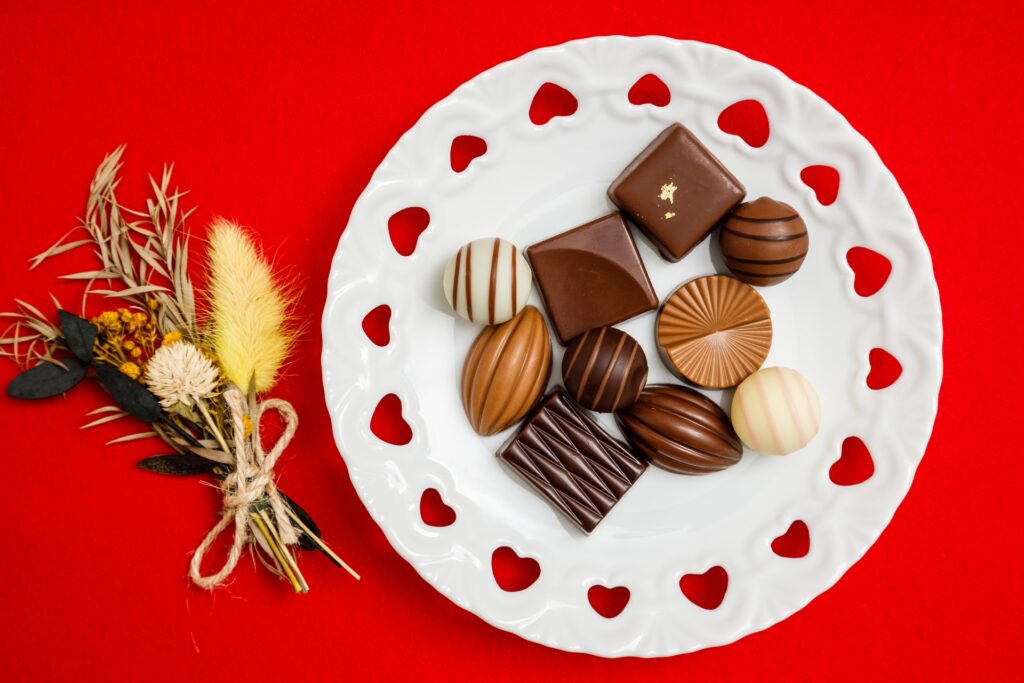
In the West, Valentine’s Day developed from older St. Valentine traditions and gradually became shaped by greeting cards, florists, and gift retailers. As a result, “cards + flowers + candy” feels like a natural trio in the United States. The emphasis is on visible affection and shared celebration on February 14 itself.
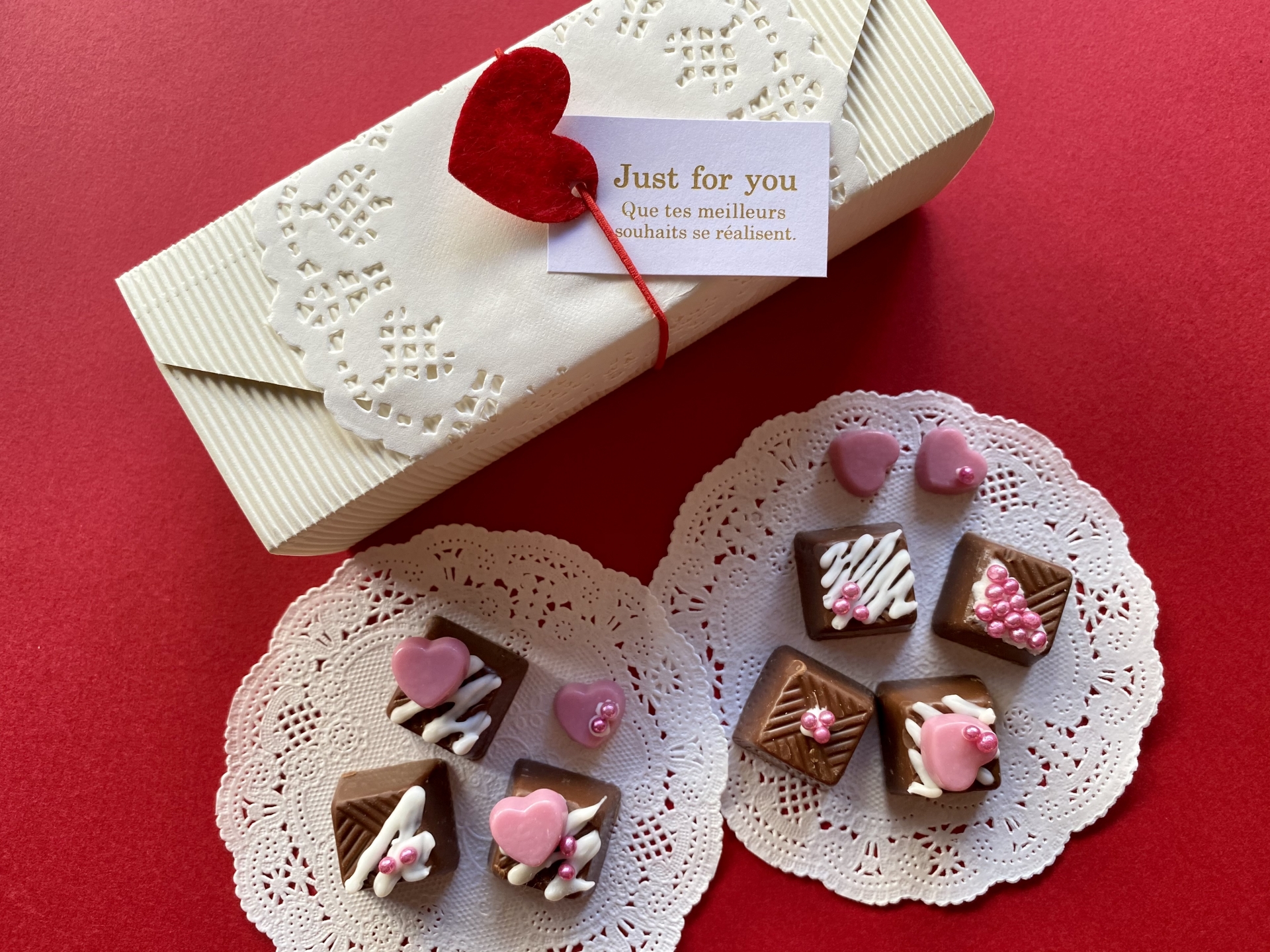
Japan’s version, by contrast, was strongly influenced by confectionery marketing and department store campaigns in the postwar era. Over time, chocolate became the standardized “language” of Valentine’s communication. Rather than being one of several equal options (like flowers or cards), chocolate became the central symbol.
This structure also led to the creation of White Day (March 14), a designated return-gift day. That reciprocity system is one of the clearest differences between Japan and the U.S. Even though modern practice is loosening, the cultural architecture still shapes expectations—especially for couples.
The Biggest Misunderstandings Foreigners Make in Japan
Below is a practical Do / Don’t checklist focused on real-life friction points: workplaces, semi-public gestures, and mismatched timing expectations. Norms are evolving, but misunderstandings still happen because the signals are easy to misinterpret.
Do
- Do treat chocolate as the default language if you’re following local convention, especially when your goal is friendly rather than dramatic.
- Do keep workplace participation modest and standardized if your office participates. Think small, individually wrapped, equal-value items.
- Do clarify timing in romantic relationships. If you’re following the Japanese structure, talk about both February 14 and March 14.
- Do observe before acting in mixed-cultural environments. International workplaces in Japan vary widely.
Don’t
- Don’t assume men automatically give on February 14 the way they often do in the U.S.
- Don’t give one colleague a noticeably premium gift in a semi-public setting unless your relationship is clearly personal. It can signal stronger romantic intent than you meant.
- Don’t mass-distribute gifts without checking office culture. Some workplaces have intentionally reduced obligation-based exchanges.
- Don’t ignore White Day if you and your partner agreed to follow the Japanese model. Timing carries meaning.
Modern Reality in Japan (2025–2026): Less Obligation, More Personal Choice
One of the biggest changes in recent years is the decline of obligation-based gifting. Workplace “duty chocolate” has decreased significantly, especially among younger generations. Rising prices and shifting attitudes toward workplace boundaries have also contributed to this trend.
At the same time, Valentine’s in Japan has expanded in another direction: self-chocolate and friend-focused gifting. Many people now buy high-quality chocolate for themselves as a seasonal indulgence. Others exchange casually with close friends rather than following strict romantic or workplace categories. The tone has shifted from obligation to enjoyment.
In contrast, the U.S. baseline remains centered on mutual couple exchange on February 14, combined with broad inclusion of friends, family, and school communities. While both countries are becoming more flexible, the underlying logic still differs:
- In the U.S., expansion usually means more people included in the same-day exchange.
- In Japan, expansion often means more freedom in how (or whether) you participate at all.
Then vs. Now (Japan, simplified)
| Then (stereotype) | Now (2025–2026 reality) |
| Women → men, obligation-heavy | More optional; more self- and friend-focused |
| Workplace exchanges common | Many offices reduce or avoid them |
| Clear, widely followed rules | Choose-your-own style + communication |
Practical takeaway: The culturally safest move today is low-pressure, context-aware, and communication-first—especially in offices and international relationships.
Scenario Guide: What You Should Do (Traveler / Expat / International Couple)
This section turns cultural theory into action. The goal is not to “perfect” the ritual, but to avoid creating unintended pressure or mismatched expectations.
Traveler (Short-Term Visitor)
If you’re visiting Japan around February 14, you generally have no obligation to give anyone chocolate. Buying seasonal chocolates for yourself or as souvenirs is completely acceptable and increasingly common.
Typical spending feel:
- Casual treats: ¥500–¥2,000
- Department store specialty boxes: ¥2,000–¥5,000+
If gifting a host family or close friend, keep it simple and add a short note to clarify your intention.
Expat (Workplace Context)
Observe first. Some companies still participate in small exchanges; others discourage them to reduce social pressure.
If your office does participate:
- Choose individually wrapped, modest items.
- Keep value consistent.
- Avoid singling out one colleague unless there is a clearly personal relationship.
If you’re unsure, a neutral appreciation gesture outside Valentine’s season (like coffee or lunch) can sometimes communicate gratitude without romantic signaling.
International Couple (U.S. + Japan Expectations)
Have an explicit conversation about which model you’re following:
- Japanese structure: One partner gives on February 14; the other reciprocates on March 14.
- U.S. structure: Mutual gifts and/or dinner on February 14.
Many couples choose a hybrid approach: a small chocolate gesture on February 14 (Japan-style) plus a mutual dinner or experience (U.S.-style). Clarity prevents disappointment more than perfect cultural accuracy does.
FAQ (U.S.-Centric)
Do Japanese men give gifts on February 14?
Traditionally, many reciprocate on March 14 (White Day). Today, some men do participate on February 14 as well, but expectations vary.
Is it rude not to give coworkers chocolate?
Usually not. Many workplaces have reduced or eliminated obligation-based exchanges. Observing your specific office culture is key.
Can I give flowers in Japan?
Yes. Flowers aren’t inappropriate—they’re simply not the cultural default for February 14. Context matters.
What if we want to celebrate the American way while living in Japan?
That’s completely fine. Just communicate clearly with your partner about expectations and timing.
Is White Day still taken seriously?
It still exists as a cultural structure, but how seriously individuals take it varies widely. Couples should align expectations directly.
Conclusion: The Real Difference Isn’t Chocolate—It’s Social Signaling
The biggest difference between Japan and the United States isn’t the gift itself. It’s how meaning is structured.
In Japan, Valentine’s Day has traditionally functioned as a coded social signal—who gives, when reciprocity happens, and in what setting all carry layered meaning. In the United States, Valentine’s Day is more openly expressive and often mutual on the same day, with broader inclusion across friends, family, and schools.
Today, both systems are becoming more flexible. There is no single “correct” way anymore.
What prevents awkwardness isn’t perfect rule-following—it’s awareness. When in doubt:
- Observe the context.
- Avoid creating pressure.
- Communicate expectations clearly.
Do that, and your Valentine’s Day—whether Japanese, American, or hybrid—will feel intentional rather than confusing.