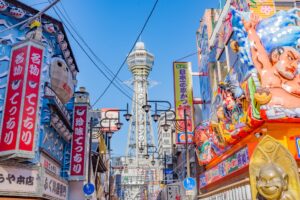
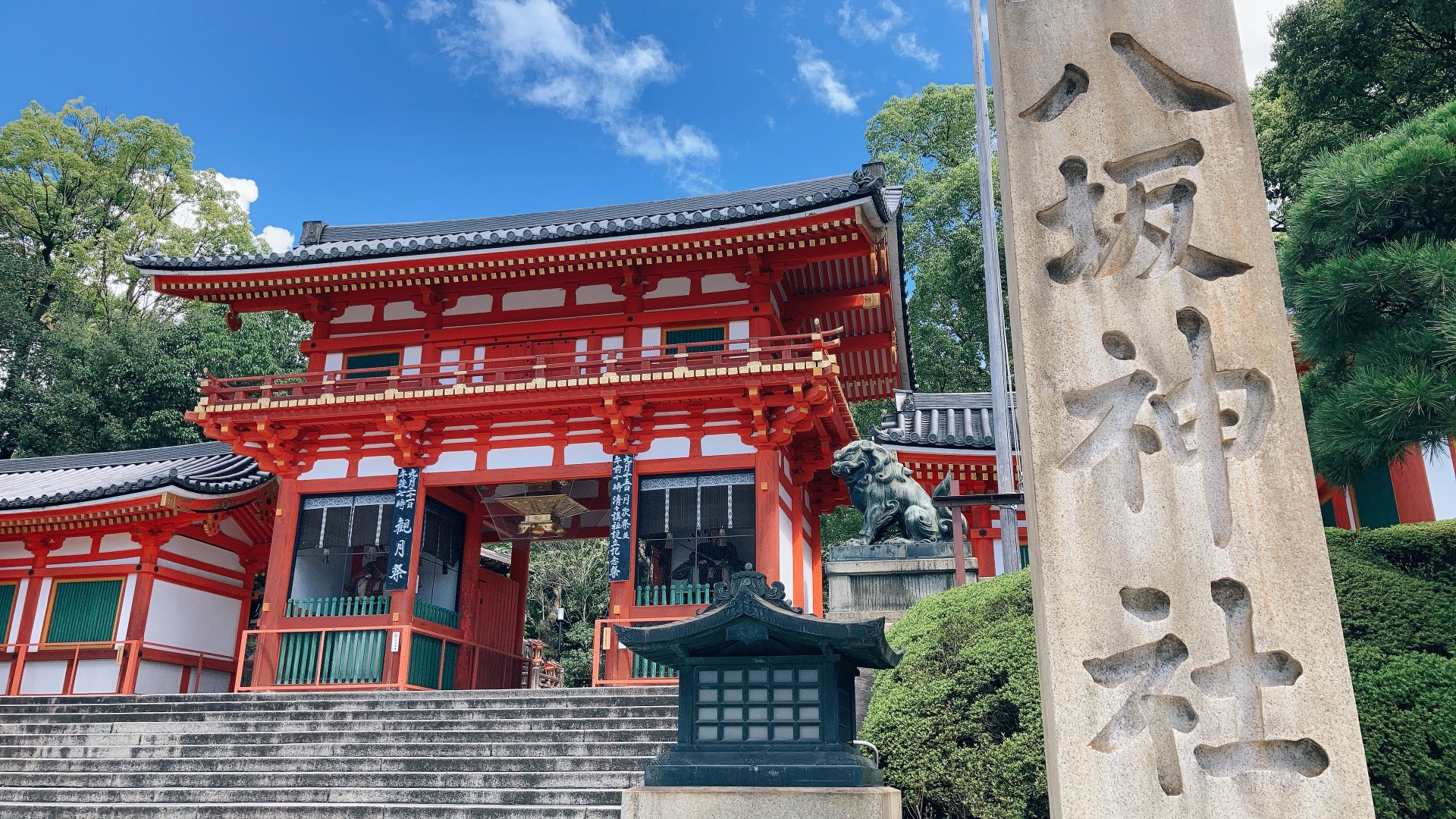
Yasaka Shrine is one of the easiest places to fold into a day in Kyoto’s Gion district — and one of the few major sights that feels just as worthwhile after dark as it does in daylight. This guide is about Yasaka Shrine in Kyoto, not Namba Yasaka Shrine in Osaka. If you are picturing the giant lion-head stage, that is the Osaka shrine. Kyoto’s Yasaka Shrine is a different kind of place: a lantern-lit Shinto shrine at the eastern end of Shijo-dori, tied closely to Gion, Maruyama Park, and the long-running rhythm of the Gion Matsuri.
For a first visit, Yasaka Shrine works well in several ways. It can be a short cultural stop between shopping and dinner, a calm evening walk after eating in Gion, or the starting point for a longer wander through Southern Higashiyama. You do not need to build an entire day around it. Still, it is worth slowing down once you arrive. Walk in from Gion, pause at the red gate, make your way toward the Main Hall, look up at the lanterns, then continue toward Maruyama Park or Kiyomizu-dera. At its best, Yasaka Shrine feels like a hinge between Kyoto’s busy city streets and its older temple paths.


Yasaka Shrine at a Glance: Why It Matters in Kyoto
Yasaka Shrine, historically known as Gion Shrine, stands at the eastern end of Shijo-dori in Kyoto’s Gion district. It has more than 1,300 years of history and remains one of the city’s most important shrines. The approach is part of the appeal. As you walk east along Shijo-dori, the shops and traffic gradually seem to narrow toward the vermilion Nishiromon Gate. Buses pass behind you, sweets shops and souvenir stores glow on either side, and then the mood shifts as you step into the shrine grounds.
The shrine is especially known for its connection to Gion Matsuri, Kyoto’s major summer festival held in July. Even outside festival season, that connection gives the grounds a lived-in feeling. This is not a silent historic monument kept behind glass. People come to pray, buy omamori, receive goshuin, meet friends, cut through toward Maruyama Park, or take a slow walk beneath the lanterns after dinner.
Location: 625 Gionmachi Kitagawa, Higashiyama-ku, Kyoto
Access: About 5 minutes on foot from Keihan Gion-Shijo Station; about 8 minutes on foot from Hankyu Kyoto-Kawaramachi Station; Kyoto City Bus 206 stops at Gion near the shrine
Hours: Shrine grounds are generally open 24 hours; shrine office is generally 9:00–17:00
Price: Free to enter the shrine grounds
Official Website: https://www.yasaka-jinja.or.jp/en/
Is Yasaka Shrine Worth Visiting?
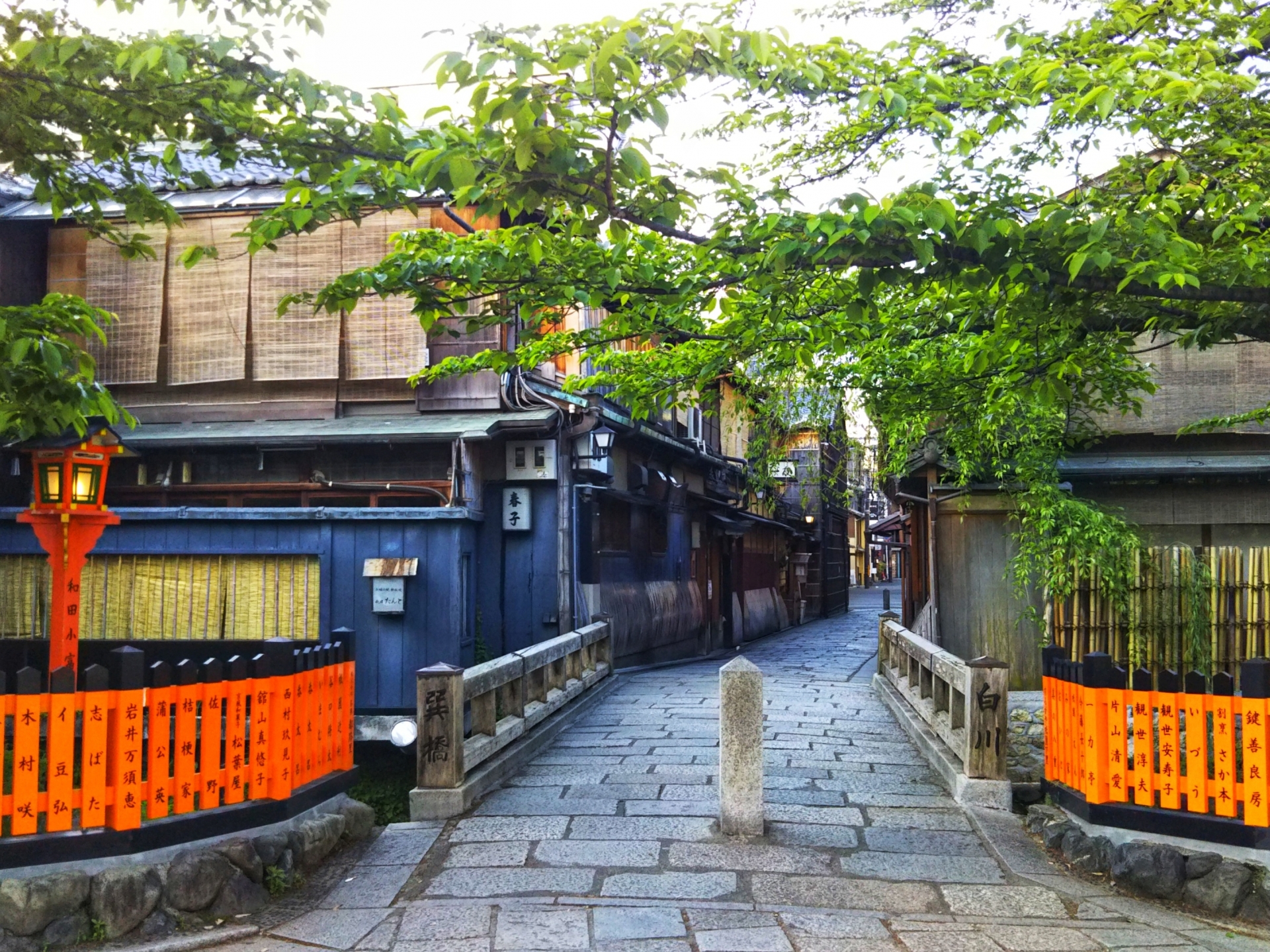
Yes — especially if your day already includes Gion, Maruyama Park, or Southern Higashiyama. Yasaka Shrine is not the kind of large, ticketed attraction where you need to spend half a day inside. Its value is more subtle. It gives structure to a Kyoto walk, linking Gion’s restaurants and traditional streets with Maruyama Park, Chion-in, Kennin-ji, Ninenzaka, Sannenzaka, and Kiyomizu-dera.
A very quick visit can take 15 to 20 minutes. That gives you enough time to enter through Nishiromon Gate, see the Main Hall and lantern stage, make a short prayer, and take a few photos. A more satisfying visit takes about 45 to 60 minutes, particularly if you drift toward the smaller shrines and continue into Maruyama Park. When Yasaka Shrine becomes part of a Gion and Higashiyama walking route, it can easily fit into a half-day itinerary.
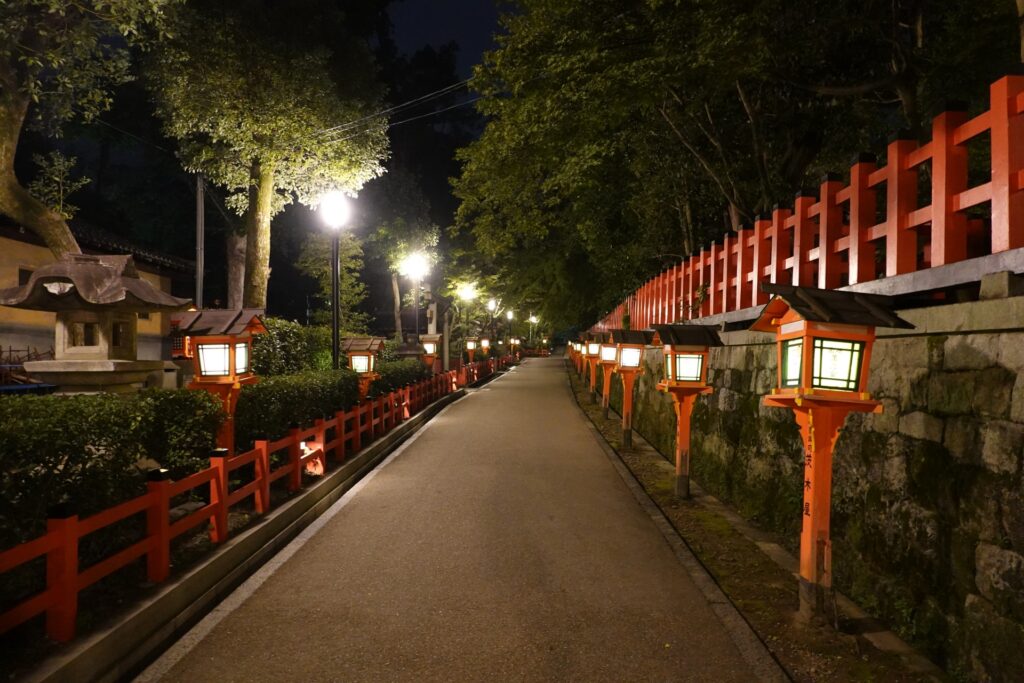
The shrine also changes with the hour. During the day, it feels open and busy, with tourists, local worshippers, school groups, and kimono-clad visitors crossing through the same space. Around sunset, it works naturally before dinner in Gion. At night, the lanterns soften the grounds. The red buildings deepen in color, the air feels cooler, and the visit becomes less about “seeing the sight” and more about letting Kyoto slow down around you.
Location: Gion district, Higashiyama-ku, Kyoto
Access: Best reached on foot from Gion-Shijo Station, Kyoto-Kawaramachi Station, or the Gion bus stop
Hours: Shrine grounds generally open 24 hours; shrine office generally 9:00–17:00
Price: Free
Official Website: https://www.yasaka-jinja.or.jp/en/
What to See Inside Yasaka Shrine
The simplest way to explore Yasaka Shrine is to follow the route most visitors naturally take: Shijo-dori → Nishiromon Gate → Main Hall and lantern stage → smaller sub-shrines → Maruyama Park. It lets the place unfold in layers. First comes the red gate, then the central worship area, then the quieter corners before the grounds open into the park behind the shrine.
Pay attention to how the mood changes as you move through the grounds. Near the gate, people stop for photos and groups gather before moving on. Around the Main Hall, the rhythm becomes more ritualized: coins drop into the offering box, bells ring, hands clap twice, and visitors bow before stepping aside. Near the smaller shrines, things become quieter again. You may hear gravel underfoot, leaves moving in the trees, or crows calling from the park side.
Photography is part of the visit for many travelers, but check signs on site. Avoid restricted areas, and do not point your camera directly at people while they are praying. The inner sanctuary is not usually somewhere casual visitors enter, so enjoy the architecture and atmosphere from the public worship areas.
Nishiromon Gate: The Classic Photo Spot
Nishiromon Gate is the red gate at the end of Shijo-dori, and for many visitors it becomes the image they remember most clearly from Yasaka Shrine. The approach matters. Walking east from Gion-Shijo or Kyoto-Kawaramachi, you see the gate gradually grow larger between traffic lights, shop signs, and people crossing the street. By the time you reach the steps, the city seems to have narrowed into this one bright entrance.
Morning is usually best for cleaner photos, partly because the crowds are lighter and partly because the red of the gate looks crisp in daylight. Late afternoon gives the scene a warmer tone, especially if you want people moving through the frame. At night, the gate feels more dramatic, though you may need to steady your phone or camera in the lower light. If the steps are busy, move slightly to the side rather than stopping in the middle of the flow.
Location: Western entrance of Yasaka Shrine, Shijo-dori side
Access: About 5 minutes on foot from Keihan Gion-Shijo Station; close to the Gion bus stop
Hours: Generally accessible with the shrine grounds
Price: Free
Official Website: https://www.yasaka-jinja.or.jp/en/
Main Hall and Lantern Stage
After entering through the gate, continue into the central grounds. The Main Hall is the spiritual center of Yasaka Shrine, while the lantern stage in front of it is one of the most recognizable scenes in Gion. During the day, the lanterns read almost like part of the architecture. At night, they take over the whole space, casting a warm light that makes even a short visit feel worthwhile.
This is also the easiest place for first-time visitors to try a simple shrine prayer. Walk up calmly, make a small offering, bow twice, clap twice, say a quiet prayer, and bow once more. You do not need to perform every gesture perfectly. It matters more to avoid blocking the line, stay respectful, and watch how other visitors move. If there is a crowd, step aside after praying so the next person can come forward.
Location: Central grounds of Yasaka Shrine
Access: A short walk from Nishiromon Gate inside the shrine grounds
Hours: Shrine grounds generally open 24 hours; shrine office generally 9:00–17:00
Price: Free to view and pray; offerings, omamori, goshuin, and prayers cost separately
Official Website: https://www.yasaka-jinja.or.jp/en/
Utsukushii Gozen-sha and Smaller Shrines
Yasaka Shrine is not only the Main Hall. Smaller shrines are scattered around the grounds, and they give the visit more texture if you have time to wander. Utsukushii Gozen-sha is especially popular because it is associated with beauty-related prayers. For travelers, it can be an interesting glimpse into how shrine worship connects not only with tradition, but also with personal hopes, Gion’s geiko and maiko culture, and everyday concerns.
These smaller shrines should not be treated as photo props. They are active places of worship, often more intimate than the central area. Walk slowly, notice the ema plaques and small offerings, and feel how the sound drops away once you leave the main path. If someone is praying, give them space. If you want omamori or goshuin, visit during shrine office hours and check what is available on the day.
Location: Within Yasaka Shrine grounds
Access: Walk from the Main Hall area; check the on-site map for the exact location
Hours: Shrine grounds generally open 24 hours; amulet and goshuin availability usually follows office hours
Price: Free to visit; omamori, goshuin, and prayers cost separately
Official Website: https://www.yasaka-jinja.or.jp/en/
Yasaka Shrine Hours, Entrance Fee, and Access
| Item | Info |
| Admission | Free |
| Shrine grounds | Generally open 24 hours |
| Office | Generally 9:00–17:00 |
| Address | 625 Gionmachi Kitagawa, Higashiyama-ku, Kyoto |
| Nearest station | Keihan Gion-Shijo Station, about 5 minutes on foot |
| Other station | Hankyu Kyoto-Kawaramachi Station, about 8 minutes on foot |
| From Kyoto Station | Kyoto City Bus 206 to Gion is common; taxi is also practical |
The most pleasant way to reach Yasaka Shrine is on foot from Gion-Shijo Station or Kyoto-Kawaramachi Station. From Gion-Shijo, cross toward the Gion side and walk east along Shijo-dori. The street becomes part of the shrine approach: sweets shops, restaurants, souvenir stores, and visitors in rental kimono slowly leading you toward the red gate.
From Kyoto Station, Kyoto City Bus 206 is a common option because it stops at Gion near the shrine. The tradeoff is crowding. Buses can get packed during cherry blossom season, autumn foliage, weekends, and Gion Matsuri. If you are carrying luggage, traveling with children, or dealing with limited mobility, a taxi from Kyoto Station may be easier. After dinner in Gion, a taxi can also be the more comfortable choice.
Location: 625 Gionmachi Kitagawa, Higashiyama-ku, Kyoto
Access: About 5 minutes from Keihan Gion-Shijo Station; about 8 minutes from Hankyu Kyoto-Kawaramachi Station; near Gion bus stop
Hours: Shrine grounds generally open 24 hours; office generally 9:00–17:00
Price: Free
Official Website: https://www.yasaka-jinja.or.jp/en/access_map/
Best Time to Visit Yasaka Shrine
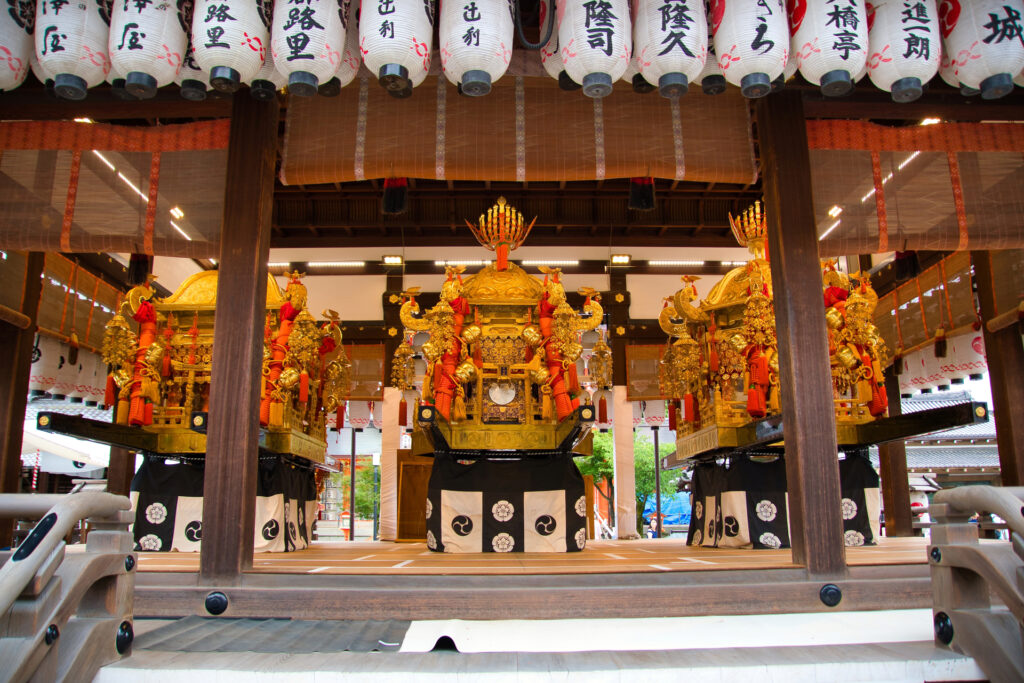
The best time to visit Yasaka Shrine depends on the kind of Kyoto moment you want. Early morning is best for quieter photos, especially around Nishiromon Gate and the central grounds. The air feels a little clearer, footsteps on the gravel stand out more, and you can look around without constantly stepping aside for other visitors. Midday works better if you want to buy omamori, receive a goshuin, or combine the shrine with lunch and shops in Gion.
Late afternoon is one of the most practical times. You can walk from Kiyomizu-dera or Southern Higashiyama toward Yasaka Shrine, rest in Maruyama Park, then continue into Gion for dinner. Night is best for atmosphere. The lanterns glow, the buildings fall into shadow, and the shrine grounds can feel calm even while Gion outside is still busy.
Season makes a difference too. Spring is popular because Maruyama Park, directly beside the shrine, is known for cherry blossoms. July brings Gion Matsuri, which is culturally rich but also hot, crowded, and affected by traffic restrictions. New Year is another very busy period, as many people visit shrines for hatsumode, the first shrine visit of the year.
Visiting Yasaka Shrine at Night
Visiting Yasaka Shrine at night is one of the simplest pleasures in Gion. You can finish dinner, walk east along Shijo-dori, and enter through the red gate once the lanterns are already lit. The sound of restaurants and traffic fades behind you, and the grounds feel softer than they do in the afternoon.
The main thing to remember is that the shrine grounds may be accessible at night, but the office, omamori, goshuin, and formal services are generally daytime matters. If you want a charm or stamp, go before 17:00. If you want lanterns, photos, and a quiet walk, evening works beautifully.
Gion is usually active at night, but normal travel awareness still applies, especially if you are walking alone late. Stay on lit paths, watch your step on stairs and gravel, and be cautious if you continue into darker parts of Maruyama Park. The best night photos are often around the lantern stage, but pause before raising your camera. Let your eyes adjust. Listen for a moment. Then shoot.
Location: Yasaka Shrine, Gion district
Access: Walk from Gion restaurants, Gion-Shijo Station, or Kyoto-Kawaramachi Station
Hours: Shrine grounds generally open 24 hours; office generally 9:00–17:00
Price: Free
Official Website: https://www.yasaka-jinja.or.jp/en/
Visiting During Gion Matsuri
Gion Matsuri is the major festival connected with Yasaka Shrine. It takes place throughout July and is one of Kyoto’s defining cultural events. For travelers, it helps to separate the broader “festival month” from the busiest main event days. Early and mid-July bring preparations, decorated floats, and evening festival atmosphere in central Kyoto. The major procession days around July 17 and July 24 bring huge crowds, traffic changes, and a much higher level of intensity.
The experience can be unforgettable, but it is not effortless. You may hear festival music from the floats, calls around the mikoshi, and the thick summer sound of people moving through Kyoto’s streets. July is hot and humid, especially in evening crowds, so bring water, wear breathable clothing, and avoid packing your schedule too tightly. If Gion Matsuri is a main reason for your trip, book accommodation early and check the current schedule before you travel.
Location: Yasaka Shrine and central Kyoto
Access: Use trains and walking where possible; expect traffic restrictions during major festival events
Hours: Festival events vary by date and year
Price: Shrine grounds are free; some viewing arrangements or special seating may cost extra
Official Website: https://www.yasaka-jinja.or.jp/en/gion_fes/
How to Visit Yasaka Shrine: A Simple Walking Route
The easiest walking route starts at Gion-Shijo Station or Kyoto-Kawaramachi Station. From there, walk east along Shijo-dori toward the red Nishiromon Gate. Do not rush this stretch. The approach is part of the experience: sweets shops and souvenir stores, people crossing between Gion and Kawaramachi, buses pulling up near the curb, and the gate waiting at the end of the street like punctuation.
Enter through the gate, continue to the Main Hall and lantern stage, make a short prayer if you wish, then circle toward Utsukushii Gozen-sha and the smaller shrines. After that, keep walking east into Maruyama Park. At a comfortable pace, this route takes about 45 to 60 minutes. It also leaves you with several good options: turn north to Chion-in, walk southwest toward Kennin-ji, or continue south through Nene-no-Michi, Ninenzaka, and Sannenzaka toward Kiyomizu-dera.
Location: Gion-Shijo or Kyoto-Kawaramachi to Yasaka Shrine and Maruyama Park
Access: On foot via Shijo-dori and the shrine grounds
Hours: Best any time; daylight for photos, evening for lantern atmosphere
Price: Free for Yasaka Shrine and Maruyama Park
Official Website: https://www.yasaka-jinja.or.jp/en/access_map/
15-Minute Quick Visit
A 15-minute visit is enough if you are passing through Gion and want a meaningful stop without rearranging your day. Walk in from Shijo-dori, photograph Nishiromon Gate, continue to the Main Hall and lantern stage, make a short prayer, and leave through the same gate or continue briefly toward Maruyama Park. This works well before dinner, after lunch, or between Gion and Kawaramachi.
Keep it focused. Do not try to see every sub-shrine, compare every omamori, or photograph the grounds from every possible angle. The gate and central lantern stage are the key points. If it is crowded, move with the flow rather than stopping suddenly. The shrine feels better when treated as a calm pause, not a checklist squeezed between errands.
Location: Nishiromon Gate and Main Hall area, Yasaka Shrine
Access: About 5 minutes on foot from Gion-Shijo Station
Hours: Shrine grounds generally open 24 hours; office generally 9:00–17:00
Price: Free
Official Website: https://www.yasaka-jinja.or.jp/en/
45-Minute Standard Visit
A 45-minute visit is the best fit for most travelers. Start from Shijo-dori, enter through Nishiromon Gate, pause for photos, then walk toward the Main Hall. After praying, step back and look at the lantern stage from a little distance. It often feels more impressive as part of the whole courtyard than as a close-up shot.
Then visit one or two smaller shrines, including Utsukushii Gozen-sha if it interests you. If the office is open, check the omamori and goshuin options. After that, continue east into Maruyama Park. The transition is gentle and satisfying: the activity of the shrine gives way to trees, paths, benches, and seasonal flowers. In spring, allow extra time, since the park becomes one of Kyoto’s busiest cherry blossom areas.
Location: Yasaka Shrine grounds and Maruyama Park entrance
Access: Walk from Gion-Shijo, Kyoto-Kawaramachi, or Gion bus stop
Hours: Shrine grounds generally open 24 hours; office generally 9:00–17:00
Price: Free
Official Website: https://www.yasaka-jinja.or.jp/en/
Half-Day Gion and Higashiyama Route
For a half-day route, two versions work especially well. Route A is gentler and less demanding: Gion-Shijo → Hanamikoji or Kennin-ji → Yasaka Shrine → Maruyama Park → Chion-in. It gives you Gion streets, an optional Zen temple, the shrine, a park break, and a large Buddhist temple without forcing you into a long uphill walk.
Route B is the classic Southern Higashiyama route: Yasaka Shrine → Maruyama Park → Nene-no-Michi → Ninenzaka and Sannenzaka → Kiyomizu-dera. This is one of Kyoto’s most memorable walking routes, but it comes with slopes, stone paths, crowds, and plenty of shops competing for your attention. Wear comfortable shoes and avoid doing it during the hottest part of a summer day.
Location: Gion, Yasaka Shrine, Maruyama Park, Southern Higashiyama
Access: Mostly on foot; expect slopes and stone paths toward Kiyomizu-dera
Hours: Vary by temple and season
Price: Yasaka Shrine and Maruyama Park are free; temples may charge admission
Official Website: https://www.yasaka-jinja.or.jp/en/
Things to Do Near Yasaka Shrine
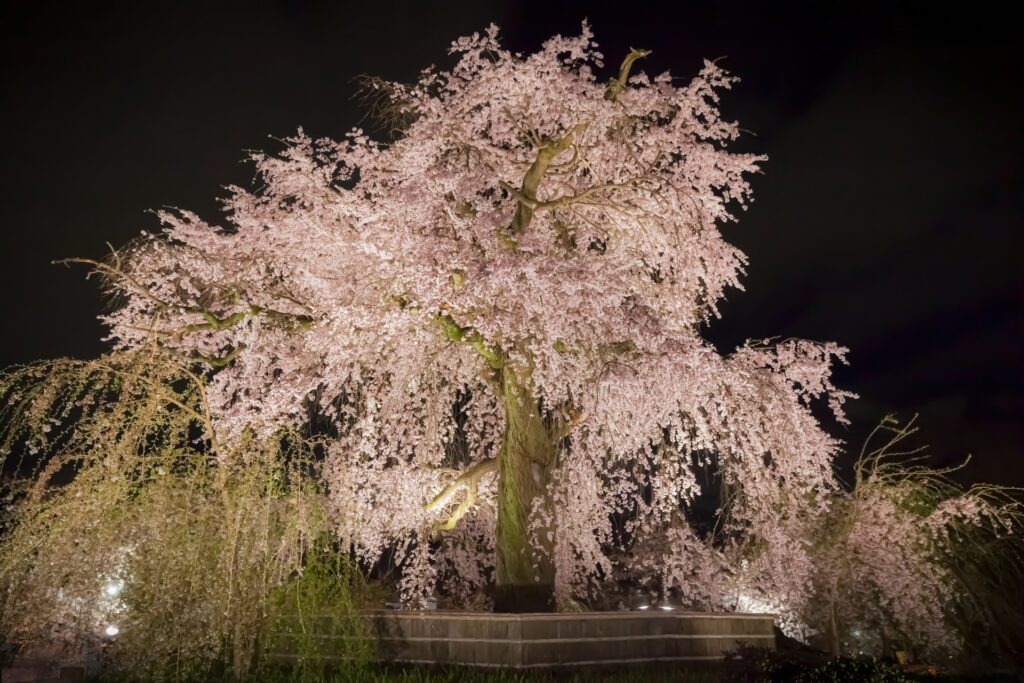
One reason Yasaka Shrine is so useful for travelers is its location. Step east and you are in Maruyama Park within moments. Walk north and you reach Chion-in. Head southwest and Kennin-ji is within easy reach. Continue through the lanes of Southern Higashiyama and you can make your way toward Kiyomizu-dera. The shrine is less an isolated stop than a natural turning point in the day.
Choose based on your energy, not just on the map. If your feet are tired, go into Maruyama Park. If you want scale and a more solemn mood, head to Chion-in. If you want a quieter Zen temple close to Gion, choose Kennin-ji. If it is your first time in Kyoto and you still have the stamina, continue toward Kiyomizu-dera through Ninenzaka and Sannenzaka. Each option changes the pace of the day.
Maruyama Park: The Easiest Add-On
Maruyama Park is the easiest add-on after Yasaka Shrine because it sits directly to the east of the shrine grounds. There is no need for a separate transfer or complicated route. Just keep walking past the central shrine area, and the space opens into paths, trees, benches, and seasonal scenery. In spring, the park is especially known for cherry blossoms, including its famous weeping cherry tree.
During cherry blossom season, expect crowds, particularly in the afternoon and evening. The mood can be more festive than quiet, with people taking photos, resting, and moving between the park and shrine. Outside peak seasons, Maruyama Park is useful as a breathing space after the busier streets of Gion. The pond, open air, and tree-lined paths make it a good reset before continuing to Chion-in or Kiyomizu-dera.
Location: 473 Maruyama-cho, Higashiyama-ku, Kyoto
Access: Directly east of Yasaka Shrine; a short walk from the shrine grounds
Hours: Generally open 24 hours
Price: Free
Official Website: https://kyoto-maruyama-park.jp/
Chion-in Temple: A Grand Temple North of the Park
Chion-in Temple is a large Buddhist temple north of Maruyama Park, and it makes a strong contrast with Yasaka Shrine. Where Yasaka Shrine feels bright, public, and tied to the movement of Gion, Chion-in feels broader and weightier. Its massive Sanmon gate, spacious grounds, and stone steps give the visit a more solemn tone.
You can walk there from Yasaka Shrine through or around Maruyama Park. The route feels natural, and it helps show how closely Kyoto’s shrines, temples, parks, and neighborhoods sit beside one another. Be ready for stairs and a site that takes more time than Yasaka Shrine. If you plan to visit gardens or specific buildings, check current hours and fees before entering.
Location: 400 Rinka-cho, Higashiyama-ku, Kyoto
Access: About 10 minutes on foot from Yasaka Shrine via Maruyama Park area
Hours: Varies by area and season; check the official website before visiting
Price: Temple grounds and paid areas vary; check current admission details
Official Website: https://www.chion-in.or.jp/en/
Kennin-ji Temple: A Quiet Zen Stop Near Gion
Kennin-ji Temple is a good choice if you want to balance Yasaka Shrine with a calmer temple experience near Gion. It pairs easily with Hanamikoji, the traditional Gion street known for teahouses and preserved architecture. After the bustle around Shijo-dori and Yasaka Shrine, Kennin-ji can feel like a slow exhale.
Inside, expect gardens, wooden corridors, tatami rooms, and well-known dragon imagery. You will usually remove your shoes in indoor areas, so wear socks you are comfortable walking in. Kennin-ji is also a good rainy-day addition because much of the visit can be enjoyed from covered spaces while looking out toward the gardens.
Location: 584 Komatsu-cho, Higashiyama-ku, Kyoto
Access: About 10–15 minutes on foot from Yasaka Shrine; also within walking distance of Gion-Shijo Station
Hours: Varies by season and area; check the official website before visiting
Price: Admission may apply for temple interiors and gardens
Official Website: https://www.kenninji.jp/english/
Kiyomizu-dera: The Longer Walk Through Southern Higashiyama
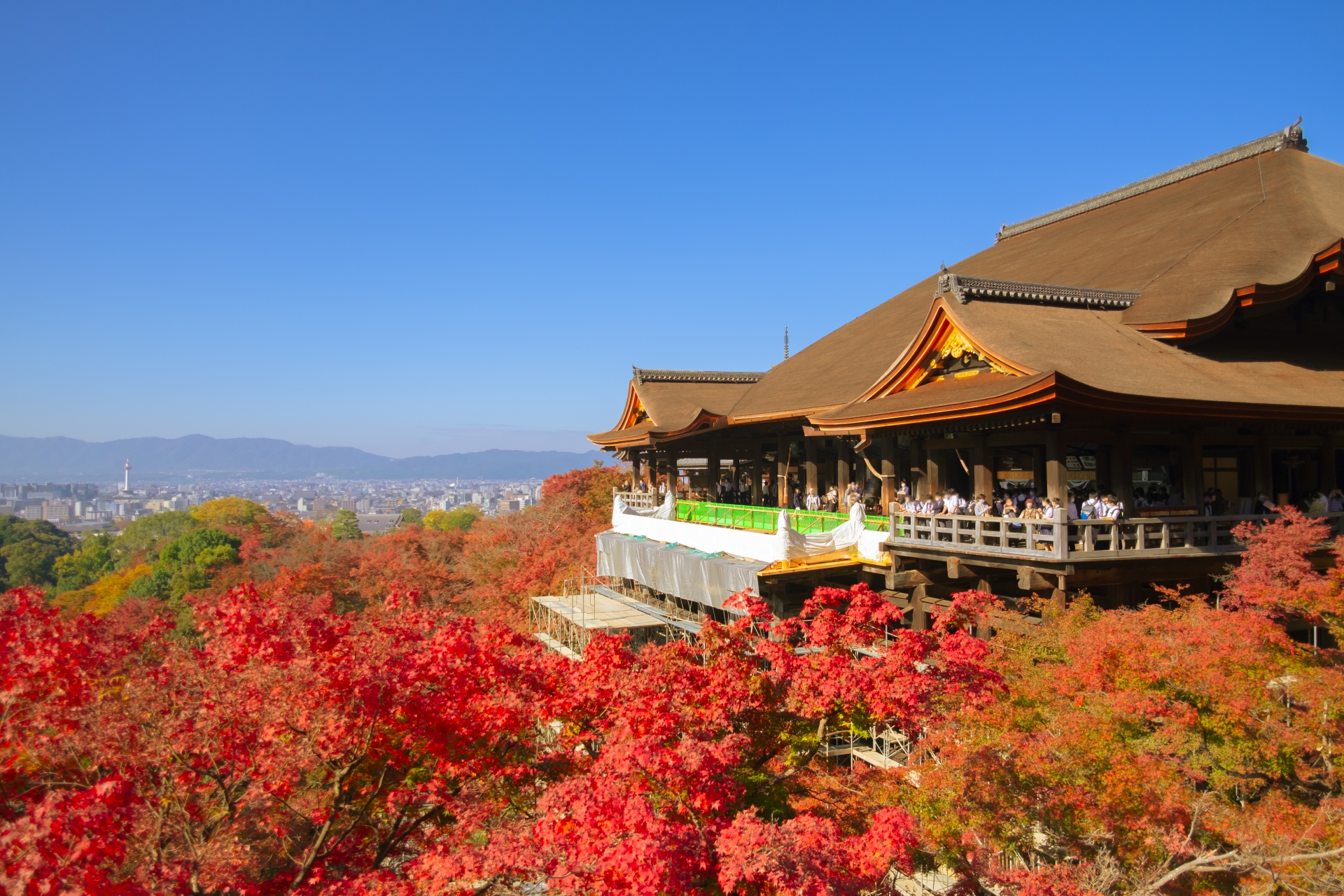
Kiyomizu-dera is the major extension from Yasaka Shrine for travelers who want a classic Kyoto walking day. From Yasaka Shrine, continue through Maruyama Park and the lanes of Southern Higashiyama, then follow Nene-no-Michi, Ninenzaka, and Sannenzaka toward the temple. It is a beautiful route, but not a flat one. Expect slopes, stone paving, narrow lanes, souvenir shops, and plenty of people.
Start early if you want a quieter experience, especially during cherry blossom season, autumn foliage, or weekends. Morning light is better for photos, and the approach to Kiyomizu-dera feels less congested before tour groups build up. Late afternoon can be lovely too, with warm light on the old streets, but it is often crowded and slow-moving.
Location: 1-294 Kiyomizu, Higashiyama-ku, Kyoto
Access: About 25–35 minutes on foot from Yasaka Shrine, depending on route, pace, and crowds; includes slopes
Hours: Generally opens at 6:00; closing time varies by season
Price: Admission applies
Official Website: https://www.kiyomizudera.or.jp/en/
Yasaka Shrine Etiquette for First-Time Visitors
You do not need to know every detail of Shinto etiquette to visit Yasaka Shrine respectfully. A few simple habits are enough. Before passing through a torii gate, make a small bow if it feels natural. When possible, walk slightly to the side of the approach rather than directly down the center, as the center is traditionally considered the path of the deity.
At the purification basin, rinse your hands if the water station is open and in use. At the worship area, place a small coin in the offering box, bow twice, clap twice, pray quietly, and bow once more. If there is a line, follow the flow and avoid lingering at the front. When in doubt, pause for a moment and watch how local visitors move before stepping forward.
Photography mostly comes down to awareness. Do not take photos where signs say not to. Do not photograph people directly while they are praying. At night, keep your voice low, especially around the Main Hall and smaller shrines. Yasaka Shrine is famous and photogenic, but it is still a living place of worship.
Location: Yasaka Shrine grounds
Access: Follow the main path from Nishiromon Gate to the Main Hall
Hours: Grounds generally open 24 hours; office generally 9:00–17:00
Price: Free
Official Website: https://www.yasaka-jinja.or.jp/en/
Sample Itineraries Including Yasaka Shrine
| Itinerary | Route | Best for | Time Needed |
| Quick Gion Stop | Gion-Shijo → Shijo-dori → Yasaka Shrine → Gion dinner | First night in Kyoto or short visit | 30–60 minutes |
| Gion + Park Walk | Yasaka Shrine → Maruyama Park → Chion-in | Cherry blossoms or quiet walking | 1.5–2.5 hours |
| Southern Higashiyama Half-Day | Yasaka Shrine → Maruyama Park → Ninenzaka/Sannenzaka → Kiyomizu-dera | First-time Kyoto visitors | 3–5 hours |
| Evening Route | Dinner in Gion → Yasaka Shrine at night → short Maruyama Park walk | Lanterns and atmosphere | 45–90 minutes |
| Gion Matsuri Route | Downtown Kyoto floats → Yasaka Shrine → evening festival atmosphere | July travelers | Half day to full day |
For a first night in Kyoto, the evening route is the easiest. Eat in Gion, walk to Yasaka Shrine, spend a little time with the lanterns, then return by taxi, train, or on foot depending on where you are staying. For a first full day, the Southern Higashiyama half-day route gives a strong sense of Kyoto’s older streets, but it requires comfortable shoes and patience with crowds.
In summer, keep your plans lighter than they look on the map. Heat and humidity make the slopes toward Kiyomizu-dera feel longer. In spring and autumn, add buffer time because photos, crowds, and seasonal scenery will slow you down. In July, if you are visiting for Gion Matsuri, plan around festival movement rather than normal sightseeing speed.
Location: Gion, Yasaka Shrine, Maruyama Park, Chion-in, Southern Higashiyama
Access: Mostly on foot, with train or bus access at the start and end
Hours: Vary by route and temple
Price: Yasaka Shrine and Maruyama Park are free; temples and special events may cost extra
Official Website: https://www.yasaka-jinja.or.jp/en/
Frequently Asked Questions About Yasaka Shrine
Is Yasaka Shrine free?
Yes. Yasaka Shrine’s main grounds are free to enter, which makes it one of the easiest cultural stops in Gion. You can walk through the gate, visit the Main Hall area, see the lantern stage, and continue into Maruyama Park without buying a ticket. Omamori, goshuin, special prayers, and offerings cost separately.
Location: Yasaka Shrine, Gion district
Access: About 5 minutes on foot from Gion-Shijo Station
Hours: Grounds generally open 24 hours; office generally 9:00–17:00
Price: Free entry
Official Website: https://www.yasaka-jinja.or.jp/en/
How long do you need at Yasaka Shrine?
You can see the main parts of Yasaka Shrine in 15 to 20 minutes if you only want Nishiromon Gate, the Main Hall, and the lantern stage. A standard visit takes about 45 minutes. If you include Maruyama Park, Chion-in, Kennin-ji, or the walk toward Kiyomizu-dera, plan anywhere from 1.5 hours to half a day.
Location: Yasaka Shrine and surrounding Gion/Higashiyama area
Access: Best explored on foot from Gion-Shijo or Kyoto-Kawaramachi
Hours: Shrine grounds generally open 24 hours
Price: Free for the shrine grounds
Official Website: https://www.yasaka-jinja.or.jp/en/
Can you visit Yasaka Shrine at night?
Yes. Yasaka Shrine is commonly visited at night, and the lantern-lit grounds are one of the best reasons to go. The shrine office is generally open during the day, so visit before 17:00 if you want omamori, goshuin, or office-related services. For photos and a quiet walk, evening is excellent.
Location: Yasaka Shrine, Gion district
Access: Easy walk from Gion restaurants and Gion-Shijo Station
Hours: Grounds generally open 24 hours; office generally 9:00–17:00
Price: Free
Official Website: https://www.yasaka-jinja.or.jp/en/
What is Yasaka Shrine famous for?
Yasaka Shrine is famous for its connection to Gion Matsuri, its location in Kyoto’s Gion district, its vermilion Nishiromon Gate, its lantern stage, and its role as an active shrine for prayers related to protection, good fortune, and everyday wishes. It also serves as a natural gateway to Maruyama Park and Southern Higashiyama.
Location: 625 Gionmachi Kitagawa, Higashiyama-ku, Kyoto
Access: About 5 minutes on foot from Gion-Shijo Station
Hours: Grounds generally open 24 hours
Price: Free
Official Website: https://www.yasaka-jinja.or.jp/en/
Is Yasaka Shrine the same as Gion Shrine?
Yes. Yasaka Shrine has historically been known as Gion Shrine or Gion-sha. Today, the official name is Yasaka Shrine. The older name still appears in travel conversations because the shrine is so closely tied to Gion and to the Gion Matsuri.
Location: Gion district, Higashiyama-ku, Kyoto
Access: Walk from Gion-Shijo Station, Kyoto-Kawaramachi Station, or Gion bus stop
Hours: Grounds generally open 24 hours; office generally 9:00–17:00
Price: Free
Official Website: https://www.yasaka-jinja.or.jp/en/
What is near Yasaka Shrine?
Maruyama Park is directly beside Yasaka Shrine and is the easiest add-on. Chion-in is north of the park, Kennin-ji is southwest toward Gion, and Kiyomizu-dera can be reached by a longer walk through Southern Higashiyama. Gion’s restaurants, shops, and traditional streets are also immediately nearby.
Location: Gion and Southern Higashiyama, Kyoto
Access: Mostly walkable from Yasaka Shrine
Hours: Vary by park, temple, shop, and restaurant
Price: Varies by site; Yasaka Shrine and Maruyama Park are free
Official Website: https://www.yasaka-jinja.or.jp/en/
Is this the shrine with the lion head in Osaka?
No. The shrine with the giant lion-head stage is Namba Yasaka Shrine in Osaka. This article is about Yasaka Shrine in Kyoto’s Gion district. The two shrines are often confused because their English names look similar, but they are in different cities and offer very different experiences.
Location: Kyoto’s Yasaka Shrine is in Gion, Higashiyama-ku, Kyoto
Access: About 5 minutes on foot from Gion-Shijo Station
Hours: Grounds generally open 24 hours; office generally 9:00–17:00
Price: Free
Official Website: https://www.yasaka-jinja.or.jp/en/
Final Tips for Visiting Yasaka Shrine
Visit in the morning if you want cleaner photos and fewer people around Nishiromon Gate. Visit in late afternoon if you are linking Yasaka Shrine with dinner in Gion. Go at night if you want lanterns, cooler air, and a quieter mood. In spring, pair the shrine with Maruyama Park’s cherry blossoms. In July, visit for Gion Matsuri only if you are ready for heat, crowds, traffic changes, and a schedule that needs a little planning.
The best way to experience Yasaka Shrine is not to rush straight through the gate. Step aside after entering, look back toward Shijo-dori, and notice how quickly the street’s energy changes. Then walk slowly toward the lantern stage. Listen for offering coins, clapping hands, low voices, and the city sounds fading behind you. That small transition — from Gion’s movement to the shrine’s glow — is the reason Yasaka Shrine fits so naturally into a Kyoto itinerary.
Location: Yasaka Shrine, Gion district, Kyoto
Access: About 5 minutes on foot from Keihan Gion-Shijo Station; about 8 minutes from Hankyu Kyoto-Kawaramachi Station
Hours: Grounds generally open 24 hours; office generally 9:00–17:00
Price: Free
Official Website: https://www.yasaka-jinja.or.jp/en/