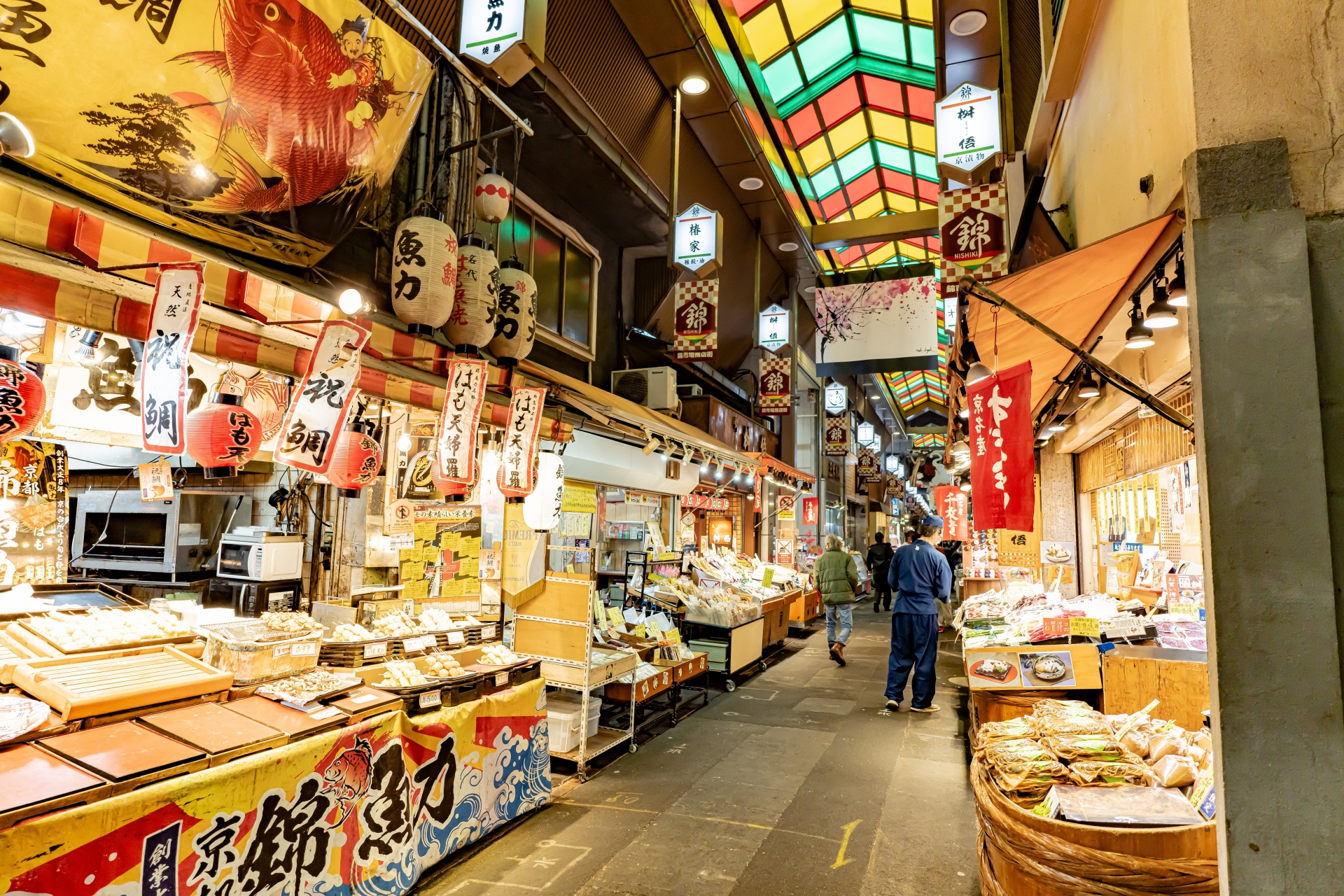
Kyoto’s Nishiki Market is one of those places that nearly every first-time visitor ends up hearing about. It shows up in guidebooks, YouTube itineraries, and endless “Kyoto food” lists. And yes, parts of it can feel heavily geared toward tourists now. But underneath the crowds and oversized seafood skewers, Nishiki still functions as a real working market tied closely to Kyoto’s food culture.
Between the snack stalls, you’ll still spot long-running pickle shops, tea sellers, tofu specialists, and knife stores that supply local restaurants. Some people move through quickly with cameras and shopping bags. Others clearly know exactly which shop they came for.
The market stretches through central Kyoto beneath a covered arcade that seems to trap every smell inside — soy broth, roasted tea, grilled scallops, sweet miso, charcoal smoke. One moment you’re standing beside a quiet tofu counter; a few meters later, someone is torching wagyu over an open flame while tourists gather around filming it.
This guide covers what to eat at Nishiki Market, when to visit if you want to avoid the heaviest crowds, and how to turn the area into a slower half-day walk through central Kyoto rather than just a quick food stop.


What Is Nishiki Market?
Often called “Kyoto’s Kitchen,” Nishiki Market has been part of the city’s food trade for centuries. The arcade runs roughly 390 meters through downtown Kyoto and packs more than 100 small shops and stalls into a surprisingly narrow lane. Seafood, Kyoto vegetables, tea, sweets, pickles, tofu, knives, dried goods — it’s all compressed into one long corridor.
What makes Nishiki feel different from some of Japan’s more tourist-focused food streets is that daily life still overlaps with tourism here. You’ll see travelers carrying matcha drinks while chefs quietly shop for ingredients nearby. Elderly locals stop at the same tsukemono shops they’ve probably visited for years. A few stalls down, people queue for butter-covered scallops.
That mix is part of what keeps the market interesting.
The atmosphere changes block by block. Vendors speak softly across counters. Knives hit cutting boards in quick rhythms. Steam drifts up from bamboo baskets. Some corners smell faintly of kombu stock, while others are thick with smoke from grilled seafood. Around midday on weekends, the market becomes genuinely crowded — shoulder-to-shoulder in places. Earlier in the morning, though, the pace feels noticeably calmer.
Calling Nishiki a tourist trap isn’t entirely wrong. Some stalls are clearly built around social media appeal and premium-priced wagyu skewers. But reducing the market to that alone misses the point. For many visitors, this is still one of the easiest places to encounter Kyoto ingredients and food traditions without needing reservations or deep local knowledge.
| Location | Nakagyo Ward, downtown Kyoto |
| Access | 5-minute walk from Shijo Station or Karasuma Station |
| Hours | Most shops operate around 10:00 AM–6:00 PM |
| Price | Free entry; food usually ranges from ¥300–¥3,000 |
| Official Website | Nishiki Market Official Website |
Best Foods to Try at Nishiki Market
Trying to eat a full meal at one place usually isn’t the best way to experience Nishiki. The market works better when you move slowly, stopping whenever something catches your attention — or smells too good to ignore.
Most people naturally drift from west to east through the arcade, sharing small portions along the way. Some stalls are tiny enough that two or three customers already feel like a crowd.
Cash is still useful here, although larger shops increasingly accept cards and IC payments. Traditional snacks stay fairly reasonable, while seafood skewers and wagyu tend to jump quickly in price.
One thing that surprises many first-time visitors is how sensory the market feels in person. Soy sauce caramelizes on grills. Pickle vendors hand out tiny samples. Steam clouds the glass near soup counters. The sounds shift constantly too — sizzling oil, quiet conversations, knives tapping against wooden boards.
Dashimaki Tamago (Kyoto-style rolled omelet)
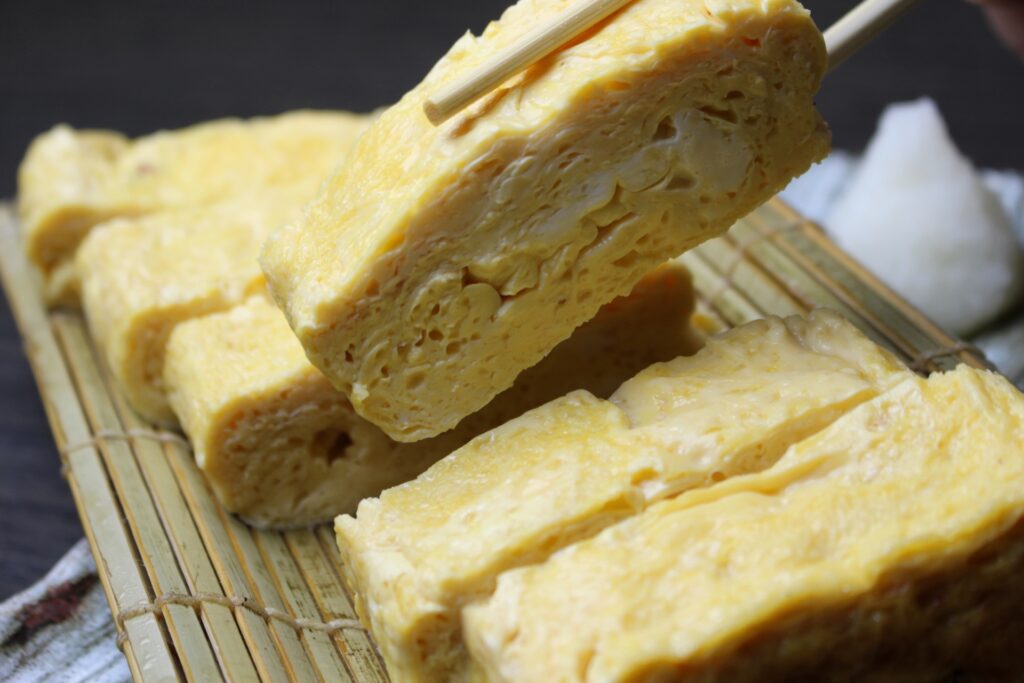
Kyoto-style dashimaki tamago is softer and lighter than the firmer rolled omelets common in other parts of Japan. The difference comes largely from the dashi. Kyoto cooking leans heavily on delicate broth flavors, and the egg absorbs that stock almost like a sponge.
At Nishiki Market, you can usually watch cooks folding the omelet layer by layer inside rectangular pans while steam rises into the arcade. Freshly cut pieces wobble slightly when picked up.
Sanjokiya is one of the better-known spots for it. Around lunchtime the queue grows quickly, but mornings tend to be easier if you want a quieter stop or cleaner photos without people packed shoulder-to-shoulder behind you.
The texture catches people off guard the first time. Instead of tasting rich or heavy, it’s surprisingly light — almost somewhere between an omelet and soft custard.
| Location | Inside Nishiki Market |
| Access | Short walk from Shijo Station |
| Hours | Typically late morning to evening |
| Price | Around ¥500–¥1,000 |
| Official Website | Not specified |
Yuba and Soy-based Kyoto Specialties
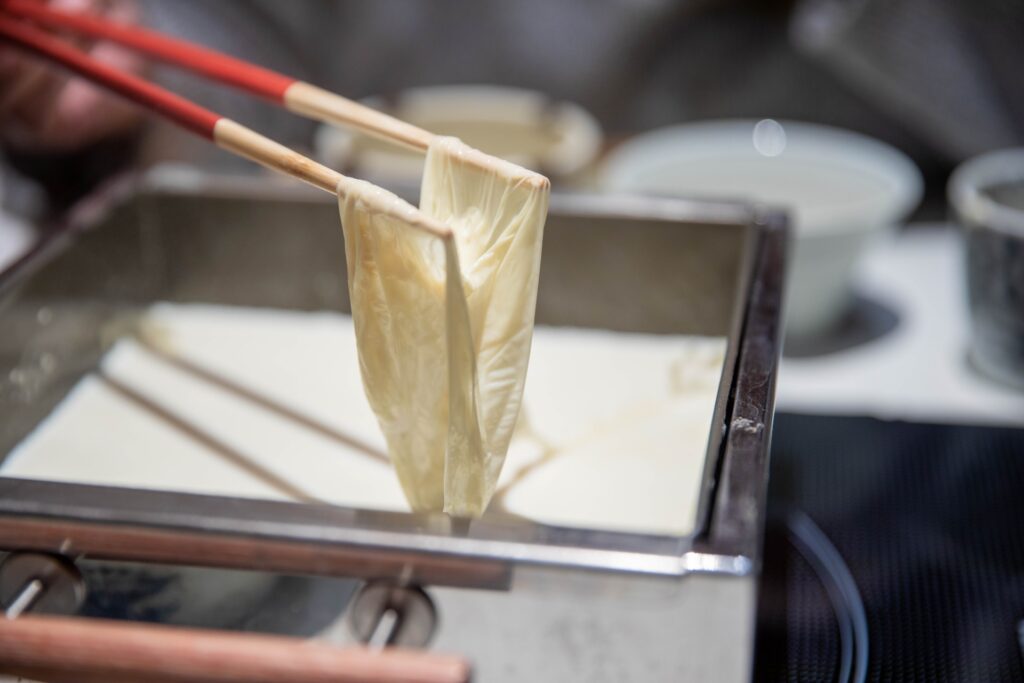
Yuba — the thin tofu skin formed during soy milk production — has deep roots in Kyoto’s Buddhist food culture and shojin ryori temple cuisine.
For travelers unfamiliar with it, Nishiki is probably one of the easiest places to try it casually without committing to a full traditional meal. Some stalls serve warm soy milk soups with folded sheets of yuba floating inside. Others turn it into croquettes, skewers, or small desserts.
Compared to the louder grilled-food sections of the market, the tofu shops feel quieter somehow. The smell is subtle: warm soy milk, light broth, steamed tofu. On rainy days especially, these corners of Nishiki can feel unexpectedly calm while the rest of the arcade stays busy around them.
A few shops have small counters where you can sit briefly instead of balancing food in the middle of the walkway.
| Location | Multiple tofu and yuba specialty shops inside Nishiki Market |
| Access | Walking distance throughout the arcade |
| Hours | Usually 10:00 AM–5:00 PM |
| Price | ¥400–¥1,500 |
| Official Website | Varies by shop |
Kyoto Pickles and Local Snacks
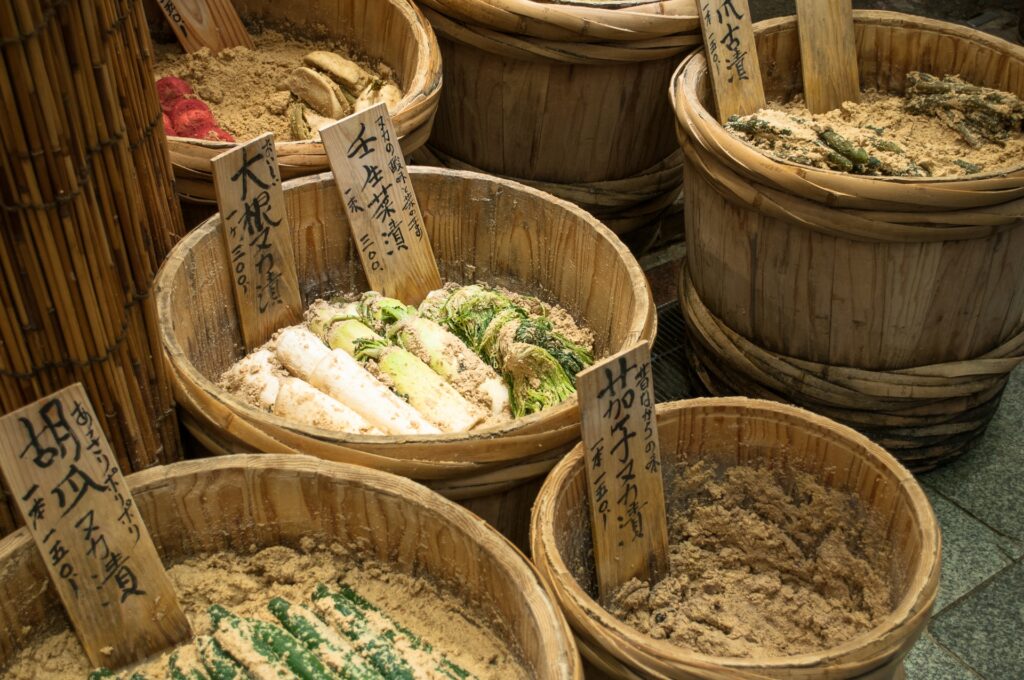
Kyoto’s pickle culture tends to surprise people who expect only simple cucumber pickles. At Nishiki, entire storefronts are filled with barrels and trays of carefully arranged vegetables — yuzu-flavored daikon, glossy cucumbers, eggplant, bright red shibazuke.
Sampling is part of the rhythm here. Vendors often hand out small tastes so people can compare textures and saltiness before buying anything. Even visitors who don’t normally care much about pickles sometimes end up leaving with vacuum-packed bags for souvenirs.
The shops are also visually striking in a way that photos don’t always capture properly. Deep purple shibazuke beside pale white daikon and vivid green cucumbers creates these sharp blocks of color under the market lights.
If you plan to bring products home, it’s worth checking customs rules first — especially for items containing fresher ingredients.
| Location | Multiple tsukemono shops inside Nishiki Market |
| Access | Throughout the arcade |
| Hours | Usually 10:00 AM–6:00 PM |
| Price | ¥500–¥3,000 depending on package size |
| Official Website | Varies by shop |
Seafood Skewers, Wagyu, and Street Snacks
This is the version of Nishiki that dominates Instagram and TikTok. Giant crab legs. Scallops covered in butter. Uni topped with salmon roe. Wagyu skewers sizzling over charcoal while crowds stop in the middle of the lane to film them.
Some stalls are genuinely excellent. Others lean heavily on presentation and convenience pricing. It helps to approach this part of the market with realistic expectations.
Around the middle sections of Nishiki, the smell of smoke and sweet soy glaze becomes much stronger. Grills crackle constantly. Tour groups pause suddenly for photos. The atmosphere gets louder and more chaotic as the day goes on.
If seafood skewers are high on your list, arriving before 11:30 AM makes a noticeable difference. By early afternoon, some lines become long enough that people spend more time waiting than eating.
| Location | Various seafood and grilled food stalls throughout Nishiki Market |
| Access | Walking distance inside arcade |
| Hours | Typically 10:00 AM–6:00 PM |
| Price | ¥800–¥4,000 depending on seafood or wagyu quality |
| Official Website | Varies by shop |
Best Time to Visit Nishiki Market
Nishiki feels almost like a different place depending on when you arrive.
For most travelers, the sweet spot is around 10:00 AM to 11:00 AM. Shops are open, ingredients are freshly arranged, and the crowd still feels manageable enough to browse without constantly weaving around people.
By noon, things change quickly. Popular stalls start building long queues, and the narrow arcade becomes harder to move through comfortably. The energy can still be fun — especially if you enjoy busy food markets — but it’s less ideal for slow browsing or photography.
Late afternoon has its own mood entirely. Some vendors begin cleaning up earlier than expected, seafood displays shrink, and parts of the market start feeling quieter even while tourists continue passing through.
Weekdays are noticeably easier than weekends. Cherry blossom season and autumn foliage season bring especially dense crowds.
Rainy days, surprisingly, are often excellent. Because the arcade is fully covered, Nishiki becomes one of Kyoto’s more convenient bad-weather destinations. The rain also tends to thin the crowds just enough to make the market easier to enjoy.
Nishiki Market Etiquette: What Tourists Should Know
One of the main things visitors should know before arriving is that Nishiki discourages eating while walking.
The arcade is narrow already, and once the crowds build up, people stopping suddenly with food in hand creates bottlenecks almost immediately. Most stalls expect customers to stay nearby, finish eating, and then continue moving through the market.
You’ll notice small standing spaces, counters, or side areas near many vendors. Using them keeps the flow smoother for everyone.
Trash bins can also be harder to find than many visitors expect. In Japan, it’s common to return disposable containers or skewers to the same stall where you bought the food.
Cash remains helpful, especially at smaller traditional shops.
During busy hours, even simple things like checking Google Maps in the middle of the walkway can create congestion. Stepping slightly to the side before stopping makes a big difference here.
How to Get to Nishiki Market
For most travelers, the easiest route is from Kyoto Station via the Karasuma Subway Line.
Take the subway two stops to Shijo Station, then walk east for about five minutes toward the covered arcade. The transition happens quickly — wide modern streets suddenly narrow, the hanging signs appear overhead, and the smell of grilled food starts drifting out toward the main road.
Karasuma Station on the Hankyu Line is another convenient option, especially for people coming from Osaka.
Buses can technically get you there too, but central Kyoto traffic is often slow enough that trains are usually less stressful.
If you’re already staying around Gion, Kawaramachi, or central Kyoto, walking is often the better experience anyway. The surrounding streets are compact enough that Nishiki fits naturally into a longer afternoon on foot.
Location: Nakagyo Ward, Kyoto
Access:
- 5-minute walk from Shijo Station (Karasuma Subway Line)
- 5-minute walk from Karasuma Station (Hankyu Kyoto Line)
Hours: Open daily; shop hours vary
Price: Subway fare from Kyoto Station approximately ¥220
Official Website: Official Access Page
Suggested Half-Day Itinerary Around Nishiki Market
Nishiki works best when it’s treated as part of a broader walk through central Kyoto rather than a standalone attraction.
A comfortable pace is starting late morning at the western entrance and spending around two hours slowly moving through the arcade. Some people rush through in 30 minutes. It’s usually more enjoyable when you leave room to stop, snack, and wander into smaller specialty shops.
From the eastern exit, Nishiki Tenmangu Shrine sits almost immediately beside the market. After the noise and movement inside the arcade, the small shrine grounds feel surprisingly quiet.
From there, continue into Teramachi Shopping Arcade and nearby Shinkyogoku. The atmosphere shifts again — cafés, bookstores, vintage clothing stores, game arcades, side streets with almost no tourists for a block or two before the crowds return.
Toward late afternoon, walking east toward Gion and the Kamo River area makes for a natural finish. Around sunset, the light softens along the riverbanks and the pace feels noticeably slower than inside Nishiki.
Typical budget for this route is around ¥4,000–¥10,000 depending on food choices and shopping.
Route Example: Nishiki Market → Nishiki Tenmangu Shrine → Teramachi → Gion
This route works particularly well for first-time visitors who want a flexible afternoon without constantly relying on trains or buses.
Start at the western side of Nishiki Market around 11:00 AM. Walking west to east tends to feel more intuitive since the lantern-covered entrance near Nishiki Tenmangu Shrine creates a natural endpoint.
After eating your way through the market, spend a little time at Nishiki Tenmangu Shrine. It’s compact, but the lanterns around the entrance look especially good once the afternoon light starts warming up.
Then head south into Teramachi Shopping Arcade. The transition is gradual: food stalls give way to fashion boutiques, retro shops, cafés, bookstores, and younger local crowds moving between stores.
Stopping for coffee somewhere around Teramachi before continuing toward Gion is usually worth it. By early evening, the streets near the Kamo River become noticeably calmer, and the glow from shop lights and lanterns starts reflecting softly off the water.
Is Nishiki Market Worth Visiting?
For most first-time Kyoto visitors, probably yes — especially if food is part of why you came to the city in the first place.
Nishiki is undeniably tourist-heavy now, and some corners feel designed more for social media than everyday shopping. Still, even with that shift, the market remains one of the easiest introductions to Kyoto ingredients and food culture.
The mistake is expecting a hidden local market untouched by tourism. That version of Nishiki mostly disappeared years ago.
It makes more sense to see the market for what it is now: part historical shopping arcade, part street-food destination, part cultural snapshot of modern Kyoto tourism.
It’s particularly well suited to:
- First-time Kyoto visitors
- Solo travelers
- Food-focused travelers
- Rainy-day sightseeing
- Travelers with limited time
If crowds drain your energy quickly, weekday mornings matter. A lot.
Most people spend somewhere between 1.5 and 3 hours here, with food budgets varying wildly depending on how many seafood skewers or wagyu stops end up happening along the way.
Final Tips for Visiting Nishiki Market
- Arrive before 11:00 AM if possible — the market feels much easier to enjoy before peak crowds.
- Carry cash even if you usually rely on cards.
- Large luggage becomes frustrating quickly inside the narrow arcade.
- Eat near the stall where you bought your food instead of walking through the market.
- Rainy days are often better than expected because the arcade is fully covered.
- Morning light and lighter crowds make photography noticeably easier.
- Some vendors close earlier than the posted market hours.
- Nearby cafés around Teramachi are better for breaks than lingering inside the arcade.
- Public restrooms are available nearby but can get crowded during peak hours.
- If you only try three things, make them dashimaki tamago, Kyoto pickles, and yuba.
Nishiki Market may no longer feel like Kyoto’s hidden food secret, but it still reflects something important about the city — the attention to ingredients, seasonality, and small-scale craftsmanship that continues underneath all the tourism noise.