Arashiyama is one of Kyoto’s most photographed districts, but it is not at its best when treated as a single photo stop. The famous Bamboo Grove gets most of the attention, and for understandable reasons, but the real appeal of Arashiyama is the way the scenery keeps changing as you walk.
Set on the western edge of Kyoto, the area brings together temple gardens, narrow bamboo paths, riverside views, low mountains, small shrines, seasonal foliage, and a handful of scenic rides. It is compact enough for a half-day trip, yet varied enough to fill a slower full day if you keep moving beyond the busiest corners.
Many travelers arrive, take a picture under the bamboo, and leave feeling that Arashiyama was less impressive than expected. Usually, the problem is not Arashiyama itself. It is the route. The area works better when you move through it in layers: start early, visit Tenryu-ji Temple, walk into the Bamboo Grove, pause at Nonomiya Shrine, then let the scenery open up around Togetsukyo Bridge. From there, you can decide whether to climb to Monkey Park, continue to quieter temples, ride the Sagano Romantic Train, or make the longer journey by boat through the Hozugawa River.
This guide is written to help you plan Arashiyama realistically. It covers what to do, how long to spend, which station to use, what to skip if you only have half a day, and how to shape the visit so it feels less like a checklist and more like a day spent properly moving through Kyoto.


Why Visit Arashiyama?
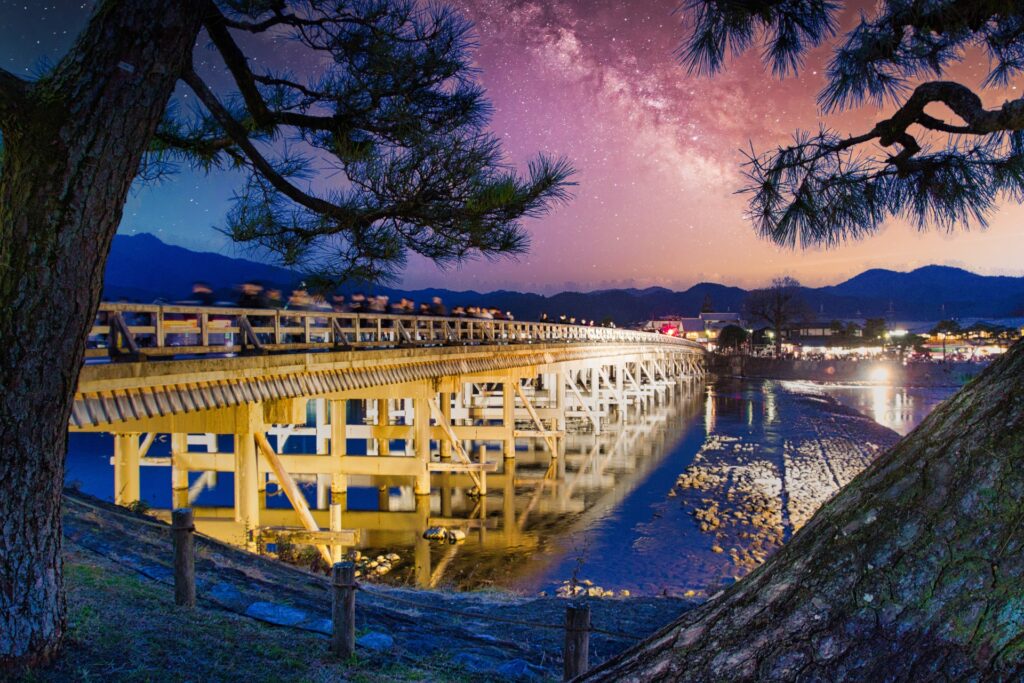
Arashiyama is worth visiting because it gives you several versions of Kyoto within a fairly small walking area. In a few hours, you can move from a Zen temple garden to a bamboo-lined path, from a small literary shrine to a wide river framed by mountains, and from crowded main streets to quieter moss gardens in northern Saga-Arashiyama.
For first-time visitors, it works especially well as either a half-day or full-day trip. A half-day visit should stay focused: Tenryu-ji Temple, the Arashiyama Bamboo Grove, Nonomiya Shrine, and Togetsukyo Bridge. That route gives you the classic Arashiyama experience without making the day feel overplanned.
A full day lets you slow down and add more texture. Okochi Sanso Garden, Jojakko-ji, Gio-ji, Arashiyama Monkey Park Iwatayama, the Sagano Romantic Train, and the Hozugawa River Boat Ride all make sense, but not all in the same rushed itinerary. Arashiyama rewards choosing well.
The mood shifts noticeably from one area to the next. Early in the morning, the Bamboo Grove feels cool and enclosed, with bamboo leaves brushing overhead and long vertical lines cutting into the sky. Around Togetsukyo Bridge, everything opens out: river, boats, mountains, rickshaws, shopfronts, and crowds moving in several directions at once.
Farther north, near Jojakko-ji and Gio-ji, the volume drops. The streets become quieter, the paths feel more residential, and after rain you may hear water dripping from trees onto moss and stone. That contrast is one of the reasons Arashiyama is more satisfying when you keep walking.
The busiest places are usually the Bamboo Grove, the main street, and Togetsukyo Bridge. They are popular for a reason, but they are not the whole story. Arashiyama becomes calmer, and often more memorable, once you move past the spots where everyone stops.
How to Get to Arashiyama from Kyoto Station and Central Kyoto
For most travelers coming from Kyoto Station, the easiest route is the JR Sagano Line to JR Saga-Arashiyama Station. From there, you can walk to Tenryu-ji Temple, the Bamboo Grove, Nonomiya Shrine, and Togetsukyo Bridge. It is a straightforward option for first-time visitors because the route is direct and the station places you within walking distance of the main sights.
Randen Arashiyama Station is another useful arrival point. It is close to Tenryu-ji, the main tourist street, and Togetsukyo Bridge. The Randen tram is especially convenient if you are coming from Shijo-Omiya or connecting from western Kyoto. Arriving by tram also gives the start of the day a slightly slower rhythm than a standard train ride.
Hankyu Arashiyama Station sits on the south side of the river. It is useful if you are coming from the Kawaramachi or Osaka direction, or if you want to begin or end near Togetsukyo Bridge and Monkey Park. Because it is across the river from the main temple and bamboo area, you will likely cross Togetsukyo Bridge as part of your walking route.
During cherry blossom season and autumn foliage season, station areas can become crowded, especially in the late afternoon. One practical approach is to arrive early by JR, walk the main route, then leave by Randen or Hankyu depending on where you are heading next. Kyoto City also suggests subway and Randen combinations during busy periods, which can help avoid the most crowded travel patterns.
| Starting Area | Best Line | Arrival Station | Best For | Notes |
| Kyoto Station | JR Sagano Line | JR Saga-Arashiyama | First-time visitors, Bamboo Grove route | Simple and direct |
| Shijo-Omiya / Randen route | Randen | Randen Arashiyama | Tenryu-ji, main street, Togetsukyo Bridge | Arrives close to central sights |
| Kawaramachi / Osaka side | Hankyu | Hankyu Arashiyama | Togetsukyo Bridge, Monkey Park | South side of the river |
Best Things to Do in Arashiyama
Arashiyama is easiest to enjoy when the sights are connected in a sensible order. Rather than hopping from one attraction to another, think of the day as a walking route.
Start near JR Saga-Arashiyama or Randen Arashiyama, visit Tenryu-ji, enter the Bamboo Grove, pause at Nonomiya Shrine, then decide whether to continue toward Okochi Sanso and the quieter northern temples or loop back toward Togetsukyo Bridge and the river.
Some stops take only a few minutes. Others are worth slowing down for. The key is knowing which ones belong in a half-day route and which are better saved for a full day.
Walk Through Arashiyama Bamboo Grove Early in the Morning
The Arashiyama Bamboo Grove is the image many travelers have in mind before they arrive: a narrow path lined with tall bamboo rising straight on both sides. It is atmospheric, but it is not a vast forest. Expectations matter here.
Come at midday expecting silence and you may leave frustrated. Come early, before the main flow of tour groups and photo stops, and the walk has a very different feel. The air is cooler, the path is easier to move through, and you can hear the bamboo shifting above you — a dry brushing sound, with the occasional creak as stalks lean against each other.
For photos, vertical compositions usually work best. Stand slightly off-center when the path allows, angle the camera upward, and let the bamboo lines draw the eye into the frame. It is better to move with the path than to block it for too long, especially once the crowds begin to build.
By late morning, the mood changes. Rickshaws pass, groups pause for pictures, and the narrow path slows down. At that point, the best thing to do is keep going. Continue toward Okochi Sanso Garden or the northern Saga area, where the walking becomes calmer and the day starts to feel less crowded.
Location: Saga-Arashiyama area, Ukyo Ward, Kyoto
Access: About 10 minutes on foot from JR Saga-Arashiyama Station; also walkable from Randen Arashiyama Station
Hours: Not specified
Price: Not specified
Official Website: Not specified
Visit Tenryu-ji Temple Before or After the Bamboo Grove
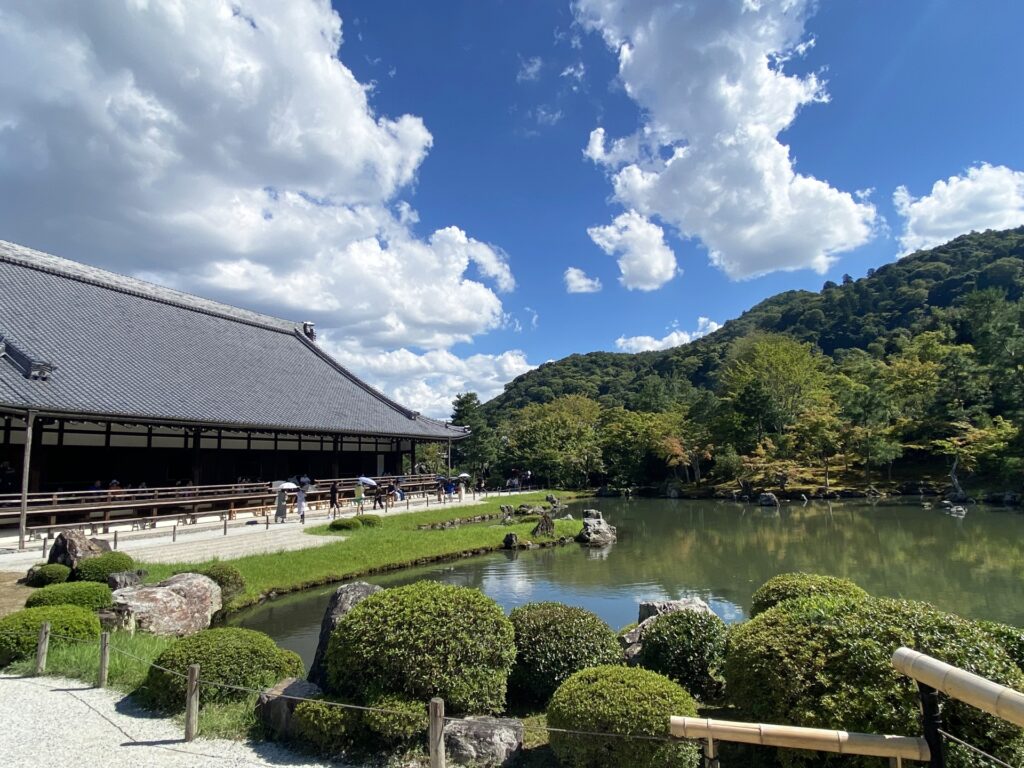
Tenryu-ji Temple is one of Arashiyama’s most important cultural stops, and it pairs naturally with the Bamboo Grove. Rather than rushing straight to the bamboo path, begin with the temple garden if your timing allows. The shift from pond, stones, pine trees, and mountain backdrop into the upright lines of the bamboo gives the route a clear sense of movement.
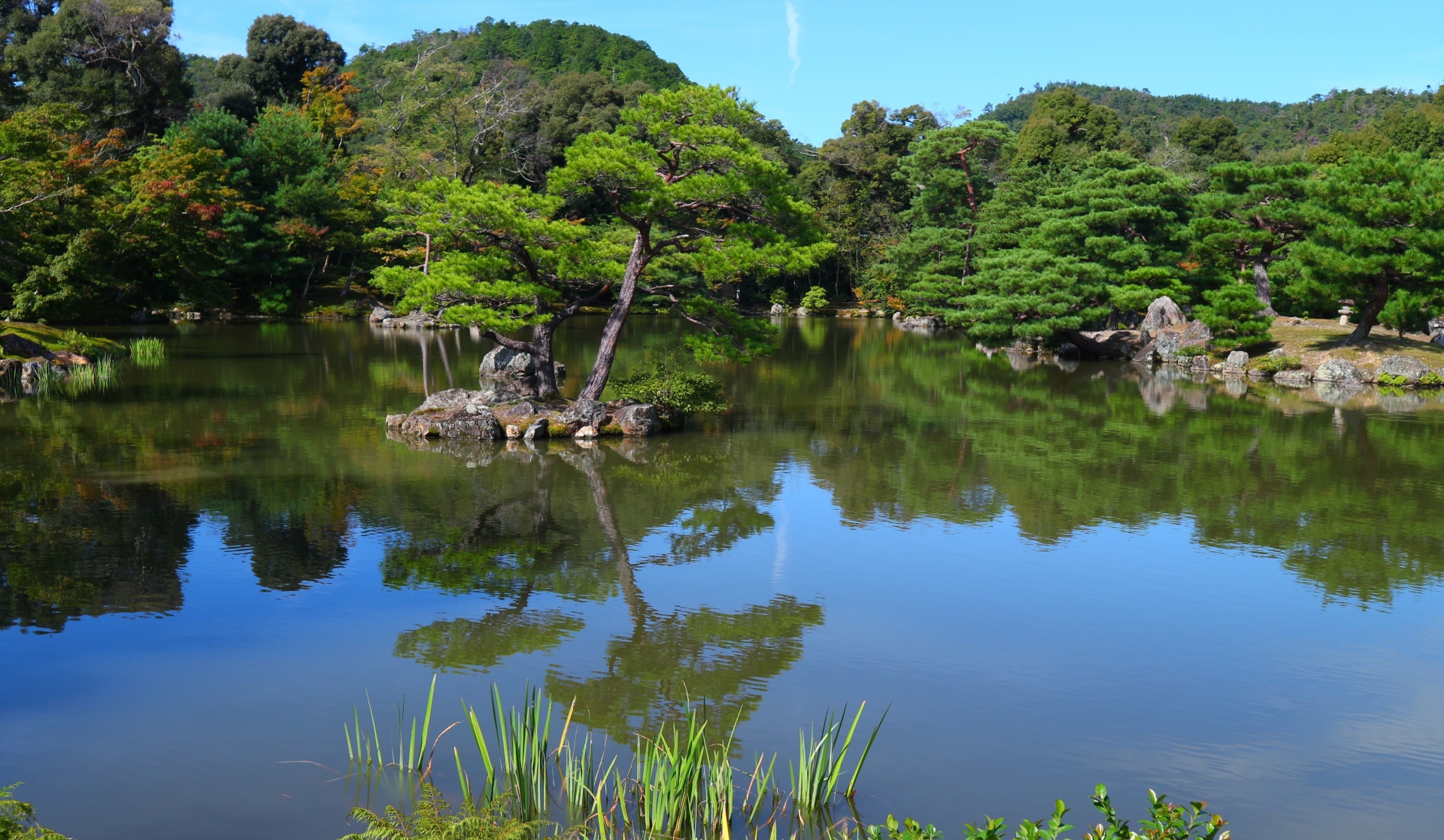
The highlight is Sogenchi Garden, where the pond, garden stones, temple buildings, and borrowed scenery of the surrounding mountains work together. In spring, the garden feels lighter and softer. In autumn, the maples bring more depth and color than the Bamboo Grove itself. Even outside the peak seasons, it rewards a slower pace: reflections on the pond, moss around the stones, clipped trees, and the low mountain line beyond the garden.
A smooth route is to visit Tenryu-ji early, walk through the garden, and then exit toward the Bamboo Grove if your path allows. This avoids some backtracking and gives the morning a quieter start before the main street fills up.
Location: 68 Susukinobaba-cho, Saga-Tenryuji, Ukyo-ku, Kyoto 616-8385
Access: About 5 minutes on foot from Randen Arashiyama Station; about 13 minutes on foot from JR Saga-Arashiyama Station
Hours: Garden 8:30 a.m.–5:00 p.m.; last admission 4:50 p.m.
Price: Garden admission ¥500 for high school students and older; ¥300 for elementary and junior high school students; preschool children free. Buildings require an additional ¥300.
Official Website: Tenryu-ji Official Website
Stop at Nonomiya Shrine on the Bamboo Grove Route
Nonomiya Shrine is small, but it gives the Bamboo Grove route a useful pause. It is known for its black torii gate, its connection to classical Kyoto culture, and its location just off the bamboo path. You do not need to spend a long time here. A few quiet minutes are enough.
The shrine feels compact and close to the path: wood, stone, moss, prayer plaques, and visitors stepping in and out between photos along the bamboo route. Even when the surrounding area is busy, Nonomiya can feel more grounded than the photo-heavy stretches nearby.
Look for the dark torii gate and the Kame-ishi stone, but do not treat the shrine as another item to quickly tick off. It works best as part of the flow between Tenryu-ji, the Bamboo Grove, and the deeper Saga-Arashiyama walking route. Stop, take in the details, then keep moving.
Location: 1 Saganomiyacho, Ukyo Ward, Kyoto 616-8393
Access: Walkable from the Bamboo Grove and Tenryu-ji Temple; about 10 minutes on foot from JR Saga-Arashiyama Station
Hours: Not specified
Price: Not specified
Official Website: Nonomiya Shrine Official Website
Cross Togetsukyo Bridge and Slow Down by the River
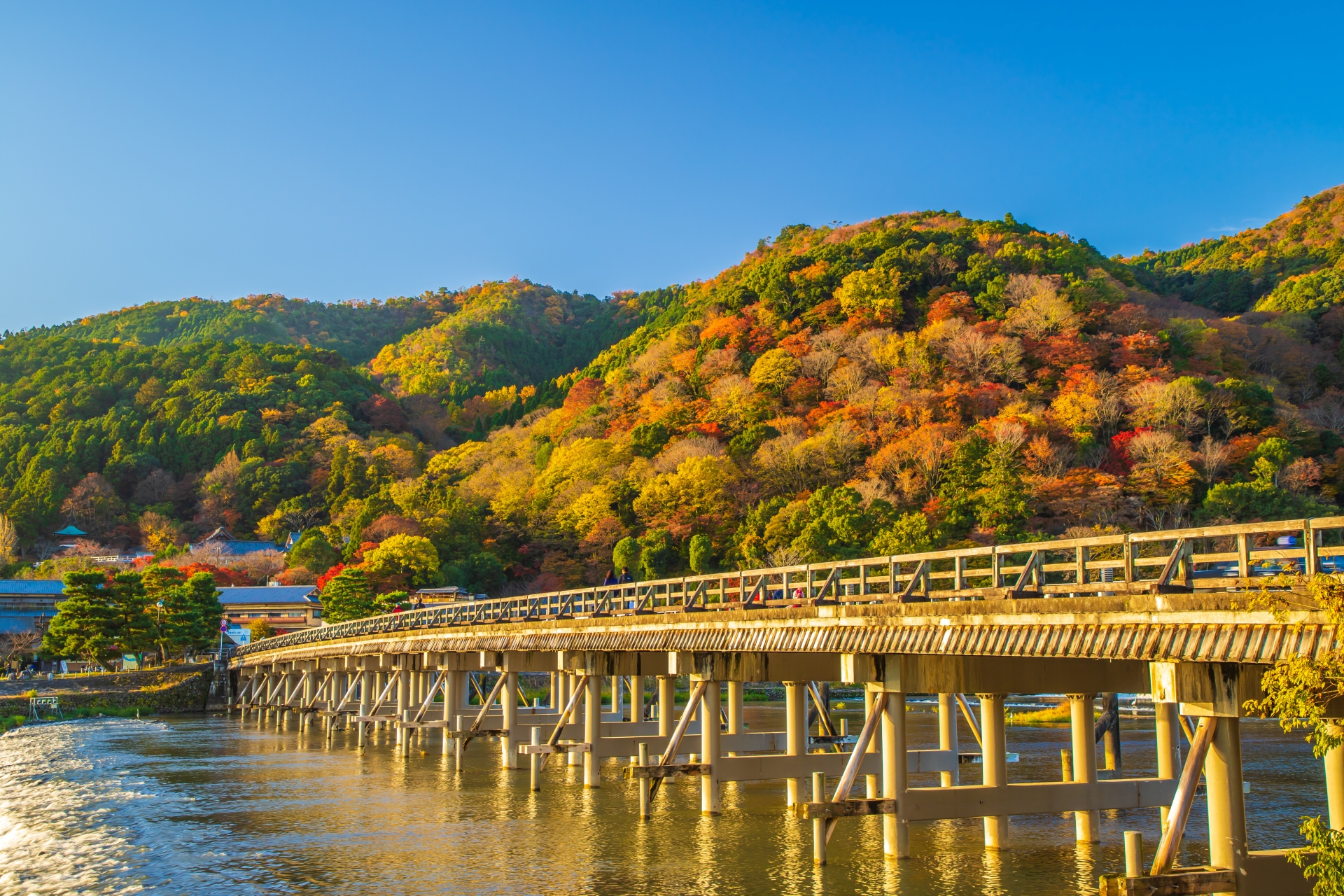
Togetsukyo Bridge is where Arashiyama opens up. After the enclosed garden spaces and the narrow Bamboo Grove, the bridge area brings in river, sky, mountains, boats, and a much wider sense of the district.
The best view is often not from the middle of the bridge but from the riverbank. From there, you can frame the bridge with the mountains behind it and avoid stopping in the walking flow. In spring, cherry blossoms soften the river scene. In early summer, the slopes turn fresh green. Autumn brings layers of red, orange, and gold across the hills, while late afternoon light can make the water look pale and almost metallic.
The bridge itself gets crowded, so cross with the flow, then step aside for photos. If you continue to the south side, you will be near the entrance area for Arashiyama Monkey Park Iwatayama. If you want a gentler finish, stay near the river, find a café, and let the pace of the day settle.
Location: Katsura River / Oi River area, Arashiyama, Kyoto
Access: About 4 minutes on foot from Randen Arashiyama Station; walkable from JR Saga-Arashiyama Station and Hankyu Arashiyama Station
Hours: Not specified
Price: Not specified
Official Website: Kyoto City Official Travel Guide
Hike to Arashiyama Monkey Park Iwatayama for City Views
Arashiyama Monkey Park Iwatayama is an active stop, not a casual flat walk. From the south side of Togetsukyo Bridge, you walk to the entrance and then climb a forested path to the summit area. In hot or humid weather, the climb can feel tougher than it looks on a map, so comfortable shoes and water are important.
At the top, the reward is both the monkeys and the view over Kyoto. Many visitors come for the macaques, but the city view is one of the strongest reasons to go. After the noise around the bridge, the climb shifts the atmosphere: leaves, footsteps, birds, and the occasional monkey call replace shopfronts and traffic.
Follow the park rules carefully. Keep your distance from the animals, do not approach them for photos, and only feed them in the permitted way. This is not the best add-on for travelers with limited mobility, young children who tire easily, or anyone trying to keep Arashiyama under three hours. For active travelers, it gives the day a strong change of pace.
Location: Arashiyama Nakaoshitacho, Nishikyo Ward, Kyoto
Access: Walk from the south side of Togetsukyo Bridge to the entrance, then climb the mountain path
Hours: 9:00 a.m.–4:00 p.m.; summit area open until 4:30 p.m. The park may close early if the monkeys return to the mountain. It may also close during severe weather.
Price: Adults ¥800; children ¥400
Official Website: Arashiyama Monkey Park Iwatayama Official Website
Continue to Okochi Sanso Garden for a Quieter Garden Walk
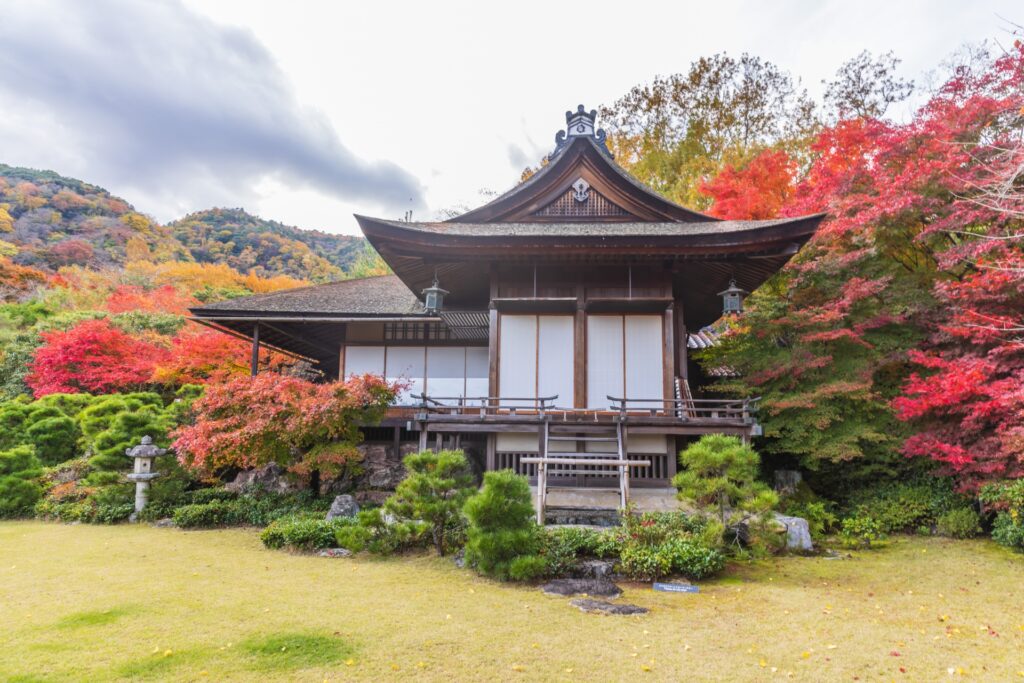
Okochi Sanso Garden is a smart stop after the Bamboo Grove if you want the walk to become quieter rather than busier. The garden sits near the upper end of the bamboo route, so it extends the visit naturally instead of sending you back into the central crowds.
The change in mood is noticeable after you enter. The path rises and curves, the crowds thin, and the garden reveals itself in sections: trees, stone paths, tea-house scenery, and viewpoints looking back toward the surrounding landscape. After the enclosed bamboo corridor, the slight elevation and open glimpses of scenery feel refreshing.
This is not a place to rush through just to complete an Arashiyama list. Pause often. Let the path slow you down. On a damp day, the stones and moss take on a darker tone. In bright weather, the garden paths offer a calm contrast to the busy main street below.
Location: Sagaogurayama Tabuchiyamacho, Ukyo Ward, Kyoto
Access: Near the upper end of the Bamboo Grove; walkable from JR Saga-Arashiyama Station via Tenryu-ji and the bamboo path
Hours: 9:00 a.m.–5:00 p.m.; January and February 10:00 a.m.–4:00 p.m.
Price: Not specified
Official Website: Not specified
Ride the Sagano Romantic Train Through the Hozu Gorge
The Sagano Romantic Train is best treated as a full-day add-on. It is not essential if you only have three or four hours in Arashiyama, but it is a good option if you want to see the Hozu Gorge from a slower scenic train and move beyond the central walking route.
The ride takes about 25 minutes and passes wooded slopes, river views, and seasonal scenery. Spring brings fresh greenery. Autumn is especially popular because the gorge takes on deeper foliage colors. The experience is simple: sit by the window, listen to the tracks, and watch the river appear and disappear below.
A practical plan is to ride one way toward Kameoka and return by JR. If you have a full day and want a more involved route, you can pair the train with the Hozugawa River Boat Ride. Because schedules and operating dates vary, check the official site before building your itinerary around it.
Location: Torokko Saga Station / Torokko Arashiyama Station to Torokko Kameoka Station
Access: Torokko Saga Station is near JR Saga-Arashiyama Station
Hours: Varies by operating date; check the official schedule before visiting
Price: One-way standard fare ¥880 for adults; ¥440 for children. Adult fare applies to ages 12 and older; child fare applies to ages 6 to 12.
Official Website: Sagano Romantic Train Official Website
Visit Jojakko-ji or Gio-ji for a Quieter Side of Arashiyama
Jojakko-ji and Gio-ji are good choices if you want to move beyond the standard Bamboo Grove route. Both sit in the quieter northern Saga-Arashiyama area, and both reward travelers who keep walking after the central sights.
They are especially appealing in autumn, but their atmosphere is not limited to foliage season. Think moss, stone steps, damp garden edges, low temple buildings, and paths that feel less hurried than the main street near the bridge.
Jojakko-ji has more elevation. The route includes stone steps, maple trees, temple structures, and changing views as you climb. It feels more active than Gio-ji, but still much calmer than the Bamboo Grove at peak hours. Wear shoes with grip, especially after rain, as the steps and slopes can feel slick.
Gio-ji is smaller and more inward-looking. Its moss garden, trees, and thatched hut atmosphere create a quiet, enclosed mood. After rain, the moss can look especially deep green, and the sound of water dripping from trees makes the garden feel removed from the busier Arashiyama streets. Choose Gio-ji if you want something soft and contemplative. Choose Jojakko-ji if you want steps, maples, and a little more movement.
Jojakko-ji Location: 3 Saga Ogurayama Oguracho, Ukyo Ward, Kyoto
Access: Walkable from the Bamboo Grove and northern Saga-Arashiyama route
Hours: 9:00 a.m.–5:00 p.m.; reception closes at 4:30 p.m.
Price: ¥600
Official Website: Jojakko-ji Official Website
Gio-ji Location: 32 Kozakacho, Sagatoriimoto, Ukyo-ku, Kyoto
Access: Walkable from northern Saga-Arashiyama; best combined with Jojakko-ji or other northern temples
Hours: Reception closes at 4:30 p.m.; visitors may remain until 4:50 p.m.
Price: Adults ¥500; children ¥100
Official Website: Gio-ji Official Website
Take the Hozugawa River Boat Ride as a Full-Day Add-On
The Hozugawa River Boat Ride is best for travelers planning a full-day Arashiyama and Kameoka route. It pairs naturally with the Sagano Romantic Train, but it requires more planning than a simple walk around the Bamboo Grove and Togetsukyo Bridge.
This is not a quick transfer. The ride takes about two hours, depending on the water level, and moves through the gorge at a pace that lets you notice the rock walls, wooded banks, changing current, and the sound of the boat on the river. The feeling is quite different from central Arashiyama: more spacious, more weather-dependent, and more tied to the landscape.
Leave enough time for transfers. If you ride the Sagano Romantic Train toward Kameoka, you still need to move between the train station and the boat boarding area. The boat may be suspended during storms or high water, and passengers under 80 cm tall cannot board. Check the official schedule before booking, especially around seasonal closures and safety inspection dates.
Location: Hozugawa / Kameoka to Arashiyama route
Access: Commonly combined with the Sagano Romantic Train; allow transfer time between Torokko Kameoka Station, the boat boarding area, and Arashiyama
Hours: Varies by date and water conditions; closed every year from December 29 to January 4, with additional closure dates possible
Price: Regular shared boat fare ¥6,000 for adults; ¥4,500 for children
Official Website: Hozugawa River Boat Ride Official Website
Best Arashiyama Itineraries: Half-Day and Full-Day Routes
The best Arashiyama itinerary depends on your time, your walking pace, and whether you want a light visit or a fuller day. A short visit should stay focused. A full-day visit can be much richer, but only if you leave room for meals, temple hours, station transfers, and slower walking through northern Saga-Arashiyama.
Try not to force every famous sight into a half-day. Arashiyama is more enjoyable when the route has breathing room. The classic route gives you the essentials. The full-day route lets you move beyond the crowded center into quieter temples and scenic experiences.
Half-Day Classic Route for First-Time Visitors
A realistic half-day route takes about 3–4 hours and works well for first-time visitors who want the main Arashiyama experience without overcomplicating the day.
Start at JR Saga-Arashiyama Station, then walk to Tenryu-ji Temple. Visit the garden first while your energy is fresh and the area is still relatively calm. From Tenryu-ji, continue into the Bamboo Grove. Walk slowly, but do not worry if the path is already busier than expected. The bamboo is only one part of the route.
Pause at Nonomiya Shrine, then continue toward Togetsukyo Bridge. Once you reach the river, the scene changes completely: open water, low mountains, boats, and more space to breathe after the narrow paths.
Finish with a riverside walk or café break. If you still have energy and do not mind a climb, add Monkey Park Iwatayama from the south side of the bridge. If time is short, skip Okochi Sanso, Jojakko-ji, Gio-ji, the Sagano Romantic Train, and the Hozugawa River Boat Ride.
Suggested route:
JR Saga-Arashiyama Station → Tenryu-ji Temple → Bamboo Grove → Nonomiya Shrine → Togetsukyo Bridge → Riverside walk or café → Optional Monkey Park
Full-Day Arashiyama Route with Temples, Train, or River Boat
A full-day Arashiyama route takes about 6–8 hours and gives you a deeper experience than the famous photo spots alone.
Start in the morning with Tenryu-ji, the Bamboo Grove, Nonomiya Shrine, and Okochi Sanso Garden. This creates a strong opening sequence: formal garden, bamboo path, small shrine, and quieter elevated garden.
Around midday, continue north to Jojakko-ji or Gio-ji. This is where the route begins to feel less crowded. The walking pace slows, the streets become more residential and wooded, and the atmosphere shifts from famous Kyoto to quieter Saga-Arashiyama. Build in a lunch or café break before choosing your afternoon activity.
For the afternoon, choose one major add-on. The Sagano Romantic Train is easier to fit into most full-day plans and costs ¥880 for adults and ¥440 for children one way. The Hozugawa River Boat Ride is more time-consuming, with a regular shared boat fare of ¥6,000 for adults and ¥4,500 for children, and a ride time of about two hours. Check schedules carefully before deciding.
| Time Available | Best Route | Best For | What to Skip | Notes |
| 3–4 hours | Tenryu-ji → Bamboo Grove → Nonomiya Shrine → Togetsukyo Bridge | First-time visitors | Train, river boat, far northern temples | Start early |
| 5–6 hours | Add Monkey Park or Okochi Sanso | Active travelers or garden lovers | Hozugawa River Boat Ride | Choose one add-on |
| Full day | Add Jojakko-ji / Gio-ji + train or boat | Slow travelers, repeat visitors, foliage season | Nothing essential | Check schedules carefully |
Best Time to Visit Arashiyama
The best time to visit Arashiyama is early morning, especially if the Bamboo Grove matters to you. Before the main crowds arrive, the path feels cooler and more atmospheric. Photos are easier too, simply because fewer people are stopping in the middle of the walkway.
Temple hours shape the rest of the day. Tenryu-ji opens at 8:30 a.m., while Monkey Park and Jojakko-ji open at 9:00 a.m. Gio-ji reception closes at 4:30 p.m., so do not leave the northern temples too late if they are part of your route. Schedule-sensitive experiences such as the Sagano Romantic Train and Hozugawa River Boat Ride should always be checked directly before your trip.
Spring and autumn are the most scenic seasons, but they are also the busiest. Spring brings cherry blossoms around the river and softer colors in the temple gardens. Autumn is known for foliage, especially around the mountains, Jojakko-ji, and the riverbanks. Summer is lush and green, but hot afternoons can make the Monkey Park climb feel demanding. Winter is quieter and less colorful, which can be a fair trade if you prefer fewer crowds.
Rainy days can be surprisingly good in Arashiyama. The Bamboo Grove turns darker and glossier, while moss gardens such as Gio-ji often look more vivid after rainfall. Bring shoes that can handle wet paths and take care on stone steps.
Where to Eat and Take a Break in Arashiyama
Plan your food stops around your route rather than treating lunch as a separate mission. If you are staying near Tenryu-ji and Randen Arashiyama Station, you will find convenient options for lunch, sweets, matcha, and snacks. This area is practical before or after the Bamboo Grove, especially if you do not want to lose time searching.
Near Togetsukyo Bridge, cafés and dessert shops work well for a break after walking. The river area is a good place to sit down, rest your feet, and decide whether you still have energy for Monkey Park. The mood is busier than the northern temples, but that can be part of the appeal: boats on the water, people lining up for sweets, rickshaws moving along the street.
If you are heading into northern Saga-Arashiyama, eat before you go or check your options ahead of time. Restaurants and cafés become more spread out, and you may not want to search for lunch once you are already deep into the quieter temple route.
Try to eat early or late to avoid the peak lunch rush. Around noon, central Arashiyama can feel packed, and popular sit-down meals may involve waiting. Street snacks are fun, but they may not be enough if you are walking all day, climbing to Monkey Park, or adding the train or river boat.
| Situation | Food Type | Best Area | Reservation Needed? | Notes |
| Quick snack | Sweets, matcha, street food | Main street / Randen area | Usually no | Good between sights |
| Sit-down lunch | Soba, tofu, Japanese set meals | Tenryu-ji / central Arashiyama | Check ahead | Best before peak lunch time |
| Rest stop | Café, tea, dessert | Near Togetsukyo Bridge | Check ahead | Good after walking |
| Special meal | Kaiseki, vegetarian, eel | Varies | Often recommended | Confirm official details before visiting |
Practical Tips Before You Go
Wear comfortable shoes. Arashiyama is walkable, but it is not entirely flat. Monkey Park involves a real uphill climb, Jojakko-ji has steps and elevation, and northern Saga-Arashiyama routes can include damp paths, slopes, and uneven stones. If rain is likely, choose shoes with grip.
Bring water if you are visiting Monkey Park or walking beyond the central sights. The main street has shops and vending machines, but once you extend the route, it is better not to rely on finding something at the exact moment you need it. In summer, heat and humidity can make even a short climb feel longer.
Use public transportation where possible, especially during cherry blossom and autumn foliage seasons. Parking is limited, and traffic can make the area feel more stressful than it needs to. Verified parking details differ by attraction: Tenryu-ji has passenger car parking for ¥1,000 per visit on a first-come, first-served basis; Monkey Park has no dedicated parking and asks visitors to use nearby paid parking; Gio-ji has only three parking spaces and asks visitors to give up the space after visiting.
Be considerate with photos and behavior. Do not block the Bamboo Grove path for long photo sessions. Keep your voice low at temples. Avoid touching moss or historic structures. Follow all animal rules at Monkey Park. Arashiyama is a major travel destination, but it is also a living area with temples, residents, and narrow routes that many people share.
FAQ About Visiting Arashiyama
Is Arashiyama worth visiting?
Yes, Arashiyama is worth visiting if you plan more than a quick photo stop at the Bamboo Grove. The area works best as a walking route through Tenryu-ji Temple, the Bamboo Grove, Nonomiya Shrine, Togetsukyo Bridge, and, if you have time, quieter temples or scenic experiences. If you only visit the bamboo path at peak hours, it may feel crowded and underwhelming.
How long should I spend in Arashiyama?
Spend 3–4 hours for a classic half-day visit. That gives you enough time for Tenryu-ji, the Bamboo Grove, Nonomiya Shrine, Togetsukyo Bridge, and a short riverside break. Spend 6–8 hours if you want to add Monkey Park, Okochi Sanso, Jojakko-ji, Gio-ji, the Sagano Romantic Train, or the Hozugawa River Boat Ride.
What is the best time to visit Arashiyama Bamboo Grove?
Early morning is the best time to visit the Arashiyama Bamboo Grove. The path is quieter, the air feels cooler, and photos are easier before the main crowds arrive. By late morning and midday, the path becomes much busier, so it is usually better to keep walking rather than wait for an empty shot.
Can I visit Arashiyama in half a day?
Yes. A good half-day route is Tenryu-ji Temple → Bamboo Grove → Nonomiya Shrine → Togetsukyo Bridge. If you still have energy, you can add Monkey Park, but remember that it requires extra time and an uphill climb. If your time is limited, skip the train, river boat, Okochi Sanso, Jojakko-ji, and Gio-ji.
How do I get from Kyoto Station to Arashiyama?
The simplest route for many visitors is to take the JR Sagano Line from Kyoto Station to JR Saga-Arashiyama Station. From there, you can walk to Tenryu-ji, the Bamboo Grove, Nonomiya Shrine, and Togetsukyo Bridge. Randen Arashiyama Station and Hankyu Arashiyama Station are also useful depending on where you are coming from or going next.
Is Monkey Park Iwatayama hard to climb?
Monkey Park Iwatayama is a real uphill walk, not a flat stroll. Most active travelers can manage it, but it can feel tiring in hot or rainy weather. Wear comfortable shoes, bring water, and allow enough time. The reward is the monkey-viewing area and a wide view over Kyoto.
Should I ride the Sagano Romantic Train?
The Sagano Romantic Train is worth considering if you have a full day in Arashiyama or enjoy scenic train rides. It is especially appealing in spring greenery and autumn foliage. For a short half-day visit, it is usually better to focus on Tenryu-ji, the Bamboo Grove, and Togetsukyo Bridge instead.
What can I do in Arashiyama besides the Bamboo Grove?
You can visit Tenryu-ji Temple, Nonomiya Shrine, Togetsukyo Bridge, Arashiyama Monkey Park Iwatayama, Okochi Sanso Garden, Jojakko-ji, Gio-ji, the Sagano Romantic Train, or the Hozugawa River Boat Ride. The best experience comes from combining several of these into a walking route rather than treating them as separate stops.
Final Recommended Route: The Best Way to Experience Arashiyama
The best way to experience Arashiyama is to treat it as a gradual walk through changing scenery. Start at JR Saga-Arashiyama Station, then visit Tenryu-ji Temple before the area becomes too crowded. Move into the Bamboo Grove, stop briefly at Nonomiya Shrine, and continue to Okochi Sanso Garden if you want a calmer garden experience.
From there, choose your pace. If you have a full day, continue north to Jojakko-ji or Gio-ji, then take a lunch or café break before adding the Sagano Romantic Train or Hozugawa River Boat Ride. If you only have half a day, return toward Togetsukyo Bridge, walk along the river, and stop there unless you have time and energy for Monkey Park Iwatayama.
A practical full route looks like this:
JR Saga-Arashiyama Station → Tenryu-ji Temple → Bamboo Grove → Nonomiya Shrine → Okochi Sanso → Jojakko-ji or Gio-ji → lunch or café break → Togetsukyo Bridge → optional Monkey Park or Sagano Romantic Train
For a half-day trip, stop after Togetsukyo Bridge or add only Monkey Park. For a full-day trip, add the quieter northern temples, the Sagano Romantic Train, or the Hozugawa River Boat Ride. Check official sites before visiting schedule-sensitive attractions, especially trains, boats, and weather-dependent activities.
Arashiyama is at its best when the scenery changes as the day moves on: bamboo in the morning, temple gardens after that, quiet Saga paths around midday, and river views toward the end of the walk. Plan the route with enough space, and the district becomes much more than one famous photo spot.