Kyoto is often described through its temples, Shinto shrines, old streets, gardens, and seasonal food. All of that is true, but it does not tell you how spread out the city feels once you start moving around it.
Fushimi Inari sits well south of the center. Arashiyama is out west. Kinkaku-ji is in the north, while many of the streets visitors picture when they think of Kyoto run through the eastern hills. A workable itinerary depends less on collecting famous names and more on understanding how those areas fit together.
This guide covers Kyoto City itself. Ine and Amanohashidate may share the Kyoto name, but they are in northern Kyoto Prefecture and need a separate trip.


How Many Days Do You Need in Kyoto?
For most first-time visitors, three full days is a comfortable starting point. That is enough time to see the major landmarks without turning every afternoon into a cross-city transfer.
| Time in Kyoto | Realistic Plan |
| 1 day | Fushimi Inari, Kiyomizu-dera, and Gion |
| 2 days | Add Arashiyama and Kinkaku-ji |
| 3 days | Add Nijo Castle, Nishiki Market, and a cultural experience |
| 4 days or more | Add quieter temples, Uji, or Fushimi’s sake district |
Arrival and departure days often look more useful on paper than they are in practice. Checking in, storing luggage, and navigating an unfamiliar station can easily consume part of the day. Families, slower walkers, and anyone traveling in summer will usually be happier planning one main area, then adding a low-effort evening stroll.
There is also no prize for seeing five temples before lunch. After the third sequence of gates, incense, and gravel courtyards, details can begin to blur. Mix temple visits with a market, a garden, a proper meal, a shopping street, or a hands-on cultural activity.
Best Things to Do in Kyoto by Area
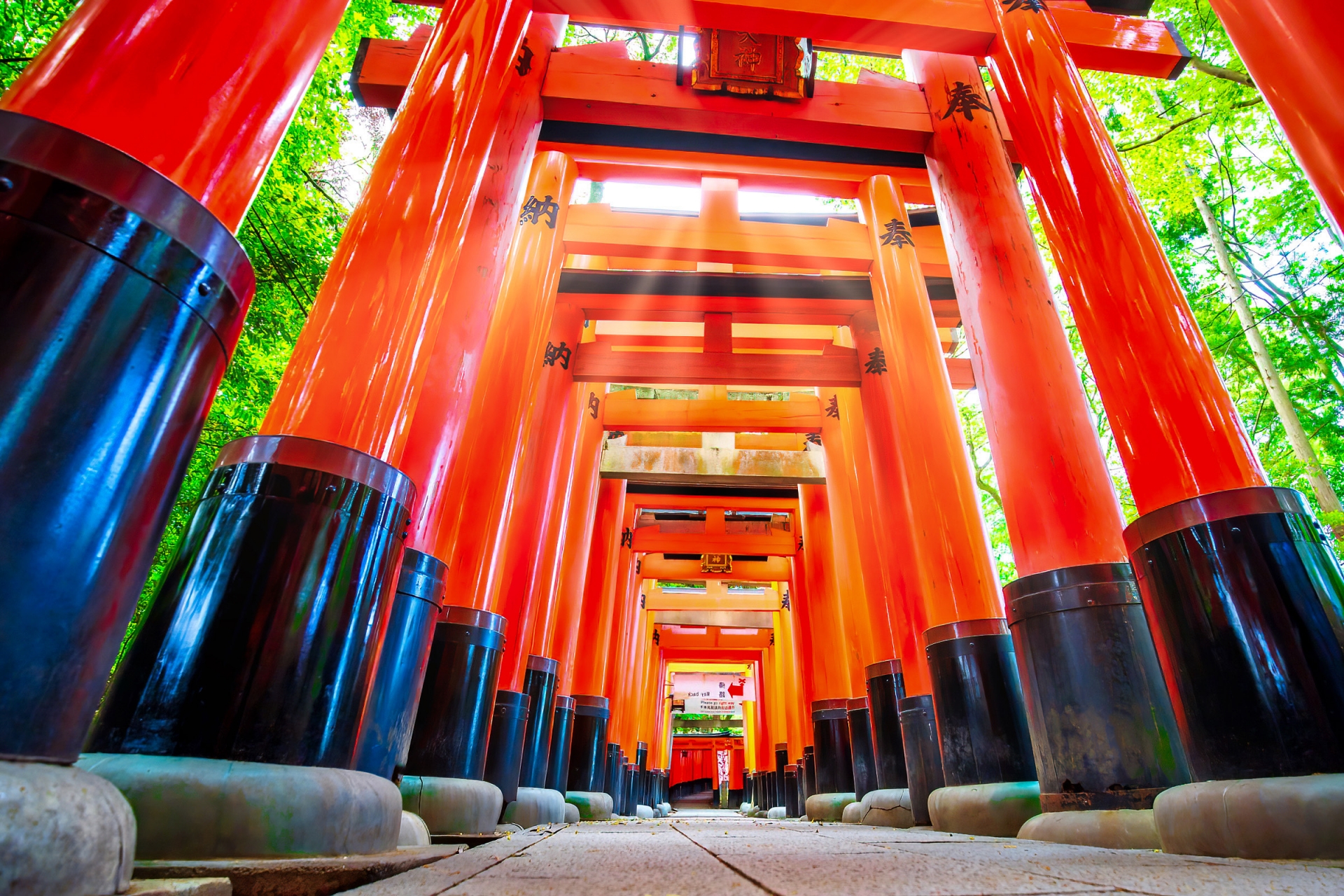
Fushimi Inari and Southern Kyoto
Fushimi Inari Taisha deserves more than a hurried photograph under the torii gates.
Start at the shrine buildings near the entrance, where fox statues appear beside halls and smaller altars. The foxes are messengers associated with Inari worship, and once you notice them, they begin turning up throughout the grounds. From there, continue into the tightly packed passages of Senbon Torii.
Many visitors photograph the gates from the front, but the reverse side tells another story. The black inscriptions record the names of donors and the dates of dedication.
The lower paths are rarely quiet. School groups, tour parties, and people waiting for photographs tend to cluster near the entrance. Keep climbing, though, and the sound changes. Camera shutters thin out, voices become less constant, and the air under the trees can feel noticeably cooler.
A short visit covering the main shrine and lower gates takes around 45–60 minutes. Walking farther up the mountain requires two to three hours. Reaching the summit is worthwhile for those who enjoy the climb, but it is not essential for a first visit.
Come early, carry water during the warmer months, and step to the side before stopping for a photograph. The torii passages are narrower than they appear in wide-angle images. Tofuku-ji works well as a nearby addition.
Essential Information
Location: 68 Fukakusa Yabunouchi-cho, Fushimi-ku, Kyoto
Access: Immediately beside JR Inari Station; about five minutes on foot from Keihan Fushimi-inari Station
Hours: Shrine grounds are generally accessible throughout the day; shrine-office hours vary
Price: Free
Suggested visit length: 45–60 minutes, or 2–3 hours for a longer walk
Best time to visit: Early morning or late afternoon
Official Website: https://inari.jp/en/
Nearby places: Tofuku-ji
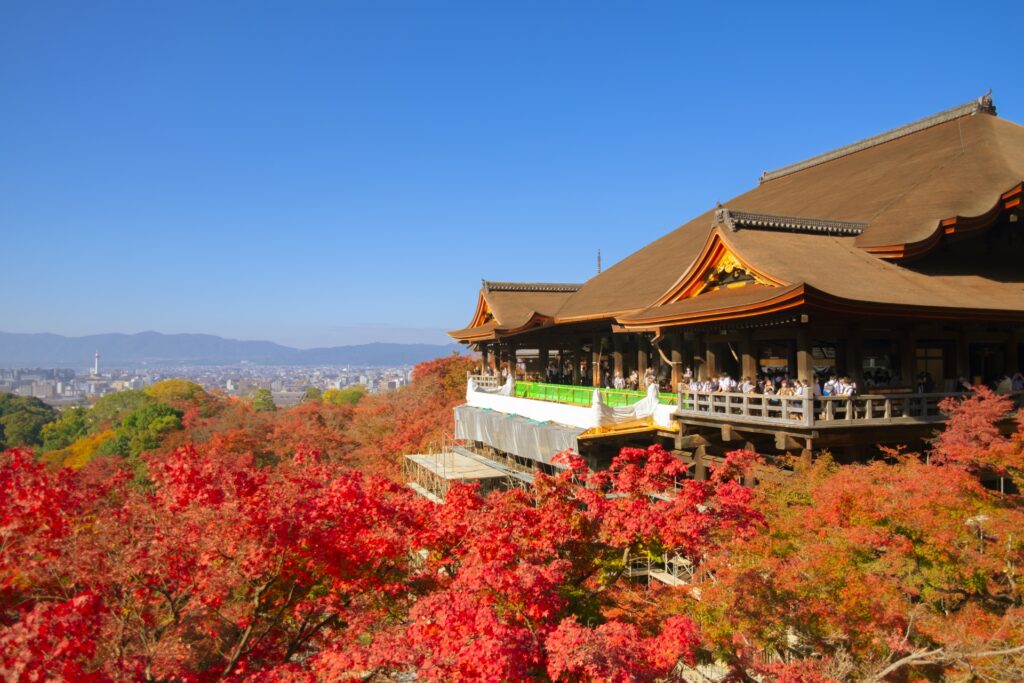
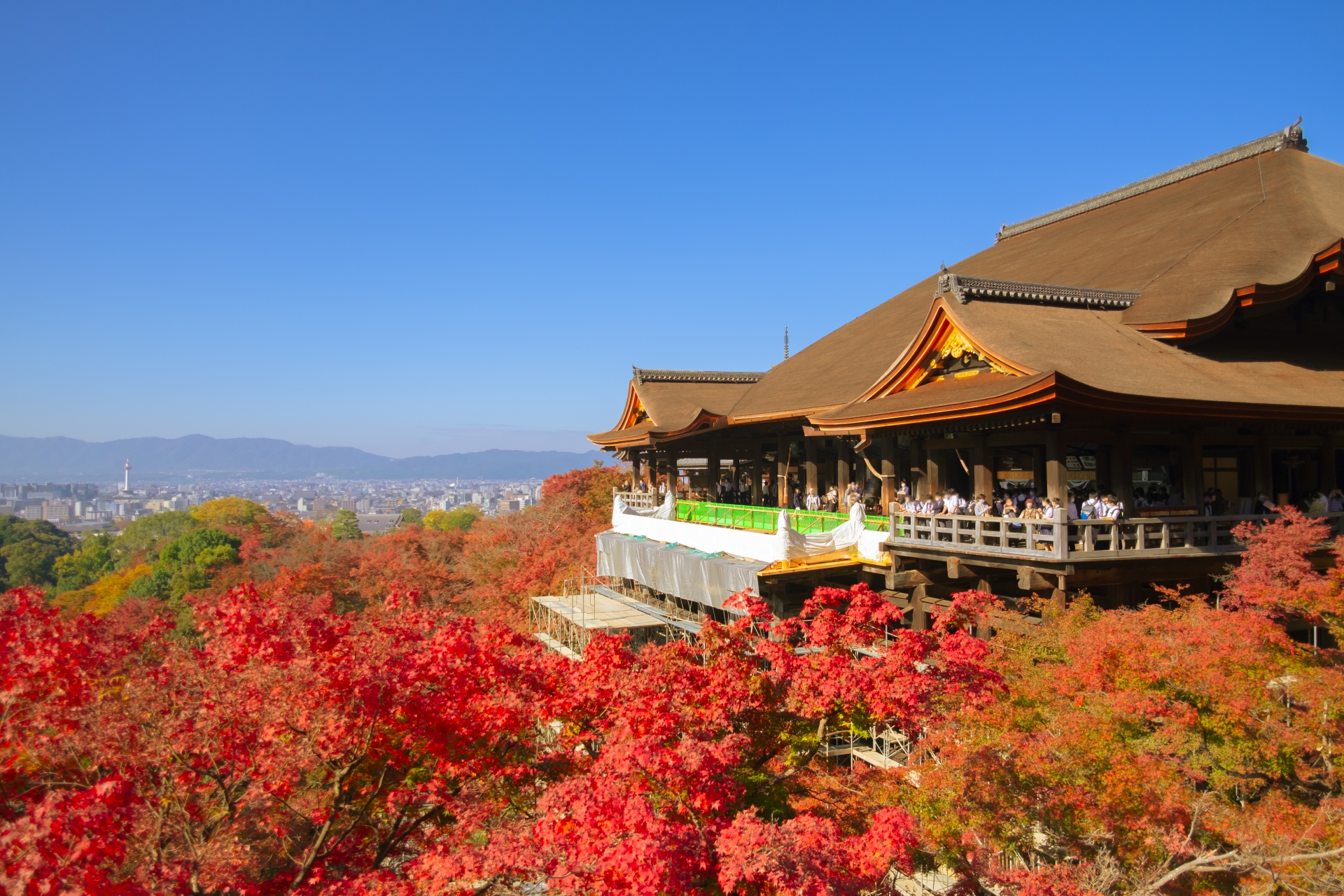
Kiyomizu-dera, Higashiyama, and Gion
Eastern Kyoto makes more sense on foot than as a series of separate stops. The natural route is:
Kiyomizu-dera → Sannenzaka → Ninenzaka → Yasaka Pagoda → Yasaka Shrine → Gion
At Kiyomizu-dera, cross the broad wooden stage for a view over the city, then continue through the grounds toward Otowa Waterfall. After that, the route begins to slope downhill into Higashiyama.
The timing changes the character of the area. At opening, the temple grounds are cooler, the stone paths are easier to move through, and the city below still feels half-awake. The trade-off is that many businesses on the approach remain shuttered.
Later in the morning, the streets fill in quickly. Pottery shops put out their displays, cafés begin serving, sweet shops open their counters, and visitors in rental kimono appear along Sannenzaka and Ninenzaka. There is more to browse, but far less room to pause.
Near Yasaka Pagoda, the road narrows into one of Kyoto’s most photographed street scenes. It is also a real street, with residents, deliveries, doorways, and occasional traffic. Take the photograph, but do not occupy the road to perfect it.
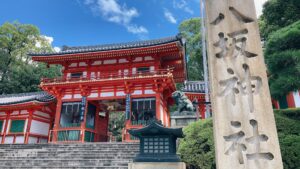
From there, continue through Yasaka Shrine and enter Gion toward the end of the afternoon. This is when the district begins to shift: lanterns come on, noren curtains hang outside restaurants, and staff start preparing for dinner service.
Gion is a working neighborhood rather than a stage set. Seeing a geiko or maiko is never guaranteed, and following, crowding, or obstructing them is inappropriate.
Essential Information
Location: 1-294 Kiyomizu, Higashiyama-ku, Kyoto
Access: About 10–15 minutes uphill from Gojozaka or Kiyomizu-michi bus stops; approximately 25 minutes on foot from Keihan Kiyomizu-Gojo Station
Hours: Opens at 6:00 a.m.; closing time varies by season and special events
Price: Check the current admission before visiting
Suggested visit length: 1–1.5 hours for the temple; 4–6 hours for the full walking route
Best time to visit: From opening for quieter grounds; later morning for open shops
Official Website: https://www.kiyomizudera.or.jp/en/
Nearby places: Sannenzaka, Ninenzaka, Yasaka Pagoda, Yasaka Shrine, Gion
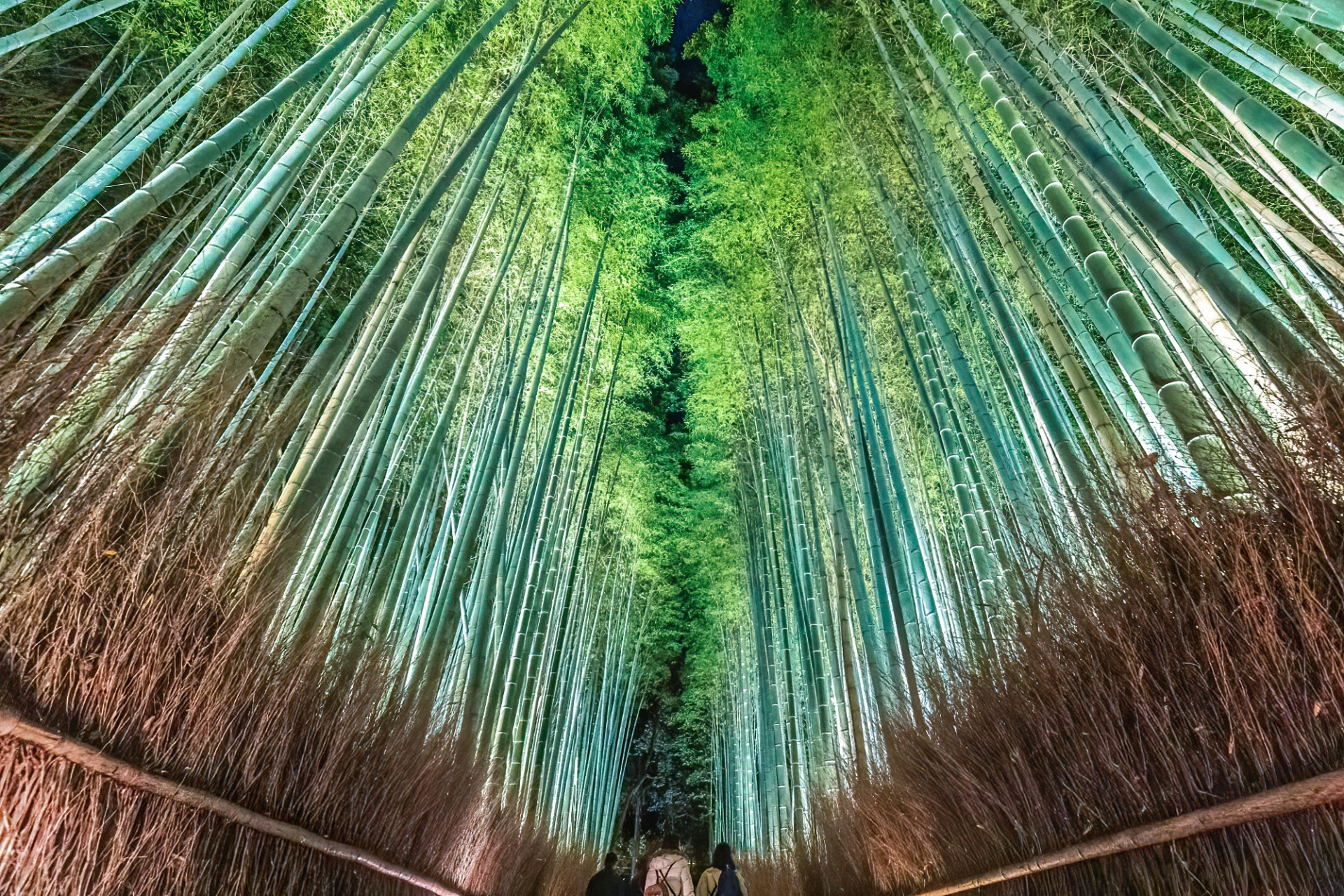
Arashiyama and the Bamboo Grove
The Bamboo Grove works best as one section of an Arashiyama morning, not the whole reason for traveling across the city.
A sensible route is:
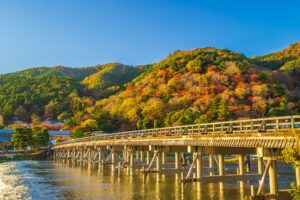
Bamboo Grove → Tenryu-ji → Togetsukyo Bridge
The bamboo path is shorter than many first-time visitors expect. Early in the morning, it can still feel enclosed and hushed, with pale light falling between the stalks and leaves shifting overhead. By midmorning, the soundtrack is more likely to be tour guides, conversations, and a steady series of camera shutters.
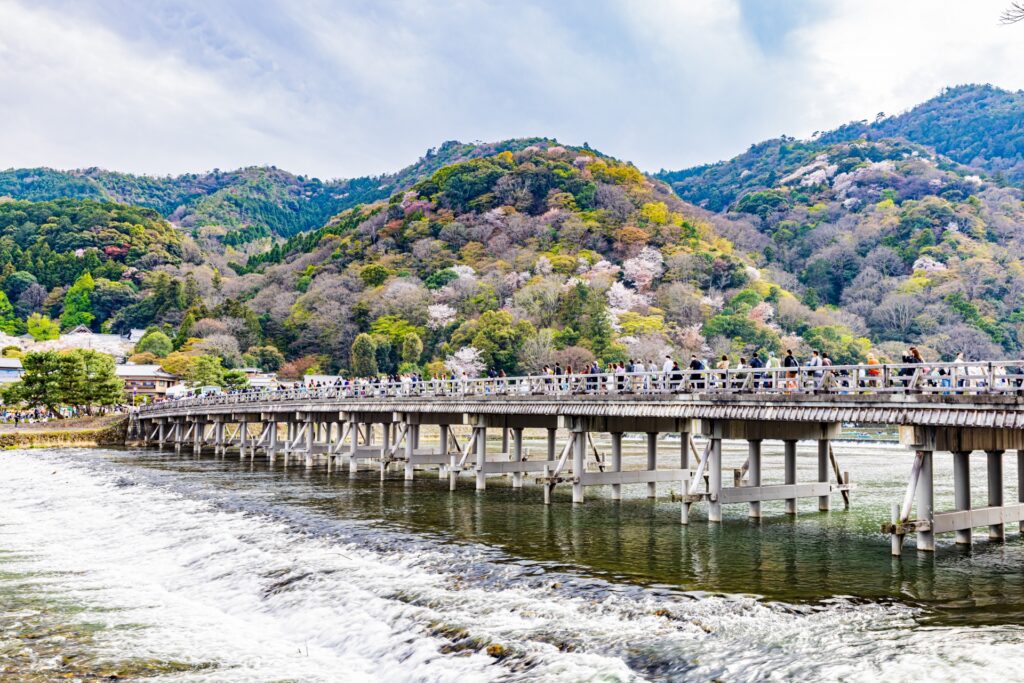
From the grove, continue to Tenryu-ji. The garden provides a welcome change of scale: the path opens beside a pond, with borrowed views of the mountains beyond. Then walk toward Togetsukyo Bridge, where the scenery suddenly widens into river, sky, and wooded slopes.
That transition is one of Arashiyama’s best moments.
The area changes clearly with the seasons. Spring brings blossoms, summer turns the hills a dense green, autumn draws crowds for the colored slopes, and winter strips the landscape back. An early start gives you more space, though temples and cafés may not yet be open.
With extra time, Okochi Sanso and Saga-Toriimoto are worthwhile additions.
Essential Information
Location: Saga-Arashiyama area, Ukyo-ku, Kyoto
Access: JR Saga-Arashiyama, Randen Arashiyama, or Hankyu Arashiyama Station
Hours: Bamboo paths are publicly accessible. Tenryu-ji is open from 8:30 a.m. to 5:00 p.m.; last admission is 4:50 p.m.
Price: Bamboo Grove free. Tenryu-ji garden costs ¥500 for high-school students and older and ¥300 for elementary and middle-school students; building entry is an additional ¥300
Suggested visit length: 2.5–4 hours
Best time to visit: Before 8:00 a.m. for the bamboo path; after 8:30 a.m. to include Tenryu-ji
Official Website: https://www.tenryuji.com/en/
Nearby places: Togetsukyo Bridge, Okochi Sanso, Saga-Toriimoto
Kinkaku-ji and Northern Kyoto
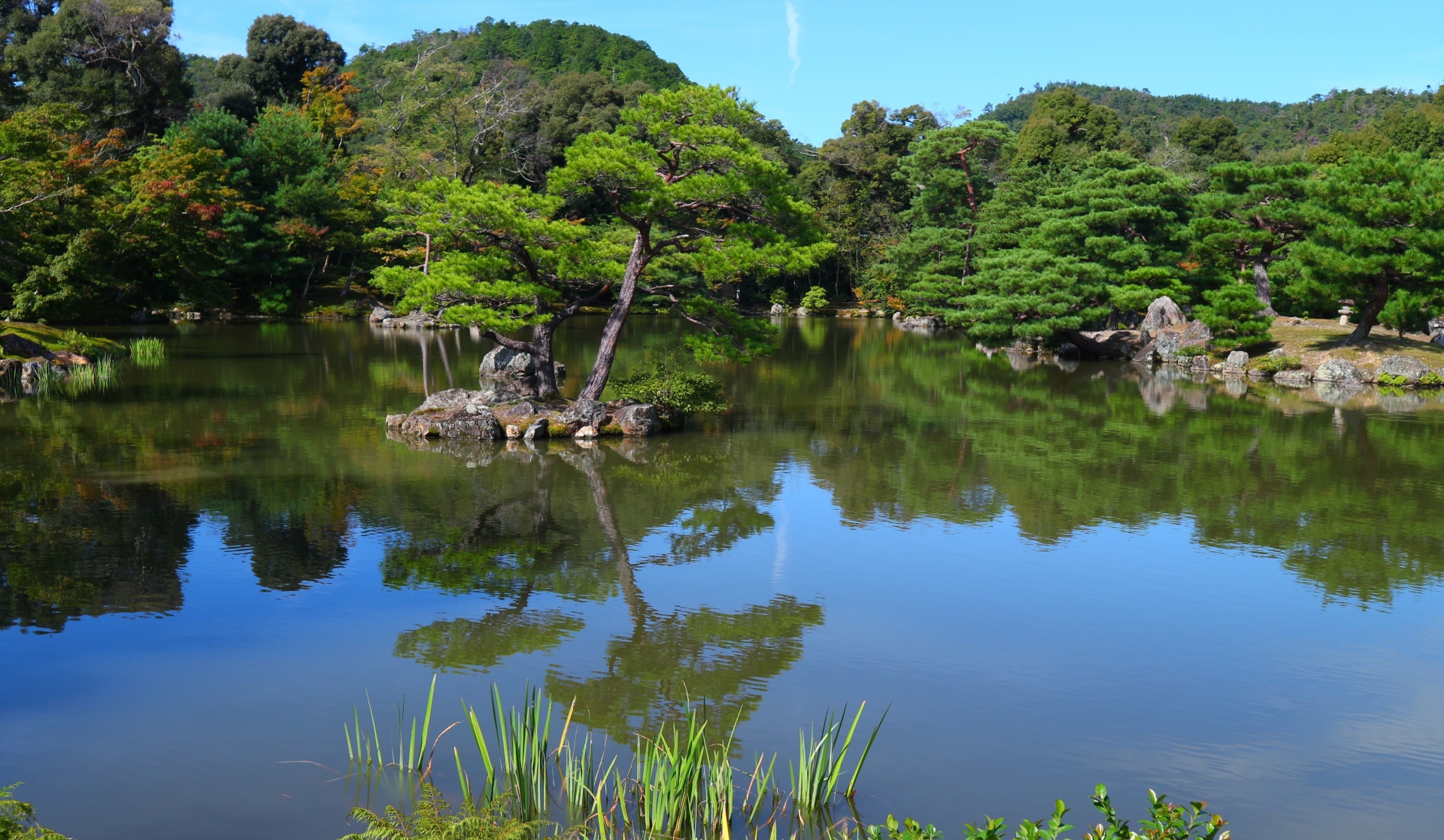
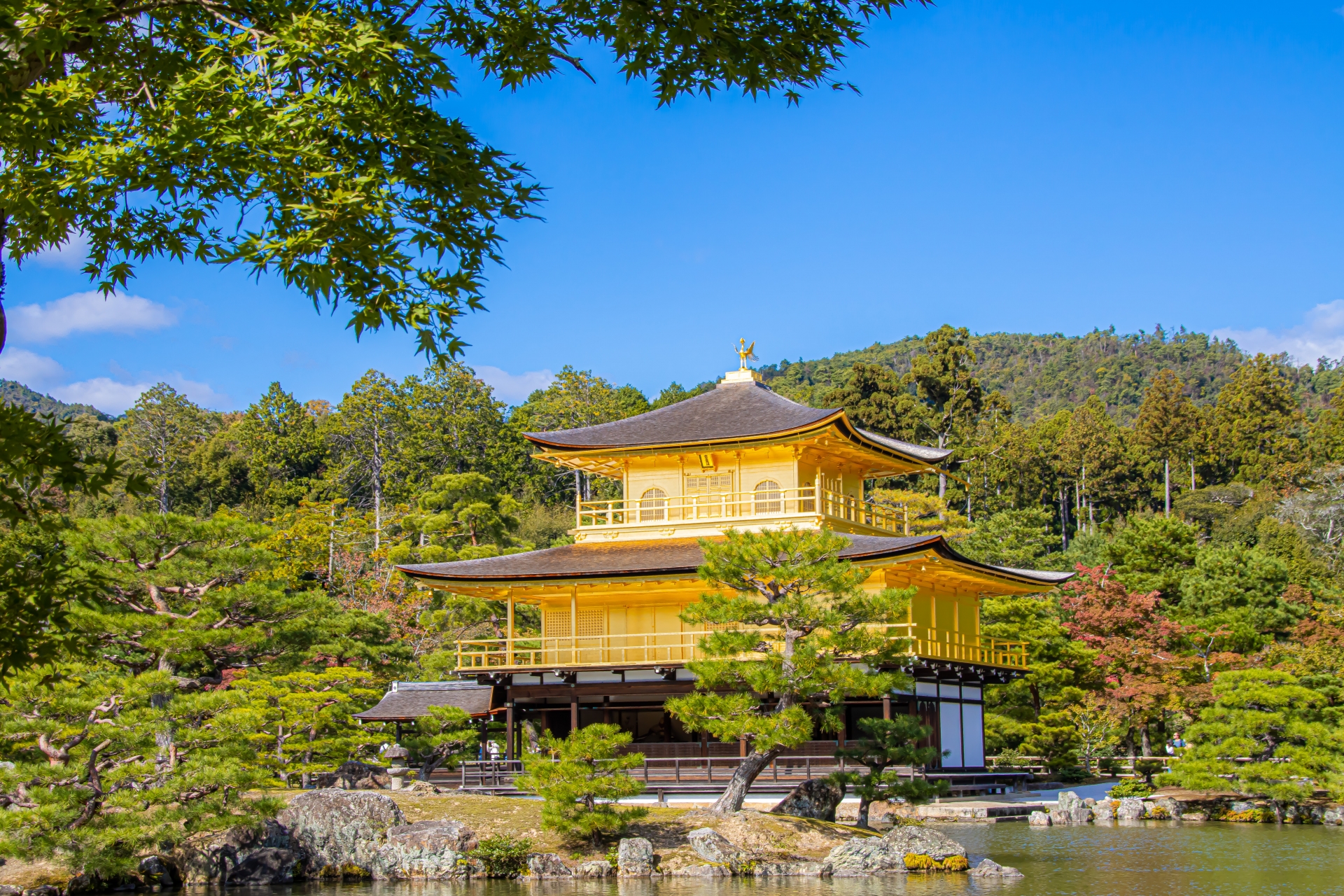
Kinkaku-ji is instantly recognizable, but the visit itself is fairly compact.
The main view appears early in the route: the gold-covered pavilion sits across the pond, often surrounded by a dense line of visitors trying to take the same photograph. The first viewpoint fills almost immediately after opening.
Take your picture, then move on. Farther along the one-way path, trees begin to frame the pavilion differently, and the crowd loosens once everyone is no longer standing in one place.
On a still day, the pond may hold a sharp reflection of the building. Wind, cloud, and shifting light make that impossible to predict, so it is better treated as a bonus than an expectation. Visitors generally view the pavilion from outside.
Kinkaku-ji pairs naturally with Ryoan-ji for a half-day in northern Kyoto. Ninna-ji is another option, although visiting all three in one stretch can make the afternoon feel overly temple-heavy.
Essential Information
Location: 1 Kinkakuji-cho, Kita-ku, Kyoto
Access: Approximately five minutes on foot from Kinkakuji-michi bus stop
Hours: 9:00 a.m.–5:00 p.m.; hours may change for special exhibitions
Price: Adults ¥500; primary and middle-school students ¥300
Suggested visit length: 45–75 minutes
Best time to visit: At opening
Official Website: https://www.shokoku-ji.jp/en/kinkakuji/
Nearby places: Ryoan-ji and Ninna-ji
Nishiki Market, Nijo Castle, and Downtown Kyoto
Central Kyoto is where a temple-focused itinerary gets some breathing room.
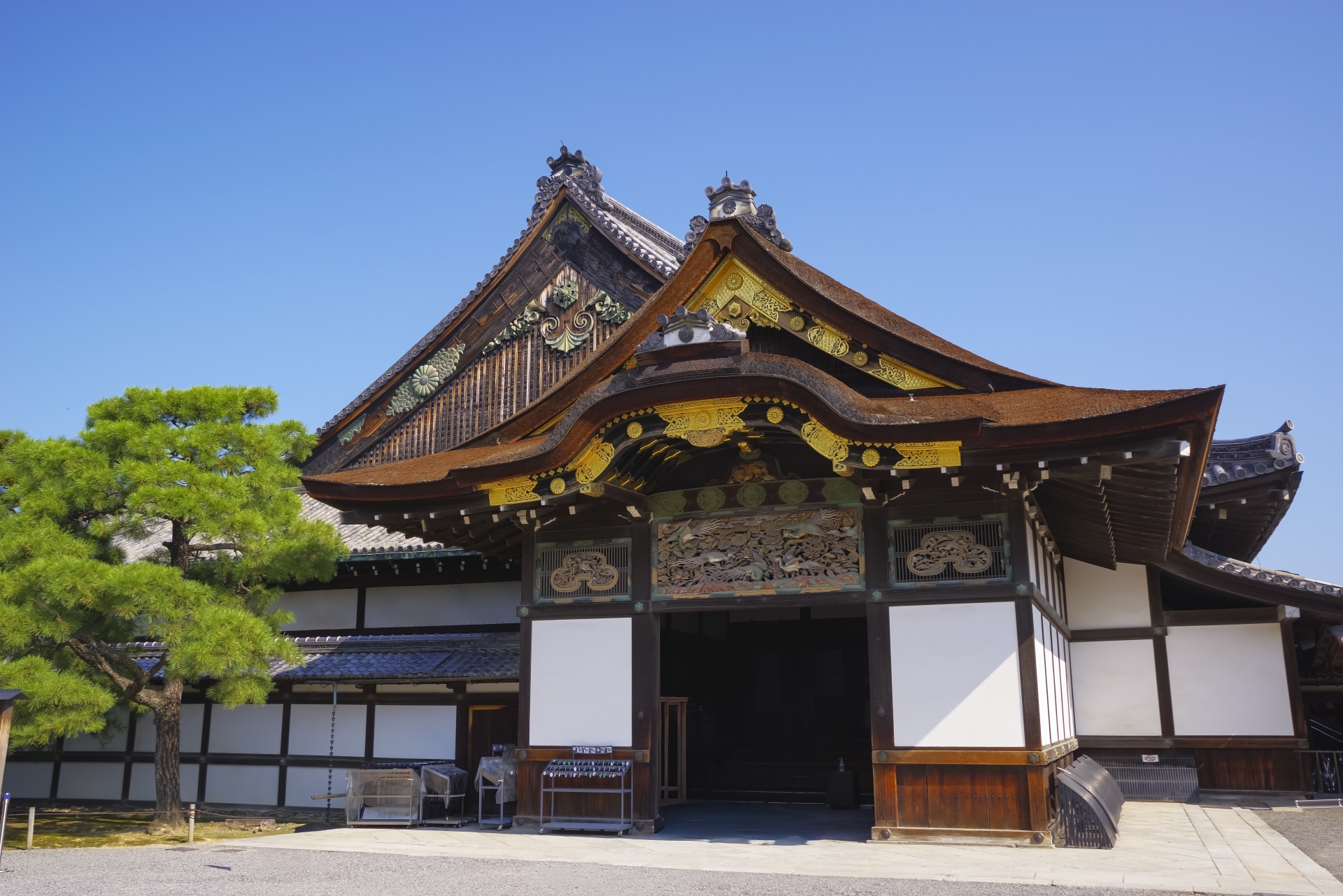
Begin at Nijo Castle. The approach has a different rhythm from the city’s religious sites: broad gravel paths, defensive gates, palace rooms, gardens, and corridors known for their distinctive sound underfoot. The interiors reward slow attention, especially the painted rooms, so allow enough time rather than squeezing the castle between lunch and another reservation.
From Nijo, continue to Nishiki Market before the busiest lunch period.
The covered arcade is dense with Kyoto vegetables, pickles, tofu products, seafood, dried goods, knives, sweets, and seasonings. The sensory details arrive all at once: blades landing on cutting boards, grilled seafood near the entrances, steam rising from small counters, and the smell of dashi drifting through the passage.
Nishiki is not simply a street-food strip. It remains a place to buy ingredients and prepared foods, and its character changes with the season. Eat inside the shop or directly in front of the counter where you bought something rather than walking through the arcade while eating.
After the market, continue through Teramachi and Pontocho, then end beside the Kamo River. By early evening, office workers, students, couples, and small groups begin settling along the riverbanks.
Nishiki Market Essential Information
Location: Nishikikoji Street, Nakagyo-ku, Kyoto
Access: About five minutes on foot from Shijo, Karasuma, or Kyoto-Kawaramachi Station
Hours: Vary by shop; many businesses open from late morning to early evening
Price: Free to enter
Suggested visit length: 1–1.5 hours
Best time to visit: Midmorning, before the lunch peak
Official Website: https://www.kyoto-nishiki.or.jp/
Nearby places: Teramachi, Pontocho, Kamo River
Nijo Castle Essential Information
Location: 541 Nijojo-cho, Nakagyo-ku, Kyoto
Access: Immediately beside Subway Nijojo-mae Station
Hours: Opening hours, last entry, palace access, and closure dates vary
Price: Depends on whether Ninomaru Palace admission is included
Suggested visit length: 1.5–2 hours
Best time to visit: Morning
Official Website: https://nijo-jocastle.city.kyoto.lg.jp/?lang=en
Nearby places: Nishiki Market and downtown Kyoto
A Practical 3-Day Kyoto Itinerary
| Day | Route |
| Day 1 | Fushimi Inari → Kiyomizu-dera → Higashiyama → Gion |
| Day 2 | Arashiyama → Kinkaku-ji → Downtown Kyoto |
| Day 3 | Nijo Castle → Nishiki Market → Philosopher’s Path or a cultural experience |
Day 1: Begin early at Fushimi Inari, then travel across to eastern Kyoto. After Kiyomizu-dera, walk downhill through Sannenzaka and Ninenzaka and continue toward Gion. This is the day with the most walking, much of it on slopes, so build in a proper café or lunch stop rather than treating breaks as wasted time.
Day 2: Take the train to Arashiyama for the Bamboo Grove, Tenryu-ji, and Togetsukyo Bridge. The onward trip from Arashiyama to Kinkaku-ji is not especially elegant by public transport. For two to four travelers, a taxi may be worth the cost and can save a tiring sequence of transfers. Finish downtown with dinner or a walk by the river.
Day 3: Start at Nijo Castle, then have lunch in or around Nishiki Market. Use the afternoon for the Philosopher’s Path or a reserved cultural activity. After two days of major sights, the slower pace usually feels well timed.
| Available Time | Recommended Route |
| 1 day | Fushimi Inari → Kiyomizu-dera → Higashiyama → Gion |
| 2 days | Add Arashiyama → Kinkaku-ji → Downtown |
| 3 days | Follow the complete itinerary |
For a less crowded schedule, leave Kinkaku-ji out of Day 2. On Day 3, a tea ceremony can replace the Philosopher’s Path, particularly in hot weather or rain.
What to Eat and Experience in Kyoto
Kyoto Food to Try
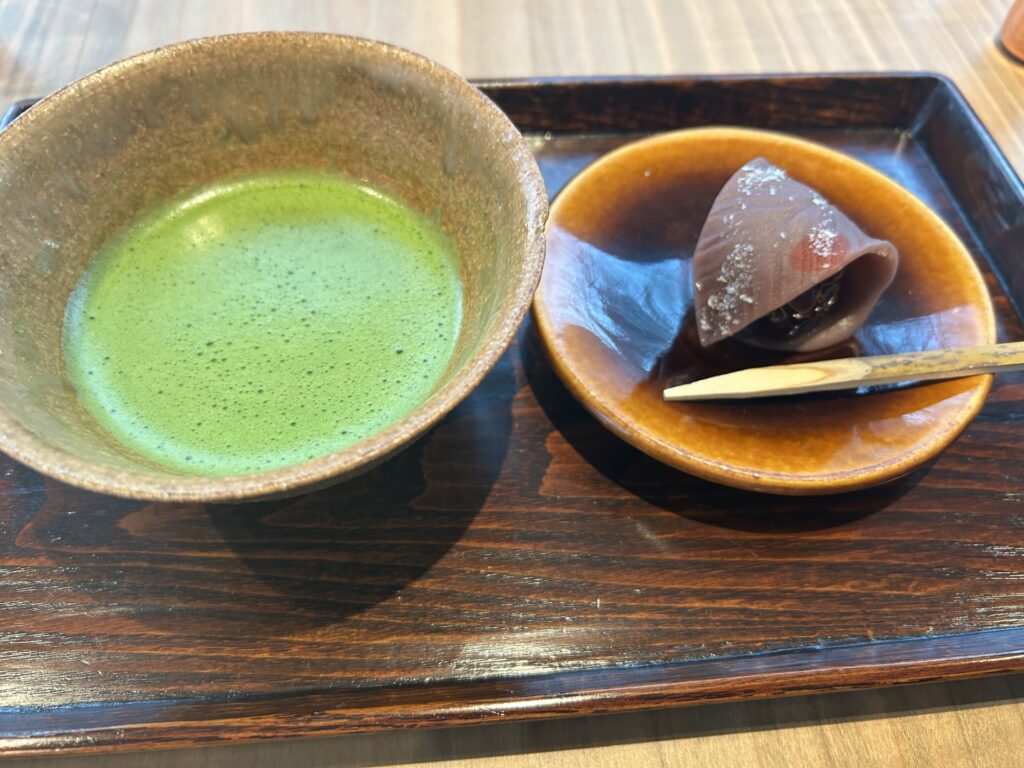
Kaiseki is a formal multi-course meal shaped around seasonal ingredients, restrained seasoning, and carefully chosen tableware. It is as much about pacing and presentation as quantity. Book in advance and set aside around two hours.
Obanzai refers to Kyoto-style home cooking, often served as a selection of small vegetable, tofu, and simmered dishes. It is a more relaxed choice for dinner and a useful contrast to heavier restaurant meals.
Yudofu is gently heated tofu served with simple condiments and is particularly common around temple districts. It makes an easy lunch when a long sightseeing day calls for something warm but not heavy.
Yuba, the thin skin that forms on heated soy milk, appears in soups, rice dishes, and set meals. Its texture can be delicate or slightly chewy depending on how it is prepared.
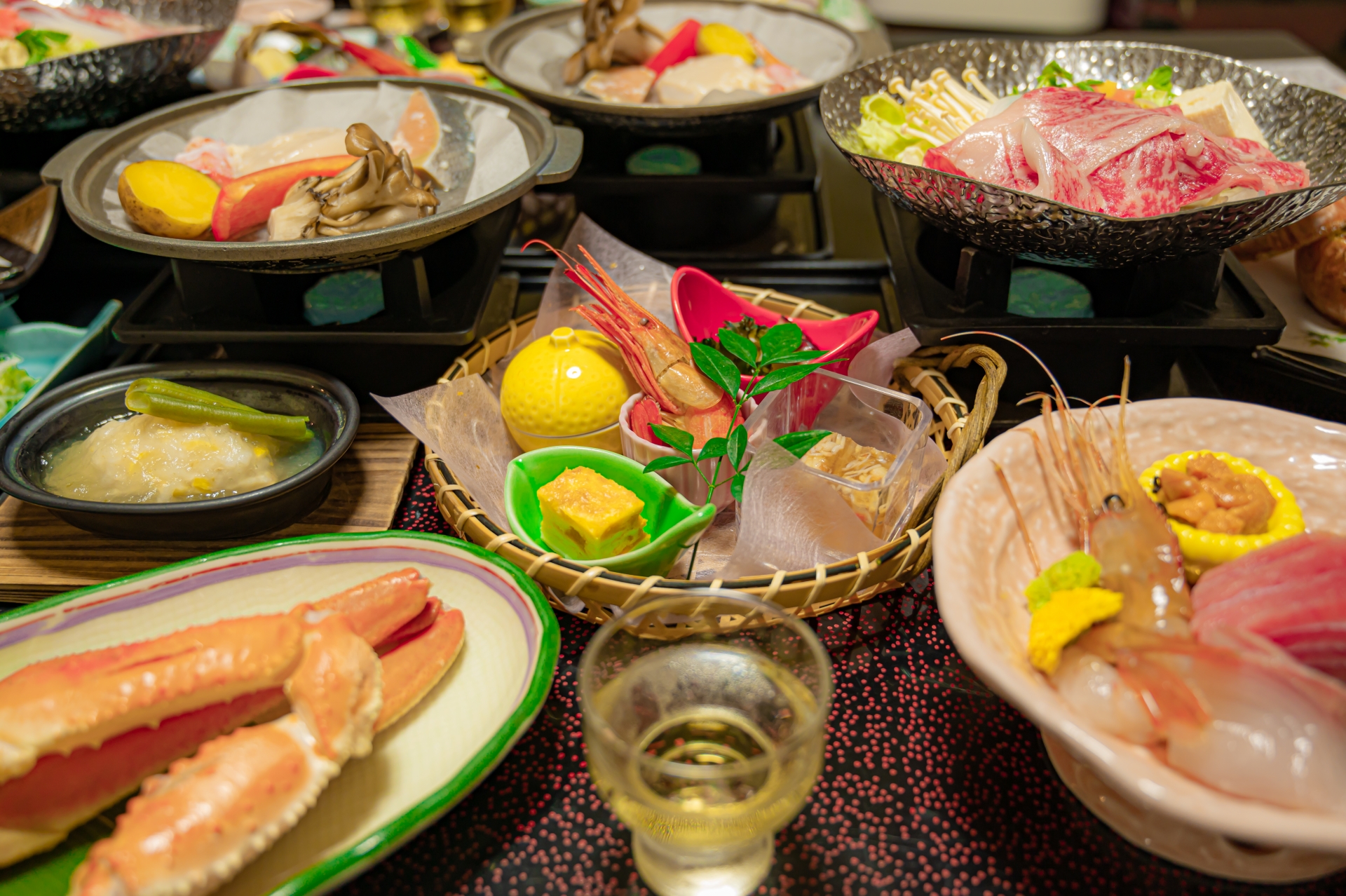
Matcha desserts and seasonal wagashi fit naturally into an afternoon break. In Kyoto, sweets are often closely tied to the month: blossom shapes in spring, leaves in autumn, and cool-looking translucent designs in summer.
A casual meal may cost around ¥1,000–¥2,500. A reserved multi-course dinner can easily cost ¥10,000 or more.
Vegetarian travelers should confirm whether the dashi contains fish, since dishes that appear meat-free may still use bonito stock. Tell restaurants about allergies before arrival, especially for fixed-course meals. Cancellation rules for reserved dining can be strict.
Tea Ceremony, Traditional Arts, and Sake
| Experience | Best Area | Typical Duration | Advance Booking |
| Tea ceremony | Gion or Higashiyama | 45–90 minutes | Recommended |
| Wagashi-making | Central Kyoto | 60–90 minutes | Usually required |
| Traditional performance | Gion | About 1 hour | Recommended |
| Sake tasting | Fushimi | 1–2 hours | Depends on venue |
During a tea ceremony, participants usually watch the host arrange and clean the utensils, receive a seasonal sweet, and drink whisked matcha. Smaller-group sessions tend to involve more direct participation than stage-style demonstrations.
Wagashi-making is hands-on and highly seasonal. The sweets may be shaped into flowers, leaves, or motifs associated with a particular festival or time of year.
A traditional performance suits travelers who would rather observe several art forms in one sitting. It can also be easier to fit into an evening than a longer workshop.
Fushimi’s sake district has brewery shops, tasting rooms, and canal-side streets that are pleasant to explore at an unhurried pace. It works better later in the day than directly after an early-morning visit to the shrine.
Gion Corner Essential Information
Location: Gion Kobu Kaburenjo area, Higashiyama-ku, Kyoto
Access: Walking distance from Gion-Shijo and Kyoto-Kawaramachi stations
Hours: Performance dates and start times vary
Price: Depends on the selected seating and program
Suggested visit length: Approximately one hour
Reservation: Advance booking recommended
English support: English visitor information is available
Official Website: https://www.kyoto-gioncorner.com/global/en.html
Cancellation terms: Depend on the ticket purchased
Where to Stay and How to Get Around Kyoto
| Area | Best For | Main Advantage | Main Drawback |
| Kyoto Station | Transportation and day trips | Easy rail access | Less historic atmosphere |
| Downtown Kyoto | Food and convenience | Best overall balance | Busy |
| Gion and Higashiyama | Historic atmosphere | Early access to eastern Kyoto | Hills and higher prices |
Kyoto Station is the most practical base for Shinkansen arrivals, airport connections, and day trips to Osaka, Nara, or Uji. The immediate surroundings feel more modern and businesslike than the eastern districts, but few areas are easier when luggage and early trains are involved.
Downtown Kyoto usually gives first-time visitors the strongest overall balance. Restaurants, department stores, shopping arcades, subway stations, and evening options are all within reach. It stays busy, though, particularly around Shijo and Kawaramachi.
Gion and Higashiyama place you close to the streets many travelers come to Kyoto to see. Early access is a real advantage: walking through parts of Higashiyama before the daytime crowds arrive feels very different from returning at noon. The drawbacks are the slopes, higher prices, and less convenient rail access.
For transport, use trains for Fushimi Inari and Arashiyama, the subway for Nijo Castle and central Kyoto, and buses for Kinkaku-ji. In Higashiyama and downtown, walking is often faster and certainly more interesting than repeatedly waiting for transport between nearby stops.
Kyoto is difficult to explore efficiently by bus alone. Traffic can slow a route that looks short on the map, and popular services become crowded enough that boarding with luggage is uncomfortable.
Taxis are useful for awkward connections, especially Arashiyama to Kinkaku-ji. The fare becomes more reasonable when shared by several people.
IC cards simplify most local journeys. Keep large suitcases off crowded buses where possible; hotel delivery, station baggage counters, and coin lockers are better options.
Official Transportation Information
Kyoto City Official Travel Guide: https://kyoto.travel/en/getting-around/
JR West: https://www.westjr.co.jp/global/en/
Hankyu Railway: https://www.hankyu.co.jp/global/en/
Keihan Railway: https://www.keihan.co.jp/travel/en/
Best Time to Visit, Crowds, and Etiquette
Spring brings cherry blossoms, mild temperatures, and high hotel demand. Summer is hot and humid, particularly on exposed roads, uphill approaches, and shrine steps. Autumn colors the surrounding hills but also draws heavy weekend crowds. Winter is colder and quieter, with shorter daylight hours and fewer people in many outdoor areas.
Cherry-blossom and foliage timing shifts each year. For late March, early April, and peak autumn weekends, reserve accommodation well ahead, then check the latest forecast shortly before the trip.
| Place | Better Time | Trade-Off |
| Fushimi Inari | Early morning | Fewer open shops nearby |
| Kiyomizu-dera | From opening time | Approach shops may be closed |
| Arashiyama | Before 8:00 a.m. | Temples may not be open |
| Kinkaku-ji | At opening | Main viewpoint fills quickly |
| Nishiki Market | Before lunch peak | Some shops open later |
In Kyoto, quiet streets and open businesses rarely happen at the same hour.
Early morning brings cooler air, easier photographs, and less pressure to keep moving. Later in the morning, cafés, shops, and food counters open, and the streets take on more energy. Neither is automatically better; they produce different versions of the same neighborhood.
In Gion, do not enter private roads or follow, obstruct, or closely photograph geiko and maiko. Avoid blocking streets and doorways for photographs. Observe photography restrictions at temples, and keep voices down in residential areas.
At Nishiki Market, eat at or directly outside the shop where the food was purchased instead of walking through the arcade with it. Gion, Higashiyama, and Arashiyama may receive large numbers of visitors, but they remain working neighborhoods rather than open-air theme parks.
Plan Your Kyoto Trip
Three full days gives a first-time visitor enough room to cover Kyoto’s essential sights without repeatedly zigzagging across the city.
Build each day around one or two neighboring areas. Start early at Fushimi Inari, Kiyomizu-dera, Arashiyama, and Kinkaku-ji when avoiding crowds matters, but remember that nearby shops and cafés may still be closed. Use trains and subways for the longer journeys, walk when sights are clustered together, and keep buses or taxis for routes that are less straightforward.
Leave space between temples. Nishiki Market, a tofu lunch, an obanzai dinner, a tea ceremony, the Kamo River, or an hour spent walking without a strict destination will often remain as memorable as another famous gate or garden.
Kyoto tends to reveal itself in those intervals: gravel sounding underfoot near a castle, dashi drifting through a covered market, restaurant lanterns coming on in Gion, or the air cooling as the path above Fushimi Inari climbs deeper into the trees.
Opening hours, admission fees, closure dates, transportation services, and event schedules may change. Check the relevant official websites before visiting