Mount Koya, also known as Koyasan, is a sacred Buddhist mountain settlement in Wakayama Prefecture in Japan’s Kansai region. Founded by Kukai (Kobo Daishi), it is one of Japan’s most important spiritual destinations and the center of Shingon Buddhism. Today, it remains an active religious community where visitors can experience temple life, traditional cuisine, and a landscape shaped by centuries of pilgrimage.
For travelers, Koyasan offers something distinct from Japan’s major cities. It is accessible from Osaka or Kyoto in about two hours, yet the atmosphere is entirely different—quiet, forested, and contemplative. Whether you are interested in history, spirituality, or unique cultural experiences like temple stays, Koyasan provides a well-balanced destination that is both meaningful and practical to visit.


Why Mount Koya (Koyasan) Is One of Japan’s Most Meaningful Destinations
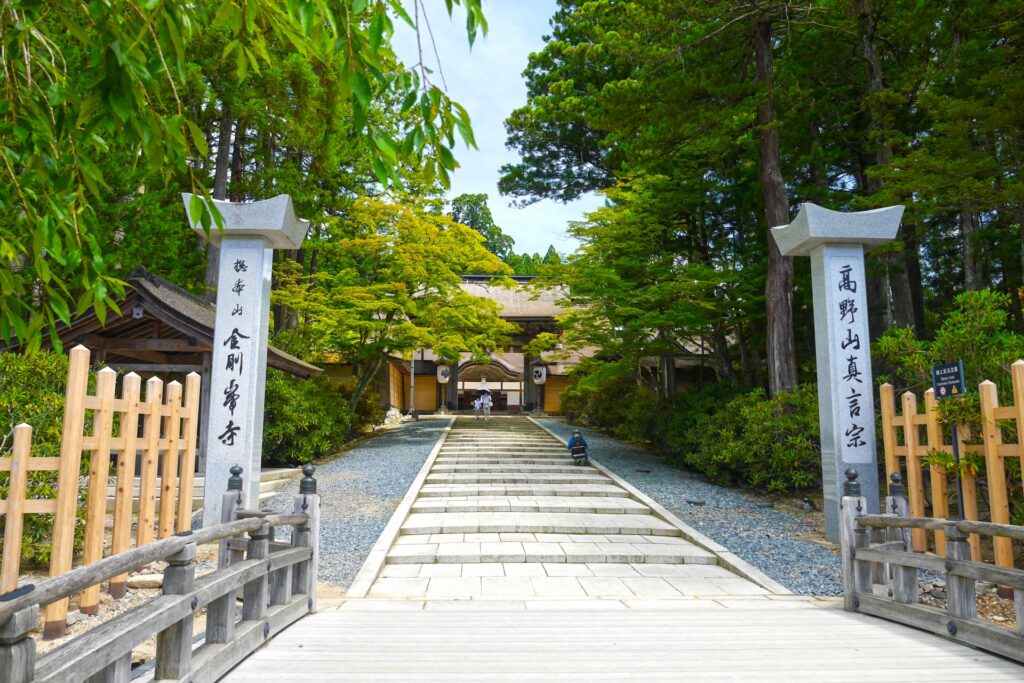
Mount Koya stands out because it is not just a historic site, but the living center of Shingon Buddhism, founded by Kukai in the early ninth century. Unlike many temple destinations that function mainly as tourist attractions, Koyasan continues to operate as a place of religious practice, which gives it a different depth and atmosphere.
It is also part of the UNESCO World Heritage site “Sacred Sites and Pilgrimage Routes in the Kii Mountain Range.” This designation reflects its long-standing role in Japanese pilgrimage culture and its connection to a broader network of sacred mountains and routes. For visitors, this adds cultural context and reinforces why Koyasan is considered one of Japan’s most important spiritual locations.
The mountain setting enhances this experience. Surrounded by cedar forests and removed from urban noise, Koyasan naturally encourages a slower pace. The journey itself—train, cable car, and bus—helps create a sense of transition. By the time you arrive, the environment has shifted from busy city life to a space designed for reflection, making the visit feel more intentional and immersive.
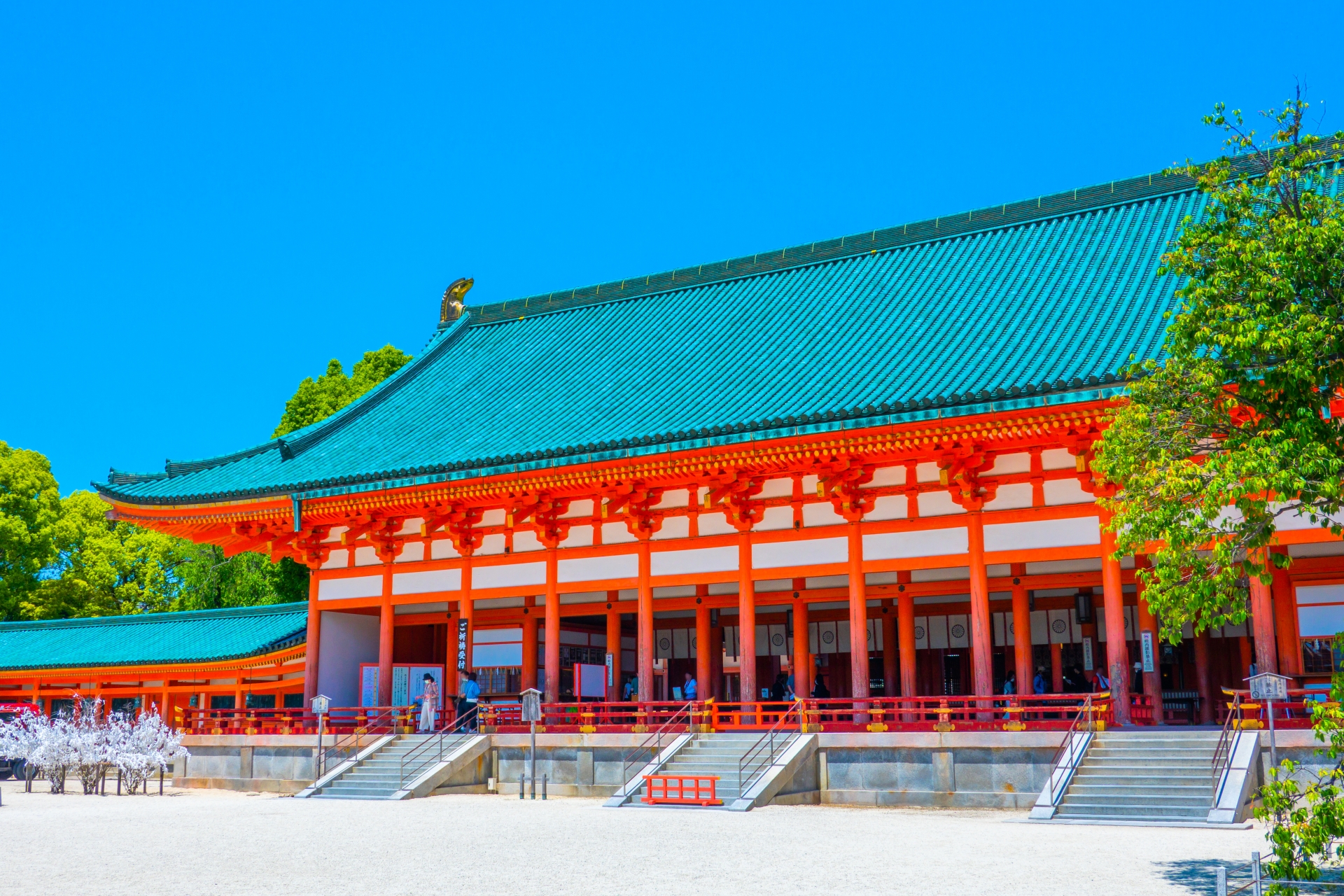
Mount Koya at a Glance
- Location: Koya Town, Wakayama Prefecture
- Religious tradition: Shingon Buddhism
- UNESCO status: Sacred Sites and Pilgrimage Routes in the Kii Mountain Range
- Recommended stay: 1 night
Where Is Mount Koya and How Do You Get There?
Mount Koya is located in Wakayama Prefecture, south of Osaka. Although it feels remote, the route is straightforward and well-organized. Most travelers take the Nankai Railway from Osaka (Namba or Shin-Imamiya) to Gokurakubashi, transfer to a cable car, and then continue by bus into the main temple area.
From Osaka, the journey typically takes about two hours. From Kyoto, the most efficient route is via Osaka. Once you arrive at Koyasan Station, buses connect major areas such as Senjuinbashi, Kongobuji, and Okunoin, making it easy to navigate without a car.
One important planning point is that this route relies on a private railway rather than JR lines. Travelers using a JR Pass should check coverage in advance, as it does not fully apply. In many cases, a dedicated Nankai or Koyasan ticket is more convenient.
Route overview:
Osaka / Kyoto → Nankai Line → Gokurakubashi → Cable Car → Bus → Koyasan
Can You Visit Koyasan as a Day Trip?
Yes, Koyasan can be visited as a day trip, especially from Osaka. With an early departure, it is possible to see the main highlights—Okunoin, Kongobuji, and Danjo Garan—in a single day.
However, the experience is fundamentally different from staying overnight. A day trip focuses on sightseeing, while an overnight stay allows you to experience the rhythm of temple life, including evening quiet and morning prayers. For travelers interested in cultural immersion, this difference is significant.
| Type | Best For | Experience | Limitation |
| Day trip | Limited time | Key sights and atmosphere | No temple stay or morning rituals |
| Overnight | Deeper experience | Shukubo, meals, slower pace | Higher cost |
Best Things to Do in Mount Koya (Koyasan)
Koyasan is compact, but its key sites offer distinct perspectives on its spiritual and cultural identity. For a first visit, three locations are essential: Okunoin, Danjo Garan, and Kongobuji Temple. Together, they provide a complete introduction to the mountain.
Additional stops such as Daimon Gate or walking routes can be added if time allows, but these core sites are enough for a meaningful experience without rushing.
Walk Through Okunoin Cemetery
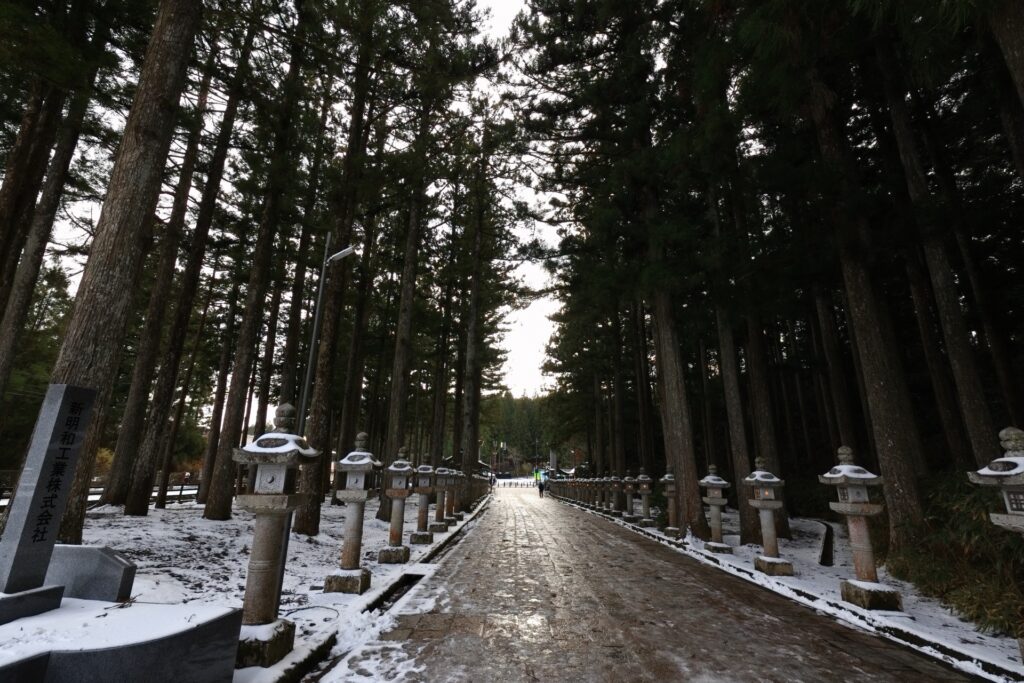
Okunoin is the most famous and atmospheric site in Koyasan. The approach passes through a forest of cedar trees lined with thousands of gravestones and memorials. At the end is Kukai’s mausoleum, where he is believed to remain in eternal meditation.
What distinguishes Okunoin is its function as a living sacred site. It is not only historical but actively used for prayer and remembrance, which creates a unique sense of presence. Many visitors find this to be the most memorable part of their trip.
Okunoin Etiquette
Visitors should remain quiet, follow posted guidance, and respect restricted areas. Photography may not be allowed in certain sections. Treating the site as a place of worship rather than a tourist attraction is essential.
Explore Danjo Garan
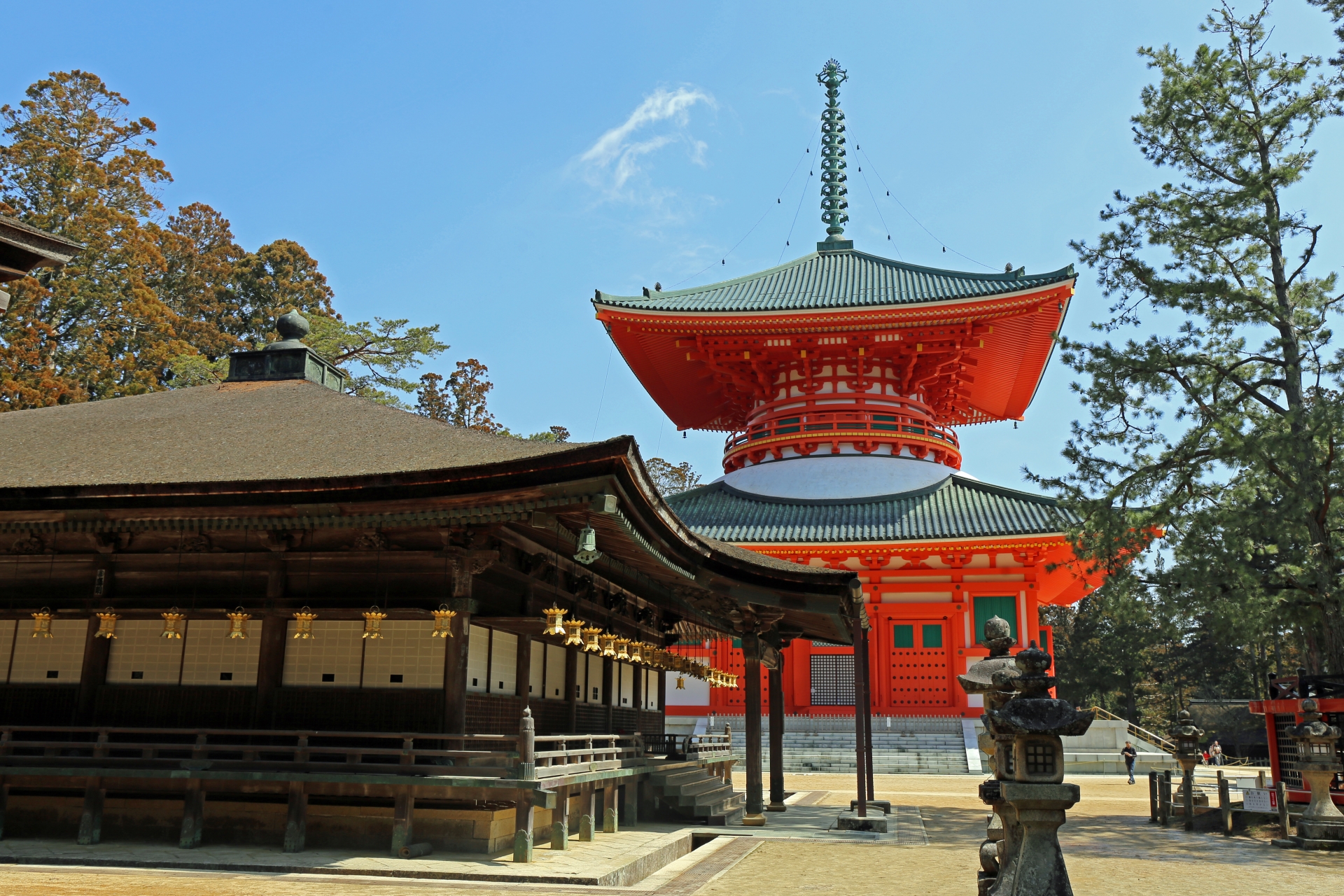
Danjo Garan is one of Koyasan’s two main sacred centers and represents its ritual core. The complex includes several important structures, most notably the vivid red Konpon Daito pagoda.
This area reflects the symbolic and ceremonial aspects of Shingon Buddhism. The layout and architecture are intentional, designed to express spiritual concepts rather than simply serve functional purposes.
What to Notice
Observe the contrast between the bright structures and the surrounding forest, and the structured arrangement of the buildings, which reflects religious meaning.
Visit Kongobuji Temple
Kongobuji is the head temple of Shingon Buddhism and serves as the administrative and spiritual center of Koyasan. It is known for its refined interiors, sliding door paintings, and the Banryutei rock garden.
This visit adds context by showing Koyasan as an organized religious institution rather than just a scenic destination.
What Is Shingon Buddhism?
Shingon Buddhism is an esoteric tradition introduced by Kukai. It emphasizes ritual, symbolism, and physical practice as paths to enlightenment. Understanding this helps explain why Koyasan feels distinct from other temple destinations in Japan.
What a Temple Stay in Koyasan Is Really Like
A temple stay, or shukubo, is one of Koyasan’s defining experiences. Guests stay in tatami rooms, eat vegetarian meals, and may participate in morning prayers.
The focus is not luxury, but simplicity and immersion. The structured schedule, quiet environment, and traditional setting create a different kind of travel experience—one centered on observation and reflection rather than activity.
Even a single night significantly changes how visitors experience Koyasan, making it feel less like a sightseeing stop and more like a place to inhabit.
How to Choose the Right Shukubo
Key factors include budget, location, English support, and comfort level. For first-time visitors, a well-located temple with clear communication is usually the best choice.
Many temple stays include dinner and breakfast, which are central to the experience, so checking meal options is important.
Temple Stay Etiquette First-Timers Should Know
- Remove shoes indoors
- Keep noise levels low
- Follow set meal times
- Observe bathing etiquette
- Dress modestly
These guidelines are simple but important, as you are staying in an active religious environment.
What to Eat in Mount Koya (Koyasan)
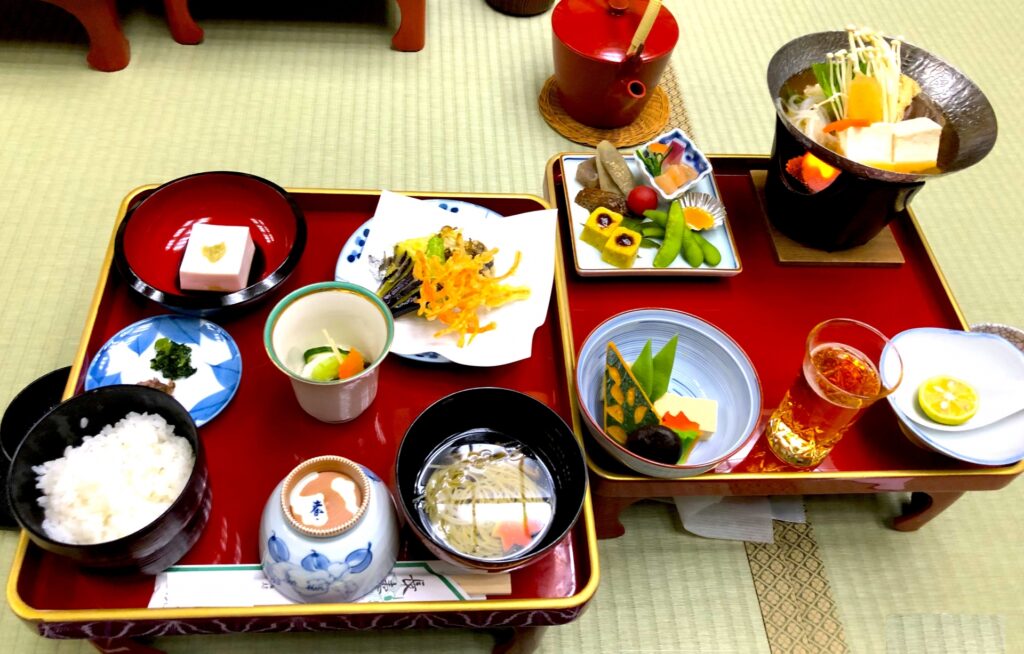
Food is an integral part of the Koyasan experience. The most important cuisine is shojin ryori, a traditional Buddhist vegetarian style focused on balance, seasonality, and simplicity rather than richness.
A signature local specialty is gomadofu (sesame tofu), known for its smooth texture and rich flavor. Unlike standard tofu, it is made primarily from sesame and has a distinctive consistency.
Other common elements include tofu-based dishes and sansai (mountain vegetables), which reflect the surrounding environment. Together, these dishes illustrate how Koyasan’s cuisine is shaped by both Buddhist philosophy and local nature.
Must-try foods:
- Shojin ryori
- Gomadofu
- Sansai dishes
- Seasonal tofu-based dishes
One-Day and Overnight Mount Koya Itineraries
The ideal itinerary depends on your available time. The key is to prioritize the main sites while allowing enough time to experience the atmosphere.
Suggested 1-Day Itinerary
- Morning arrival
- Danjo Garan
- Kongobuji Temple
- Lunch
- Okunoin
- Return to Osaka
This covers the essentials efficiently but does not include the quieter evening experience.
Suggested 1-Night Itinerary
Day 1
- Arrival
- Danjo Garan and Kongobuji
- Check in at shukubo
- Visit Okunoin in late afternoon
- Temple dinner
Day 2
- Morning prayers
- Breakfast
- Short walk
- Departure
This option provides a more complete and immersive experience.
Best Time to Visit Mount Koya
Spring and fall offer the most comfortable conditions, with mild weather and seasonal scenery. Summer is green but humid, while winter is cold but can be especially atmospheric.
Because of its elevation, Koyasan is generally cooler than Osaka or Kyoto. Layered clothing is recommended year-round.
How Much Does a Trip to Koyasan Cost?
Costs vary depending on whether you stay overnight, but typical ranges are:
- Transport (round trip): ¥3,000–¥4,000
- Temple entry fees: ¥500–¥1,000 per site
- Meals: ¥1,000–¥2,000
- Temple stay (with meals): ¥15,000–¥25,000+
| Expense | Day Trip | Overnight |
| Total | ~¥5,000–¥8,000 | ~¥20,000–¥30,000 |
Mount Koya Travel Tips for First-Time Visitors
Travel light, wear comfortable shoes, and bring layers. Koyasan involves walking and can be cooler than nearby cities. Carry some cash and avoid overpacking your schedule.
The experience is best when approached slowly.
FAQ About Mount Koya (Koyasan)
Is Mount Koya worth visiting?
Yes, especially for travelers seeking a deeper cultural experience.
Can you visit without staying overnight?
Yes, but staying overnight offers a more complete experience.
How many days do you need?
One day is enough for highlights, but one night is ideal.
Is it accessible from Osaka?
Yes, about two hours by train, cable car, and bus.
Is Mount Koya (Koyasan) Worth Visiting?
Yes—Mount Koya is absolutely worth visiting, especially for travelers looking for a deeper cultural and spiritual experience in Japan.
What makes Koyasan stand out is not just its temples, but the combination of experiences it offers. You can walk through the atmospheric Okunoin Cemetery, explore the symbolic architecture of Danjo Garan, and visit Kongobuji, the center of Shingon Buddhism. At the same time, the mountain setting creates a quiet, reflective environment that feels completely different from nearby cities like Osaka or Kyoto.
One of the biggest highlights is the shukubo temple stay. Staying overnight allows you to experience shojin ryori, join morning prayers, and enjoy the peaceful atmosphere after day visitors leave. These are the moments that turn a simple visit into something memorable.
If you are short on time, a day trip is still worthwhile and lets you see the main highlights. However, if your schedule allows, staying overnight is highly recommended for a more complete and meaningful experience.
Koyasan is not just a place to visit—it is a place to slow down, reflect, and experience a different side of Japan.