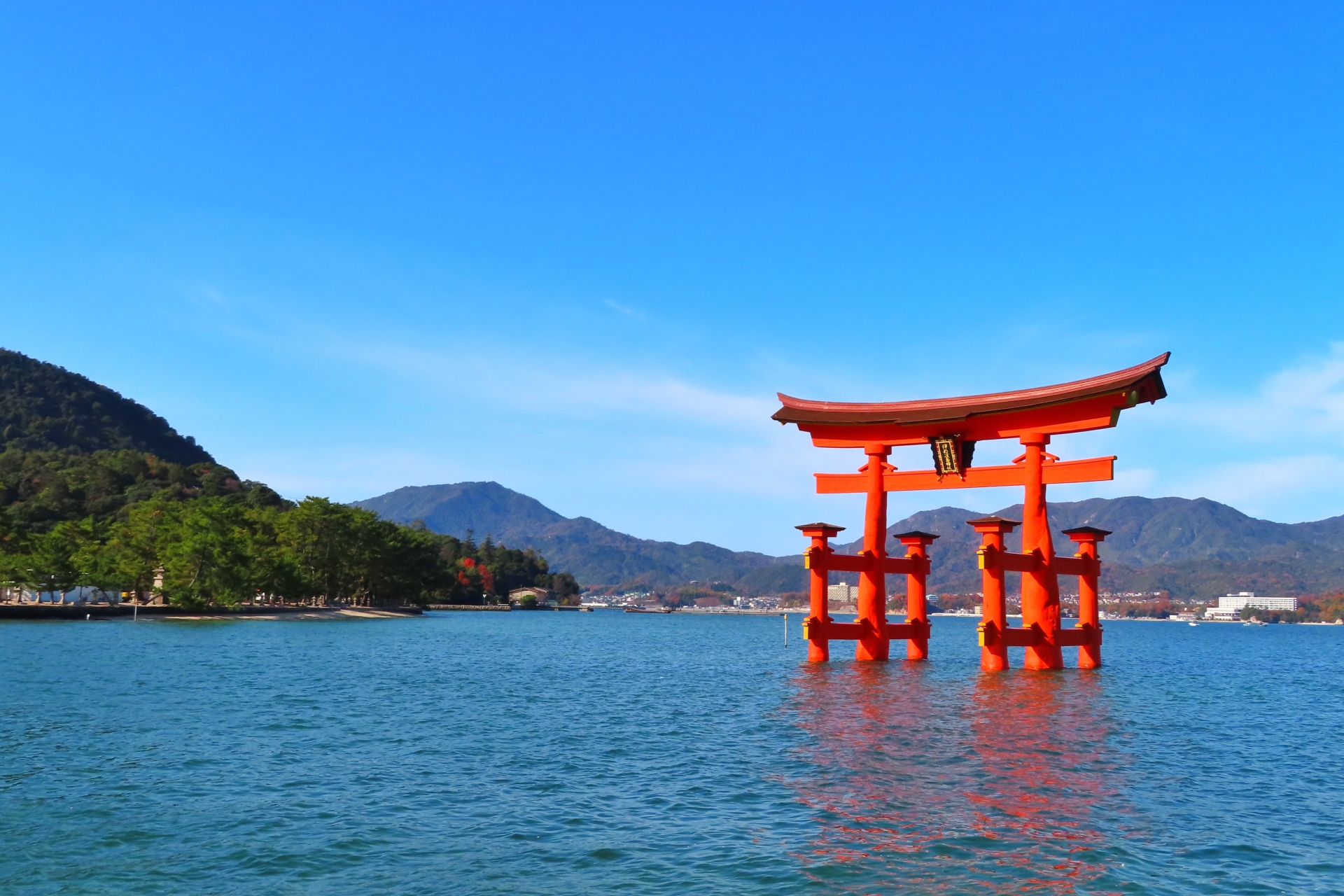
Itsukushima Shrine is one of those places that feels familiar long before you arrive. The image—vermilion gate, shallow water, mountains behind—circulates widely enough that it risks becoming fixed in your mind.
But once you’re there, it doesn’t stay fixed at all.
The tide pulls in and out. The shoreline expands and disappears. What looks like a single iconic view turns out to be something that keeps shifting as the day goes on. This guide covers the essentials, but also what tends to catch people off guard when they actually visit.


What Is Itsukushima Shrine?
The shrine stands on Miyajima, just off the coast of Hiroshima. While most travelers casually call the destination “Miyajima,” the island’s formal name is Itsukushima—the same as the shrine.
That overlap matters more than it seems. The shrine isn’t just located on the island; it defines how the island has been understood for centuries.
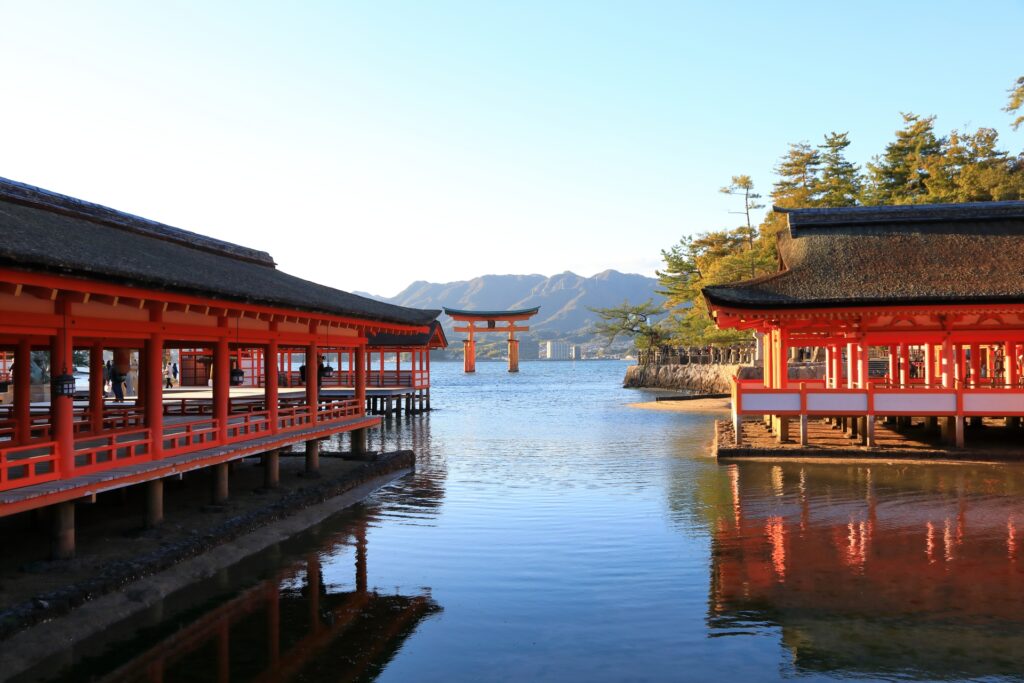
One of the first things you notice is how the buildings are positioned. Instead of sitting on solid ground, they extend out over the water on wooden pillars. This wasn’t simply a stylistic choice. In Shinto belief, the island itself was considered sacred—too sacred for ordinary human activity. Building over the water allowed people to approach without stepping directly onto the consecrated land.
Even now, walking through the corridors feels slightly detached from the shore, as if you’re moving along the edge rather than fully entering.
Why Is Itsukushima Shrine Famous?
Its reputation comes from a combination of elements rather than a single feature. Architecture, landscape, and timing all play a role—and they don’t behave the same way throughout the day.
The Floating Torii Gate
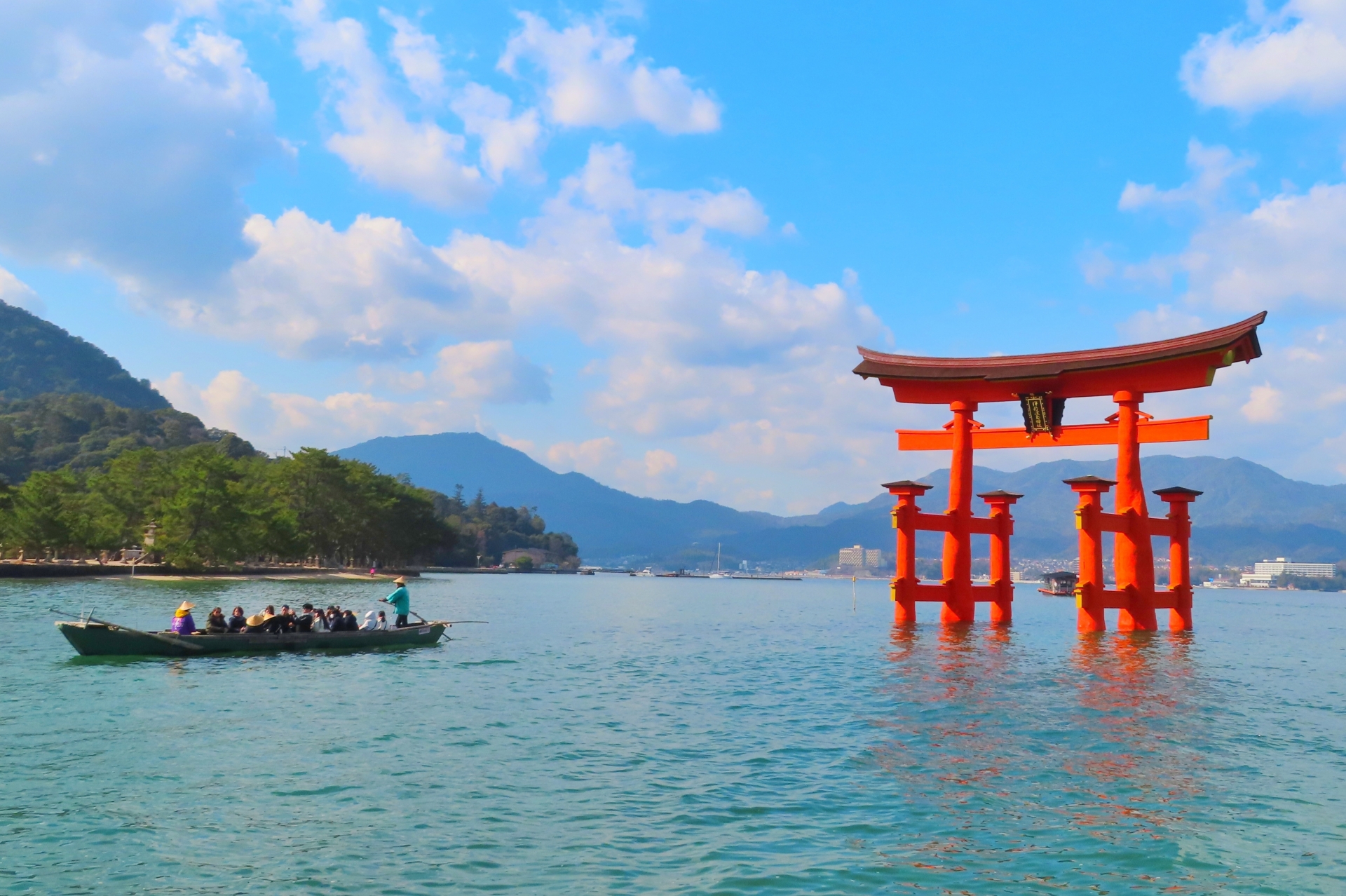
The shrine’s most recognizable feature is its large vermilion torii gate standing offshore. At high tide, water rises around its base, and the structure appears to float slightly apart from the land. From a distance, it can look almost weightless.
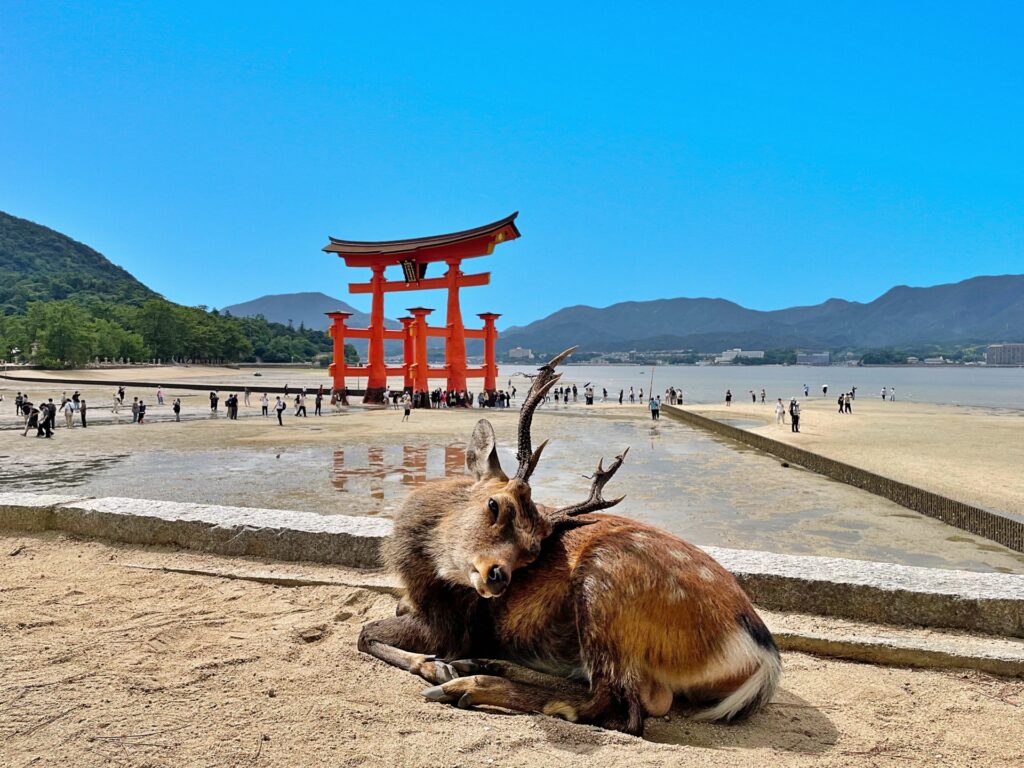
At low tide, the impression changes completely. The sea recedes, exposing a wide stretch of damp sand. Visitors walk out toward the gate, sometimes casually, sometimes with more intention. Up close, the scale becomes clearer—the thickness of the pillars, the weathering of the wood, small details that disappear when viewed from afar.
If you have time, it’s worth seeing both conditions. Not for comparison, but because they feel like two different places.
The Shrine Built Over the Sea
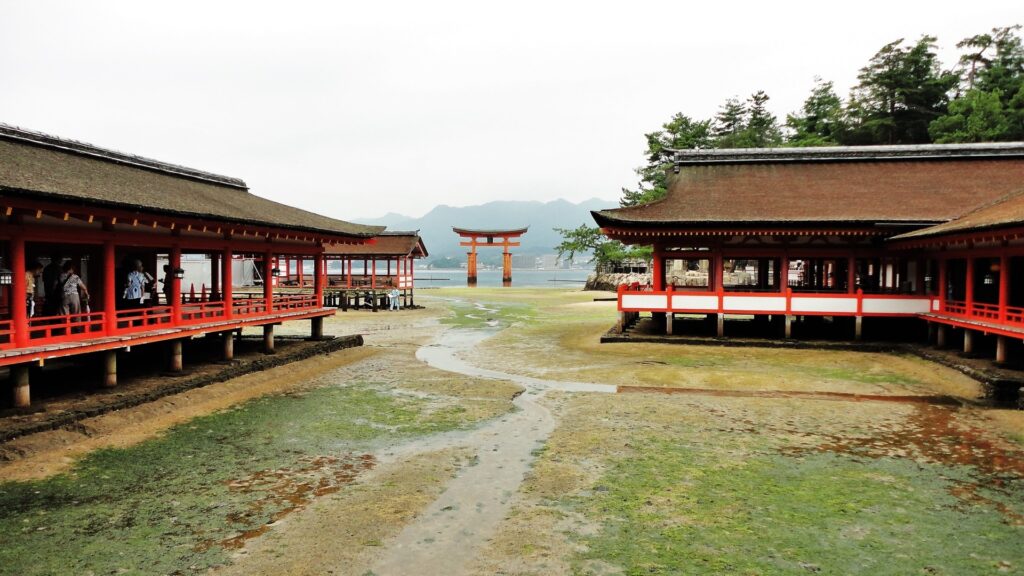
The shrine follows a traditional Shinden-style layout, with open pavilions connected by long wooden corridors. The structures stay relatively low, allowing the surrounding scenery to remain visible.
From certain points along the walkway, the composition becomes noticeable: the torii gate set in the water, the shrine buildings extending behind it, the surface of the sea shifting in between, and further back, the forested slope of Mount Misen.
It doesn’t feel like one element is meant to dominate. The balance is quiet, but intentional.
History of Itsukushima Shrine
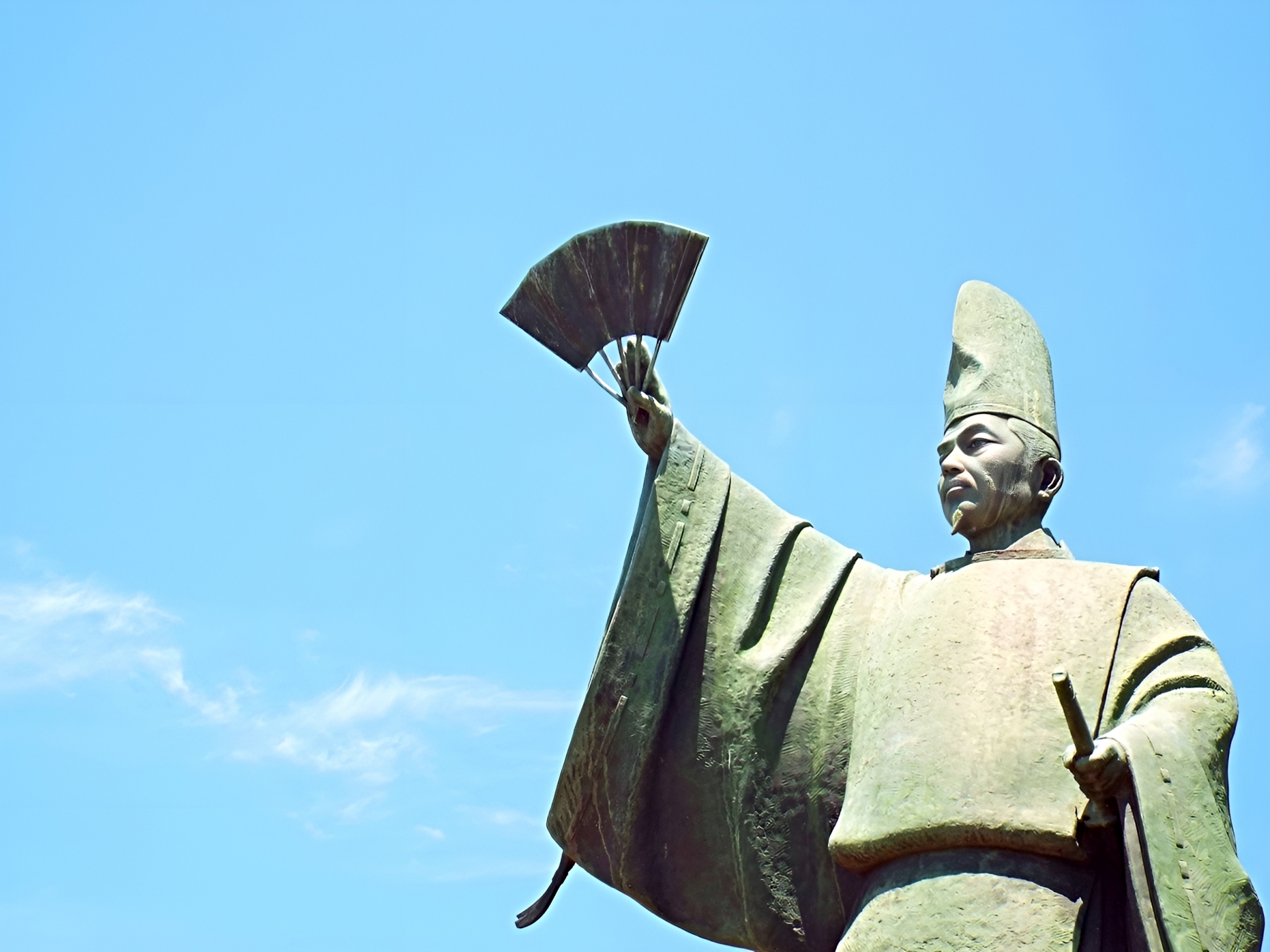
The origins of the shrine date back to the 6th century, though much of its current form was shaped in the 12th century under Taira no Kiyomori.
He expanded the shrine into a large, carefully arranged complex, reflecting both his political influence and personal devotion. During that period, the island’s sacred status was strictly observed. Ordinary people were not allowed to set foot on it, and even events like births and deaths were avoided to preserve ritual purity.
Over the centuries, the shrine has been damaged and rebuilt multiple times due to natural causes. Still, its overall design has remained consistent. What you see today isn’t untouched—it’s something that has been maintained and reconstructed in a way that keeps the original intent intact.
What Gods Are Enshrined at Itsukushima Shrine?
The shrine is dedicated to three Shinto goddesses, known collectively as the Munakata deities:
- Ichikishimahime-no-Mikoto
- Tagorihime-no-Mikoto
- Tagitsuhime-no-Mikoto
They are associated with the sea, navigation, and the protection of travelers. Given the shrine’s location along historic maritime routes, their role was especially important to those moving through the Seto Inland Sea.
Today, visitors still come to pray for safe journeys, but also for more personal reasons—creative work, performances, or milestones. Ichikishimahime, in particular, is often linked to artistic expression, which brings a slightly different atmosphere compared to other coastal shrines.
UNESCO World Heritage Status
Itsukushima Shrine was designated a UNESCO World Heritage Site in 1996.
The recognition reflects several factors: its integration with the natural environment, its long-standing cultural and religious significance, and its architectural approach—especially the decision to build over water in response to spiritual beliefs.
What stands out is that the design isn’t separate from the belief system. The structure exists the way it does because of how the place was understood.
Best Time to Visit Itsukushima Shrine
Timing has a noticeable impact on the experience.
- High tide: the torii appears to float, and the shrine feels closely connected to the water
- Low tide: you can walk out toward the gate and see details up close
- Sunset: softer light, longer shadows, often more visitors
- Night: the gate is illuminated, and the area becomes quieter, though shrine access is limited
If possible, arriving before high tide and staying as the water recedes allows you to see the transition rather than just one state.
How to Get to Itsukushima Shrine from Hiroshima
From Hiroshima, the route is straightforward:
- Train from Hiroshima Station to Miyajimaguchi (about 25 minutes)
- Walk to the ferry terminal
- Ferry to Miyajima (about 10 minutes)
- Walk 10–15 minutes to the shrine
If you’re using a JR Pass, the ferry is included. The journey takes about an hour in total, but the ferry crossing creates a subtle shift—it feels like leaving the mainland behind, even if only briefly.
Things to See Inside and Around the Shrine
Main Hall and Corridors
The main hall draws attention with its bright vermilion pillars, but the corridors tend to linger in memory longer. They frame the sea in partial views—sometimes wide and open, sometimes narrow and shaded depending on the angle and light.
Hokoku Shrine (Sessha / Guest Shrine)
A smaller structure within the complex, often less crowded. The atmosphere here is quieter, and it can feel slightly removed from the main flow of visitors.
Kagami-no-ike (Mirror Pond)
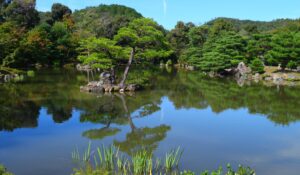
Visible during low tide, this small pond reflects the sky and surrounding architecture. It’s easy to overlook unless you’re paying attention to the ground rather than the horizon.
Noh Stage and Bugaku Performances
The shrine includes a rare over-water Noh stage. During festivals, traditional performances take place here, with sound carrying across the surface of the water in a way that feels unusually clear.
Nearby Attractions
Beyond the shrine itself, the island offers a few different directions to explore:
- Deer roaming freely near the waterfront and streets
- Omotesando shopping street, lined with casual food stalls and local snacks
- Trails up Mount Misen for broader views
- Daisho-in Temple, which tends to feel quieter and more contemplative
Suggested Miyajima Itinerary
Half-Day Plan
- Visit Itsukushima Shrine
- Walk to the torii gate (low tide)
- Explore Omotesando street
One-Day Plan
- Morning: Shrine visit
- Afternoon: Daisho-in Temple and Mount Misen
- Evening: Sunset near the torii gate
If you stay longer into the evening, the island’s pace changes noticeably as day-trippers leave.
Entrance Fee and Opening Hours
- Entrance fee: around 300 yen
- Opening hours: approximately 6:30 AM to evening (seasonal variation)
It’s a good idea to check the official website in advance, especially if you’re planning around tide times.
Visiting Etiquette and Practical Tips
- Bow lightly before entering shrine grounds
- Purify your hands at the water pavilion
- Keep noise levels low
- Avoid feeding the deer
- Wear comfortable shoes
- Check tide schedules beforehand
These are small things, but they shape the overall atmosphere of the visit.
FAQ About Itsukushima Shrine
Is Itsukushima Shrine worth visiting?
It offers a layered experience—landscape, architecture, and shifting conditions all interacting.
Can you walk to the floating torii gate?
Yes, during low tide.
How long do you need?
Around 2–4 hours for the shrine area; a full day if exploring the island.
Is Miyajima a day trip from Hiroshima?
Yes, and a relatively easy one.
What tide is best?
Both offer different perspectives.
Conclusion
Itsukushima Shrine isn’t defined by a single view. The same place changes depending on the tide, the light, and the time you spend there.
Stand beneath the torii at low tide, and it feels solid, almost heavy. Step back at high tide, and it seems to drift just above the surface.
If your schedule allows, staying overnight shifts the experience further. As the crowds thin and the shoreline quiets, the shrine settles into a slower rhythm—less about the image, more about the space itself.