If you’re looking for somewhere in Tokyo where the pace drops without warning, Shinjuku Gyoen National Garden does that almost immediately. One minute you’re crossing busy streets around Shinjuku, the next you’re inside a space where the loudest thing is usually the wind catching the trees. It’s not dramatic. It just… softens.
This guide leans practical, but it’s also shaped by how the place actually feels when you walk it—where to enter, how to move through it, and where people tend to linger.


What Is Shinjuku Gyoen? (And Why It’s Worth Visiting)
At a glance, it’s a large urban park built around three garden styles: Japanese traditional, English landscape, and French formal. That part is easy to explain. What’s harder to put into a single sentence is how those sections connect.
You don’t experience them as separate zones on a map. You feel the shift as you move.
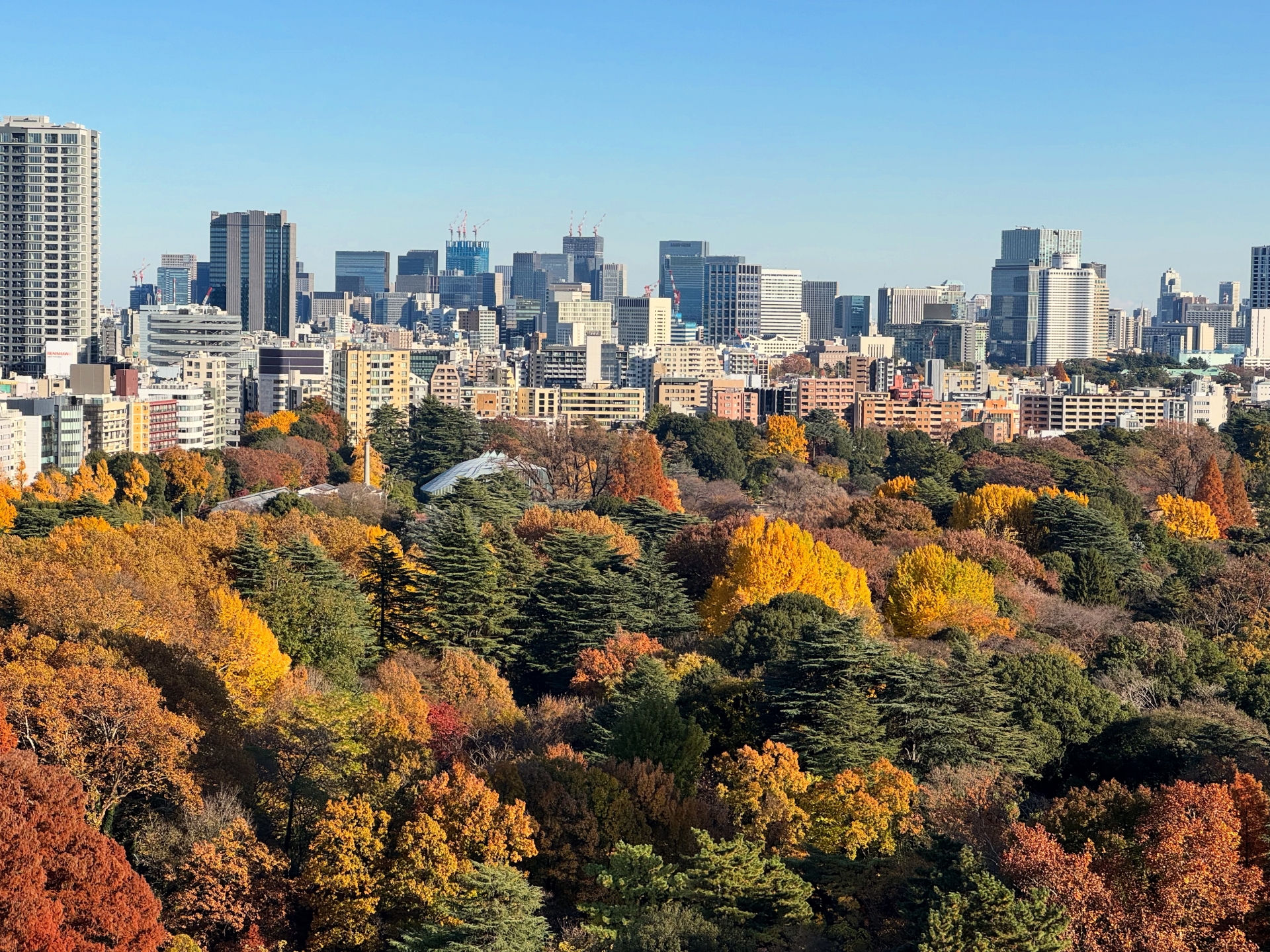
The transition from Shinjuku’s density is part of it too. You step in, and the skyline doesn’t disappear—but it gets pushed back, framed by branches instead of towering over you. Gravel underfoot, slower footsteps, fewer people talking loudly. It changes how you move without really announcing it.
Practical Information:
| Location | 11 Naitomachi, Shinjuku City, Tokyo |
| Access | 10-minute walk from JR Shinjuku Station / 5 minutes from Shinjuku-Gyoenmae Station |
| Hours | Typically 9:00 AM – 4:00/5:30 PM (seasonal variation) |
| Closed | Mondays (or next weekday if Monday is a holiday) |
| Price | ¥500 adults |
| Official Website | https://www.env.go.jp/garden/shinjukugyoen/english/index.html |
Why it tends to stay on people’s itineraries:
- It’s one of the few truly wide, open green spaces in central Tokyo
- You can switch between structured gardens and open lawns without thinking about it
- It works just as well for slow wandering as it does for photography
How to Get to Shinjuku Gyoen (Best Entrances Explained)
Which Gate Should You Use?
There are three main entrances, and they don’t feel interchangeable once you’ve tried more than one.
Shinjuku Gate
- Closest to JR Shinjuku Station
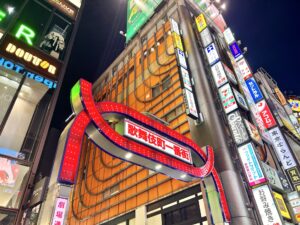
- Location: Near Kabukicho side
- Access: 10-minute walk from Shinjuku Station
- Best for: First-time visitors staying nearby
- Downside: This is where most people enter, so it can feel busy by late morning
Shinjuku-Gyoenmae Gate
- Access: 5 minutes from Shinjuku-Gyoenmae Station (Marunouchi Line)
- Best for: Getting in quickly without much walking
- Atmosphere: Usually balanced—not empty, not packed
Sendagaya Gate
- Access: 5 minutes from Sendagaya Station
- Best for: A quieter start, especially earlier in the day
- Good if you want the garden to unfold gradually
Local tip: If you arrive early, Sendagaya Gate changes the first impression. You don’t step straight into crowds—you ease into the space.
Best Things to Do in Shinjuku Gyoen
Walk Through Three Distinct Garden Styles
The most natural way to explore is to move through the three styles in sequence. Not because a map tells you to—but because the shifts in atmosphere land better that way.
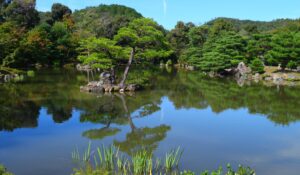
Start with the Japanese Traditional Garden. Early morning works best here. The paths are narrower, and they guide you rather than invite wandering. You’ll circle around ponds where koi gather near the surface, especially if people stop nearby. Wooden bridges, carefully placed stones—nothing feels random.
Near the Taiwan Pavilion-style structure, people tend to pause longer. Reflections in the water, slower light in the morning. Even the sounds are quieter—footsteps on gravel, the occasional bird, water moving just enough to notice.
Then it opens up. Almost abruptly.
The English Landscape Garden feels wide in a way that’s rare in Tokyo. After the tight paths, you’re suddenly on open grass with a big slice of sky. People stretch out here—some reading, some half-asleep, some just sitting with nothing in particular to do. The city edges back into view, but it feels distant again, softened by trees.
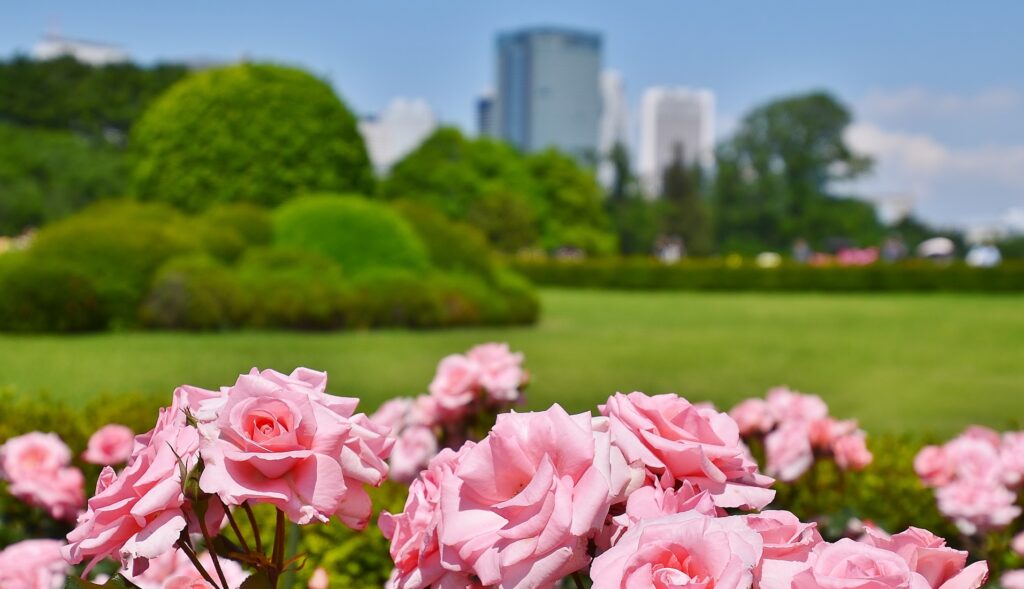
Finally, you move into the French Formal Garden. The change is visual first—straight lines, symmetry, carefully spaced trees. In autumn, this area shifts again, with rows of trees turning gold and forming something close to a tunnel. It’s one of those places where people slow down just to get the angle right on a photo.
Photo tip:
- Japanese Garden → reflections, bridges, still water
- English Lawn → skyline meeting open grass
- French Garden → symmetry, seasonal colors
Visit the Greenhouse
The greenhouse sits slightly off the main flow, which is probably why it stays relatively calm.
Step inside and the air changes immediately—warmer, heavier. The light filters through the glass in a way that softens everything, even on bright days. Elevated walkways guide you through different layers of plants, from low tropical growth to taller palms stretching toward the ceiling.
Some plants are labeled, others you’ll just stop and look at because they don’t quite resemble anything familiar. Orchids and carnivorous plants tend to draw people in for longer than expected.
It’s also a practical stop:
- Good option if it starts raining
- Usually less crowded than the outdoor areas
- A natural break point mid-walk
If you visit after spending time on the lawns, the contrast lands better.
Have a Picnic Like a Local
If you want to see how people in Tokyo actually use this space, the lawn tells you more than any guide.
Head back to the English Landscape Garden and find a spot—under a tree if you can. By late morning, people start settling in properly. Shoes off, bags opened, books out. Some stay for hours.
Before entering, it’s worth stopping near Shinjuku Station for simple food:
- Onigiri (rice balls)
- Sandwiches
- Drinks
No need to overthink it. A small mat helps, but plenty of people just sit directly on the grass.
A few things to keep in mind:
- Alcohol is generally not allowed
- Keep noise low
- Take your trash with you
Timing:
- Late morning → more space, slower pace
- Early afternoon → more people, still relaxed
If you’re taking photos, try shooting from a lower angle near the grass. It pulls the skyline into the frame without overpowering the scene.
Suggested Walking Route (2–3 Hour Itinerary)
This route keeps things flowing without doubling back:
- Start: Sendagaya Gate
→ Enter quietly, fewer people
→ Walk toward Japanese Garden (30–40 min)
→ Continue into English Lawn (45 min break / picnic)
→ Head to French Garden (30 min photos)
→ Visit Greenhouse (20–30 min)
→ Exit via Shinjuku Gate - Total time: 2–3 hours
- Distance: ~3–4 km walking
What works here is the pacing. It starts slow, opens up, then tightens again before you step back into the city.
Best Time to Visit (Cherry Blossoms, Autumn, and More)
Spring gets most of the attention. There are multiple types of cherry trees here, so the blooming period stretches a bit longer than in smaller parks.
That also means crowds—especially around midday.
Autumn feels different. The colors are deeper, the air sharper, and it’s generally easier to find space to walk at your own pace.
Time-of-day approach:
- Morning: quieter, better for photos
- Midday: more people, more picnic activity
- Late afternoon: softer light, fewer crowds
Practical Tips for Visiting Shinjuku Gyoen
- Bring a mat if you plan to sit on the grass
- Buy food and drinks before entering (options inside are limited)
- Avoid weekends during cherry blossom season if possible
- Consider less busy gates for smoother entry
One thing that catches people off guard: the size. You’ll walk more than expected, so comfortable shoes matter.
What to Do Nearby After Your Visit
Exit via Shinjuku Gate and the shift back to the city is immediate.
From there:
- Head toward Shinjuku Station for shopping or food
- Walk toward Yoyogi for a quieter café stop
- Or take it easy around Shinjuku South Terrace
A simple flow that works well: garden → coffee → city at sunset.
FAQ About Shinjuku Gyoen
Is Shinjuku Gyoen worth visiting?
If you’re spending time in central Tokyo, it’s one of the easiest ways to reset without going far.
How long should I spend here?
Around 2–3 hours feels right. Less is possible, but you’ll likely rush through it.
Is it free?
No. Entry is ¥500, and the upkeep shows.
Can you bring food?
Yes. Just follow the basic rules and clean up after yourself.
Final Thoughts
There are plenty of parks in Tokyo, but not many that change your pace this quickly. Shinjuku Gyoen National Garden isn’t dramatic about it. You just notice, somewhere between the entrance and the first stretch of lawn, that you’ve slowed down without trying.