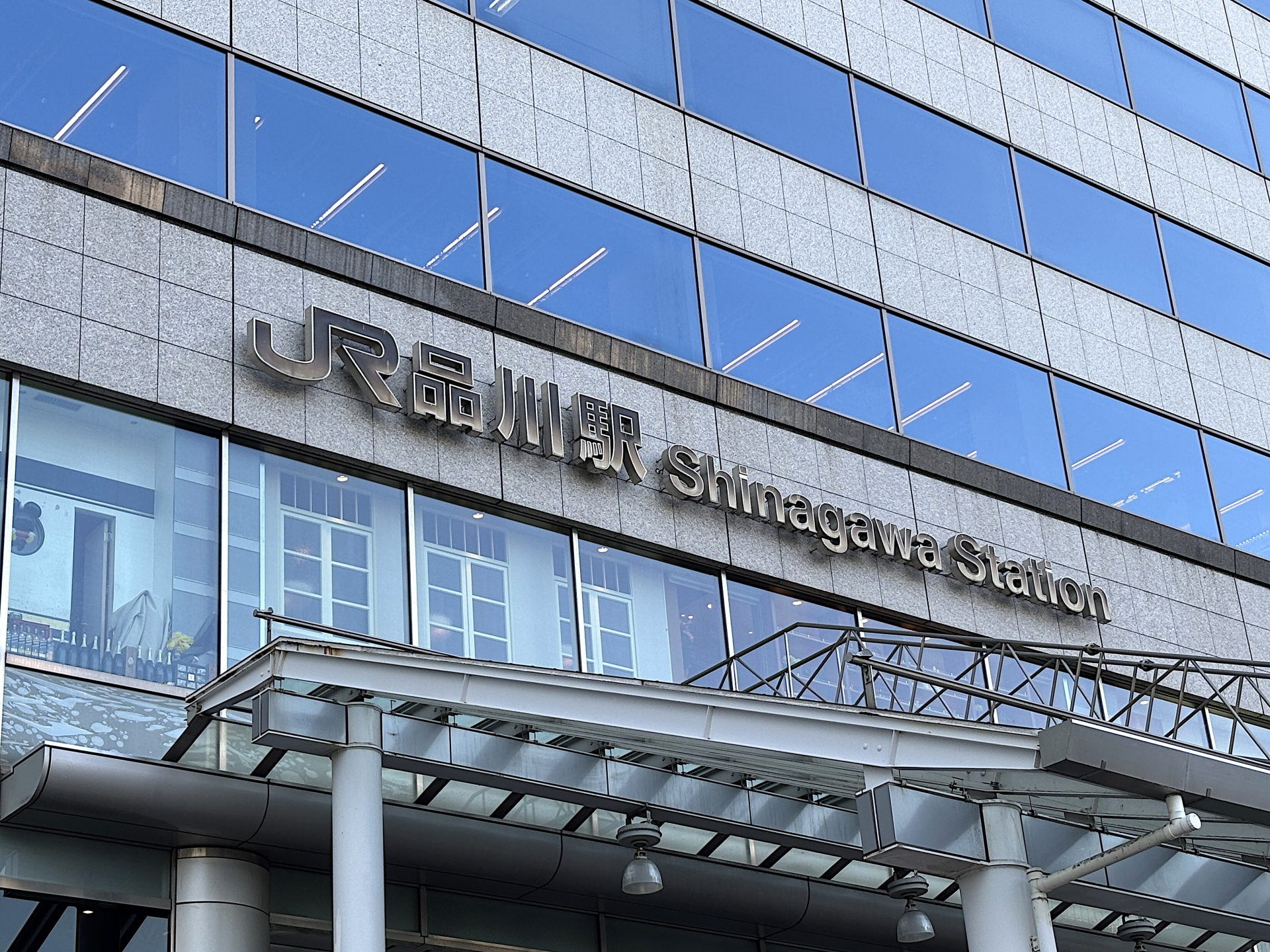
Shinagawa Station is one of those Tokyo stations that travelers often pass through before they properly notice it. It is not the city’s most atmospheric sightseeing district, and it does not have the immediate pull of Shibuya or Asakusa. Still, for anyone arriving from Haneda Airport, catching the Tokaido Shinkansen, or staying somewhere with easy train access, Shinagawa is hard to beat.
What makes the station useful is also what makes it slightly confusing at first: the exits lead to very different sides of the area. The Takanawa Exit takes you toward hotels, Maxell Aqua Park Shinagawa, and Sengakuji Temple. The Konan Exit points you toward Atre Shinagawa, office towers, Shinagawa Season Terrace, and eventually the canals and galleries of Tennozu Isle.
Get the exit right, and Shinagawa becomes much easier to use.


Shinagawa Station at a Glance: Why Travelers Use It
Shinagawa Station brings together JR lines, the Keikyu Line, and the Tokaido Shinkansen. That combination makes it especially useful for three kinds of trips: traveling to or from Haneda Airport, taking the Shinkansen toward Nagoya, Kyoto, or Osaka, and staying in Tokyo without being too far from major train routes.
The station is busy, but in a slightly different way from places like Shinjuku. Much of the crowd is practical: office workers moving quickly, people with suitcases, families heading to the aquarium, and Shinkansen passengers trying to find the right gate. During the morning and evening rush, the concourse can feel tight, especially near ticket gates and escalators.
If you are transferring between Keikyu, JR, and the Shinkansen, allow more time than the map suggests. The systems are connected, but they are not all behind the same gates.
Shinagawa Station practical info
Location: Around 3 Takanawa, Minato-ku, Tokyo
Access: JR lines, Keikyu Line, Tokaido Shinkansen
Hours: Varies by railway and facility
Price: Train fares vary by route
Official Website: JR East / JR Central / Keikyu official sites
Which Exit Should You Use at Shinagawa Station?
At Shinagawa, choosing the exit first saves a surprising amount of backtracking. The Takanawa Exit is the side for hotels, Aqua Park, and the older slope-filled streets around Takanawa. The Konan Exit is better for station dining, office towers, open spaces, and the walk toward Tennozu Isle.
| Exit | Best for | Nearby places | Traveler tip |
| Takanawa Exit | Hotels, aquarium, families | Shinagawa Prince Hotel, Maxell Aqua Park Shinagawa, Sengakuji | Best for rainy-day plans and hotel stays |
| Konan Exit | Food, business district, waterfront walks | Atre Shinagawa, Shinagawa Season Terrace, Tennozu Isle | Best for dining and walking toward canals |
| JR / Keikyu / Shinkansen gates | Transfers | JR lines, Keikyu, Tokaido Shinkansen | Follow railway names carefully |
The Takanawa side has more of a hotel-and-entertainment feel, with taxis, slopes, and people moving between the station and Shinagawa Prince Hotel. The Konan side feels newer and more businesslike. Pedestrian decks lead out toward glassy office buildings, cafés, and a cleaner, wider-feeling route toward the waterfront.
Neither side is “better.” They simply serve different kinds of trips.
How to Transfer at Shinagawa Station: JR, Keikyu, and Shinkansen
Shinagawa Station has three train systems that travelers often mix up. JR lines are for local and citywide travel, including the Yamanote Line. Keikyu is the line most visitors use for Haneda Airport. The Tokaido Shinkansen is for long-distance travel toward Nagoya, Kyoto, and Osaka.
When you are inside the station, follow the railway name first, not only the destination. Keikyu signs use red branding, JR signs are often green, and the Shinkansen gates are marked separately. It sounds obvious, but when you are tired after a flight or carrying luggage, “Shinagawa” can start to feel like several stations packed into one building.
Elevators and ticket gates can also slow you down. With a suitcase, build in a little breathing room.
Transfer practical info
Location: Inside Shinagawa Station
Access: JR, Keikyu, and Shinkansen areas are connected but use separate gates
Hours: Train times vary by line and time of day
Price: Local train fares and Shinkansen tickets are separate
Official Website: JR East / Keikyu / JR Central official sites
Getting from Haneda Airport to Shinagawa Station
From Haneda Airport, the Keikyu Line is usually the simplest way to reach Shinagawa Station. From Haneda Airport Terminal 1・2 or Terminal 3, the ride to Shinagawa takes about 15 to 20 minutes and costs 330 yen one way.
After landing, follow the signs for Keikyu, use an IC card or buy a ticket, and board a train heading toward Shinagawa or central Tokyo. It is a very convenient route if your hotel is around Shinagawa, or if you plan to catch the Shinkansen the next morning.
With large luggage, try to avoid peak commuter hours if your schedule allows it. The ride itself is short, but standing in a packed car with a suitcase after a long flight is not the best start to Tokyo.
Haneda to Shinagawa practical info
Location: Haneda Airport Terminal 1・2 / Terminal 3 to Shinagawa Station
Access: Direct by Keikyu Line
Hours: Based on Keikyu train operating hours; trains generally run from early morning until late night, with frequency depending on the time of day
Price: 330 yen one way
Travel Time: About 15–20 minutes
Official Website: Keikyu official site / Haneda Airport access information
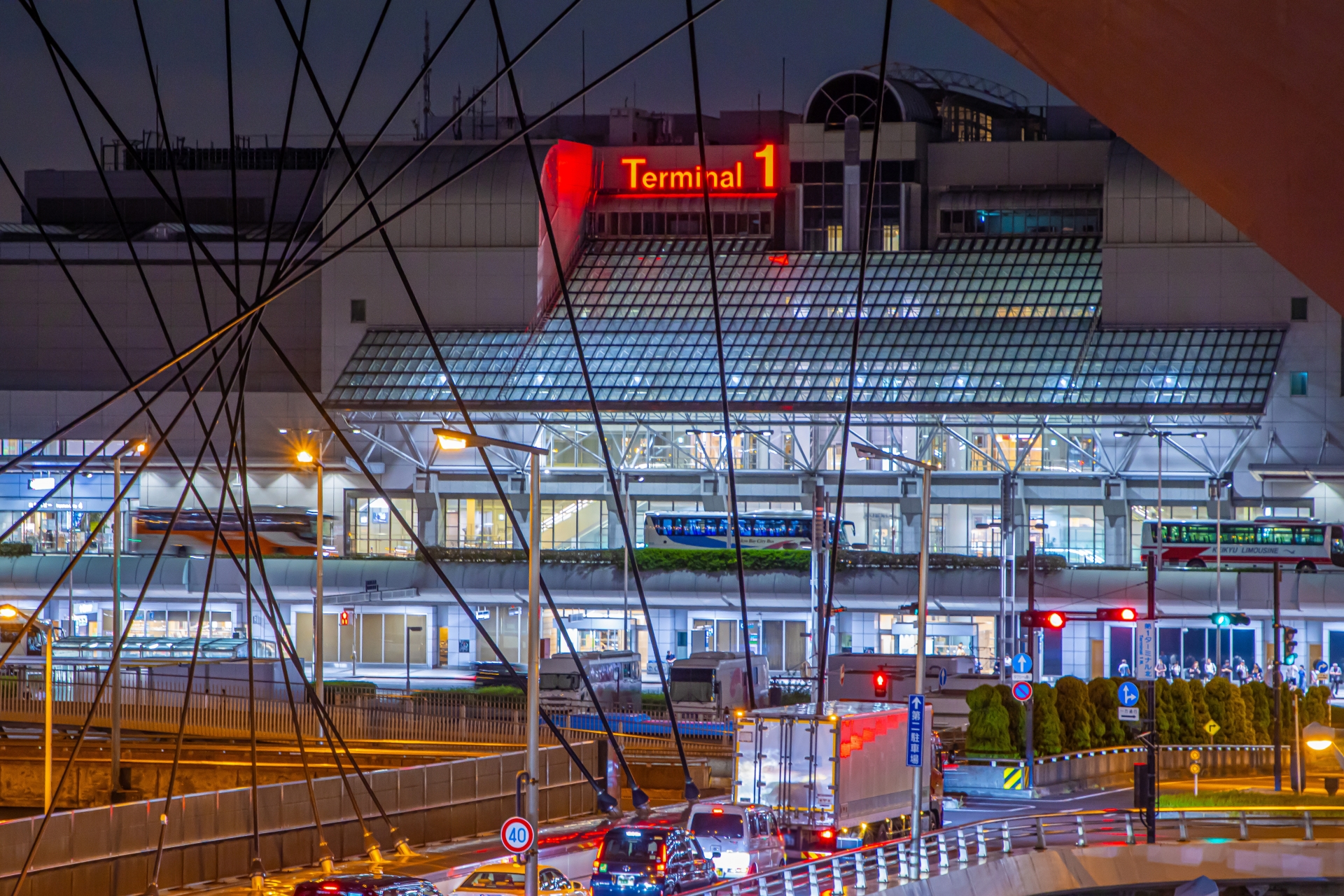
Things to Do Near Shinagawa Station If You Have 30 Minutes to 2 Hours
Shinagawa works well when you do not have much time. It is not the sort of area where you need to plan a full sightseeing day, but it is excellent for filling a gap before a train: lunch, coffee, souvenirs, an aquarium visit, or a short walk away from the station noise.
If you only have 30 minutes, stay inside or right beside the station. With two hours, you can comfortably choose either the Takanawa side or the Konan side.
Grab Food and Souvenirs at ecute Shinagawa
ecute Shinagawa sits inside the JR ticket gates, which makes it especially useful before a Shinkansen ride. You can pick up ekiben, sweets, snacks, coffee, and small gifts without leaving the paid area.
This is the place to use when it is raining, when your suitcase is annoying you, or when you realize your train leaves sooner than you thought. Restaurant and café areas generally open from around 7:00, many deli, ekiben, and sweets shops from around 8:00, and some convenience-style shops run from early morning until late at night.
During busy travel periods, buy food earlier than feels necessary. The final 10 minutes before departure disappears quickly at Shinagawa.
ecute Shinagawa practical info
Location: Inside JR Shinagawa Station ticket gates
Access: Inside JR paid area
Hours: Varies by shop; as a guide, restaurants and cafés are often around 7:00–22:00, deli / ekiben / sweets shops around 8:00–22:00, and some convenience shops around 5:50–23:30
Price: Free to browse; food prices vary
Official Website: ecute Shinagawa official site
Eat or Shop at Atre Shinagawa
Atre Shinagawa is directly connected to the Konan Exit side of the station. It is useful for casual restaurants, cafés, deli food, and supermarket shopping, especially when you want something easy rather than a long search for dinner.
It is a good stop before hotel check-in, after arriving from Haneda, or when you want a low-effort solo meal near the station. Compared with the louder dining districts of central Tokyo, Atre feels more contained. At night, the mood is practical rather than rowdy: office workers finishing dinner, hotel guests picking up food, people heading home with groceries.
Atre Shinagawa practical info
Location: 2-18-1 Konan, Minato-ku, Tokyo
Access: Directly connected to Shinagawa Station, Konan Exit side
Hours: Generally 7:00–23:00; some shops and restaurants have different hours
Price: Varies by restaurant or shop
Official Website: Atre Shinagawa official site
Take a Break at Shinagawa Season Terrace
Shinagawa Season Terrace is a modern office complex with a stretch of open green space near the Konan Exit. It is not a major sightseeing stop, and that is partly why it can be useful. After the station concourse, the extra space feels welcome.
Around lunchtime, office workers fill the area. Later in the afternoon, the lawn and surrounding towers settle into a calmer rhythm, and it becomes a decent place to sit for a while, check your route, or take a short walk before getting back on a train.
Restaurants and shops inside the complex keep their own hours, so check individual stores if you plan to eat there.
Shinagawa Season Terrace practical info
Location: 1-2-70 Konan, Minato-ku, Tokyo
Access: About 6 minutes on foot from Shinagawa Station Konan Exit
Hours: Varies by public area, shop, and restaurant
Price: Free to enter public areas
Official Website: Shinagawa Season Terrace official site
Best Attractions Around the Takanawa Exit
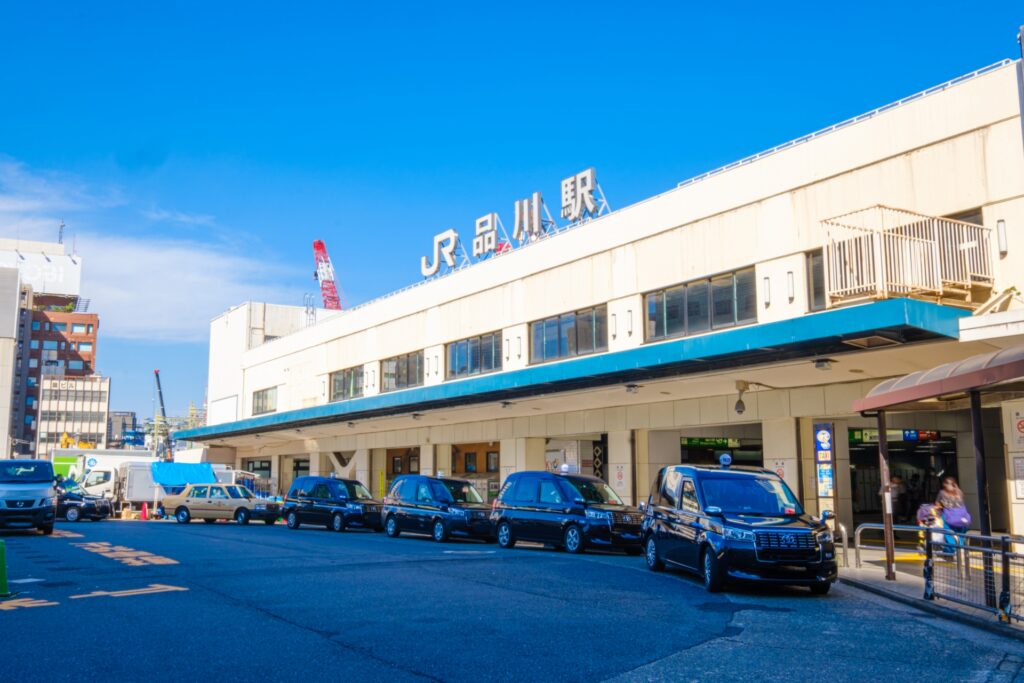
The Takanawa Exit is the easier side for classic short sightseeing. It works well for rainy-day plans, families, hotel stays, and travelers who want something close to the station without heading deep into another neighborhood.
Maxell Aqua Park Shinagawa: The Easiest Rainy-Day Stop
Maxell Aqua Park Shinagawa is an indoor aquarium inside the Shinagawa Prince Hotel complex, just a short walk from the Takanawa Exit. For travelers with children, rainy weather, or a free evening near the station, it is one of the simplest attractions in the area.
The aquarium is known for its light displays, jellyfish tanks, and dolphin performances with music and water effects. It is more polished and entertainment-focused than a quiet natural-history-style aquarium, so the appeal depends a little on what kind of visit you want.
The front rows at the dolphin performances may get wet. Weekends and rainy days can also bring bigger crowds, so it is worth checking the schedule before going.
Maxell Aqua Park Shinagawa practical info
Location: 4-10-30 Takanawa, Minato-ku, Tokyo
Access: About 2 minutes on foot from Shinagawa Station Takanawa Exit
Hours: Usually 10:00–20:00; last entry is generally about 1 hour before closing. Hours may change by season or event
Price: Adults 2,800 yen, elementary / junior high school students 1,300 yen, children aged 4 and over 800 yen
Official Website: Maxell Aqua Park Shinagawa official site
Sengakuji Temple: A Quiet Historical Detour
Sengakuji Temple is best known for its connection to the 47 Ronin. It is much quieter than many of Tokyo’s famous temples, and that gives it a different kind of weight. You are not coming here for a grand approach lined with souvenir shops; you are coming for a compact historical site that feels set apart from the station crowds.
Walk slowly around the grounds, especially near the graves. The stone paths, incense, and subdued atmosphere make the place feel further from Shinagawa Station than it actually is. Early in the day is usually the best time to visit if you want a calmer stop.
Sengakuji Temple practical info
Location: 2-11-1 Takanawa, Minato-ku, Tokyo
Access: About 1 minute on foot from Sengakuji Station Exit A2
Hours: Temple grounds 7:00–16:00; museum 9:00–15:30
Price: Temple grounds free; museum 500 yen
Official Website: Sengakuji official site
Best Attractions Around the Konan Exit and Tennozu Isle
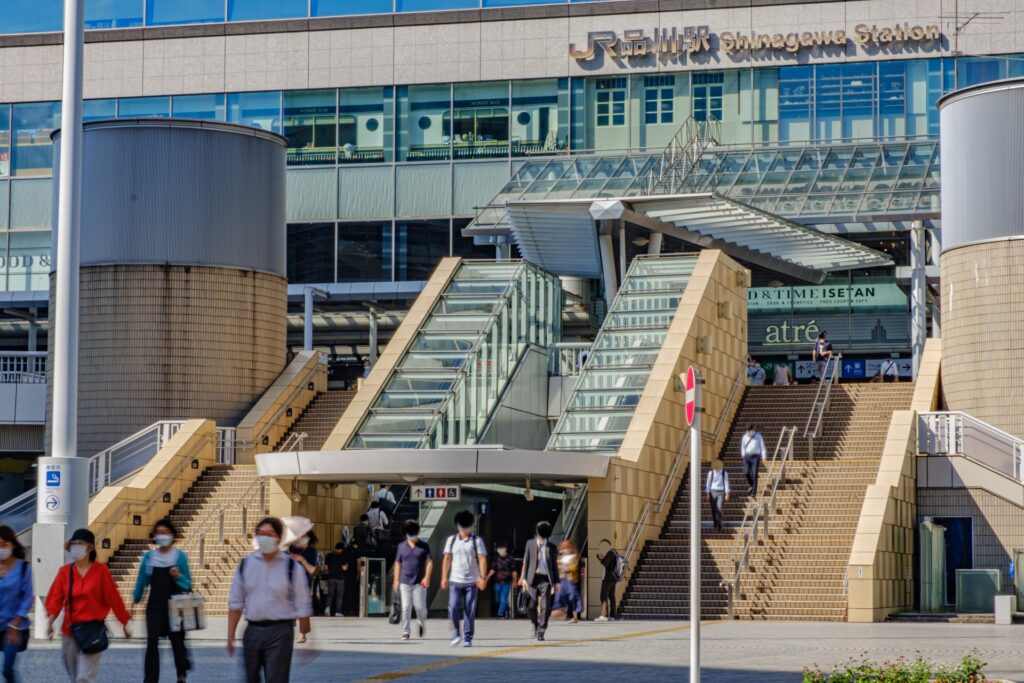
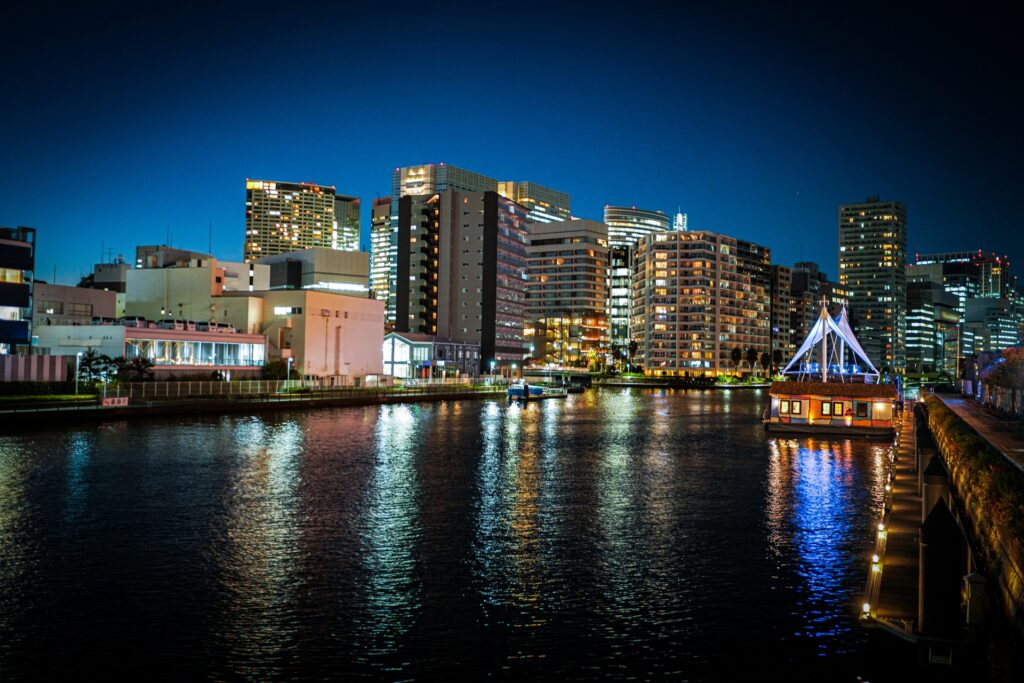
The Konan Exit is the better side for a modern Tokyo walk. The route begins with office towers and station-connected shops, then gradually opens out toward canals, bridges, renovated warehouse buildings, and the art spaces of Tennozu Isle.
Walk from Shinagawa Station to Tennozu Isle
From the Konan Exit, Tennozu Isle is about 15 to 20 minutes on foot. The first part of the walk feels like a business district: broad paths, glass buildings, people moving with purpose. Keep going, and the scenery softens around the canals and bridges.
Late afternoon is the best time to walk, especially when the light catches the water. It is not a dramatic route, but it gives you a different view of Tokyo: less neon, more waterfront edges and converted warehouses.
If it is hot, raining, or you have large luggage, use Tennozu Isle Station instead. This walk is much better with free hands.
Tennozu Isle walk practical info
Location: Higashi-Shinagawa / Tennozu Isle area
Access: 15–20 minutes on foot from Shinagawa Station Konan Exit
Hours: Public areas generally open; shops and galleries vary
Price: Free to walk
Official Website: GO TOKYO / Tennozu area official information
WHAT MUSEUM and the Tennozu Art Scene
WHAT MUSEUM is one of Tennozu Isle’s main art spaces. Its exhibitions often focus on contemporary art, architecture, and design, though the content changes depending on the program.
The surrounding area has a warehouse-district feel, with cafés and galleries nearby. It is a good fit for travelers who want something quieter than the major museum districts, but it is worth checking the current exhibition before you go. Ticket prices and opening details depend on what is showing.
WHAT MUSEUM practical info
Location: 2-6-10 Higashi-Shinagawa, Shinagawa-ku, Tokyo
Access: About 4 minutes from Rinkai Line Tennozu Isle Station Exit B; about 5 minutes from Tokyo Monorail Tennozu Isle Station; about 15 minutes on foot from Shinagawa Station Konan Exit
Hours: 11:00–18:00, last entry 17:00. Closed Mondays; if Monday is a national holiday, closed the following Tuesday
Price: Varies by exhibition
Official Website: WHAT MUSEUM official site
T.Y.HARBOR and Canal-Side Dining
T.Y.HARBOR is a well-known canal-side restaurant in Tennozu Isle, popular for brunch, dinner, and drinks after visiting nearby galleries. It has a different feel from station dining around Shinagawa: slower, more open, and more suited to lingering.
The terrace seats are especially pleasant in the evening, when the canal picks up the surrounding lights. On weekends, it can get busy, so reservations are a good idea if you have a specific time in mind.
T.Y.HARBOR practical info
Location: 2-1-3 Higashi-Shinagawa, Shinagawa-ku, Tokyo
Access: About 5 minutes on foot from Tennozu Isle Station; about 20 minutes from Shinagawa Station
Hours: Lunch 11:30–15:00 on weekdays, 11:30–16:00 on weekends and holidays; dinner 17:30–22:00
Price: Varies by order
Official Website: T.Y.HARBOR official site
Historic Shinagawa: Old Tokaido and Shinagawa Shrine
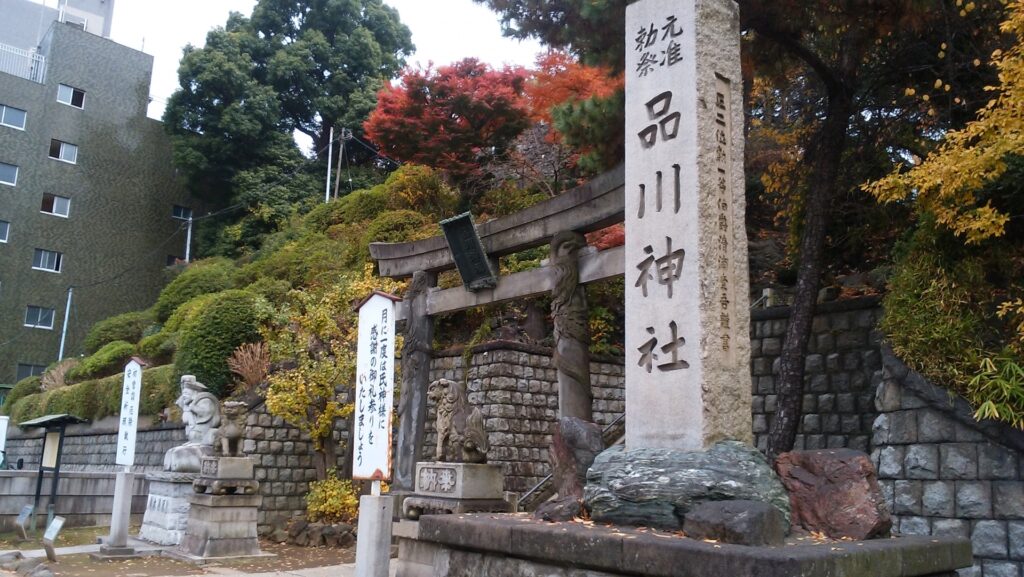
Shinagawa is not only a station district and a line of office buildings. A short distance away, the old Tokaido road and neighborhood shrines give the area a more lived-in texture. This side of Shinagawa takes more time than a quick station stop, but it is rewarding if you like local streets and small historical details.
Walk the Old Tokaido Shinagawa-shuku
The Old Tokaido Shinagawa-shuku area stretches around Kitashinagawa, Shin-Banba, and Aomono-yokocho. It was once part of the historic road connecting Edo and Kyoto, and although the modern city has grown around it, traces of that older route remain.
Today, the area feels local in a practical, everyday sense. You pass small shops, temples, old road markers, and quiet side streets where the pace is much slower than the station concourse. It is best visited without luggage and without trying to tick off sights too quickly.
Give yourself time to wander. That is the point here.
Old Tokaido Shinagawa-shuku practical info
Location: Kitashinagawa to Aomono-yokocho area
Access: Nearest stations include Kitashinagawa, Shin-Banba, and Aomono-yokocho
Hours: Public streets are generally accessible; shops and tourist information facilities vary
Price: Free to walk
Official Website: Shinagawa tourism information
Shinagawa Shrine and the Mini Mt. Fuji
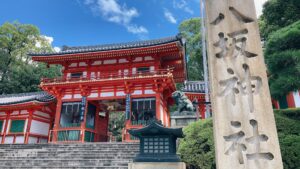
Shinagawa Shrine is a local-feeling shrine near Shin-Banba Station. It is known for its stone steps, dragon-carved torii gate, and small Fujizuka, or mini Mt. Fuji.
The climb up the steps is short, but it gives you a small break from the surrounding city. On wet days, take care on the stone, as it can be slippery. If you want a goshuin stamp or shrine amulets, visit during shrine office hours rather than late in the day.
Shinagawa Shrine practical info
Location: 3-7-15 Kitashinagawa, Shinagawa-ku, Tokyo
Access: About 1 minute on foot from Shin-Banba Station North Exit
Hours: Shrine office reception 9:00–17:00
Price: Free
Official Website: Shinagawa Shrine / GO TOKYO official information
Suggested Shinagawa Station Itineraries
Use these plans based on how much time you have and how much you want to move around. Shinagawa is easiest when you match the area to your schedule instead of trying to cover everything at once.
30-Minute Plan: Stay Inside or Next to the Station
Route: JR gates → ecute Shinagawa → Atre Shinagawa or coffee stop → platform / hotel
This is the best plan before a train or when you have luggage. Buy food, coffee, or souvenirs without straying far. If you are already inside the JR gates, ecute Shinagawa is the easiest choice. If you are outside the gates on the Konan side, Atre is more convenient.
2-Hour Plan: Aqua Park and Station Dining
Route: Takanawa Exit → Maxell Aqua Park Shinagawa → Atre or ecute for food
This works well on rainy days, with children, or in the evening. Aqua Park is close enough to the station that you can fit in an actual attraction without committing to a cross-city trip. Just keep an eye on your next train time, especially if you plan to watch a performance.
Half-Day Plan: Shinagawa History Walk
Route: Shinagawa Station → Sengakuji Temple → Old Tokaido → Shinagawa Shrine → return by Keikyu
This plan is best for travelers who like history, neighborhood streets, and slower walks. Store your luggage before starting. Visit Sengakuji during its opening hours, then continue toward the Old Tokaido and Shinagawa Shrine.
Half-Day Plan: Tennozu Art and Waterfront
Route: Konan Exit → Shinagawa Season Terrace → Tennozu Isle → WHAT MUSEUM → T.Y.HARBOR
This route works especially well in the afternoon or early evening. It combines modern Tokyo, canals, art, and a relaxed meal by the water. Visit WHAT MUSEUM before last entry at 17:00, then finish with dinner or drinks in Tennozu Isle.
Where to Eat Around Shinagawa Station
Shinagawa is not the place most travelers choose for a food-focused night out, but it is excellent for practical meals. Use ecute Shinagawa for ekiben, sweets, and snacks before boarding a train. Use Atre Shinagawa for casual restaurants, cafés, and supermarket food. For something more relaxed, head toward Tennozu Isle.
| Situation | Best area | Why | Notes |
| Before Shinkansen | ecute Shinagawa | Fast, inside JR gates | Buy early during busy times |
| Solo dinner | Atre Shinagawa | Easy and station-connected | Good after hotel check-in |
| Family meal | Takanawa side | Close to hotels and Aqua Park | Check restaurant hours |
| Relaxed dinner | Tennozu Isle | Canal-side atmosphere | Reserve on weekends |
Is Shinagawa Station a Good Place to Stay in Tokyo?
Shinagawa is a good place to stay if convenience matters more than nightlife. It is especially useful for Haneda Airport, the Shinkansen, business trips, family travel, and first or last nights in Tokyo.
It is not ideal if you want bars, late-night wandering, or major sightseeing right outside your hotel. Shinjuku, Shibuya, Ginza, or Asakusa may feel more exciting for that kind of stay. Shinagawa is calmer and more functional. For some trips, that is exactly what you want.
Practical Tips for Using Shinagawa Station
Can you take the Shinkansen from Shinagawa Station?
Yes. Shinagawa Station serves the Tokaido Shinkansen toward Nagoya, Kyoto, and Osaka. For other Shinkansen directions, you may need Tokyo Station or another major station.
Is Shinagawa Station on the Yamanote Line?
Yes. Shinagawa is on the JR Yamanote Line, making it useful for reaching Tokyo, Shibuya, Shinjuku, and other major areas.
Should I use Shinagawa Station or Tokyo Station for Kyoto and Osaka?
Use Shinagawa if you are staying nearby, coming from Haneda Airport, or want a smoother transfer with luggage. Use Tokyo Station if your hotel or route is closer to central Tokyo.
What should I do near Shinagawa Station with luggage?
Stay close to the station. Use ecute, Atre, hotel luggage storage, or coin lockers. Avoid walking to Tennozu Isle or the Old Tokaido with large suitcases, as both are much more enjoyable without dragging luggage behind you.
Final Thoughts: Shinagawa Station Is More Than a Transfer Point
Shinagawa Station is not Tokyo’s most dramatic sightseeing area, and it does not try to be. Its strength is that it makes travel easier. You can arrive from Haneda, catch the Shinkansen, buy food inside the station, visit an aquarium, stop by a historic temple, or spend an afternoon near the canals of Tennozu Isle.
Start by choosing the right exit. Then match your plan to the time you actually have. With that alone, Shinagawa becomes less of a place to rush through and more of a useful base that quietly works in your favor.