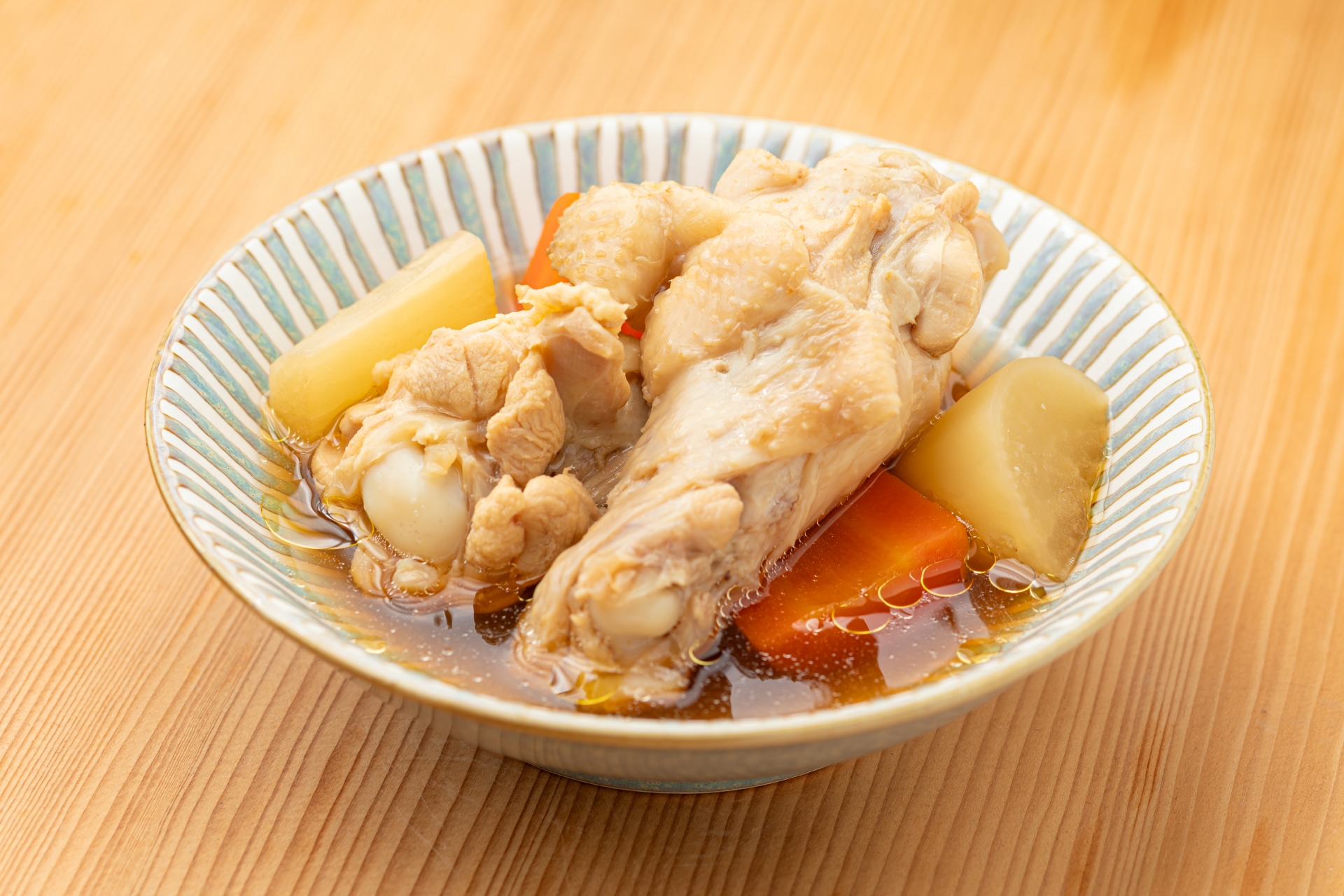
Nimono is one of the most everyday and comforting styles of Japanese home cooking. Vegetables, tofu, fish, or meat are gently simmered until they absorb a savory, slightly sweet, dashi-based broth.
In this guide, you’ll learn what nimono is (and what it isn’t), the classic seasoning formula, essential techniques that help flavors soak in, and the most common types of nimono you’ll see in Japanese homes and menus—plus simple recipes you can actually try.


What Is Nimono? (Meaning, Kanji, and the Core Idea)
Nimono (煮物, pronounced “nee-moh-noh”) literally means “simmered things” in Japanese. The term refers both to a cooking method and to a broad category of dishes in which ingredients are gently simmered in a seasoned broth until they absorb flavor.
In one sentence for American readers:
Nimono are Japanese comfort dishes made by slowly simmering vegetables, fish, tofu, or meat in a savory-sweet dashi-based broth until tender and flavorful.
At its core, nimono is about balance and restraint. It is neither a heavy stew nor a soup. Instead, it is a quiet, thoughtful style of cooking that brings out the natural character of each ingredient while layering in umami and subtle sweetness. This is why nimono appears so frequently in everyday Japanese home cooking—it is comforting, adaptable, and easy to return to again and again.
Nimono Flavor and the Basic Seasoning Philosophy (Dashi + Seasonings)
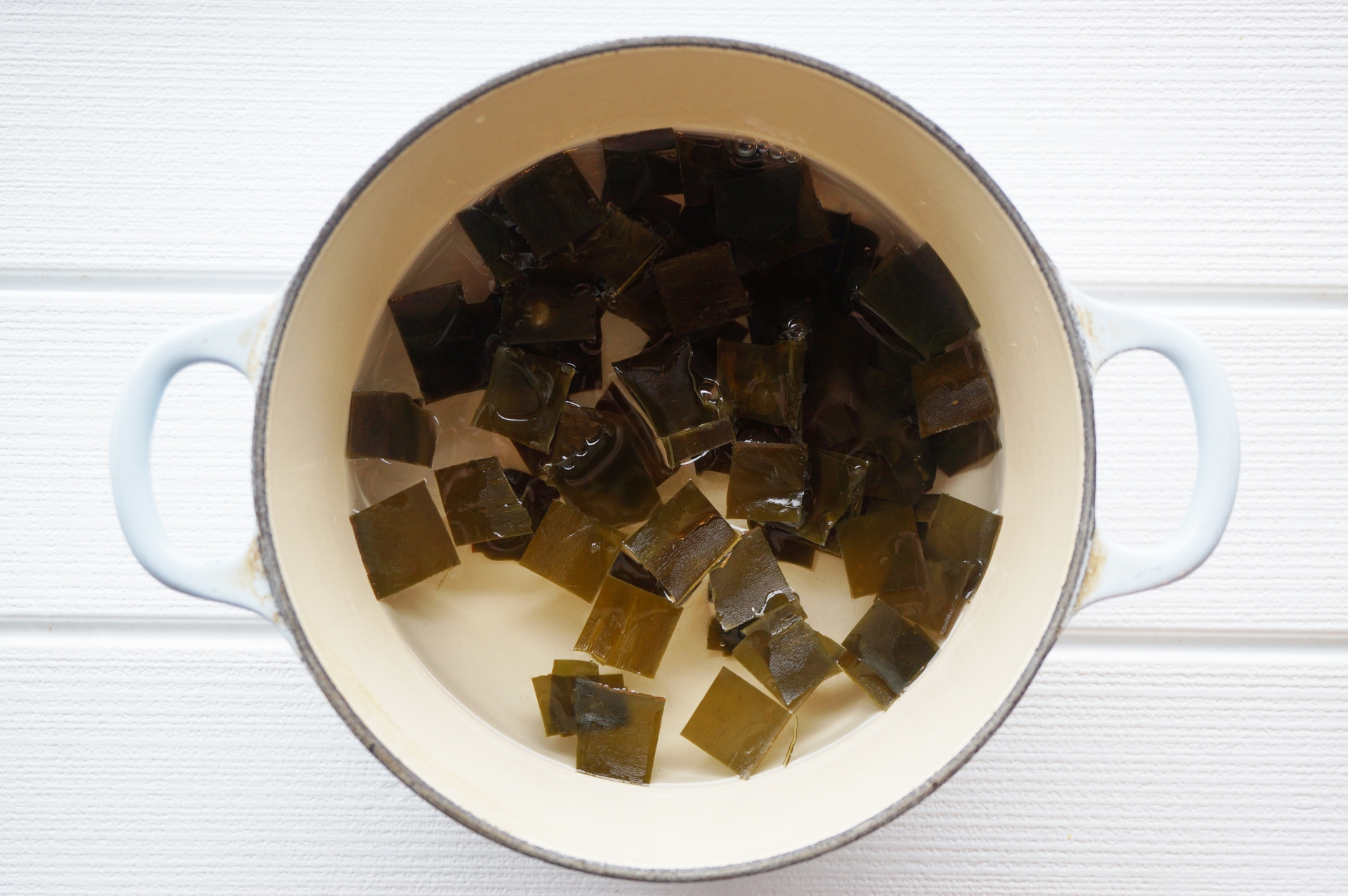
The flavor of nimono is built on a harmonious balance of umami and gentle sweetness, with dashi as the foundation. Dashi—traditionally made from kombu (kelp) and katsuobushi (bonito flakes)—provides depth without heaviness. Soy sauce adds salt and savory complexity, mirin or sugar contributes soft sweetness, and sake adds aroma while helping remove unwanted odors from fish or meat.
Rather than bold or spicy flavors, nimono is subtle and rounded. The seasoning supports the ingredients instead of overpowering them, which is why nimono is well suited to everyday meals. Taste varies by household and region: Kyoto-style nimono tends to be lighter and more dashi-forward, while Kanto (Tokyo-area) versions are often darker and slightly saltier.
For home cooks, nimono seasoning relies more on ratios than strict measurements. A common baseline is:
Dashi : Soy Sauce : Mirin : Sake = 10 : 1 : 1 : 1
From there, seasoning is adjusted by tasting. This flexible approach reflects how nimono is actually cooked in Japanese homes.
Dashi Options for Home Cooks
Ichiban-dashi (first brew) is delicate and aromatic, making it ideal for clear soups. Niban-dashi (second brew), made from the same kombu and bonito flakes after the first extraction, is slightly stronger and better suited for simmered dishes like nimono.
For busy cooks, instant granulated dashi is a practical alternative, while the fastest option is soaking kombu in water overnight to create a simple plant-based broth.
Vegan and Vegetarian Nimono
For vegan or vegetarian nimono, kombu dashi is the most common base. To enhance umami, many cooks add the soaking liquid from rehydrated dried shiitake mushrooms, which naturally deepens the flavor. Because plant-based broths can taste saltier more quickly, seasoning should be done carefully and adjusted toward the end of cooking.
Key Technique: How Nimono Gets Flavor Into the Ingredients
Nimono develops its flavor through gentle simmering and controlled reduction. Ingredients slowly absorb the seasoned broth as it reduces, allowing flavor to penetrate without breaking down texture. Boiling should be avoided; instead, aim for a calm simmer at around 90°C / 195°F.
A defining tool in nimono cooking is the otoshibuta (落とし蓋), or drop lid. Placed directly on top of the ingredients, it keeps them submerged, improves contact with the broth, and prevents rapid evaporation. A simple substitute can be made by cutting a round of parchment paper slightly smaller than the pot, with a small hole in the center.
Prep That Matters: Cutting and Shape
Evenly sized pieces cook evenly, which is essential for nimono. Root vegetables such as carrot, daikon, and taro are typically cut into similar bite-size shapes. Many cooks lightly chamfer sharp edges (a technique known as mentori) to prevent ingredients from breaking apart during simmering. Gentle handling, minimal stirring, and allowing the dish to rest after cooking all help maintain shape and texture.
Common Types of Nimono (Classic Examples + Simple Recipes)
Nimono includes countless dishes, but a few classics are enough to understand the concept and start cooking at home.
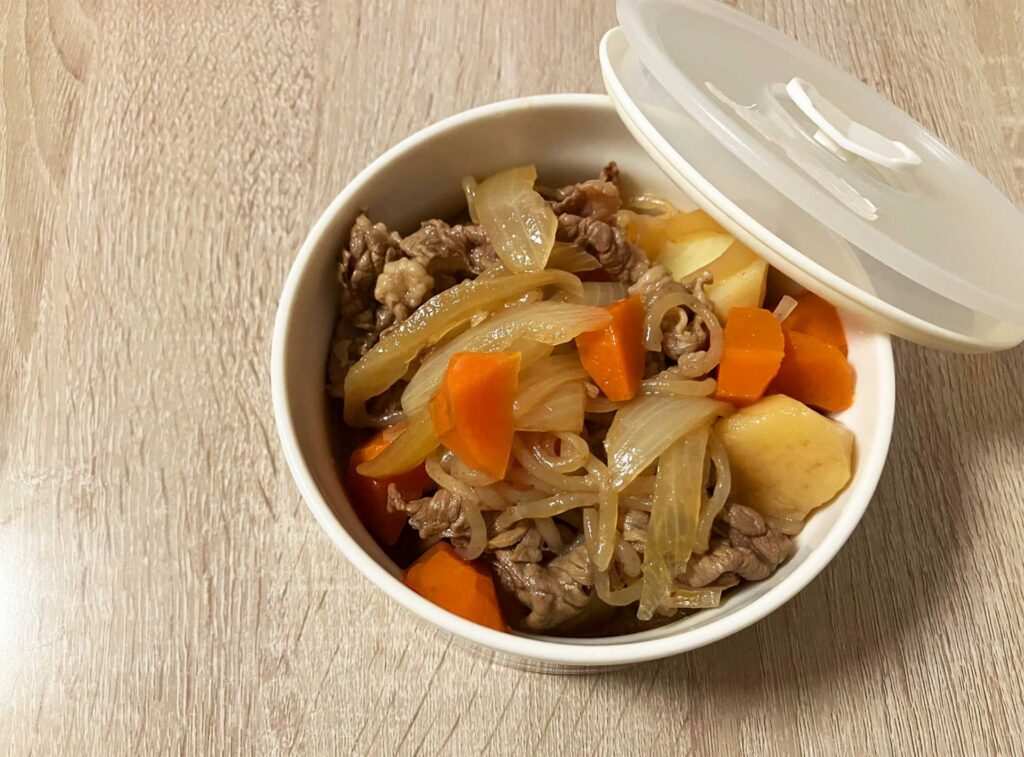
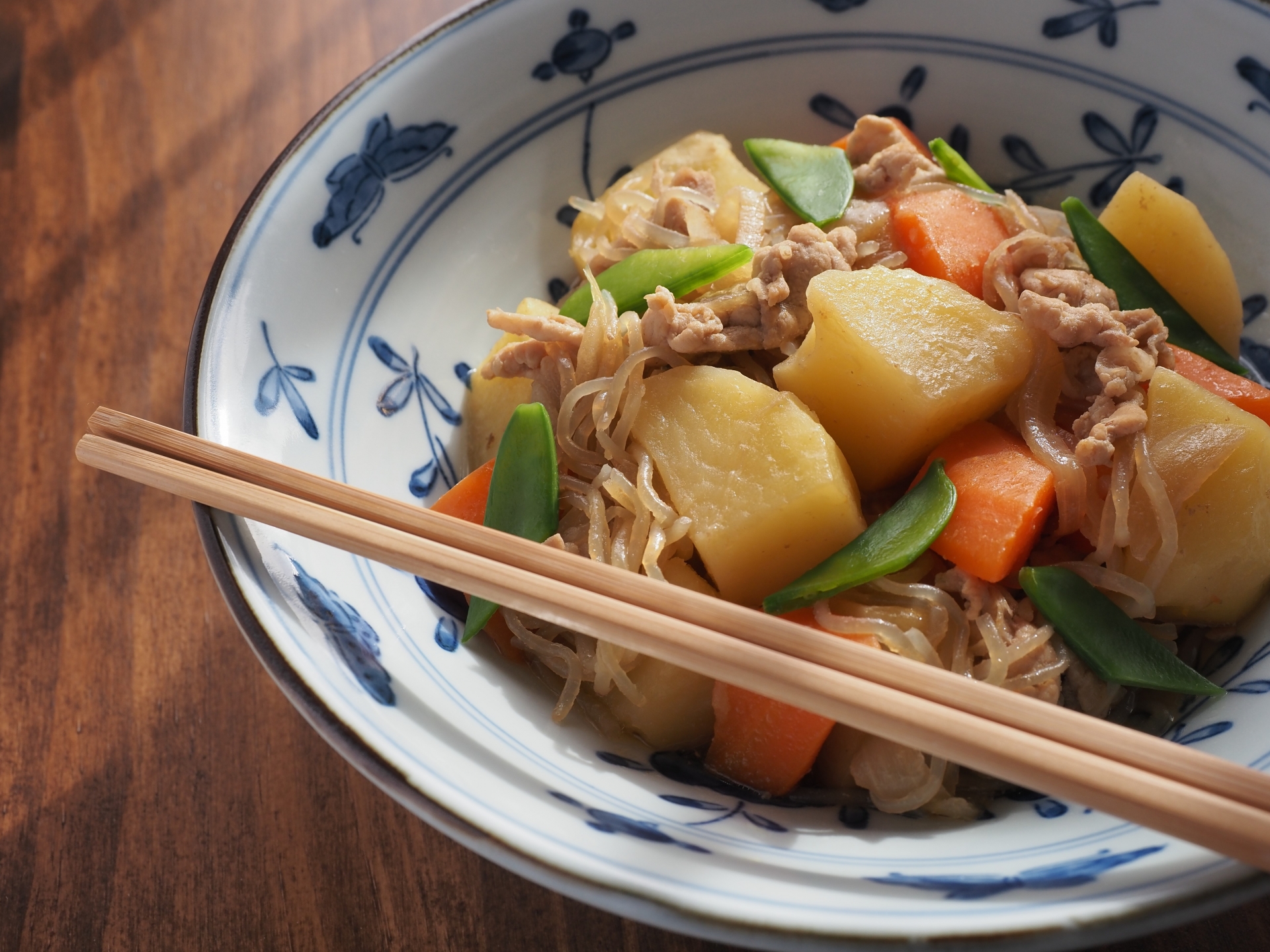
Nikujaga (Meat and Potatoes)
What it is:
A sweet-and-savory stew of sliced meat and potatoes, and one of the most iconic Japanese home dishes.
Main ingredients:
Potatoes, thinly sliced beef or pork, onion, dashi, soy sauce, mirin, sugar
Very simple home method:
- Lightly sauté the meat in a pot until just cooked.
- Add the potatoes and onions.
- Pour in dashi and bring to a gentle simmer.
- Season in stages: sugar first, then mirin, then soy sauce.
- Cover with a drop lid and simmer until the liquid reduces.
Tip:
Nikujaga tastes even better after cooling and reheating, as the flavors continue to soak in.
Nishime (Simmered Vegetables)
What it is:
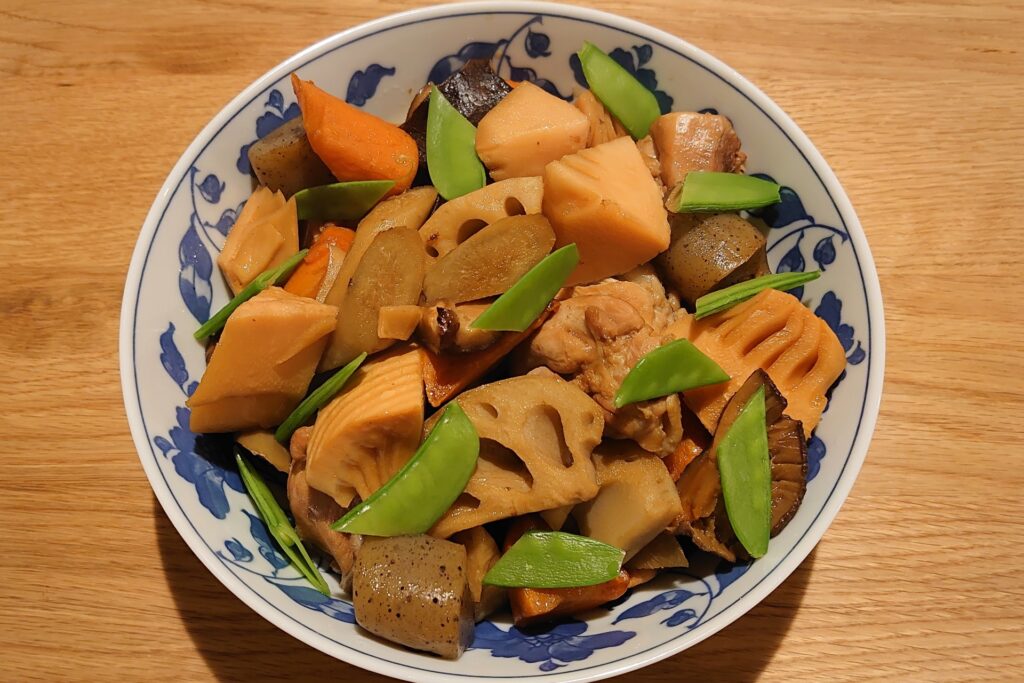
A vegetable-focused nimono often associated with Osechi Ryori, but also commonly made for everyday meals.
Main ingredients:
Carrot, daikon radish, lotus root, taro, dried shiitake mushrooms, dashi
Very simple home method:
- Cut all vegetables into evenly sized pieces.
- Place them in a pot with dashi.
- Season lightly with mirin and soy sauce.
- Simmer gently on low heat until tender.
Tip:
Nishime is ideal for meal prep—the flavor improves noticeably the next day.
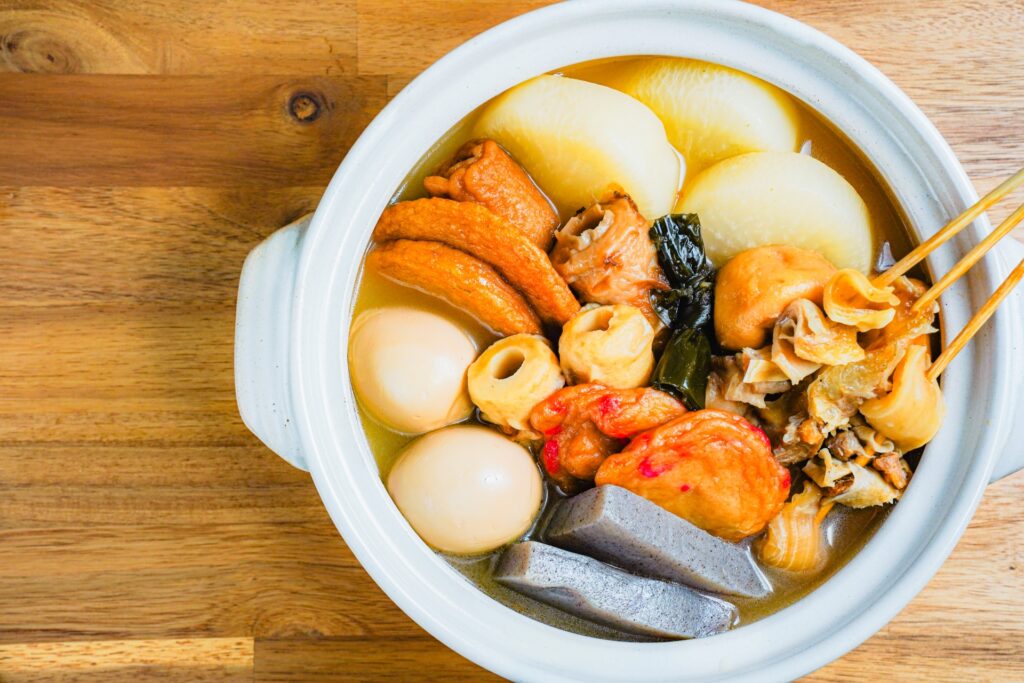
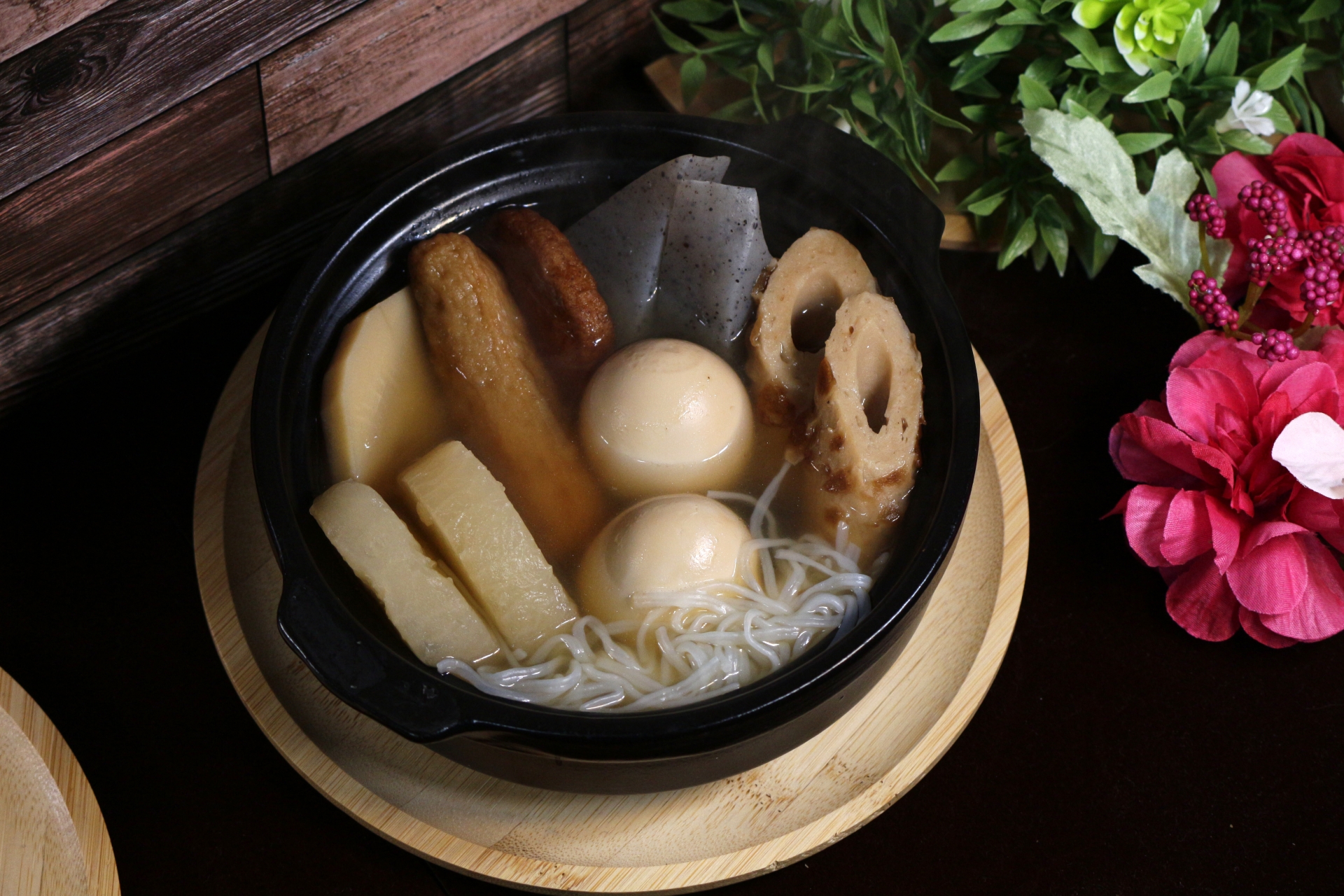
Oden
What it is:
A winter favorite that highlights the pure flavor of dashi rather than strong seasoning.
Main ingredients:
Daikon radish, boiled eggs, fish cakes, konnyaku, kombu dashi
Very simple home method:
- Parboil the daikon radish until partially tender.
- Add all ingredients to the dashi.
- Season very lightly.
- Keep the pot hot for a long time without boiling.
Tip:
Oden is best after resting overnight and is traditionally served with mustard.
An Easy “Mix-and-Match” Nimono Method
Once you understand the structure, nimono becomes highly adaptable. The basic flow is simple: prepare ingredients, simmer them gently in dashi, season gradually, cover with a drop lid, reduce the liquid, and allow the dish to rest before serving. Root vegetables take the longest to cook, while tofu, fish, and leafy greens require much less time, making nimono ideal for using whatever ingredients you already have.
Troubleshooting, Storage, and Everyday Adjustments
When nimono turns out too salty, the simplest solution is to add a small amount of water or unsalted dashi and gently reheat it. If the dish becomes too sweet, a splash of soy sauce or sake can help restore balance. Nimono that tastes bland often needs more reduction rather than more seasoning, while cloudy broth is usually the result of heat that is too high. Ingredients falling apart typically indicate overcooking or excessive stirring.
Nimono stores well in the refrigerator for up to three days and is often described as “better the next day,” as the flavors continue to settle. Freezing is possible for some ingredients, such as tofu or root vegetables, but potatoes tend to become grainy and are best avoided. Reheating should be done gently on the stove rather than bringing the dish to a rapid boil.
If mirin is unavailable, a combination of sake and sugar can provide a similar effect. When mushrooms cannot be used due to allergies, careful attention to kombu dashi becomes especially important. Sake can be replaced with a small amount of dry sherry if necessary, though it should be used sparingly because of its stronger aroma. Nimono’s greatest strength is its adaptability—restrictions rarely make it impossible.
Conclusion: Why Nimono Makes Japanese Home Cooking So Approachable
Nimono is not a single recipe but a way of cooking that defines Japanese home food. With a basic understanding of dashi, gentle seasoning, and slow simmering, you can create countless variations using everyday ingredients.Cook patiently, use a drop lid, and let the dish rest. That is where nimono’s quiet depth comes from. Start with vegetables or nikujaga, and build from there.
Nimono is not complicated—it is Japanese comfort food at its best.