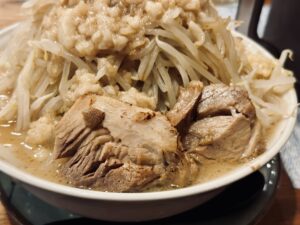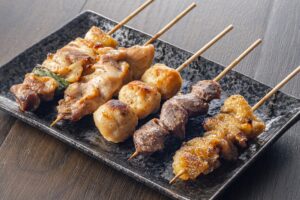
Gyoza are woven into everyday eating in Japan. They turn up beside bowls of ramen, on izakaya tables next to frosted beer glasses, in supermarket freezer cases, and on family dinner tables where everyone has a slightly different way of folding the pleats.
At their most familiar, gyoza are thin wheat wrappers filled with seasoned meat or vegetables, cooked so the underside develops a crisp brown crust while the filling stays juicy. Their roots lie in Chinese dumpling traditions, but the version now associated with Japan has taken on its own character: thinner skins, finely minced fillings, plenty of garlic, and a cooking method that moves from frying to steaming and back to frying again.
This guide looks at what goes into gyoza, how they differ from jiaozi and potstickers, the main styles found in Japan, and the techniques that make a crisp-bottomed batch work at home. It also covers dipping sauces, regional gyoza cities, useful ordering phrases, and dietary points travelers may need to check.


What Is Gyoza?
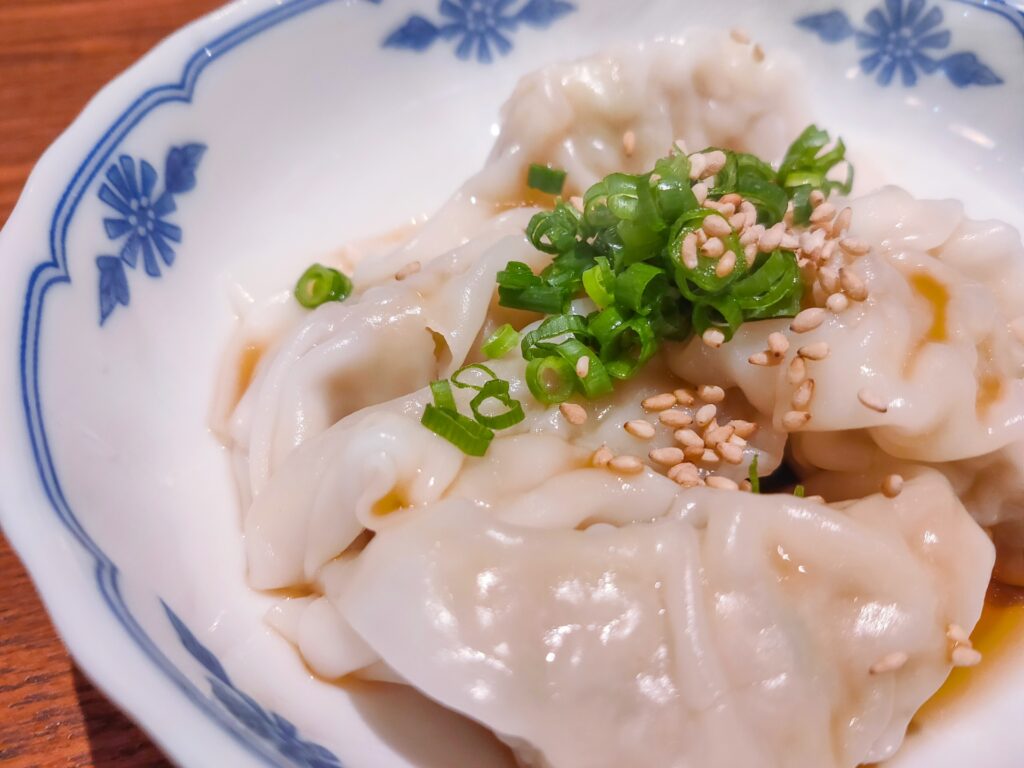
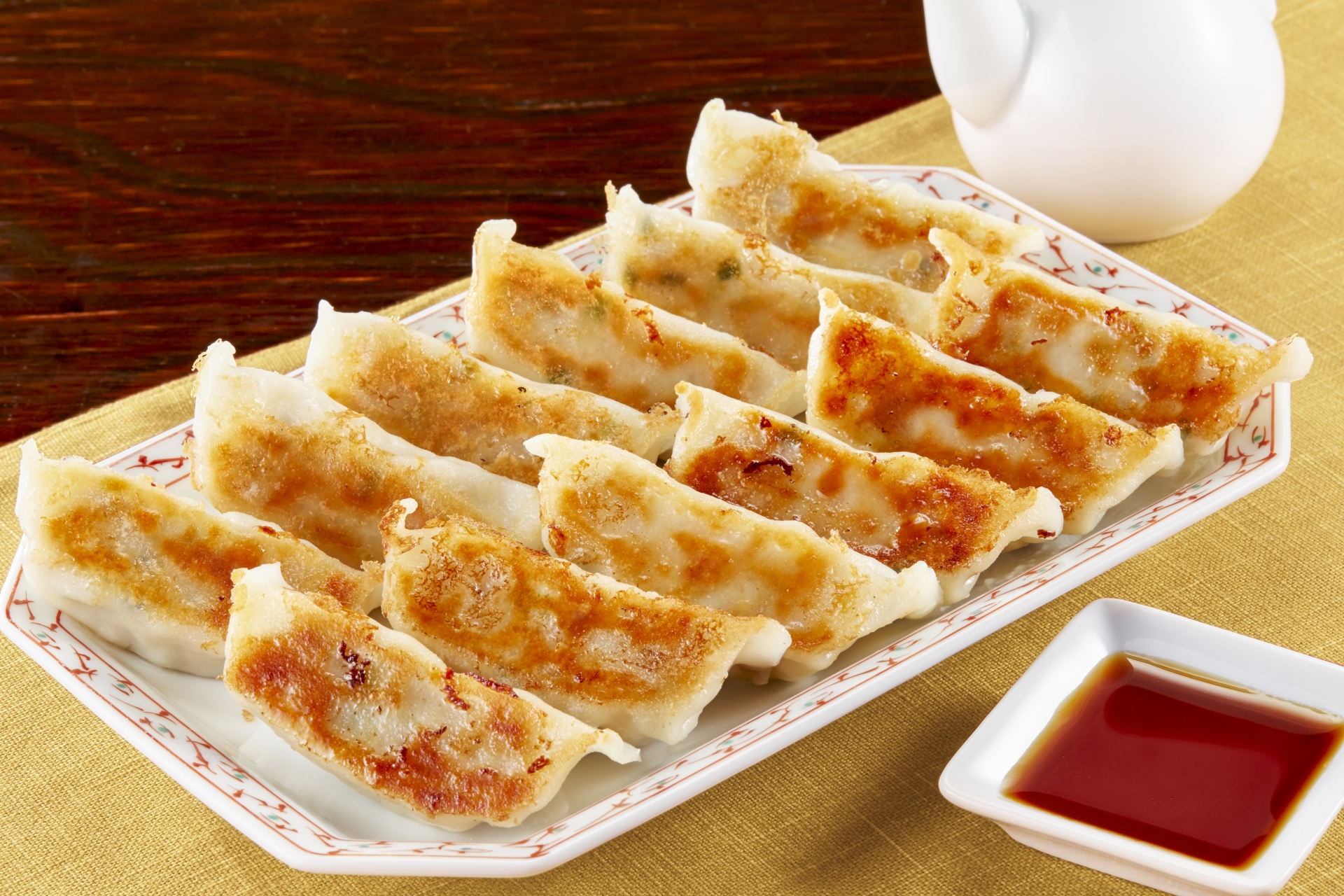
Gyoza are Japanese-style dumplings made by enclosing a savory filling in thin wheat dough. The version most people picture is yaki gyoza: dumplings browned in a lightly oiled pan, steamed briefly under a lid, then left uncovered long enough for the bottoms to crisp again.
In Japanese, gyoza is written 餃子 and pronounced roughly “GYOH-zah.” Most are folded into pleated half-moons. A well-cooked one has three distinct textures at once: a brittle golden base, a tender upper wrapper with a slight chew, and a moist center.
The standard filling found in many Japanese restaurants combines ground pork, cabbage, nira garlic chives, garlic, and ginger. Soy sauce and sesame oil bring salt and richness, while pepper and sometimes a little extra seasoning round things out. Gyoza are normally served straight from the pan, often with a small dish of soy sauce, rice vinegar, and rayu chili oil.
| Feature | Typical Japanese Gyoza |
| Japanese spelling | 餃子 |
| Wrapper | Thin wheat dough |
| Shape | Pleated half-moon |
| Common filling | Pork, cabbage, nira, garlic, and ginger |
| Main cooking style | Pan-fried and steamed |
| Texture | Crisp bottom, tender wrapper, and juicy center |
| Typical sauce | Soy sauce, rice vinegar, and rayu |
What Is Traditionally Inside Gyoza?
A classic Japanese gyoza filling usually starts with ground pork, finely chopped cabbage, and nira, the flat garlic chive used in many East Asian dishes. Garlic and ginger provide most of the aroma, while soy sauce, sesame oil, salt, and pepper season the mixture. Green onion is a common substitute when nira is difficult to find.
The chopping matters. Rather than leaving large pieces of cabbage or meat, cooks usually mince the ingredients quite finely so the filling holds together and tastes evenly seasoned from one end of the dumpling to the other. Mixing it briefly until it turns slightly sticky also helps the meat retain moisture as it cooks.
Still, there is no single official filling. Chicken, shrimp, tofu, mushrooms, and vegetable-only versions are easy to find, and specialist shops may work in seasonal produce or regional ingredients. Japanese gyoza are defined less by one fixed recipe than by the relationship between a thin wrapper, a compact savory filling, and the contrast of crisp and tender surfaces.
Is Gyoza Japanese or Chinese?
Gyoza are fully established in Japanese cuisine, but their ancestry is Chinese. They developed from the much older tradition of jiaozi, a broad family of Chinese filled dumplings with centuries of regional variation behind them.
Dumpling dishes reached Japan through long periods of contact and cultural exchange. The modern popularity of gyoza, however, grew particularly during the twentieth century, when more Japanese cooks became familiar with dumplings from northeastern China. Once the dish entered Japanese restaurant and home-cooking culture, it began to change.
Wrappers tended to become thinner. Fillings were chopped more finely. Garlic, which is not equally prominent in every Chinese dumpling tradition, became a noticeable feature. Pan-frying also took on a central role. Rather than treating boiled dumplings as the standard, many Japanese restaurants came to favor gyoza with a browned base and soft upper skin.
A useful way to see the development is through a simple timeline:
Early history: Filled dumplings develop in multiple forms across China.
Cultural exchange: Dumpling traditions become known in Japan.
Twentieth century: Gyoza gain wider popularity among Japanese diners and home cooks.
Postwar period onward: Pan-fried gyoza become common in restaurants, supermarkets, and home kitchens.
Gyoza are therefore best understood as a Japanese adaptation of Chinese jiaozi. The lineage is Chinese; the flavor profile, wrapper, preferred cooking style, and role in daily eating reflect decades of change within Japan.
How Gyoza Became Japanese Comfort Food
Gyoza slipped easily into everyday Japanese meals because they are inexpensive, easy to portion, and comfortable in several settings. They can be cooked in batches, frozen, reheated quickly, or shared without much ceremony.
At a small ramen shop, the usual scene might be a bowl of shoyu ramen and a side plate of five or six dumplings. In a neighborhood chuka restaurant—Japanese-style Chinese cooking—gyoza may arrive beside fried rice, soup, and pickles. At an izakaya, they are the kind of food that disappears quickly once the first round of beer arrives.
They are just as familiar at home. Supermarkets carry chilled and frozen versions, and homemade gyoza often become a group task: one person portions the filling, another wets the wrappers, and someone else folds a row of increasingly uneven pleats.
That looseness is part of their place in Japanese food culture. Gyoza can be a snack, a side dish, drinking food, or much of dinner. They are not saved for special occasions. They belong to the ordinary rhythm of eating.
Gyoza vs. Dumplings vs. Potstickers
Dumpling is the broad category. Gyoza are one Japanese type within it. Potsticker is an English term generally used for dumplings browned and steamed in a pan, so it often overlaps with gyoza without meaning exactly the same thing.
A dumpling may be filled or unfilled and made with many kinds of dough. It can be boiled, steamed, fried, or baked. The word includes foods from a wide range of culinary traditions.
Gyoza are more specific. The term points to a Japanese style with recognizable wrappers, seasonings, shapes, and cooking habits.
Jiaozi is the Mandarin Chinese name for a large family of filled dumplings. Because China has such wide regional variation, there is no single wrapper thickness, filling, or cooking method that defines all jiaozi.
A potsticker, meanwhile, is usually described by the way it is cooked: browned in a pan and then steamed. In the United States, “gyoza” and “potsticker” are sometimes used interchangeably on menus, especially when restaurants choose the term they think diners will recognize most readily.
Wontons belong to another Chinese dumpling tradition. Their wrappers are often thin and square, and they may be folded into small parcels, boiled in soup, or deep-fried.
| Feature | Japanese Gyoza | Chinese Jiaozi | Potstickers | Wontons |
| Cuisine | Japanese | Chinese | Usually Chinese or Chinese-American | Chinese |
| Wrapper | Usually thin and round | Often thicker, but varies | Varies | Thin, often square |
| Filling texture | Usually finely minced | Highly variable | Variable | Often soft and compact |
| Typical cooking | Pan-fried and steamed | Boiled, steamed, or fried | Pan-fried and steamed | Boiled, served in soup, or fried |
| Typical shape | Pleated half-moon | Several shapes | Usually crescent-shaped | Folded parcel |
Menu terminology is not always exact. A restaurant may call thin-skinned Japanese-style gyoza “potstickers” simply because the English term is familiar. Looking at the wrapper, filling, seasoning, and cooking method usually tells you more than the name alone.
Gyoza vs. Chinese Jiaozi
Japanese gyoza wrappers are generally thinner than those many diners associate with northern Chinese jiaozi. That thinness allows the base to turn particularly crisp and gives the dumpling a lighter feel.
The filling is also commonly minced into a fairly uniform mixture. Chinese jiaozi vary much more widely and may contain chunkier vegetables, shrimp, pork, beef, lamb, or combinations shaped by local cooking traditions.
Garlic tends to stand out in Japanese gyoza. Seasoning in Chinese dumplings cannot be reduced to one profile, since it changes from region to region and kitchen to kitchen. Boiled jiaozi are common, though steaming and pan-frying are also widely used. In Japan, by contrast, yaki gyoza are the version most closely tied to restaurant dining.
These are tendencies, not hard borders. Some Chinese jiaozi resemble Japanese gyoza closely, whether in shape, wrapper, or cooking method. The clearest difference lies in cultural context: gyoza are Japan’s development of a much broader Chinese dumpling tradition.
Gyoza vs. Potstickers
In American restaurants, the two terms often blur together. Both may refer to crescent-shaped dumplings with browned bottoms, cooked with a splash of water under a lid.
“Gyoza,” however, usually suggests a thinner wrapper, finely minced filling, Japanese seasoning, and the fry-steam-fry process that restores the crisp base at the end. Pork, cabbage, nira, garlic, ginger, sesame oil, and soy sauce are common markers.
A potsticker may have a thicker skin, a looser or chunkier filling, or seasonings associated with Chinese or Chinese-American cooking. In practice, the distinction can be small—especially when menus simplify descriptions for English-speaking diners.
Many pan-fried gyoza can reasonably be called potstickers. Not every potsticker, though, is Japanese gyoza.
The Main Types of Gyoza in Japan
In Japan, gyoza are usually grouped by cooking method. The filling may change very little from one style to another, but the treatment of the wrapper makes each one feel different.
Yaki gyoza are pan-fried and steamed. Sui gyoza are boiled. Age gyoza are deep-fried, while mushi gyoza are steamed. At a specialist restaurant, ordering more than one type is a good way to notice how much the wrapper changes the dish.
Yaki Gyoza: Pan-Fried Gyoza
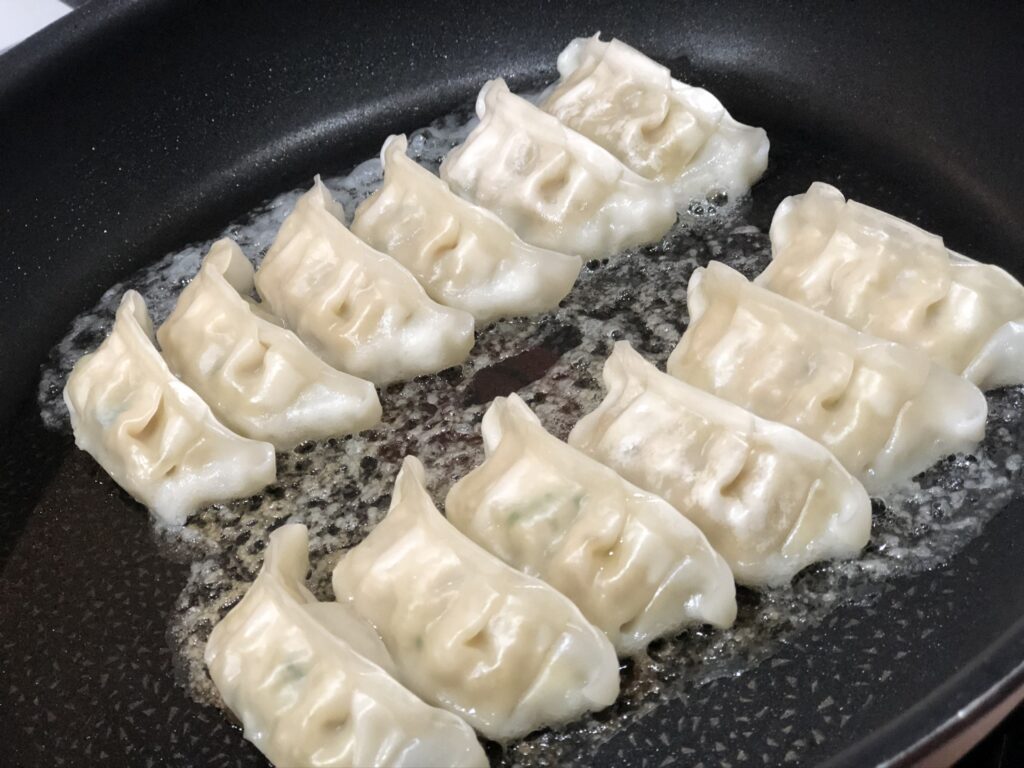
Yaki gyoza are the everyday standard in Japan.
The cooking happens in three stages. First, the flat sides sit in a lightly oiled pan until they begin to color. Water is then added and the pan is covered, trapping steam around the filling and upper wrapper. Finally, the lid comes off. The remaining moisture evaporates, and the bases crisp once more.
This is why yaki gyoza are neither simply fried nor simply steamed. A good batch has a thin golden crust underneath, tender pleats across the top, and enough juice inside that the filling does not feel dry.
Hanetsuki Gyoza: Gyoza With Crispy Wings
Hanetsuki gyoza arrive connected by a fragile, lacy sheet called hane, meaning “wings.”
To make it, cooks pour a thin mixture of water and flour or starch around the dumplings. As the water evaporates, the starch settles into a delicate crust. When the pan is turned out onto a plate, the gyoza may appear under one continuous golden web.
The wing is light and brittle rather than thick or doughy. It adds crackle and visual drama, but the dumplings underneath can contain the same filling as ordinary yaki gyoza.
Sui Gyoza: Boiled Gyoza
Sui gyoza are boiled, so there is no browned base. The wrapper stays smooth, soft, and a little slippery.
Because boiling puts more pressure on the sealed edge, wrappers for sui gyoza may be sturdier than the very thin skins used for pan-frying. Once cooked, they can be drained and served with sauce or placed in broth.
Without the crunch of yaki gyoza, the texture feels gentler and more even. The wrapper becomes a larger part of the experience rather than just a shell around the filling.
Age Gyoza: Deep-Fried Gyoza
Age gyoza are submerged in oil until the entire wrapper turns crisp and golden. There is no soft upper section or tender pleated edge—just a dry, all-over crunch.
They often appear as appetizers or drinking snacks and may be served with dipping sauce, salt, or something spicy. Although familiar across Japan, they are less representative of ordinary gyoza culture than yaki gyoza, the version still seen most often in ramen shops and casual restaurants.
Mushi Gyoza: Steamed Gyoza
Mushi gyoza are cooked entirely with steam. Their wrappers stay supple and tender, without the browned underside associated with yaki gyoza.
They can resemble dumplings served at dim sum restaurants, but the terms should not be treated as synonyms. Dim sum includes a wide range of small dishes and dumpling traditions. Mushi gyoza simply means gyoza prepared by steaming, often with fillings and seasonings still recognizably Japanese.
How to Make Japanese Gyoza at Home
The process can be broken into seven stages: prepare the filling, manage the moisture in the vegetables, fill the wrappers, seal them, brown the bottoms, steam the dumplings, and uncover the pan so the crust returns.
It helps to finish all chopping and mixing before opening the wrapper package. Gyoza skins dry out quickly. Keep unused rounds in their package or beneath a slightly damp towel while you work.
Finely chop the cabbage and nira or green onion. If the cabbage is especially watery, salt it lightly, leave it to rest, then squeeze out some of the liquid before adding it to the meat. The goal is not to make the filling dry, only to keep excess water from weakening the wrappers.
Mix the vegetables with ground pork and seasonings until the filling begins to hold together. Place a small spoonful in the center of each wrapper, dampen the edge, fold, and press out obvious pockets of air. Pleats look familiar, but they are not essential. A tightly sealed half-moon cooks perfectly well.
Heat a skillet, coat the base with a little oil, and place the gyoza flat-side down. Once the undersides begin to brown, add water and cover the pan at once. When the filling is cooked and most of the liquid has evaporated, remove the lid and let the bottoms crisp.
Eat them promptly. Gyoza do not improve by waiting; the steam inside slowly softens the crust.
For meat-filled gyoza, a thermometer is useful when available. Ground pork should reach 160°F (71°C), while ground chicken or turkey should reach 165°F (74°C) according to USDA guidance.
Choosing Gyoza Wrappers
In the United States, gyoza wrappers are commonly sold at Japanese, Korean, Chinese, and other Asian grocery stores. Check the refrigerated section near tofu, noodles, or fresh dumpling skins. Some shops freeze them instead, and online Asian grocery services may carry them depending on the region.
Round packages labeled gyoza skins or dumpling wrappers are the most convenient choice. For standard home-style gyoza, look for wrappers around 3 to 4 inches in diameter. Frozen wrappers should be thawed according to the package directions and kept sealed until folding begins.
Wonton wrappers can fill in when nothing else is available, but they are often square and may differ in thickness or ingredients. Cutting circles wastes dough, while using them as squares changes the finished shape. For the familiar look and bite of Japanese gyoza, round wrappers work better.
Preparing the Filling
A juicy filling depends on controlling moisture, not stripping it all away.
Chop the vegetables finely enough that they blend with the meat and soften evenly. When cabbage is particularly wet, add a little salt, let it sit, and squeeze it gently before mixing.
Keep the filling cold. Stirring it in one direction until it becomes slightly sticky helps the fat, meat, and vegetables bind together. Be careful with liquid seasoning; too much soy sauce or other moisture can make the mixture loose and difficult to wrap.
Overfilling is another common problem. A large mound may look generous, but it leaves too little clean wrapper around the edge and makes the seam more likely to split.
Use clean utensils with raw meat, keep it away from ready-to-eat ingredients, and fry a small test portion before wrapping the entire batch when you need to check the seasoning.
How to Fold Gyoza
Lay one wrapper in your non-dominant hand and place a small amount of filling in the center. Leave a clean border all the way around. Moisten the edge with water, paying particular attention to the side that will become the front.
Bring the wrapper together without sealing it completely. Starting from one end, fold a small section of the front edge into a pleat and press it against the flat back edge. Continue across, usually making four or five pleats, then press along the full seam.
The first few may lean, wrinkle, or end up different sizes. That is normal. Pleats are decorative; the important part is a secure seam with no filling caught between the layers. An unpleated half-moon works just as well.
Set each finished gyoza on its flat base and cover it lightly while the rest are folded.
How to Cook Gyoza Until Crispy
Heat a nonstick or well-seasoned skillet over medium heat. Add a thin, even layer of neutral oil, then arrange the gyoza flat-side down with a little space between them.
Let the bases begin to brown before adding enough water to produce steam without submerging the dumplings. Cover the pan immediately.
Once the wrappers look slightly translucent and the filling is cooked, remove the lid. Allow all remaining water to evaporate. A small drizzle of sesame oil can be added at this stage, though it is optional. Continue cooking until the undersides are crisp.
| Problem | Likely cause | Solution |
| Gyoza stick to the pan | Too little oil or an unsuitable pan | Preheat the pan and coat it evenly |
| Bottoms burn | Heat is too high | Reduce the heat before steaming |
| Wrappers remain tough | Insufficient steam | Add enough water and cover tightly |
| Gyoza become soggy | Water remains in the pan | Uncover and cook until completely dry |
| Filling leaks | Overfilled or poorly sealed wrappers | Use less filling and press the seam firmly |
Try not to keep nudging the dumplings around the pan. Once the crust has formed, they generally release more cleanly on their own.
How to Cook Frozen Gyoza
Most packaged frozen gyoza are intended to go straight from the freezer to the pan. Thawing can make the wrappers sticky and fragile, so leave them frozen unless the manufacturer says otherwise.
Arrange them in an oiled pan, add water, and give them slightly more covered steaming time than fresh gyoza. Follow the package directions where possible, since wrapper thickness, dumpling size, and whether the filling is raw or precooked vary by brand.
Meat-filled gyoza should be thoroughly hot in the center. An air fryer can produce an evenly crisp shell, though the result is drier and different from pan-steamed gyoza. A microwave is useful for convenience, but it will not recreate the crisp base.
What Sauce Is Served With Gyoza?
The standard dipping sauce is simple: soy sauce and rice vinegar, often with a few drops of rayu, Japanese chili oil.
The soy sauce deepens the savory filling. Vinegar cuts through pork fat and sesame oil. Rayu adds heat without turning the sauce into the main event.
Basic Gyoza Dipping Sauce
- 1 tablespoon soy sauce
- 1 tablespoon rice vinegar
- A few drops of rayu chili oil
Mix everything in a small dish and adjust it as you go. There is no fixed ratio. Some diners prefer a sharp, vinegar-heavy sauce; others add more soy sauce or leave out the chili oil altogether.
Ponzu brings a citrus edge. Black vinegar gives the sauce darker, rounder acidity. Garlic, grated ginger, green onion, sesame seeds, and chili crisp may also be added, though stronger condiments can easily overwhelm a lightly seasoned filling.
Dip the edge rather than soaking the whole dumpling. The crisp underside stays crisp, and the filling still tastes like itself. Some restaurant gyoza are seasoned well enough to need almost no sauce.
How Gyoza Is Eaten in Japan
In many Japanese restaurants abroad, gyoza are filed under appetizers. In Japan, the category is less rigid.
They may sit beside ramen, come as part of a set meal with rice and soup, or be ordered for the table at an izakaya. At home, they can be dinner, a side dish, or something pulled from the freezer on a busy evening.
Ramen and gyoza is one of the most recognizable combinations. Some people add a small bowl of rice, producing a meal built around broth, noodles, dumplings, and starch. At a chuka restaurant, gyoza may share the table with fried rice, mapo tofu, stir-fried vegetables, or a bowl of soup.
At an izakaya, a plate tends to be communal. The garlic-heavy filling and crisp base sit comfortably with draft beer, especially when the dumplings arrive hot enough to require a brief pause before the first bite.
Families also make large batches at home, often dividing the work between filling and folding. Frozen gyoza are a staple in many kitchens because they cook quickly and require little preparation.
A serving commonly contains five or six pieces, though there is no nationwide rule. Specialist shops may sell smaller tasting portions or large plates designed for sharing.
What Foods and Drinks Go With Gyoza?
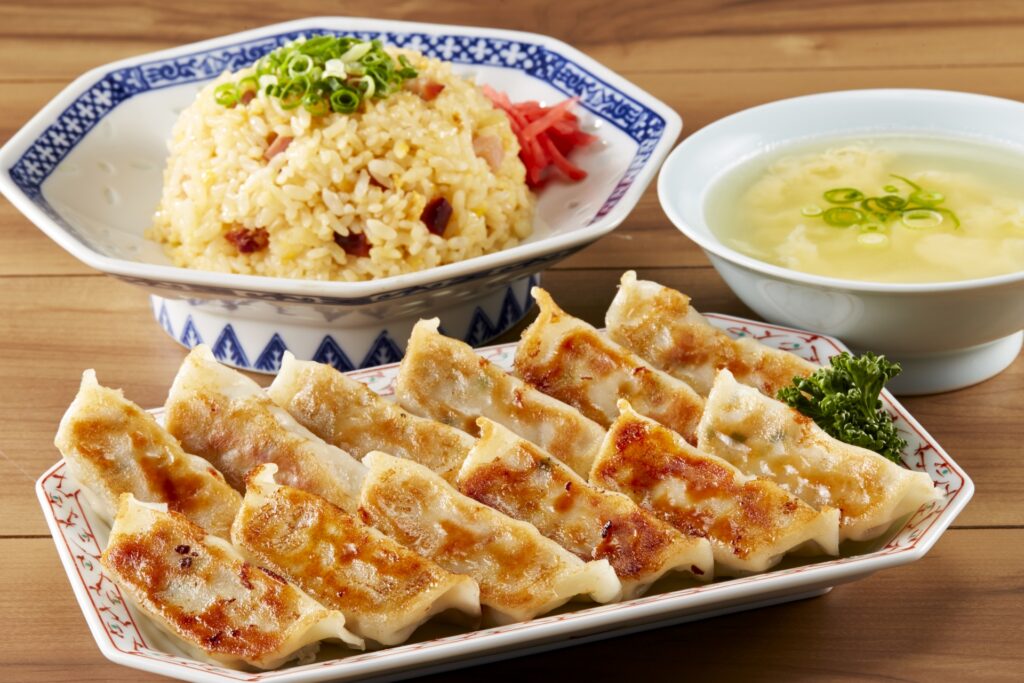
Ramen remains the obvious pairing. The broth and noodles are soft and hot; the dumplings add browned edges and a concentrated savory bite.
Fried rice, plain steamed rice, soup, and stir-fried vegetables also fit naturally. A few gyoza can sit at the edge of a larger meal without competing with it, while a full pan served with rice and vegetables can become dinner on its own.
Cold beer is the familiar match when gyoza are treated as a snack. Its carbonation and mild bitterness cut through the richness of pork, sesame oil, and the browned wrapper. Nonalcoholic beer, iced tea, and sparkling water provide a similar sense of refreshment.
The right pairing depends mostly on how much gyoza you plan to eat. A small plate is a side. A larger batch changes the center of gravity of the meal.
Famous Gyoza Destinations in Japan
A few Japanese cities have built especially visible identities around gyoza. Utsunomiya in Tochigi Prefecture is the best known, while Hamamatsu in Shizuoka Prefecture and Miyazaki in Kyushu have their own serving styles and local stories.
The cities are often compared through annual household-purchasing statistics. Those rankings change, however, and they are not a permanent verdict on which place makes the “best” gyoza. The more interesting differences lie in how the dumplings are served, what ingredients are emphasized, and how deeply specialist shops are embedded in the city.
Utsunomiya is known for its unusually high concentration of gyoza restaurants and for making it easy to compare different cooking styles. JNTO describes it as a major gyoza destination with more than 200 shops.
Hamamatsu gyoza are strongly associated with dumplings arranged in a circle and served with boiled bean sprouts. The city continues to promote gyoza as one of its local specialties.
Miyazaki has developed a growing reputation around both household and restaurant consumption, supported by access to local pork and vegetables. The city’s tourism materials present gyoza as an established part of local eating, even if the connection is less familiar to overseas visitors.
Utsunomiya Gyoza
Utsunomiya lies north of Tokyo in Tochigi Prefecture and is the Japanese gyoza city most likely to be recognized abroad.
Specialist shops cluster around the station and central streets. Gyoza signs are hard to miss, and the centrally located Gyoza Street makes the city’s association with the dish explicit.
There is no single required Utsunomiya recipe. That is part of the point. One shop may use a thin wrapper and vegetable-heavy filling; another may serve something meatier, more garlicky, or relatively mild. Pan-fried, boiled, and deep-fried versions are all available.
Portions are often small enough to make shop-hopping realistic. Rather than ordering a large meal at the first place, many visitors try a plate or two and move on. Opening hours and restaurant details do change, so current official listings are more useful than an old ranking of “best” shops.
Hamamatsu and Miyazaki Gyoza
Hamamatsu gyoza are often arranged in a ring, a presentation linked to cooking larger quantities around the edge of a round frying pan. Boiled bean sprouts are commonly placed in the center or served alongside.
The sprouts are more than decoration. Their clean crunch breaks up the richness of the pork filling and browned wrapper, particularly when several dumplings are eaten in one sitting.
Miyazaki’s gyoza culture is less visible internationally but closely tied to local dining. The region has access to pork, cabbage, chives, and other agricultural products, and some shops and producers make those ingredients part of their identity. Gyoza are eaten both at home and in restaurants rather than being treated only as a tourism specialty.
Neither Hamamatsu nor Miyazaki can be reduced to one recipe. What they show is how a food eaten across Japan can pick up a distinct local shape, garnish, or ingredient emphasis.
How to Order Gyoza in Japan
Ordering gyoza is usually uncomplicated. Menus may indicate the cooking method, type of filling, number of pieces, or whether garlic is included. Portion sizes vary, so a menu photo can be helpful when the number is not listed.
| Japanese | Reading | Meaning |
| 焼き餃子 | yaki gyoza | Pan-fried gyoza |
| 水餃子 | sui gyoza | Boiled gyoza |
| 揚げ餃子 | age gyoza | Deep-fried gyoza |
| 蒸し餃子 | mushi gyoza | Steamed gyoza |
| 一人前 | ichininmae | One serving |
| にんにく入り | ninniku iri | With garlic |
| にんにくなし | ninniku nashi | Without garlic |
Useful phrases include:
餃子を一人前ください。
Gyoza o ichininmae kudasai.
“One order of gyoza, please.”
焼き餃子はありますか?
Yaki gyoza wa arimasu ka?
“Do you have pan-fried gyoza?”
にんにくなしはできますか?
Ninniku nashi wa dekimasu ka?
“Can you make it without garlic?”
肉は入っていますか?
Niku wa haitte imasu ka?
“Does it contain meat?”
Saying gyoza o hitotsu kudasai may be understood, but ichininmae is clearer when you mean one serving rather than one individual dumpling.
A vegetable filling should not automatically be assumed to be meat-free. Broth, lard, oyster sauce, or meat-based seasonings may still be involved. Travelers with allergies or strict dietary requirements should carry written information in Japanese and ask about both ingredients and cross-contact.
Dietary Considerations and Common Allergens
Standard gyoza commonly contain wheat in the wrapper and soy in either the filling or dipping sauce. Sesame oil is widely used, and pork is the most common meat.
Depending on the recipe or manufacturer, the dumplings may also contain egg, shrimp, oyster sauce, fish-derived seasonings, or other allergens.
Vegetable gyoza are not necessarily vegetarian or vegan. Chicken stock, lard, oyster sauce, bonito seasoning, or another animal-derived ingredient may be mixed into the filling. Even when the recipe itself is plant-based, the dumplings may be cooked in a pan or fryer shared with meat.
Gluten-free gyoza require more than a different wrapper. Ordinary soy sauce generally contains wheat, and prepared sauces or seasonings may also contain gluten. A genuinely gluten-free version needs suitable wrappers, verified seasonings, and care around shared equipment.
Nutritional values vary too widely for a single useful calorie estimate. The filling, portion size, quantity of oil, and dipping sauce all matter. Deep-fried pork gyoza and pan-fried vegetable gyoza are not nutritionally equivalent simply because both are called gyoza.
Anyone with a serious allergy should confirm ingredients directly with the restaurant. Small kitchens may not be able to guarantee protection from cross-contact, especially where dumplings share pans, fryers, utensils, or preparation surfaces.
Frequently Asked Questions About Gyoza
What is gyoza made of?
Traditional Japanese gyoza often contain ground pork, cabbage, garlic chives, ginger, garlic, soy sauce, and sesame oil inside a thin wheat wrapper.
Recipes vary considerably. Chicken, shrimp, mushrooms, tofu, and vegetable fillings are also common. The ingredients are usually chopped finely so the mixture stays compact and juicy inside the wrapper.
Is gyoza Japanese or Chinese?
Gyoza are Japanese dumplings with roots in Chinese jiaozi.
Chinese dumpling traditions came first, but Japanese cooks gradually adapted the wrapper thickness, filling texture, seasoning, and preferred cooking method. Modern yaki gyoza are therefore a distinct Japanese development rather than an unchanged Chinese dish.
Are gyoza fried or steamed?
Yaki gyoza are both.
Their bottoms are first browned in oil. Water is then added and the pan covered so steam cooks the filling and upper wrapper. Once the lid is removed, the remaining liquid evaporates and the bases become crisp again.
What is the difference between gyoza and potstickers?
Gyoza usually have thinner wrappers, finely minced fillings, Japanese seasonings, and a crisp-steam-crisp cooking process.
“Potsticker” is a broader English term for dumplings cooked by browning and steaming them in a pan. Many gyoza qualify as potstickers, but potstickers are not necessarily Japanese gyoza.
Can you cook frozen gyoza without thawing?
Yes. Most frozen gyoza are designed to be cooked straight from frozen.
Thawing can make the skins sticky or fragile. Allow a little more steaming time than you would for fresh dumplings, follow the package instructions, and make sure meat-filled gyoza are fully cooked in the center.
Can gyoza be vegetarian or vegan?
Yes. Gyoza can be filled with tofu, mushrooms, cabbage, chives, and other vegetables.
A vegetable filling is not automatically vegan, however. Check the wrapper, stock, sauces, and cooking oil for animal-derived ingredients, and ask about shared pans or fryers when cross-contact is a concern.
Conclusion: Discovering Gyoza at Home and in Japan
Gyoza began with Chinese jiaozi traditions and became something recognizably Japanese through changes in wrapper thickness, seasoning, filling texture, and cooking style. The best-known version, yaki gyoza, moves from frying to steaming and back again, leaving the underside crisp while the top stays tender.
At home, tidy pleats are less important than managing moisture, sealing the wrappers properly, and letting the pan dry out before serving. In Japan, gyoza are equally comfortable beside ramen, in the middle of an izakaya table, or at the center of a trip through Utsunomiya, Hamamatsu, or Miyazaki.
They are ordinary food in the best sense: inexpensive, shareable, and immediately satisfying. A plate rarely stays untouched for long.