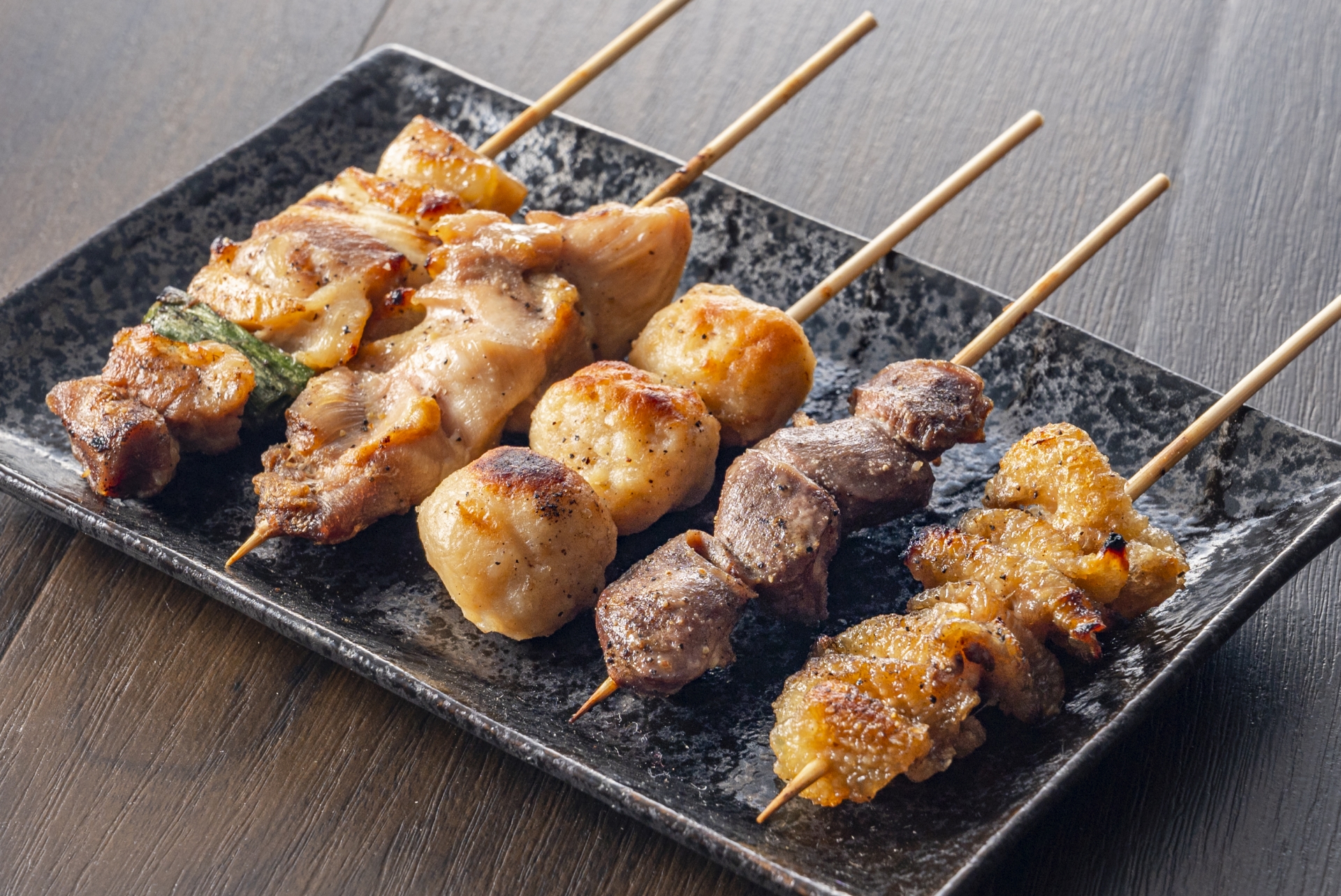
Yakitori is one of those Japanese foods that looks simple from the outside: small pieces of chicken on skewers, grilled over heat, seasoned with salt or sauce. But sit down at a counter in Japan, watch the cook turn each skewer just before the edges catch, and it starts to feel like much more than “grilled chicken.”
You’ll find yakitori in many settings: smoky izakaya, narrow counter-only restaurants, festival stalls, department-store food floors, and neighborhood takeout shops where commuters pick up a few skewers on the way home. This guide covers what yakitori is, how to order it, which cuts to try first, and a few small etiquette points that make the experience easier.


What Is Yakitori?
Yakitori is Japanese grilled chicken served on skewers. The word comes from yaki, meaning grilled or cooked over heat, and tori, meaning bird or chicken. In its most basic form, chicken is cut into bite-sized pieces, skewered, and grilled until the surface is browned, lightly smoky, and still juicy inside.
In Japan, yakitori sits comfortably between everyday food and craft cooking. You might eat it with a cold beer at a casual izakaya, grab a few skewers from a festival stall, or spend an evening at a quiet counter where the chef controls the heat skewer by skewer. That range is part of its appeal. Yakitori can be quick and inexpensive, but it can also be surprisingly precise.
Is Yakitori Always Chicken?
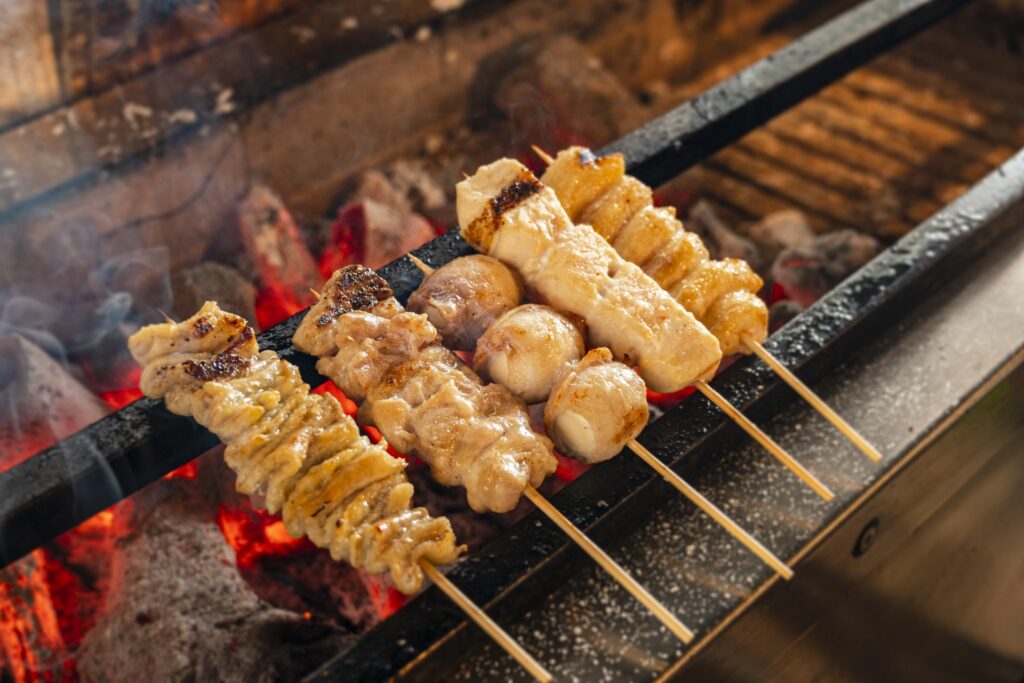
Strictly speaking, yakitori refers to grilled chicken skewers. In English-speaking countries, and sometimes on broader Japanese restaurant menus, the word is used more loosely for Japanese-style skewers in general.
If the skewer is made with pork, beef, seafood, mushrooms, or vegetables, the more accurate term is kushiyaki, which simply means grilled skewers. Knowing the difference helps in Japan, especially at restaurants that serve chicken skewers alongside other grilled items.
Yakitori vs Kushiyaki vs Teriyaki vs Robatayaki
| Term | Meaning | Main Difference |
| Yakitori | Grilled chicken skewers | Chicken-focused |
| Kushiyaki | Grilled skewers | Broader skewer category |
| Teriyaki | Sweet-savory glazed cooking style | Not necessarily skewered |
| Robatayaki | Fireside charcoal grilling | Broader charcoal-grilling style |
American readers may find yakitori tare similar to teriyaki sauce because both can be sweet and savory. The difference is that yakitori refers to the chicken skewer dish and the way it is eaten, while teriyaki is mainly a glaze or cooking method.
How Yakitori Is Cooked
Yakitori begins with chicken cut into small pieces and threaded onto bamboo or metal skewers. The skewers are grilled over charcoal, a grill, or another high-heat cooking surface, then seasoned with either salt or sauce.
Traditional yakitori restaurants often value binchotan, a high-quality Japanese charcoal known for steady heat and a clean aroma. Still, you do not need to know charcoal types to enjoy yakitori. What matters on the plate is the balance: smoke, browning, fat, salt, sauce, and timing.
A good skewer should arrive hot. The edges may be crisp, the center still juicy, and the seasoning should feel like it belongs to that particular cut.
Tare vs Shio: The Two Main Yakitori Seasonings
Yakitori is usually seasoned in one of two ways: tare or shio.
Tare is a sweet-savory glaze that gives the skewer shine, richness, and depth. It is often brushed on during grilling, allowing the sauce to caramelize slightly at the edges.
Shio simply means salt. It lets the chicken flavor come through more directly and tends to work especially well with crisp skin, wings, and cuts where texture is the main point.
As a rough guide, tare suits tsukune, liver, and richer cuts. Shio is a natural match for tebasaki, kawa, and simpler cuts where you want a cleaner finish. At some restaurants, the chef chooses the seasoning for each skewer. When in doubt, ask for osusume — the recommendation.
What Is Yakitori Sauce Made Of?
Yakitori sauce, or tare, is usually made from soy sauce, mirin, sake, and sugar. The ingredients are simmered until the sauce becomes glossy, concentrated, and sweet-savory.
Some yakitori restaurants keep a house tare that is refreshed over time, adding more depth with each use. It is one of those small details you may not notice immediately, but it can give the sauce a rounder, more layered taste.
For gluten-free diners, regular soy sauce often contains wheat, so tamari or gluten-free soy sauce is the safer option when cooking at home. Since tare may also include sake or mirin, diners avoiding alcohol-based ingredients should ask before ordering.
Popular Types of Yakitori to Try
| Japanese | English | Flavor / Texture | Best For |
| Momo | Chicken thigh | Juicy, rich | Beginners |
| Negima | Chicken and scallion | Savory, balanced | First order |
| Tsukune | Chicken meatball | Soft, sweet-savory | Tare lovers |
| Kawa | Chicken skin | Crispy, fatty | Adventurous beginners |
| Tebasaki | Chicken wing | Crisp, bony, flavorful | Finger-food fans |
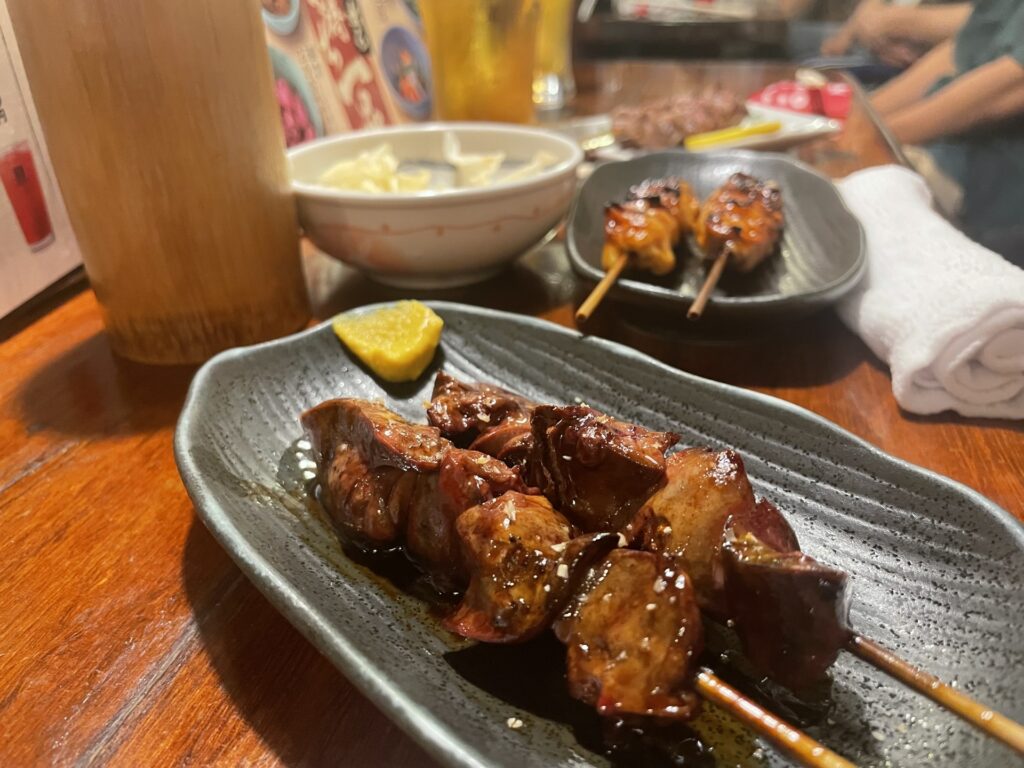
| Reba | Liver | Rich, creamy | Adventurous eaters |
| Sunagimo | Gizzard | Crunchy, clean-tasting | Texture lovers |
| Bonjiri | Chicken tail | Fatty, juicy | Advanced order |
Yakitori menus can look intimidating at first, especially when the English translation only says “gizzard” or “tail.” But many skewers are easy to like. Momo, negima, and tsukune are approachable starting points, while kawa, reba, sunagimo, and bonjiri show how much yakitori culture values texture, fat, and different parts of the bird.
Best Yakitori for Beginners
For a first order, try a small mix rather than choosing only one type:
Momo shio, negima tare, tsukune tare, kawa shio, and tebasaki shio.
That gives you familiar chicken flavor, a little sweetness from tare, crisp skin, a grilled wing, and the contrast between salt and sauce. Momo and negima are easy entry points. Tsukune is soft and usually crowd-pleasing. Kawa brings crunch and fat, while tebasaki is best eaten hot, with your hands if the setting is casual.
Adventurous Yakitori Cuts
Once you are comfortable, yakitori becomes more interesting when you move beyond thigh and meatballs.
Reba is liver, usually rich and creamy. Hatsu, or heart, tends to be firm with a slight springiness. Sunagimo, the gizzard, has a clean crunch that surprises many first-timers in a good way.
For more texture, try nankotsu, or cartilage, which has a firm bite. Bonjiri, the chicken tail, is fatty, juicy, and deeply flavored. These cuts may sound unusual if you are used to chicken breast and wings, but they are part of what makes yakitori feel so specific to Japanese dining culture.
How to Order Yakitori in Japan
Yakitori is often ordered by the skewer, though many restaurants offer sets. At specialty shops, you may also find omakase-style ordering, where the chef chooses the skewers and serving order.
Staff may ask whether you want tare or shio. At some places, the recommended seasoning is already decided for each cut.
Useful phrases:
| Japanese Phrase | Meaning |
| Osusume wa nan desu ka? | What do you recommend? |
| Tare de onegaishimasu. | With sauce, please. |
| Shio de onegaishimasu. | With salt, please. |
| Omakase de onegaishimasu. | I’ll leave it to the chef. |
| Kore wa nan desu ka? | What is this? |
You do not need perfect Japanese to enjoy yakitori. Pointing at the menu, ordering a small set, and asking for osusume is often enough.
Yakitori Restaurant, Izakaya, or Street Food?
| Place | What to Expect |
| Yakitori restaurant | Chicken skewers are the main focus |
| Izakaya | Yakitori is one of many dishes |
| Festival stall | Casual, quick, street-food style |
| Takeout shop | Easy, affordable, often neighborhood-focused |
A yakitori restaurant is best if you want to focus on skewers and notice the differences between cuts. An izakaya is better for groups who want drinks and several shared dishes. Festival stalls are louder and more casual; the smell of sauce and smoke tends to do half the advertising. Takeout shops are practical, especially when you want a quick taste without making a full meal out of it.
What to Eat and Drink with Yakitori
Classic yakitori pairings include beer, highballs, sake, shochu, and oolong tea. The salty, smoky, and slightly sweet flavors work well with drinks that refresh the palate. Non-alcoholic options are common too, especially oolong tea.
For side dishes, look for cabbage, edamame, pickles, rice, or ochazuke. These do not compete with the skewers. They reset the meal a little, especially after richer cuts like skin, tail, or tare-glazed meatballs.

Yakitori Etiquette: How to Eat It Without Feeling Awkward
Yakitori is best eaten while hot, so avoid ordering too many skewers at once. Crispy skin softens, salt-seasoned skewers lose their edge, and a carefully grilled piece of chicken becomes much less interesting after sitting around.
If the restaurant provides a cup or container for used skewers, place finished skewers there. Do not put used skewers back on the serving plate.
When sharing, follow the group’s rhythm. At casual izakaya, people may remove pieces from a skewer with chopsticks so everyone gets some. At a counter-style yakitori restaurant, it may feel more natural to eat each skewer as it is served.
Do You Eat Yakitori Off the Skewer?
Yes. In most casual settings, eating yakitori directly from the skewer is completely normal.
When sharing, some people slide the pieces off with chopsticks. At more specialized yakitori shops, eating directly from the skewer can actually make more sense because the chef has considered the temperature, seasoning, and order. When unsure, glance around and follow what other diners are doing.
Common Mistakes to Avoid
The easiest mistake is ordering too much at once. Yakitori is not meant to sit in a pile while you work through it slowly.
Other common mistakes include assuming every skewer is chicken breast, forgetting that tare and shio create very different flavors, and putting used skewers back on the plate. If you are ordering organ meats or less familiar cuts, ask what they are first so the texture does not catch you off guard.
Can You Make Yakitori at Home?
Yes, yakitori can be made at home, even without a traditional charcoal grill. A charcoal setup gives the best smoky flavor, but a gas grill, broiler, grill pan, or cast-iron skillet can still produce a satisfying version.
Chicken thighs are one of the easiest cuts for beginners because they stay juicy over high heat. Scallions are useful too, especially for negima, where their sweetness balances the chicken. If using bamboo skewers, soak them before grilling, and always cook chicken thoroughly.
Basic Homemade Yakitori Ingredients
For a simple home version, you need:
- Chicken thighs
- Scallions
- Bamboo skewers
- Salt
- Tare sauce
Optional seasonings include shichimi togarashi for mild heat and sansho pepper for a citrusy, numbing aroma.
To make a basic tare, combine:
- 1/2 cup soy sauce
- 1/2 cup mirin
- 1/4 cup sake
- 2 tablespoons sugar
Bring the mixture to a gentle simmer over medium heat, stirring until the sugar dissolves. Let it simmer for about 10 to 15 minutes, or until slightly glossy and lightly thickened. Brush the tare onto the skewers during the last few minutes of cooking, then add another thin layer just before serving.
For a gluten-free version, use tamari or gluten-free soy sauce. For readers avoiding alcohol, check ingredients carefully or use a non-alcoholic tare alternative, since traditional tare often contains sake and mirin.
Yakitori Without Binchotan Charcoal
| Method | Pros | Cons |
| Lump charcoal | Good smoky flavor | Requires outdoor space |
| Gas grill | Easy and convenient | Less charcoal aroma |
| Broiler | Works indoors | Needs close attention |
| Grill pan | Easy for small batches | Less smoky flavor |
| Cast-iron skillet | Accessible | More pan-seared than grilled |
Binchotan is traditional, but it is not required for a good home version. The key is high heat, careful turning, and enough space between skewers. Even if the result is less smoky, you can still get the sweet-savory, lightly charred character that makes yakitori so satisfying.
Is Yakitori Healthy?
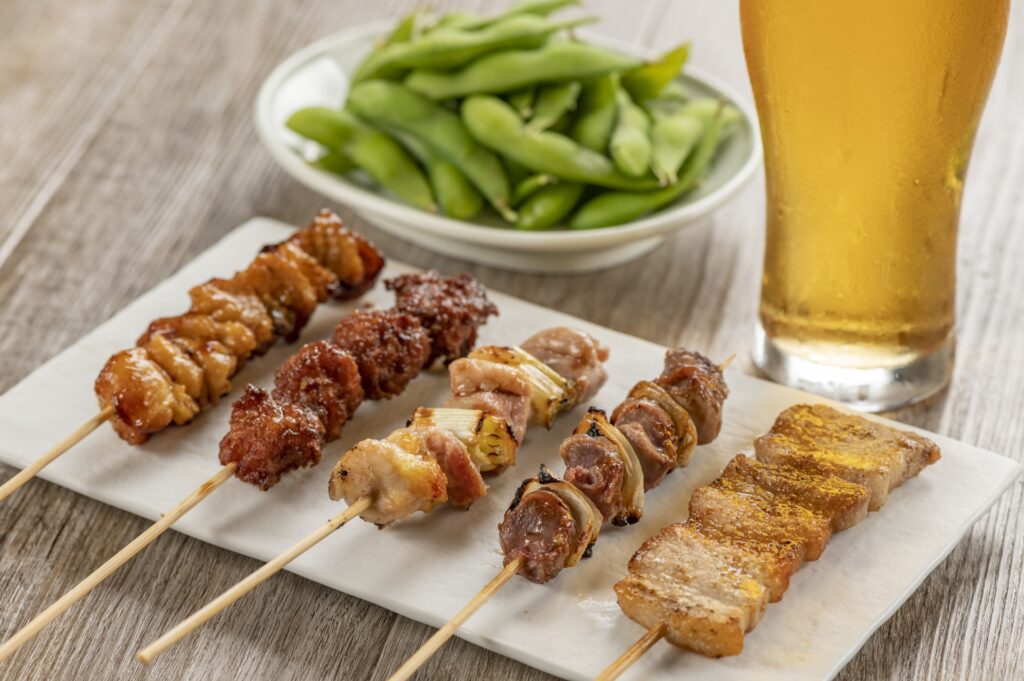
Yakitori can be a protein-rich food, and the skewer format makes portions easy to control. Leaner cuts such as chicken breast or sasami are lighter choices, while thigh is juicier and richer.
Cuts like kawa and bonjiri are higher in fat, and tare adds sugar and sodium. Shio is simpler, but still salty. The overall balance depends on what you order, how many skewers you eat, what you drink with them, and whether you add lighter side dishes.
Allergy and Dietary Notes
Tare usually contains soy sauce, and regular soy sauce often contains wheat. It may also include sake or mirin, which matters for diners avoiding alcohol-based ingredients.
Cross-contact can happen because many skewers are cooked on the same grill. Some menus also include pork, beef, seafood, or vegetables. People with serious allergies should ask staff before ordering rather than relying only on menu names.
Where to Eat Yakitori in Japan
Travelers can find yakitori across Japan: Tokyo drinking alleys, neighborhood izakaya, counter-style specialty restaurants, festival stalls, department-store food floors, convenience stores, and local takeout shops.
This does not need to become a restaurant-ranking mission. For a first experience, a casual izakaya or neighborhood yakitori shop is often enough. The best introduction may be a small place where you can order a few skewers, try both tare and shio, and watch what comes off the grill.
Casual vs High-End Yakitori
Casual yakitori is relaxed and easy to approach. You can order a few skewers at a time, drink something cold, and figure out your preferences without much pressure.
High-end yakitori is different. It may involve omakase courses, rare cuts, precise grilling, and carefully paced service. One style is not more “real” than the other. Casual yakitori shows how the food fits into everyday Japanese dining, while high-end yakitori highlights technique and control.
Frequently Asked Questions About Yakitori
What does yakitori mean?
Yakitori literally means grilled chicken. Yaki means grilled or cooked over heat, and tori means bird or chicken.
What is the difference between yakitori and teriyaki?
Yakitori is grilled chicken served on skewers. Teriyaki is a sweet-savory glaze or cooking style. Yakitori tare may taste similar to teriyaki, but yakitori refers to the skewer dish itself.
What is the best yakitori for first-timers?
Negima, momo, and tsukune are good first choices. They are familiar enough for beginners but still give a good sense of classic yakitori flavors.
Is yakitori street food?
Yakitori can be street food, but it is also served at izakaya, casual restaurants, and specialized yakitori shops. In Japan, it ranges from everyday comfort food to carefully paced counter dining.
Can yakitori be made with beef or pork?
Strictly speaking, yakitori refers to chicken. Beef, pork, seafood, or vegetable skewers are more accurately called kushiyaki, though some menus use the terms loosely.
Should I choose tare or shio?
Both are worth trying. Choose tare if you want a sweet-savory glaze, and shio if you want a cleaner chicken flavor with more emphasis on the cut itself.
Conclusion: Why Yakitori Is Worth Trying
Yakitori is simple at first glance, but it becomes more interesting as you notice the cuts, seasonings, textures, and settings. Start with momo, negima, and tsukune, then try both tare and shio to see how much the seasoning changes the experience.
Whether you eat it at a lively izakaya, a quiet counter in Japan, or from your own grill at home, yakitori is one of the most approachable ways to enjoy Japanese food culture. A few skewers are enough to begin. The rest can come skewer by skewer.