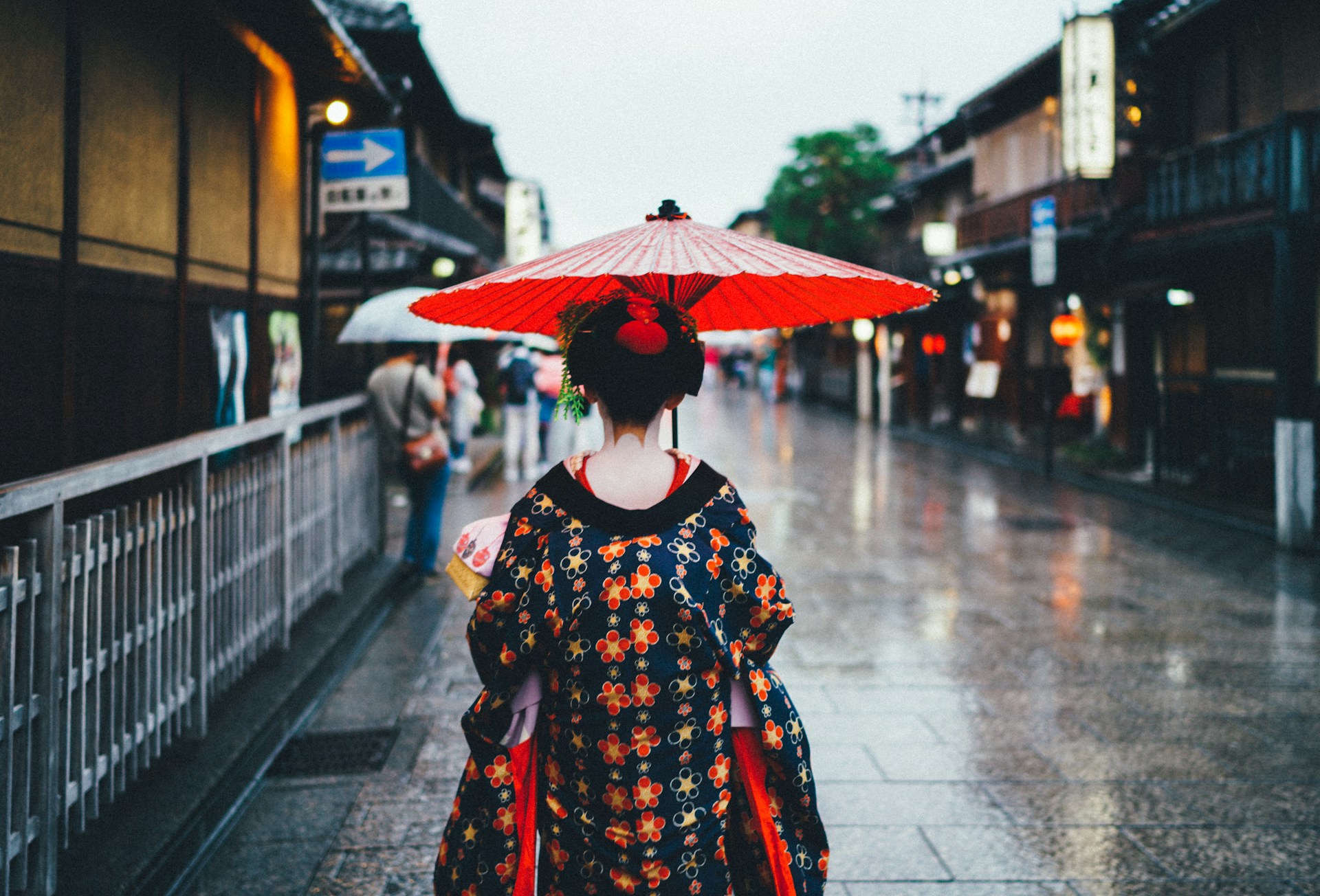
Geisha are probably one of the most instantly recognizable figures associated with Japan. At the same time, few cultural traditions are surrounded by as much misunderstanding. For many visitors, the first image that comes to mind comes from films, novels, or heavily stylized travel photos — white makeup, elaborate kimono, lantern-lit Kyoto streets. The reality is quieter and far more layered.
At their core, geisha are professional entertainers trained in traditional Japanese arts and hospitality. Music, dance, conversation, seasonal etiquette, and years of disciplined study all sit at the center of the profession. Appearance matters, of course, but it’s only the outer surface of a much older artistic culture.
This guide looks at what geisha actually do, how the profession evolved, the differences between geisha, geiko, maiko, and oiran, and what visitors should understand before trying to experience geisha culture in Japan today.


What Is a Geisha?
A geisha is a traditional Japanese entertainer trained in arts such as dance, music, singing, conversation, and formal hospitality. The word itself — geisha (芸者) — translates roughly to “person of the arts.”
Their work traditionally takes place at private gatherings known as ozashiki, often held in teahouses or long-established traditional restaurants. A geisha may perform shamisen music, dance, seasonal songs, or simply help guide the mood of an evening through conversation and etiquette. A large part of the profession is social awareness: reading the room, adjusting the atmosphere, and making guests feel at ease without drawing attention to the effort behind it.
Although Kyoto tends to dominate international images of geisha culture, geisha communities historically existed across Japan. Some still remain active today in places like Tokyo and Kanazawa. Kyoto, though, continues to shape much of the public image — especially districts such as Gion or Pontocho, where lantern-lit alleys and wooden facades still give a sense of the older entertainment quarters.
What often gets lost in popular portrayals is how demanding the profession actually is. Behind the makeup and kimono is years of training, rehearsals, etiquette lessons, and highly structured apprenticeship systems.
What Do Geisha Actually Do?
A geisha’s work blends performance with hospitality in a way that can feel unfamiliar to many foreign visitors. They are not stage performers in the usual sense, nor are they simply companions hired for conversation.
During gatherings, geisha may perform classical dance, play instruments such as the shamisen, sing seasonal songs, or lead traditional drinking games. But much of the evening can unfold more subtly than people expect. Timing, tone of conversation, humor, and attentiveness are all part of the craft.
In Kyoto, it’s not unusual for a geisha or maiko to move quickly between several appointments in one evening, disappearing down narrow side streets in full formal dress while taxis wait outside old teahouses. Even preparing for work can take hours — hairstyling, kimono dressing, makeup, rehearsals.
The profession sits somewhere between cultural preservation, performing arts, and refined hospitality. Trying to force it into a simple Western category usually misses the point.
Geisha, Geiko, Maiko, and Oiran: What’s the Difference?
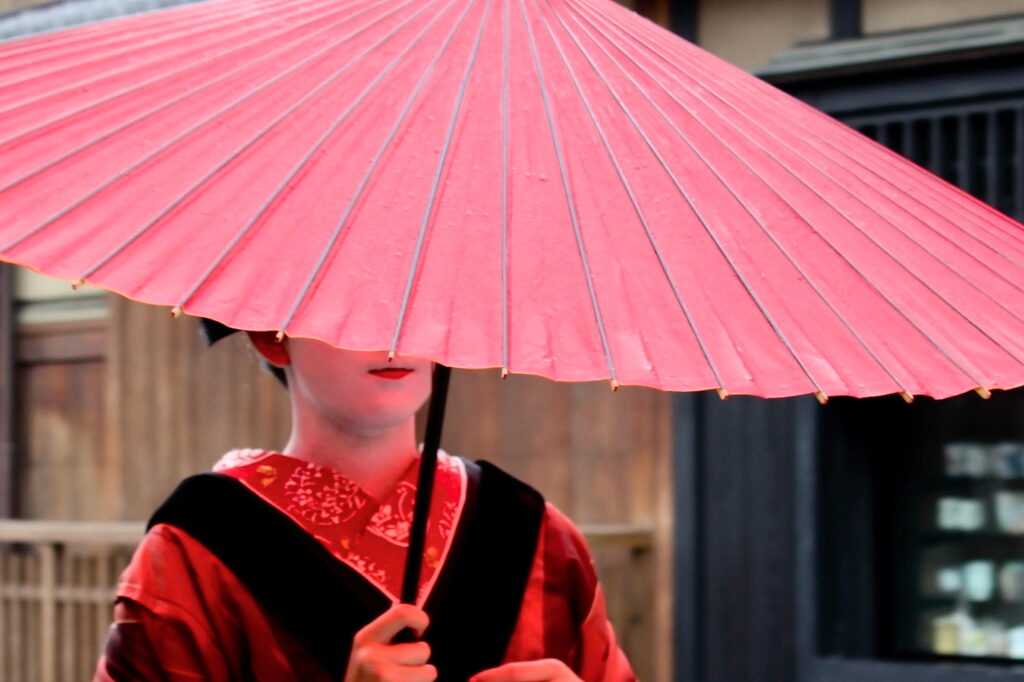
One reason geisha culture gets misunderstood abroad is that several completely different historical roles are often grouped together online. Geisha, geiko, maiko, and oiran are related to different regions, professions, and periods of Japanese history.
| Term | Region | Role | Training Stage | Appearance | Common Misunderstanding |
| Geisha | Across Japan | Professional entertainer | Fully trained | Elegant but relatively subdued | Often incorrectly associated with prostitution |
| Geiko | Kyoto term | Same as geisha | Fully trained | Kyoto-style attire and dialect | Thought to be a separate profession |
| Maiko | Mainly Kyoto | Apprentice geisha | In training | More colorful kimono and ornate hair | Mistaken for geisha in general |
| Oiran | Historical pleasure quarters | High-ranking courtesan | Not geisha-related | Extremely elaborate fashion | Frequently confused with geisha |
The distinction matters because geisha culture developed around artistic entertainment and hospitality, while oiran belonged to the licensed pleasure quarters of the Edo period. They occupied very different social worlds, even if modern media often blurs the line.
Geisha vs Geiko
“Geiko” is simply the Kyoto term for a fully trained geisha. Outside Kyoto, “geisha” is the word most people use.
Kyoto’s traditional entertainment districts — known as hanamachi, or “flower towns” — preserved older dialects and customs that disappeared elsewhere over time. Because of that, Kyoto retained the term geiko, which roughly means “woman of the arts.”
Functionally, geisha and geiko do the same work. The difference is regional rather than hierarchical, though visitors sometimes assume geiko refers to a more elite category.
Kyoto’s strong association with preserved traditional culture has made the local terminology more widely known in recent years, especially among travelers interested in tea houses, seasonal dances, and older neighborhoods.
Geisha vs Maiko
A maiko is an apprentice geisha, most commonly associated with Kyoto.
Before becoming a full geiko, apprentices spend years studying dance, music, etiquette, conversation, and the rhythms of formal entertaining. The training is demanding and highly structured, though modern paths into the profession can vary more than they once did.
Visually, maiko are usually easier to recognize. Their kimono tend to be brighter and more elaborate, with long sleeves and ornate hair ornaments that change with the seasons. In spring, you might notice dangling floral decorations; in autumn, subtler colors begin to appear. Senior geiko generally dress in a more restrained style.
Because maiko are photographed constantly in Kyoto, many tourists end up using “geisha” as a catch-all term when they are actually seeing apprentices.
Geisha vs Oiran
Oiran were high-ranking courtesans active during the Edo period. Unlike geisha, whose profession centered on entertainment and performance arts, oiran worked within licensed pleasure districts.
The confusion between the two became especially widespread outside Japan, where older distinctions were often flattened into a single exoticized image. In reality, geisha and oiran belonged to separate professions with different social roles.
Even visually, the differences are noticeable once you know what to look for. Oiran wore far more extravagant hairstyles and kimono arrangements, including obi tied in the front rather than the back. Historical recreations still appear at festivals and tourism events, but authentic oiran no longer exist as a living profession.
Understanding that separation helps untangle one of the most persistent myths surrounding geisha culture.
The History of Geisha in Japan
The roots of geisha culture go back to the Edo period (1603–1868), when entertainment districts expanded in cities such as Kyoto and Edo, now Tokyo.
Interestingly, the earliest geisha were men. They performed music, comedy, and light entertainment at banquets. Over time, female entertainers became more prominent, and by the 18th century women had largely come to define the profession.
As geisha culture developed, entire support systems grew around it — teahouses, training houses, dance schools, and tightly organized apprenticeship structures. Kyoto and Tokyo became major centers, though regional geisha traditions appeared across the country.
The profession survived periods of enormous social change, from modernization during the Meiji era to wartime disruption and the economic shifts of the postwar decades. Numbers declined dramatically from their historical peak, but the tradition never disappeared completely.
Today’s geisha communities are much smaller than they once were, though still active.
How Geisha Became Symbols of Japanese Traditional Arts
Over generations, geisha became closely tied to many of the cultural arts now associated with traditional Japan: classical dance, shamisen music, tea culture, seasonal aesthetics, and kimono craftsmanship among them.
Kyoto played an especially important role in shaping this image. Walking through parts of Gion in the early evening — narrow lanes, low wooden buildings, the occasional sound of geta sandals against stone pavement — it becomes easier to understand why the city remains so closely connected to geisha culture in the public imagination.
Seasonality is also deeply embedded in the tradition. Kimono patterns, hair ornaments, dances, and even conversational topics often shift with the calendar. A spring banquet and an autumn banquet may feel entirely different in mood and visual detail.
For many Japanese people, geisha represent not only entertainment but also continuity — older forms of etiquette, performance, and craftsmanship carried into the present.
Are Geisha Prostitutes? The Biggest Misconception Explained
No. Modern geisha are not prostitutes.
They are professional entertainers trained in traditional performing arts and formal hospitality. The misconception largely comes from historical confusion, postwar misunderstandings, and fictional portrayals that merged several unrelated parts of Japanese nightlife into a single image.
Historically, geisha sometimes worked near entertainment districts that also included courtesans, but the professions themselves were distinct. Geisha were valued for artistic skill, conversation, music, and dance.
Reducing geisha culture to sexual stereotypes ignores the years of study and discipline required to enter the profession. It also strips away much of the cultural context that gives the tradition meaning in the first place.
Why Western Pop Culture Misunderstood Geisha
A large part of the confusion developed overseas during the 20th century. After World War II, the phrase “geisha girl” was sometimes incorrectly used by foreigners to describe women connected to occupation-era nightlife, even when they had no relationship to actual geisha culture.
Films and novels later reinforced those misunderstandings. Memoirs of a Geisha, for example, introduced many international audiences to the subject, but it also blended fiction, dramatization, and historical elements in ways that shaped public perception for years afterward.
Western media often collapsed geisha, courtesans, nightclub hostesses, and entertainers into one vaguely “mysterious” archetype. Inside Japan, those distinctions are generally much clearer.
In recent years, cultural tourism and historical scholarship have helped correct some of the older misconceptions, though the stereotypes still linger online.
Do Geisha Still Exist Today?
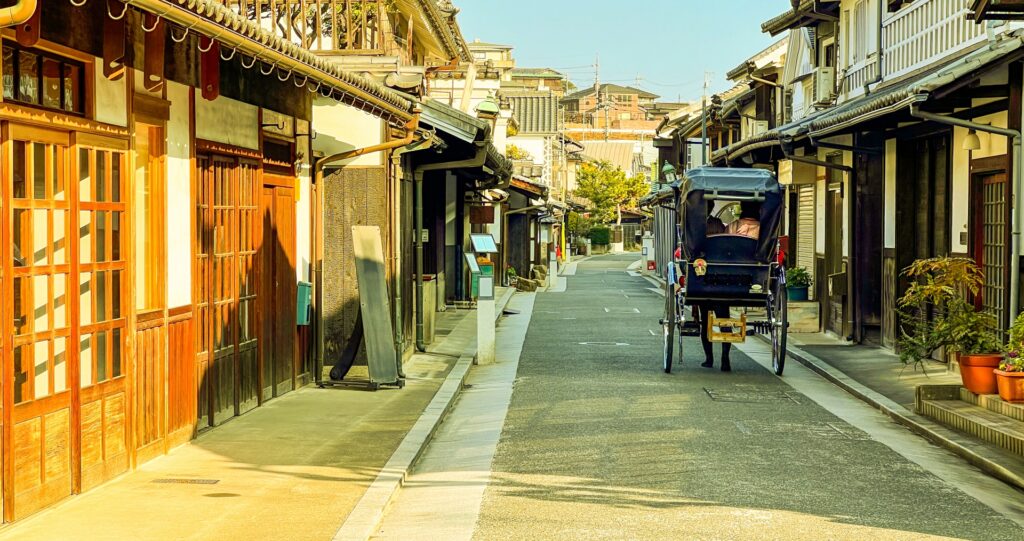
Yes. Geisha communities still operate in modern Japan, although on a much smaller scale than in the past.
Kyoto remains the best-known center, but active communities also exist in Tokyo, Kanazawa, and several regional cities. Geisha continue to perform at traditional banquets, seasonal dances, festivals, and cultural events.
The profession is still demanding. Training takes years, the lifestyle can be highly structured, and younger generations face very different economic realities than previous eras did. Even so, new apprentices continue entering the profession.
That ongoing continuity is part of what makes geisha culture feel distinct from a museum exhibit or reconstructed tourist attraction. It is still lived.
Where Can You See Geisha in Japan?
Visitors interested in geisha culture should understand that many authentic gatherings remain private. Seeing a geisha walking through Kyoto on the way to an appointment is possible, but it shouldn’t be treated like spotting a street performer.
| Area | City | Known For |
| Gion | Kyoto | Most famous geisha district |
| Pontocho | Kyoto | Historic alley with teahouses |
| Miyagawacho | Kyoto | Traditional arts and performances |
| Kamishichiken | Kyoto | Oldest geisha district in Kyoto |
| Asakusa | Tokyo | Tokyo geisha traditions |
| Higashi Chaya District | Kanazawa | Preserved teahouse atmosphere |
Kyoto remains the easiest place for visitors to encounter geisha culture through public dance performances, seasonal events, and organized cultural experiences.
How to Experience Geisha Culture Respectfully
For most travelers, the best introduction to geisha culture comes through official performances, tea house experiences, cultural dinners, or seasonal dance events organized for the public.
A good experience tends to feel quieter and more intimate than people expect. Less spectacle, more attention to detail. The rhythm of conversation, the music, the pacing of the evening — those parts often leave a stronger impression than the visual elements alone.
Choosing reputable operators matters. Some tourism experiences are carefully designed in cooperation with local communities, while others reduce the tradition to costume photography or shallow entertainment.
It’s also important to remember that geisha are working professionals. Following them through the streets for photos or interrupting them between appointments is considered deeply disrespectful.
Can You Take Photos of Geisha?
Photography rules depend on the setting.
In Kyoto, overtourism created serious problems in some historic districts, especially when visitors crowded private alleys or chased maiko for photos. As a result, certain areas now restrict photography and impose fines for entering private roads.
If you attend an official performance or cultural event, staff will usually explain the photography rules beforehand. Outside those settings, basic common sense goes a long way.
If someone is clearly heading to work, it’s better to let them pass.
Gion Is Not a Theme Park
Gion may appear cinematic at times, especially after sunset when lanterns glow against dark wooden facades and taxis idle quietly outside restaurants. But it is still a living neighborhood.
People live there. Children walk to school there. Restaurant deliveries happen in the morning. Laundry hangs behind some of the old buildings tourists photograph every day.
In recent years, local frustration around overtourism has grown, particularly when visitors ignore signs, block narrow streets, or enter private alleys searching for photos of maiko.
Respectful travel in these districts means understanding that geisha culture continues because local communities actively protect it. Visitors are guests in that environment, not the center of it.
Ironically, travelers who slow down and approach these neighborhoods with patience often come away with the more memorable experience anyway.
Frequently Asked Questions About Geisha
What does geisha mean?
The word “geisha” means “person of the arts.” It refers to professional entertainers trained in traditional Japanese arts including dance, music, singing, and hospitality.
Are geisha and maiko the same?
No. A maiko is an apprentice geisha, especially in Kyoto. Maiko are still in training, while geisha or geiko are fully qualified professionals.
Can foreigners become geisha?
It is uncommon, but possible. A small number of non-Japanese women have completed geisha training in modern Japan. Doing so requires fluent Japanese ability, deep cultural understanding, and years of commitment.
Is it okay to dress up as a geisha in Japan?
Kyoto has makeover experiences where visitors can wear kimono and geisha-style makeup. These can be enjoyed respectfully, though it’s best to approach them as cultural experiences rather than costume play. The line between appreciation and caricature tends to come down to attitude more than clothing itself.
Final Thoughts: Understanding Geisha Beyond the Stereotype
Geisha are not relics frozen somewhere in Japan’s past, nor are they the fantasy figures often presented in pop culture.
They are artists working within a highly specialized tradition that blends performance, etiquette, hospitality, and seasonal aesthetics. Understanding the differences between geisha, geiko, maiko, and oiran reveals a more nuanced picture of Japanese cultural history than the simplified versions that often circulate abroad.
For travelers, encountering geisha culture can be meaningful precisely because it doesn’t always present itself openly or dramatically. Sometimes it’s just a brief glimpse of a maiko disappearing into a side street in Kyoto at dusk, or the sound of shamisen music drifting from upstairs behind a closed wooden door.
The tradition survives through discipline, community support, and adaptation — not through nostalgia alone. And visitors who approach it with curiosity and restraint usually understand far more than those searching only for the perfect photograph.