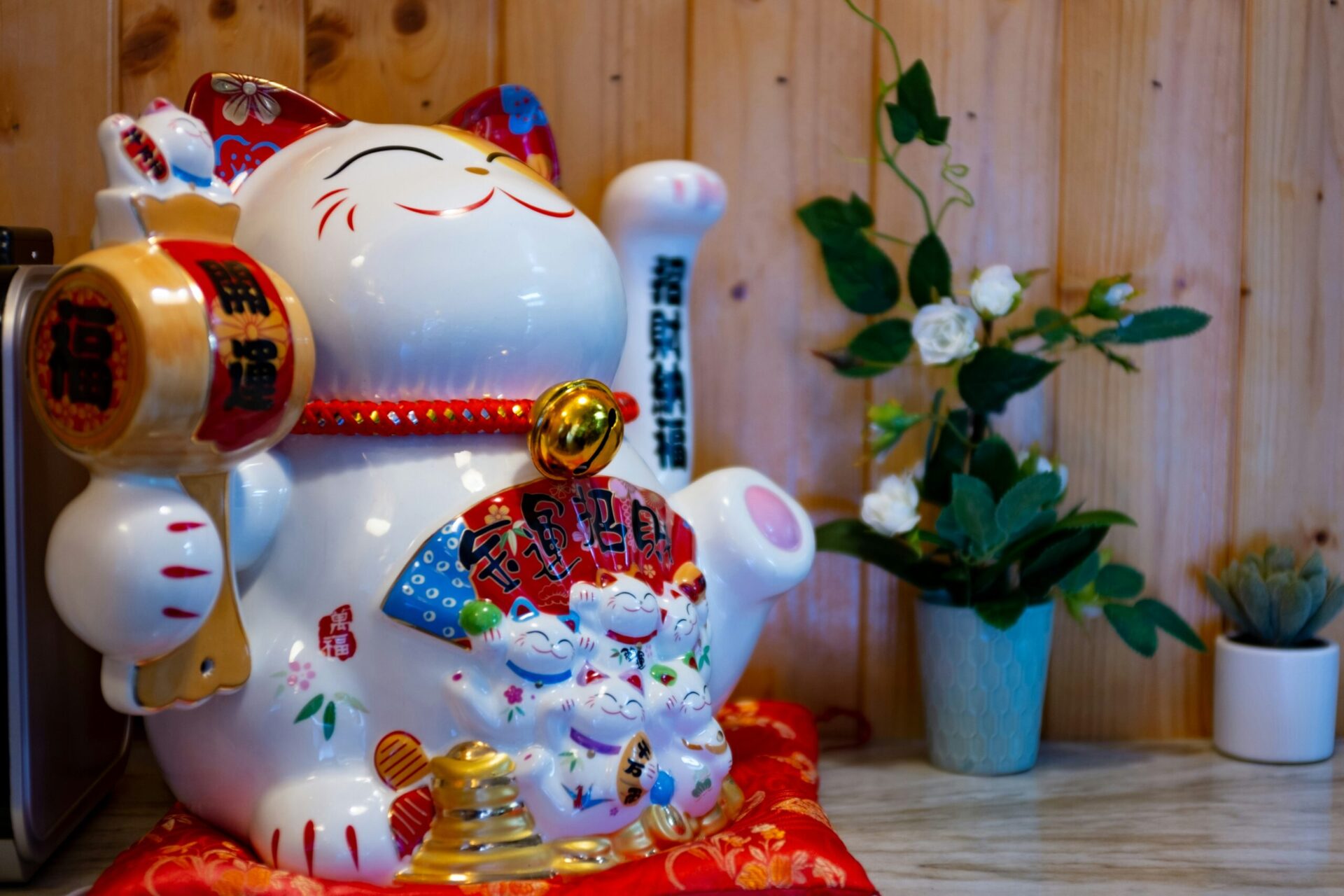
Maneki Neko, often called Japanese lucky cats, are more than cute souvenirs with one paw raised. Their colors, paws, accessories, and placement all carry different symbolic meanings. Some are chosen for business luck, while others are associated with protection, health, love, study, or general happiness. This guide explains lucky cat color meanings in a clear, practical way so you can choose the right Maneki Neko for your home, shop, office, or gift.


Lucky Cat Color Meanings at a Glance
Lucky cat color meanings can vary slightly by region, shop, maker, and modern interpretation, so it is best to think of them as common associations rather than fixed rules. Still, many Maneki Neko colors are widely understood in similar ways across Japanese gift shops, craft stores, and cultural guides. The table below gives you a quick answer before we go into the details.
| Color | Main Meaning | Best For |
| White | Overall luck, happiness, purity | First lucky cat, new home, general good fortune |
| Black | Protection, warding off evil, peace | Entrance, family safety, protection gifts |
| Gold or Yellow | Wealth, prosperity, business luck | Shops, offices, business owners |
| Red | Health, protection from illness | Health wishes, family gifts |
| Pink | Love, romance, relationships | Couples, dating, relationship wishes |
| Green | Safety, health, academic success | Students, safe travel, well-being |
| Blue | Study, wisdom, calm judgment, peace | Exams, focus, work, learning |
| Calico | General good fortune, traditional luck | Souvenirs, first-time buyers |
| Purple | Longevity, well-being, spiritual calm | Older relatives, wellness gifts |
In many cases, the “best” color depends on your personal wish. Gold is the classic choice for money and business, black is often chosen for protection, red is linked with health, and pink is associated with love. If you are not sure which one to choose, white or calico is usually a safe and traditional option because both are connected with broad, overall good fortune.
What Is a Lucky Cat or Maneki Neko?
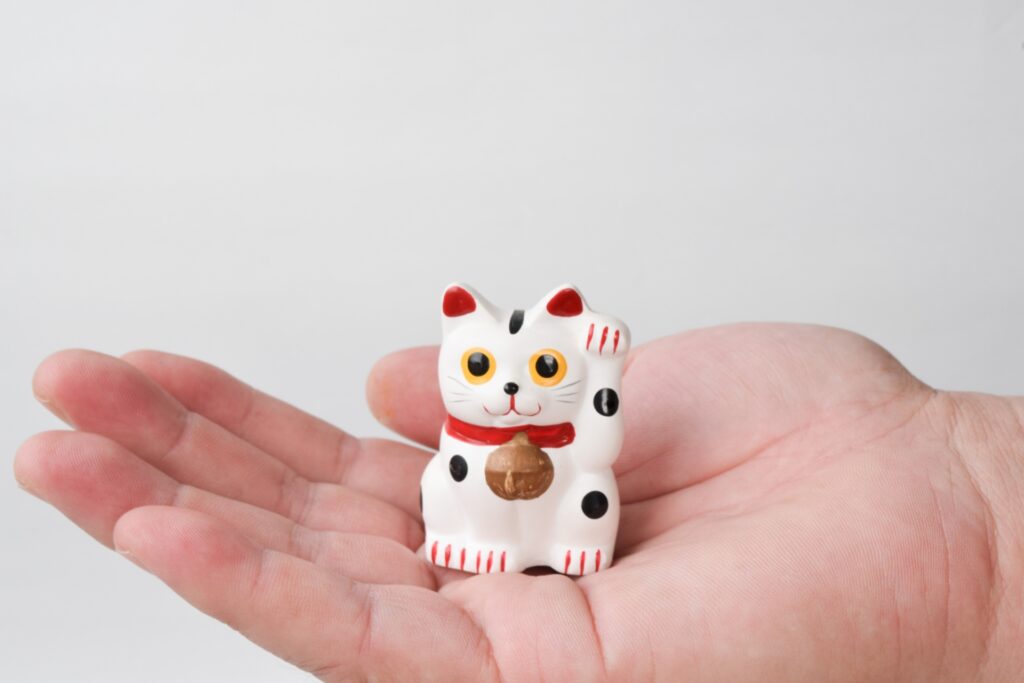
A lucky cat is a Japanese figurine known as Maneki Neko in Japanese. The name literally means “beckoning cat,” and the figure is usually shown sitting upright with one paw raised as if inviting good fortune. In English, you may also see it called a “fortune cat,” “welcoming cat,” or simply “Japanese lucky cat.” It is commonly displayed in restaurants, shops, homes, offices, and souvenir stores.
One important detail for English-speaking readers is the gesture itself. To many Western viewers, the raised paw may look like the cat is waving goodbye. In Japan, however, the downward-facing beckoning motion means “come here.” That is why the cat is believed to invite people, customers, money, happiness, or protection into a space.
Maneki Neko often hold or wear symbolic items, such as a koban coin, bell, collar, bib, or decorative charm. These details can add meaning, but color is usually the easiest way for beginners to understand the cat’s symbolism. Whether you buy one in Japan or online, learning the color meanings helps you choose one that matches your wish.
Detailed Meanings of Each Lucky Cat Color
Each lucky cat color has its own personality. Some colors are old and familiar, while others are more modern or influenced by feng shui, gift culture, and contemporary design. When shopping, you may also see a small card explaining the meaning of that specific cat. It is worth reading because one maker may describe green as “safety,” while another may connect it with study or health.
Below are the most common Maneki Neko colors and what they usually symbolize. For each color, think about three things: the wish you want to express, where the cat will be placed, and whether it is for yourself or someone else. A lucky cat is a symbolic object, not a guarantee of results, but choosing one thoughtfully makes it a more meaningful keepsake.
White Lucky Cat Meaning
A white lucky cat is one of the most classic and versatile choices. White is commonly associated with overall good fortune, happiness, purity, and a fresh start. Because the meaning is broad and positive, a white Maneki Neko is a good choice when you want luck in general rather than one specific wish like money, romance, or study.
White lucky cats work especially well for new homes, new shops, and people starting a new chapter in life. They also make safe gifts because the symbolism is gentle and easy to understand. If you are buying your first lucky cat in Japan and do not know which color to choose, white is one of the easiest recommendations.
For a home, a white Maneki Neko can be placed near the entrance, on a shelf, or in a bright, clean area where it can be seen. For a gift, it suits almost anyone: a friend who loves Japan, a family member moving house, or someone beginning a new job. It carries the feeling of “may good things come your way” without being too specific.
Black Lucky Cat Meaning
A black lucky cat may surprise English-speaking visitors because black cats are sometimes seen as unlucky in Western folklore. In the world of Japanese Maneki Neko, however, black usually has the opposite meaning. A black lucky cat is commonly associated with protection, warding off evil, keeping away bad luck, and bringing peace to the home.
This makes black one of the most meaningful colors for entrances, doorways, shops, and family spaces. It is often chosen by people who want symbolic protection rather than wealth or romance. For a business, a black Maneki Neko near the entrance can represent the wish to keep trouble away while welcoming good customers.
As a gift, black is a thoughtful choice for someone who has moved into a new home, opened a shop, or wants a protective charm. Because of the Western image of black cats, you may want to explain the meaning when giving it to an American friend. That small explanation can make the gift more interesting: in Japan, the black lucky cat is not a bad omen but a guardian-like symbol.
Gold or Yellow Lucky Cat Meaning
Gold and yellow lucky cats are strongly associated with wealth, financial luck, prosperity, and business success. If someone asks, “What color lucky cat is best for money?” the usual answer is gold or yellow. These cats are especially popular in shops, restaurants, offices, and places where people hope for steady income or commercial success.
A gold Maneki Neko is often placed near a cash register, reception counter, desk, or business entrance. It may also hold a koban coin, which strengthens the money-related symbolism. For business owners, freelancers, restaurant operators, or people starting a new project, gold is one of the most direct and recognizable choices.
That said, it is better to describe a gold lucky cat as a good-luck symbol rather than something that “brings money” in a literal way. Its real value is cultural and symbolic. It expresses a wish for prosperity, confidence, and a successful flow of customers or opportunities. As a gift, gold or yellow is especially suitable for a new business owner, entrepreneur, or friend starting a side hustle.
Red Lucky Cat Meaning
A red lucky cat is commonly connected with health, protection from illness, long life, and the wish to keep harmful things away. In Japanese folk belief, red has often been used as a protective color. Some explanations connect red Maneki Neko with historical beliefs about warding off disease, including old ideas related to smallpox protection.
For modern readers, the safest way to understand a red lucky cat is as a symbol of health wishes and protective energy. It should not be described as having a medical effect, but it can be a thoughtful object for someone recovering from difficulty, caring for family, or hoping for well-being. It carries the feeling of “stay healthy and protected.”
Red can be a good gift for parents, grandparents, or family members, especially when you want something warmer and more personal than a money-focused gold cat. It can also be placed in a living room, entrance, or family area. The color is bright and cheerful, so it works well as a decorative piece while still carrying a traditional protective meaning.
Pink Lucky Cat Meaning
A pink lucky cat is usually associated with love, romance, good relationships, and meeting the right partner. Compared with white, black, or gold, pink feels more modern and gift-oriented, but it has become a popular color for people who want a Maneki Neko connected with romance or emotional connection.
Pink is a natural choice for couples, people hoping for a relationship, or anyone who wants better harmony in love and personal relationships. It is also a sweet souvenir for a partner, especially if they enjoy Japanese culture or cute lucky charms. The meaning is easy to explain and rarely feels too formal.
One useful combination is pink with the left paw raised. The left paw is often said to invite people, customers, or relationships, so a pink left-paw Maneki Neko fits well with wishes for love and connection. It does not have to be only romantic, though. It can also represent friendship, kindness, and warm relationships with the people around you.
Green Lucky Cat Meaning
A green lucky cat can have several meanings depending on the source. Some shops explain green as a color for academic success, while others connect it with safety, health, calm growth, or well-being. Because the interpretation is less fixed than gold or black, green is a good example of why you should check the meaning card or shop description when buying a Maneki Neko.
For students, green may be chosen as a wish for study success or progress. For travelers or families, it may be understood as a color for safety and peaceful everyday life. The natural feeling of green also makes it suitable for people who want balance, healing, or steady personal growth.
As a gift, green works well for students, people starting school, someone beginning a new course, or a friend who values calm and health. If you are buying one in Japan, ask the shop staff or read the attached explanation. You may find that one green cat is sold for “school success,” while another is described as “traffic safety” or “good health.”
Blue Lucky Cat Meaning
A blue lucky cat is often linked with study, wisdom, intelligence, calm judgment, peace, and mental clarity. Like green, blue can vary by shop or maker, but it is commonly recommended for students, exams, learning, and work that requires focus. The color itself gives a feeling of calmness, which fits well with concentration and thoughtful decision-making.
Blue is a good choice for someone preparing for an exam, learning a language, starting a new job, or trying to stay calm under pressure. It can be placed on a desk, bookshelf, study area, or work corner. Unlike gold, which feels energetic and business-focused, blue has a quieter meaning. It suggests wisdom, patience, and steady progress.
For a gift, blue is especially suitable for students, writers, researchers, or friends who enjoy learning. It is also a good choice when you want a lucky cat that feels less flashy than gold or red. If the recipient likes peaceful colors and practical symbolism, blue can be one of the most thoughtful options.
Calico Lucky Cat Meaning
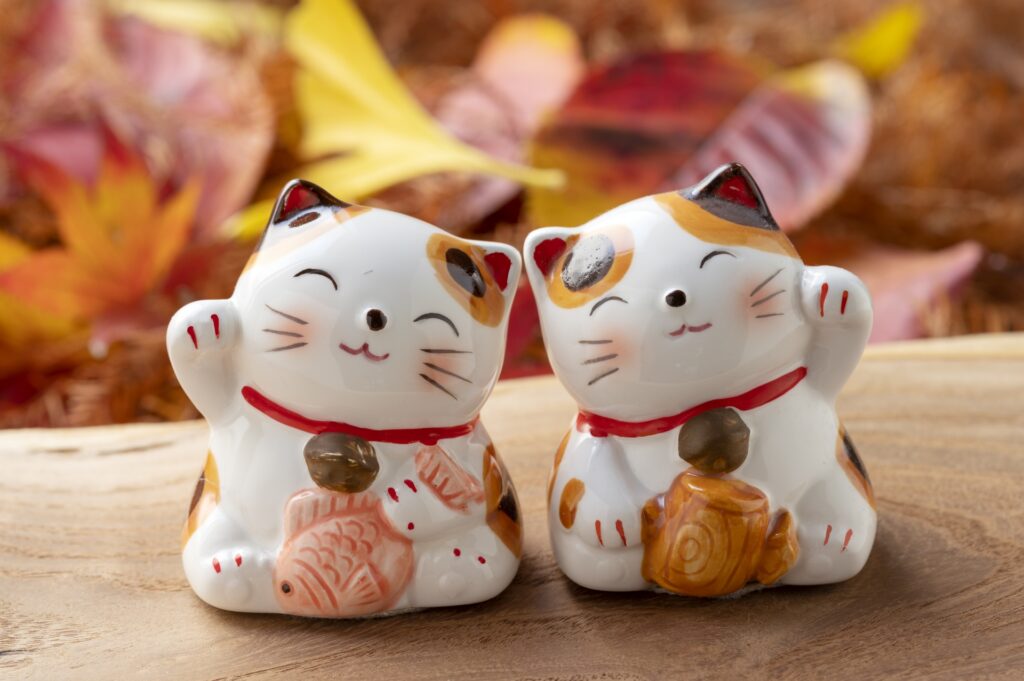
A calico lucky cat, often shown with white, black, and orange patches, is one of the most traditional-looking Maneki Neko styles. It is commonly associated with general good fortune and is often considered especially lucky. The design is also connected with the Japanese Bobtail-like appearance that many people imagine when they think of the classic beckoning cat.
Calico is a great choice when you want a lucky cat that feels authentically traditional but not tied to only one wish. It is suitable for general happiness, family luck, business luck, travel souvenirs, and first-time buyers. If you are visiting Japan and want one Maneki Neko that represents the whole tradition, calico is hard to go wrong with.
As a gift, calico works for almost anyone because the meaning is broad and friendly. It is also a good option when you are unsure whether the recipient wants money luck, love luck, or protection. Instead of choosing one narrow meaning, a calico cat says, “May good fortune come to you in many ways.”
Purple Lucky Cat Meaning
A purple lucky cat is less standard than white, black, gold, or red, but it is often described in modern interpretations as a symbol of longevity, well-being, spiritual calm, dignity, or inner balance. Because purple is not one of the most traditional Maneki Neko colors, its meaning may vary more from shop to shop.
This color can be a thoughtful choice for someone who enjoys unusual designs or deeper symbolic meanings. It may suit older relatives, wellness gifts, meditation spaces, or people who like refined colors rather than bright gold or red. Purple can also feel elegant, making it attractive as a decorative item even when the buyer is not focused on one specific wish.
When buying a purple Maneki Neko, check whether the maker explains its meaning. Some may emphasize long life, while others may focus on healing, calmness, or spiritual luck. Treat purple as a modern, interpretive color rather than a fixed traditional rule.
Which Lucky Cat Color Should You Choose?
The easiest way to choose a lucky cat color is to begin with your purpose. If your wish is money or business success, choose gold or yellow. If you want protection, choose black. For health wishes, red is a common option. For love or relationships, pink is the clearest choice. For study, exams, or calm focus, green or blue may be best. For broad good fortune, choose white or calico.
For gifts, think about the recipient’s situation. A new business owner may appreciate a gold lucky cat, especially one with the right paw raised. A student might enjoy green or blue for study luck. A couple may like pink, particularly with the left paw raised. A family moving into a new home may appreciate white for happiness or black for protection.
For souvenirs from Japan, white, calico, and gold are usually safe choices. They are easy to understand, widely available, and visually recognizable. However, the best Maneki Neko is not only the one with the “correct” meaning. The face, size, material, and feeling also matter. If a particular cat makes you smile, that personal connection is part of the charm.
Does the Raised Paw Change the Meaning?
Yes, the raised paw changes the meaning of a lucky cat. In many common explanations, a Maneki Neko with the right paw raised is associated with money, wealth, and financial luck. This makes it a popular choice for businesses, offices, and people hoping for prosperity. A gold cat with the right paw raised is one of the clearest combinations for business and money luck.
A cat with the left paw raised is often said to invite people, customers, guests, or relationships. This is why left-paw Maneki Neko are common in restaurants and shops that want to welcome visitors. A pink cat with the left paw raised can also be interpreted as a symbol for love, connection, or good relationships.
A cat with both paws raised may be described as inviting both money and people, or as offering stronger protection. Some people like it because it feels powerful, while others jokingly say both paws up may look like surrender. You may also hear that a higher raised paw reaches farther or brings greater luck, though this is more of a folk-style interpretation than a strict rule.
Other Symbols on a Maneki Neko and What They Mean
Color and paw position are the main things most people notice first, but Maneki Neko often include other symbols. The most common is the koban coin, an old Japanese gold coin shape that represents money, prosperity, and material fortune. Many gold lucky cats hold a koban, which makes the financial meaning even clearer.
You may also see a bell, collar, or bib. These details are partly decorative, but they also connect to the idea of a cared-for, cherished cat. A bell can suggest protection or awareness, while a bib may give the figure a temple-like or guardian-like feeling. Some cats hold extra objects such as a fish, magic mallet, gem, gourd, or other lucky items, each adding another layer of symbolism.
When buying a Maneki Neko, check it in this order: color, raised paw, item held, material, and meaning card. This is especially helpful when shopping in Japan, where two cats of the same color may still carry different messages depending on the maker. If you are buying a gift, a small meaning card can make the souvenir much easier to explain.
Where Should You Place a Lucky Cat?
A lucky cat is usually placed where good fortune, people, or opportunities are believed to enter. In a home, common spots include the entrance, hallway shelf, living room, or a clean area near the front door. In a shop or restaurant, you may see Maneki Neko near the register, counter, front window, or entrance. In an office, a desk, reception area, or business shelf is common.
Some traditional advice says the cat should face the door or be placed where people can see it. Others suggest keeping it in a clean, bright, respectful location rather than hiding it in a closet or storage area. For practical reasons, make sure it is stable and not likely to fall, especially if it is ceramic.
It is important to remember that these are customs, not strict religious rules for every household. If you live outside Japan, choose a place that feels welcoming, clean, and safe. A small lucky cat on a desk can be just as meaningful as a larger one by the entrance, especially if it reminds you of your wish every day.
Are Lucky Cat Color Meanings Traditional or Modern?
Lucky cat color meanings are a mix of older tradition, folk belief, modern gift culture, commercial interpretation, and sometimes feng shui-inspired ideas. Colors like white, black, red, and gold tend to have more familiar and widely repeated meanings. White is general luck, black is protection, red is health or warding off illness, and gold is wealth.
Other colors, such as blue, green, pink, and purple, may be more modern or less consistent. Pink is now widely associated with love, but it may not be as old or universal as the classic calico or white lucky cat. Green may mean academic success in one shop and safety or health in another. Purple may be explained as longevity, wellness, or spiritual calm.
For this reason, it is best to use phrases like “often said to symbolize” or “commonly associated with” rather than treating every color meaning as an ancient rule. If you buy a Maneki Neko from a temple, shrine, craft shop, or souvenir store, follow the explanation provided by that place. Local meaning is part of the charm.
Lucky Cat Color Meanings for Gifts and Souvenirs
Maneki Neko make excellent gifts and souvenirs because they are small, meaningful, and strongly connected with Japanese culture. The best color depends on the person receiving it. For a business owner, gold or yellow is the most direct choice because it is linked with prosperity. For someone moving into a new home, white suggests happiness and a fresh start, while black offers a protective meaning.
For a student, green or blue can express support for study, exams, and calm focus. For a partner or couple, pink is a sweet choice connected with romance and relationships. For a parent, grandparent, or family member, red can express health wishes, while black can suggest safety and peace at home. For a general Japan souvenir, white or calico is easy to recommend.
If you buy a lucky cat while traveling in Japan, consider size and material. Ceramic cats are beautiful but breakable, so choose one that is easy to pack. A meaning card is helpful for gifts, especially if the recipient is not familiar with Maneki Neko. If the cat comes from a temple or shrine, treat it with extra care and follow any local guidance about handling, returning, or displaying it.
Where to See or Buy Maneki Neko in Japan
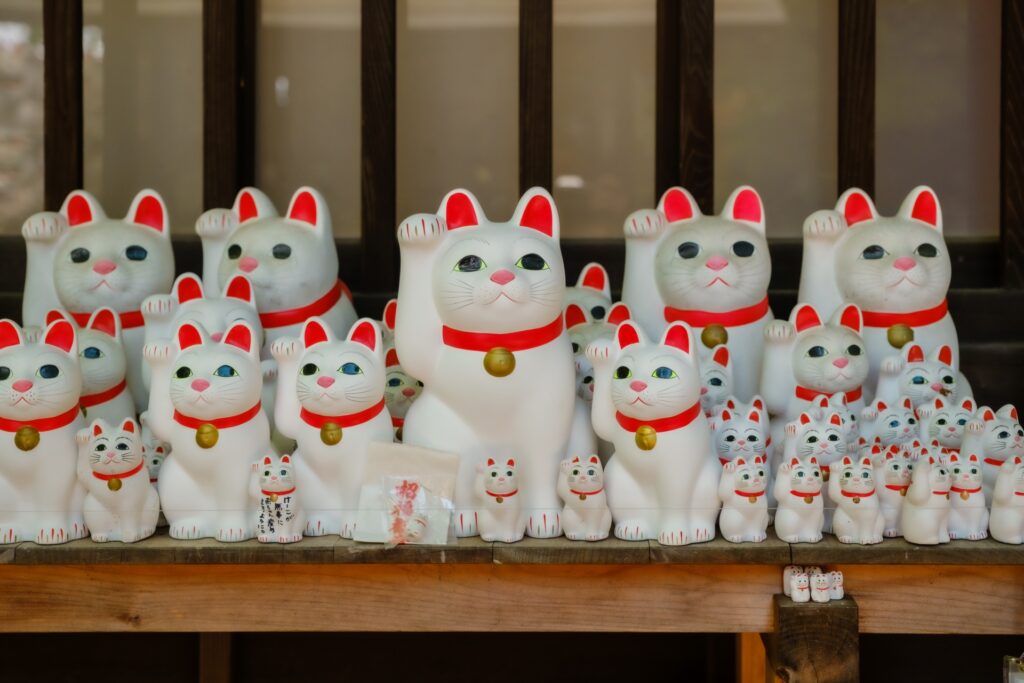
You can find maneki neko in Japan in temple grounds, shrine shops, pottery towns, tourist streets, department stores, and airport gift shops. The best place depends on your goal: visit Gotokuji Temple or Imado Shrine if you want to see lucky cats in a cultural setting, go to Tokoname or Seto in Aichi if you want a ceramic piece with a local craft story, and choose Asakusa, Kyoto, or airport shops if you need an easy-to-pack souvenir during your trip.
Mass-produced cats are fine for casual gifts, but travelers looking for something more meaningful should compare ceramic cats, shrine charms, and handmade-style pieces. Pay attention to the raised paw, color, size, and packaging, especially if you are flying home with a fragile ceramic item.
Best Places to See Maneki Neko in Japan
Gotokuji Temple, Tokyo
Gotokuji Temple is the classic place to see rows of maneki neko in Tokyo. In one corner of the temple grounds, small white lucky cats are packed tightly on shelves, creating a quiet but striking scene. The walk from the station passes through a calm Setagaya neighborhood, and once inside, you hear gravel underfoot, birds, and the soft movement of visitors taking photos. Morning is best for fewer crowds and softer light.
Location: Gotokuji Temple, Tokyo
Address: 2-24-7 Gotokuji, Setagaya-ku, Tokyo 154-0021
Access: 5-minute walk from Miyanosaka Station, or 15-minute walk from Gotokuji Station
Hours: Grounds 6:00 AM–5:00 PM; temple office 8:00 AM–3:00 PM
Price: Admission free; maneki neko price varies
Official Website: Gotokuji Temple official website
Suggested visit time: 45–60 minutes
Can you buy Maneki Neko there? Yes, at the temple office, subject to availability
Imado Shrine, Tokyo
Imado Shrine near Asakusa is known for matchmaking and maneki neko. Unlike Gotokuji’s many white cats, Imado often features paired cat motifs, making it popular with visitors interested in love, relationships, and good fortune. It is a small shrine, so it works best as a short detour after Sensoji Temple or Sumida Park. Weekday mornings feel calm; weekends can be busier with couples and visitors writing wishes on ema plaques.
Location: Imado Shrine, Tokyo
Address: 1-5-22 Imado, Taito-ku, Tokyo 111-0024
Access: About 15 minutes on foot from Asakusa Station
Hours: Shrine office commonly 9:00 AM–4:00 PM; grounds may vary
Price: Admission free; charms and cat items vary
Official Website: Imado Shrine official information
Suggested visit time: 30–45 minutes
Can you buy Maneki Neko there? Yes, charms and cat-themed items are usually available
Tokoname Maneki Neko Street, Aichi
Tokoname turns maneki neko into a town walk. Near Tokoname Station, Maneki Neko Street displays artist-made lucky cats, and the giant cat head “Tokonyan” looks out over the pottery town. As you continue toward the Pottery Footpath, you pass old kilns, ceramic walls, small galleries, and shops selling heavier, more distinctive ceramic cats. The late afternoon light on the clay-colored streets is especially photogenic.
Location: Tokoname Maneki Neko Street, Tokoname, Aichi
Address: Area between Meitetsu Tokoname Station and Tokoname City Ceramic Hall / Pottery Footpath
Access: About 5 minutes on foot from Meitetsu Tokoname Station
Hours: Street open at all times; shop hours vary
Price: Free to walk; maneki neko prices vary
Official Website: Tokoname City Tourism official website
Suggested visit time: 2–3 hours
Can you buy Maneki Neko there? Yes, in pottery and souvenir shops
Best Places to Buy Maneki Neko as a Souvenir
Asakusa, Tokyo
Asakusa is the easiest place in Tokyo to buy a maneki neko on a first Japan trip. After visiting Sensoji Temple, walk through Nakamise-dori and the surrounding side streets, where souvenir shops sell small ceramic cats, charms, keychains, and Japan-themed gifts. It is convenient rather than highly specialized, but you can compare many designs quickly. Go before lunch if you want lighter crowds.
Location: Asakusa / Nakamise-dori area, Tokyo
Address: Around 2-3-1 Asakusa, Taito-ku, Tokyo
Access: About 5 minutes on foot from Asakusa Station
Hours: Street open at all times; shop hours vary, often daytime to early evening
Price: Admission free; maneki neko prices vary
Official Website: Sensoji official website / GO TOKYO Asakusa guide
Suggested visit time: 1–2 hours including Sensoji
Can you buy Maneki Neko there? Yes, widely available
Kyoto: Kyoto Station, Nishiki Market, and Temple-Area Shops
Kyoto is a good place to find smaller, more understated maneki neko. Around Kyoto Station, Nishiki Market, Gion, and Kiyomizudera approach streets, shops sell ceramics, fabric goods, charms, and refined Japanese-style souvenirs. The atmosphere is slower than Asakusa, and many designs feel softer and more decorative. Kyoto Station is especially useful if you want to buy near the end of your stay and avoid carrying fragile items all day.
Location: Kyoto Station, Nishiki Market, Gion, Kiyomizudera area, Kyoto
Address: Kyoto Station: Higashishiokoji-cho, Shimogyo-ku; Nishiki Market: Nakagyo-ku
Access: Kyoto Station shops are inside or near JR Kyoto Station; Nishiki Market is about 5 minutes on foot from Shijo or Karasuma Station
Hours: Varies by shop
Price: Varies
Official Website: Kyoto tourism / Kyoto Station shopping information
Suggested visit time: 1–2 hours
Can you buy Maneki Neko there? Yes, in souvenir, craft, and lifestyle shops
Tokoname and Seto, Aichi
For a more authentic ceramic souvenir, choose Tokoname or Seto. Tokoname is famous for lucky cats and pottery walks, while Seto is one of Japan’s major ceramic towns. In both areas, you can compare texture, glaze, expression, and size instead of buying the first cat you see in a tourist shop. Seto also has the Maneki-Neko Museum, which helps visitors understand how many styles of lucky cats exist.
Location: Tokoname and Seto, Aichi
Address: Tokoname: around Tokoname Station / Pottery Footpath; Seto: around Owari Seto Station and Maneki-Neko Museum area
Access: Tokoname is about 30 minutes by train from Meitetsu Nagoya Station; Seto is reached via Ozone Station and the Meitetsu Seto Line to Owari Seto Station
Hours: Streets open at all times; shops and museums vary
Price: Varies widely by size, artist, and material
Official Website: Tokoname City Tourism / Seto City Tourism information
Suggested visit time: Half day for either town
Can you buy Maneki Neko there? Yes, especially in pottery shops and museum shops
Department Stores, Craft Shops, and Airport Shops
Department stores and craft shops are best for quality, packaging, and gift presentation. They are useful if you want a neat boxed item or a more refined interior piece. Airport shops at Haneda, Narita, and other major airports are convenient for last-minute purchases, especially small boxed cats that are easier to pack. Selection varies, so buy earlier if you want a specific handmade piece.
Location: Major department stores, craft shops, Haneda Airport, Narita Airport
Address: Haneda Airport: Ota-ku, Tokyo; Narita Airport: Narita, Chiba
Access: Haneda is served by Tokyo Monorail and Keikyu Line; Narita is served by JR and Keisei trains
Hours: Varies by store and terminal
Price: Varies
Official Website: Haneda Airport / Narita Airport official websites
Suggested visit time: 30–60 minutes for airport shopping
Can you buy Maneki Neko there? Often yes, depending on shop and terminal
FAQ About Lucky Cat Color Meanings
The questions below answer the most common things English-speaking readers want to know before buying or displaying a Maneki Neko. Because lucky cat meanings can vary by source, these answers focus on the most common interpretations rather than strict rules. When you buy a specific cat, the meaning card or shop explanation should be treated as the best guide for that particular item.
What is the luckiest color for a lucky cat?
The luckiest color depends on what kind of luck you want. For overall good fortune, white or calico is usually the safest choice. White is associated with happiness, purity, and broad good luck, while calico is often considered a very traditional and lucky Maneki Neko style. For money, gold or yellow is luckiest. For protection, black is a strong choice. For love, pink is the clearest option. Instead of looking for one universal “luckiest” color, choose the color that matches your personal wish.
What color lucky cat is best for money?
Gold or yellow is the most common lucky cat color for money, wealth, prosperity, and business success. A gold Maneki Neko is often displayed in shops, restaurants, offices, and near cash registers because it symbolizes financial luck and commercial growth. If you want to strengthen the money-related meaning, look for a gold cat with the right paw raised or one holding a koban coin. Just remember that it is a good-luck symbol, not a promise of actual income.
What does a black lucky cat mean?
A black lucky cat usually means protection, warding off evil, keeping away bad luck, and maintaining peace in the home. This can be surprising for English-speaking readers because black cats are sometimes viewed as unlucky in Western superstition. In Japanese Maneki Neko symbolism, however, black is often protective rather than negative. A black lucky cat is a good choice for an entrance, shop doorway, or family space. It also makes a meaningful gift for someone moving into a new home.
What does a red lucky cat mean?
A red lucky cat is commonly associated with health, long life, and protection from illness or harmful influences. Red has long been used as a protective color in Japanese folk belief, so red Maneki Neko are often chosen for health wishes. It is best to understand this symbolically rather than medically. A red lucky cat does not cure illness, but it can express a warm wish for well-being. It is a thoughtful gift for family members, older relatives, or someone you want to encourage.
What does a pink lucky cat mean?
A pink lucky cat is usually connected with love, romance, good relationships, and meeting the right person. It is a popular choice for couples, partners, or people hoping for better relationship luck. A pink Maneki Neko with the left paw raised is especially fitting because the left paw is often said to invite people, customers, or connections. While pink is a more modern interpretation than some classic colors, it is easy to understand and makes a charming gift for someone special.
Which paw should a lucky cat raise?
A Maneki Neko with the right paw raised is usually associated with wealth, money, and financial luck. A cat with the left paw raised is often said to invite people, customers, guests, or relationships. This is why left-paw cats are common in shops and restaurants. A lucky cat with both paws raised may symbolize both kinds of luck or stronger protection. If you are choosing by purpose, try gold with the right paw for business or pink with the left paw for relationships.
Where should I place a lucky cat?
A lucky cat is often placed near an entrance, front door, shop counter, cash register, reception desk, or work area. The idea is to place it where people, opportunities, or good fortune enter. In a home, a clean shelf near the entrance or a visible living space works well. In a business, the register or front counter is common. Choose a stable place where the cat will not fall, especially if it is ceramic. Keeping it clean and visible is more important than following strict rules.
Is Maneki Neko Japanese or Chinese?
Maneki Neko is generally known as a Japanese lucky cat. The Japanese name means “beckoning cat,” and the figure is widely connected with Japanese shops, temples, souvenirs, and folk culture. However, outside Japan, people sometimes call it a “Chinese lucky cat” or “fortune cat,” which can create confusion. You may see similar cats in Chinese restaurants or Asian gift shops overseas, but the Maneki Neko tradition itself is usually explained as Japanese. The raised paw represents a Japanese-style beckoning gesture.
Final Tips for Choosing the Right Lucky Cat
To choose the right lucky cat, start with your wish. Do you want wealth, protection, health, love, study success, or general good fortune? Once you know that, choose the color: gold for money, black for protection, red for health, pink for love, blue or green for study, and white or calico for overall luck. Then look at the raised paw to see whether it invites money, people, relationships, or broader protection.
After that, check the details. A koban coin adds a money-related meaning, while bells, collars, bibs, and other accessories may add charm or extra symbolism. Think about where you will place the cat, whether it is for home or business, and whether the size and material fit your space. If it is a gift, choose a color that matches the recipient’s situation.
Most importantly, do not worry too much about choosing “wrong.” Maneki Neko are meant to be welcoming, cheerful, and hopeful. If you like the cat’s face, color, and feeling, that is already a good reason to choose it. Treat it with care, place it somewhere clean and visible, and let it remind you of the kind of good fortune you want to invite.