If you’ve seen the word “kofun” on a map, museum label, or travel guide, you’re encountering one of the most important physical remains of ancient Japan. In Japanese, kofun is written 古墳 and refers to large burial mounds built mainly between the 3rd and 7th centuries. This article explains what kofun means in Japanese, how to pronounce it, what these tombs look like, and why they still matter today—especially for travelers and history enthusiasts.


Meaning of “Kofun” in Japanese (古墳): Quick Definition
Kofun (古墳/こふん) means an ancient burial mound or tomb mound in Japanese.
The word refers to earthen mounds constructed primarily as graves for elites—rulers, powerful clan leaders, and members of the early ruling class. Most kofun date from roughly the 3rd to 7th centuries CE, a formative era when political power was consolidating in the Japanese archipelago.
In plain English, you can think of a kofun as a man-made hill covering a burial chamber, often surrounded by one or more moats. While some kofun are modest in size, others are monumental, stretching hundreds of meters and reshaping entire landscapes. Today, many are covered in trees and resemble quiet green parks, which can make their original purpose easy to miss without context.
How to Write and Pronounce Kofun: 古墳 (こふん / kofun)
Understanding the Japanese writing and pronunciation helps demystify the term you’ll often see romanized as kofun.
| Form | Writing |
|---|---|
| Kanji | 古墳 |
| Hiragana | こふん |
| Romaji | kofun |
Pronunciation tips for English speakers:
Say “ko-fun,” with two short syllables. The “u” in “fun” is very light—almost swallowed—closer to “f’n” than the English word “fun.”
The kanji themselves are informative. 古 (ko) means ancient or old, and 墳 (fun) means burial mound or tumulus. Because of this, kofun is often translated as “ancient burial mound,” “tumulus,” or “tomb mound.” Simple translations like “old mound” miss the funerary and historical nuance, so “ancient burial mound” is usually the clearest choice in English.
What Do Kofun Look Like? Key Shapes, Moats, and Haniwa
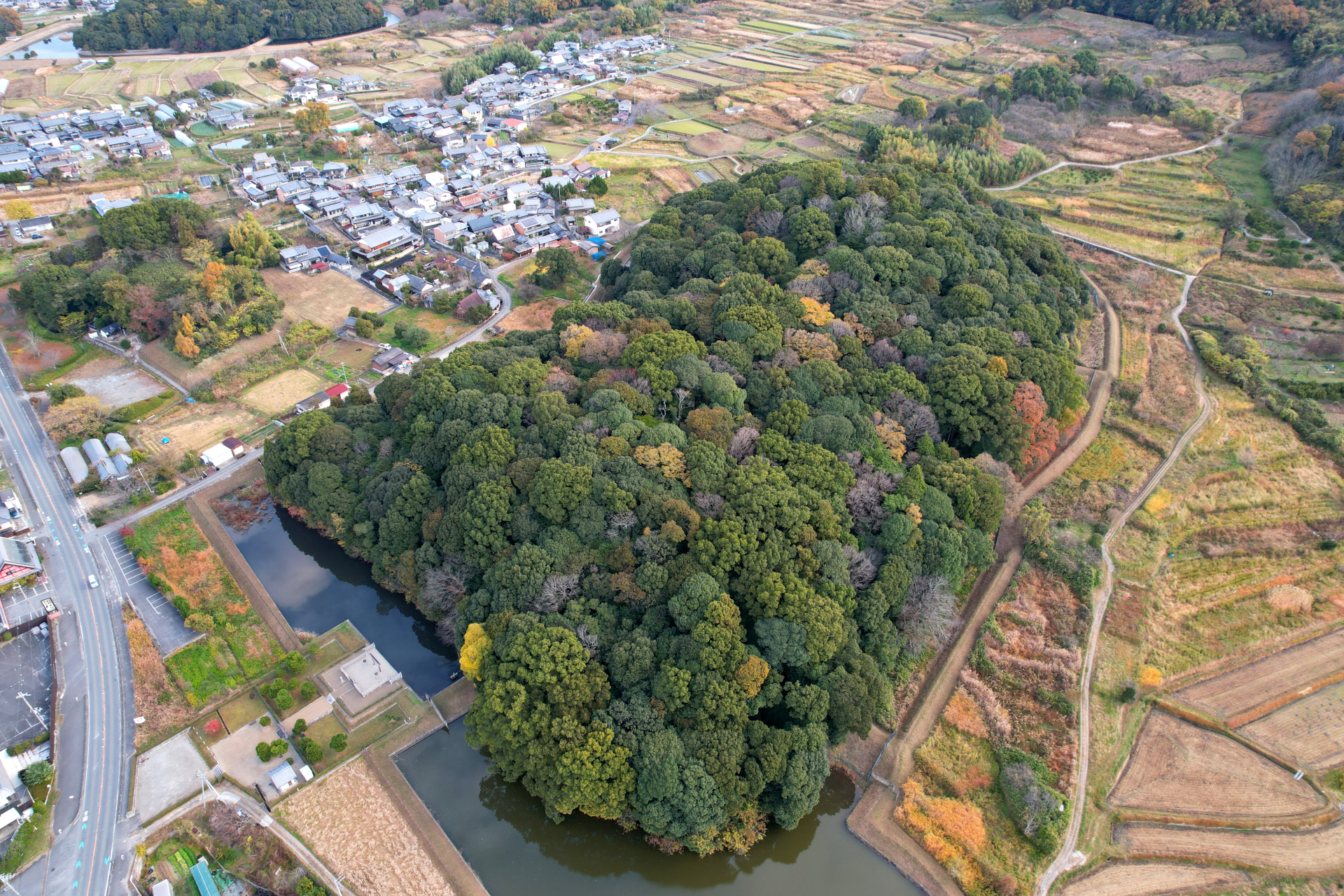
At their core, kofun are carefully engineered earthworks. Builders piled soil to form large mounds, often shaping them in tiers and reinforcing slopes with stones. Many kofun are surrounded by moats, which emphasized separation between the sacred burial space and the everyday world.
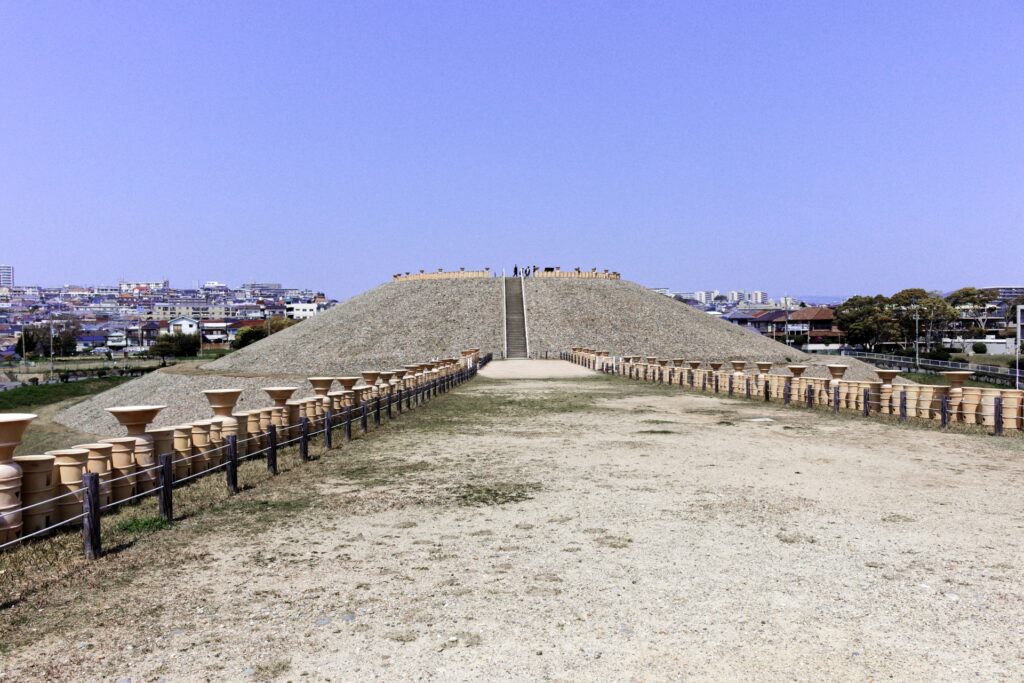
On top of or around the mound, you may find haniwa—clay cylinders or figures placed in rows. From a distance, however, most kofun today appear as tree-covered hills. Their dramatic shapes, especially keyhole forms, are easiest to recognize from aerial views.
Common kofun shapes include round mounds, square mounds, scallop-shaped mounds, and keyhole-shaped mounds (zenpō-kōen-fun). The last type—the keyhole shape—is unique to Japan and is closely associated with the most powerful elites of the period.
Table: Common Kofun Shapes and What They May Indicate
| Shape | Japanese term | Visual description | What it often suggests |
|---|---|---|---|
| Round | Enfun | Simple circular mound | Widely used; various social levels |
| Square | Hōfun | Flat-sided, squared mound | Regional or chronological variation |
| Scallop | Hotategai-gata | Rounded with a protrusion | Transitional forms |
| Keyhole | Zenpō-kōen-fun | Square front + round back | High-status elite burials |
Archaeologists emphasize that shape alone does not guarantee rank. Size, location, grave goods, and regional context all matter when interpreting a kofun’s significance.
Why Kofun Matter: What They Reveal About Early Japan
Kofun are more than graves—they are evidence of emerging social hierarchy and political power. Building a massive mound required labor, organization, and authority, suggesting the presence of strong leaders and cooperative communities.
Grave goods found in some kofun—such as weapons, armor, mirrors, and ornaments—hint at regional networks and overseas connections, especially with the Korean Peninsula and China. While interpretations are cautious, these finds show that early Japan was not isolated but part of a broader East Asian world.
In short, kofun help historians trace how loosely connected communities evolved into more centralized rule, laying foundations for the Japanese state.
Haniwa in One Minute: The Clay Figures on Kofun
Haniwa are unglazed clay objects placed on kofun. Early haniwa were simple cylinders, but over time they became highly expressive figures.
Common examples include people (warriors, dancers, attendants), animals (horses and birds), and objects such as houses, shields, or tools. From details like clothing, hairstyles, and equipment, historians learn about daily life, social roles, and technology during the kofun era, making these tombs invaluable cultural records rather than just burial sites.
Kofun vs. the Kofun Period: Are They the Same Thing?
This is a common point of confusion. Kofun refers to the physical burial mounds, while the Kofun Period is the historical era named after them.
The Kofun Period generally spans from the 3rd century to the 6th or early 7th century and overlaps with the rise of the Yamato polity in central Japan. In short, kofun are the objects, and the Kofun Period is the time when they were built.
Can You Visit Kofun? What Travelers Should Expect
Yes, many kofun can be visited, but expectations matter. Most appear today as forested hills or park-like spaces. Interiors are usually closed, either for preservation or because they are treated as sacred graves.
Typical visitor experiences include walking paths around moats, viewing platforms or perimeter trails, and on-site signs or nearby museums explaining the site. A helpful mindset is that you are appreciating landscape and scale rather than entering a tomb.
Famous Kofun to Know: Mozu-Furuichi (UNESCO World Heritage)
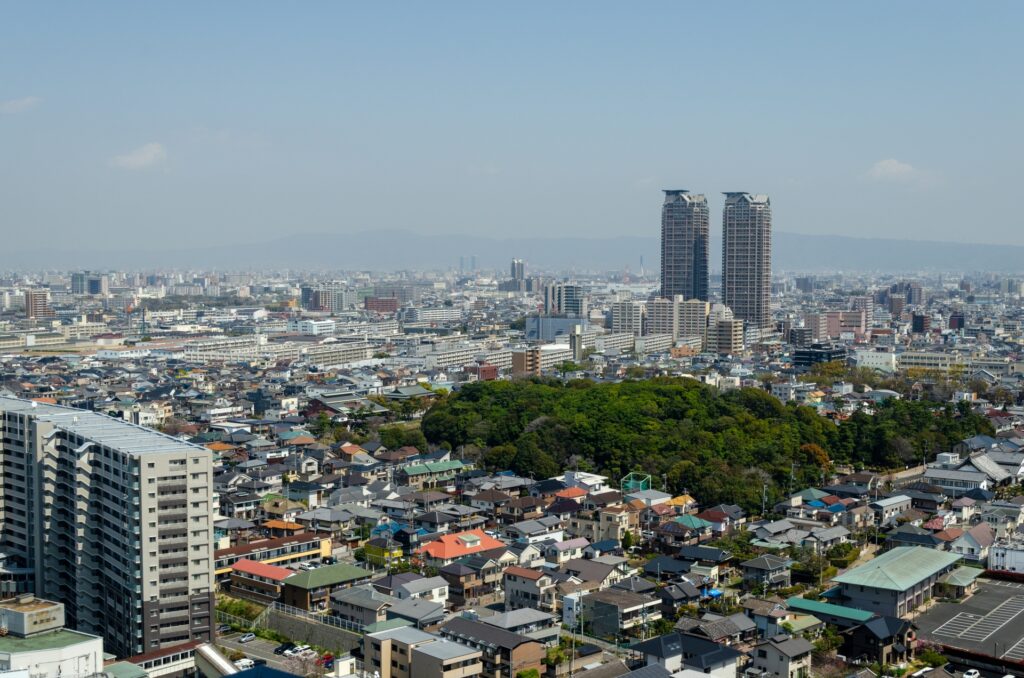
The Mozu-Furuichi Kofun Group is one of the most famous kofun clusters in Japan. Located in the Osaka area, it represents a dense concentration of elite burial mounds and a highly developed funerary system.
Visitors can walk around major kofun, enjoy viewpoints, and explore nearby museums, all with easy access from urban areas. The site was inscribed as a World Heritage property for its outstanding testimony to ancient social and political structures.

Nara Focus: Kofun and Imperial Tombs — What’s the Difference?
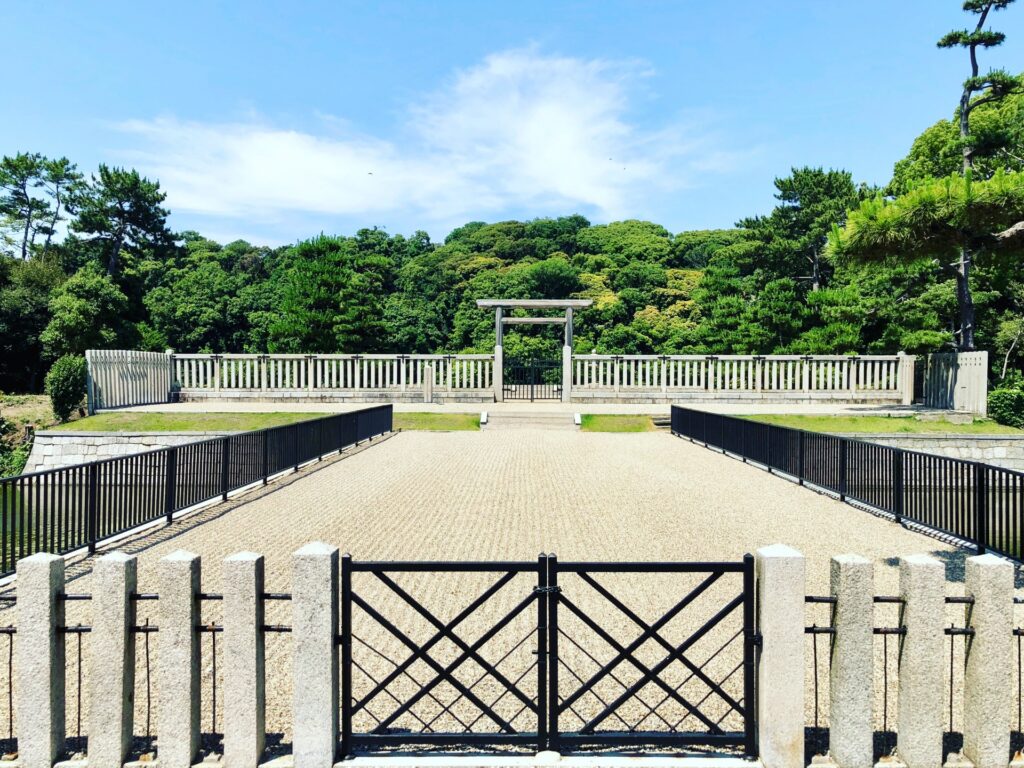
Some kofun are traditionally identified as imperial tombs associated with emperors or imperial family members. These sites are managed by the Imperial Household Agency.
Because of this status, access is usually restricted, interiors cannot be entered, and photography or visitor behavior may be regulated. Visitors should view these sites respectfully from designated outer paths.
FAQ
Why are some kofun keyhole-shaped?
Keyhole-shaped kofun are visually distinctive and unique to Japan. While their exact meaning is debated, they are strongly associated with elite power and ritual display.
What’s inside a kofun?
Most contain burial chambers with coffins and grave goods, but access is generally restricted today to protect the sites.
Are there really around 160,000 kofun?
Kofun are found across Japan in very large numbers, ranging from small local mounds to massive elite tombs, making them one of the most widespread archaeological features in the country.
Conclusion
Kofun (古墳) are ancient burial mounds that give the Kofun Period its name and offer a direct window into early Japanese society. They are not just “old tombs,” but landmarks of political power, belief, and cultural exchange.
For travelers, knowing what kofun are can transform a quiet, tree-covered hill into a meaningful historical site and deepen appreciation for the landscapes of Osaka, Nara, and beyond.