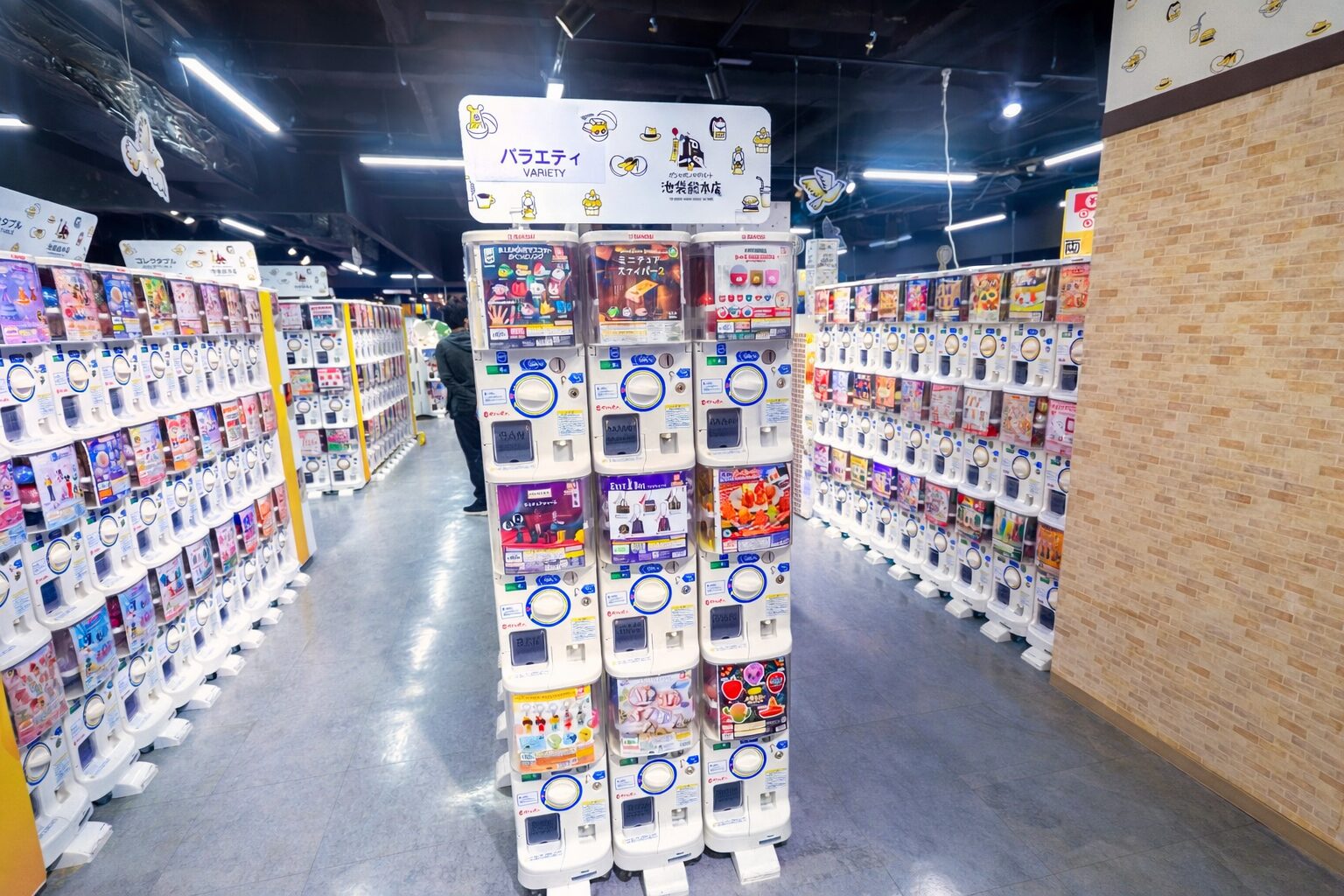
Walking through Tokyo, you will inevitably see walls of colorful machines stacked on top of each other. These are “Gachapon” (capsule toys)—one of Japan’s most fascinating pop culture phenomena.
While they may resemble the gumball machines found in Western supermarkets, Japanese Gachapon are in a league of their own. Far from simple toys, these are high-quality, intricately detailed collectibles—ranging from realistic miniature furniture to bizarre concepts like a cat waiting for a bus. Usually costing between 100 to 500 yen, they make for the perfect, affordable souvenir.
This guide explains what Gachapon is, the correct history behind the names, and how to play step-by-step so you can enjoy them like a local.


What is Gachapon? A Cultural Introduction
Gachapon (also spelled “Gashapon”) refers to Japan’s capsule toy machines. The term is onomatopoeic: “Gacha” mimics the sound of turning the machine’s crank, and “Pon” represents the capsule dropping into the collection tray.
Did you know? The Names are Trademarks While locals use various names interchangeably, they are actually registered trademarks.
- “Gashapon” (Reg. 1985): Bandai’s official brand name.
- “Gacha Gacha” (Reg. 1988): Often used as a generic term by locals.
- “Gachapon” (Reg. 2002): Another common variation.
These machines are a staple of Japanese pop culture, found in train stations, arcades, and department stores. Priced from 100 to 500 yen per capsule, Gachapon toys appeal to all ages. Their popularity stems not only from their affordability but also from the charm of randomness and the detailed quality of the items.
The History and Evolution of Gachapon
Gachapon originated in Japan in the 1960s, inspired by American gumball machines. However, the turning point was 1977, when Bandai entered the market with higher-quality toys, transforming them from cheap trinkets into desirable collectibles.
In the 1980s, the industry saw a boom as character merchandising expanded. The 1983 “Kinnikuman” (Muscle Man) eraser boom cemented Gachapon as a staple of Japanese culture. The 1990s and 2000s brought a collector’s culture, with limited edition series and themed collections increasing their appeal.
Major Milestones:
- 1965: First toy capsule machines appear in Japan.
- 1977: Bandai enters the market (revolutionizing quality).
- 1983: Licensed character toys (Kinnikuman) surge in popularity.
- 2000s: Rare item series and adult-targeted collections emerge.
- 2020s: Online Gachapon services launch, enabling global access.
What Can You Get from a Gachapon Machine?
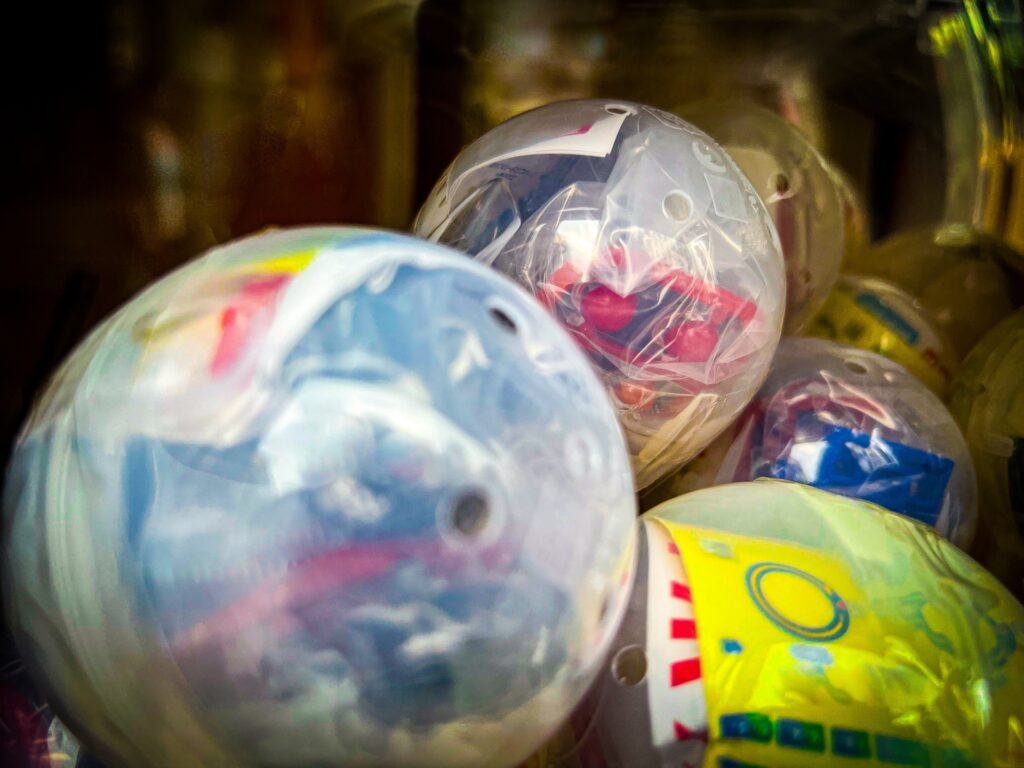
Gachapon machines offer a dizzying variety of items. While anime figures remain a popular choice, you’ll also find keychains, miniature food replicas, animals dressed in clothing, tiny household items, and novelty gadgets.
Each series usually includes 4 to 6 variations, and part of the appeal is the mystery of which one you’ll receive. Items are often categorized into tiers based on rarity. Limited editions and event-exclusive Gachapon can become highly sought-after collectibles.
| Category | Common Items | Rare/Exclusive Items |
| Anime | Character figures, pins | Limited variants, holographic versions |
| Lifestyle | Mini stationery, home goods | Brand collabs, seasonal themes |
| Novelty | Funny animals, mascots | Gachapon x Art exhibitions |
How to Use a Gachapon Machine
Using a Gachapon machine is simple, but there are a few local rules. Most machines are analog and accept cash only.
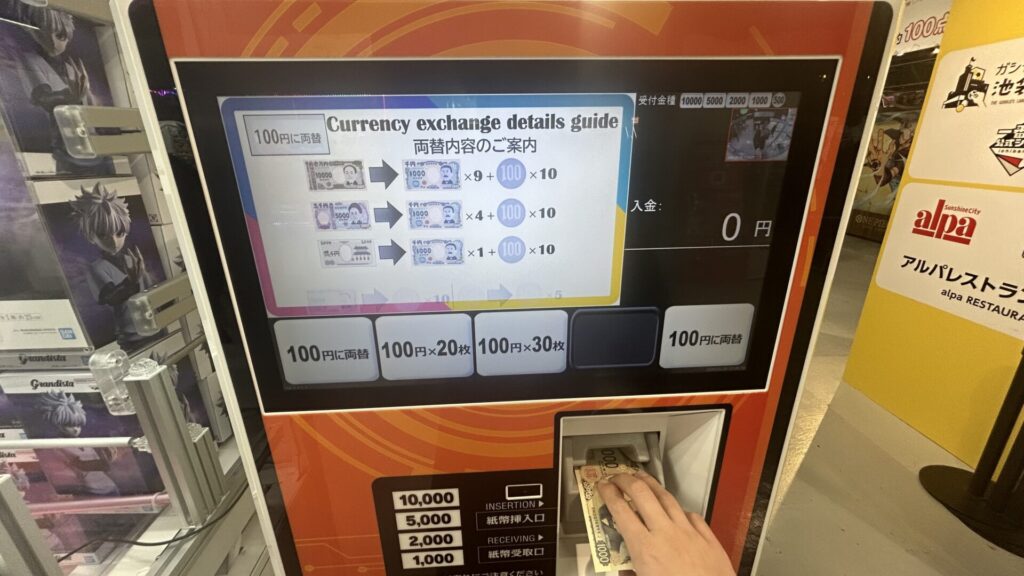
Step 1: Get 100-Yen Coins (The “Ryogae” Trick) Machines exclusively accept 100-yen coins. You cannot use 500-yen coins or bills directly.
- No coins? Look for a small machine nearby called “Ryogae” (Money Changer). Insert a 1,000-yen bill, and it will dispense ten 100-yen coins.
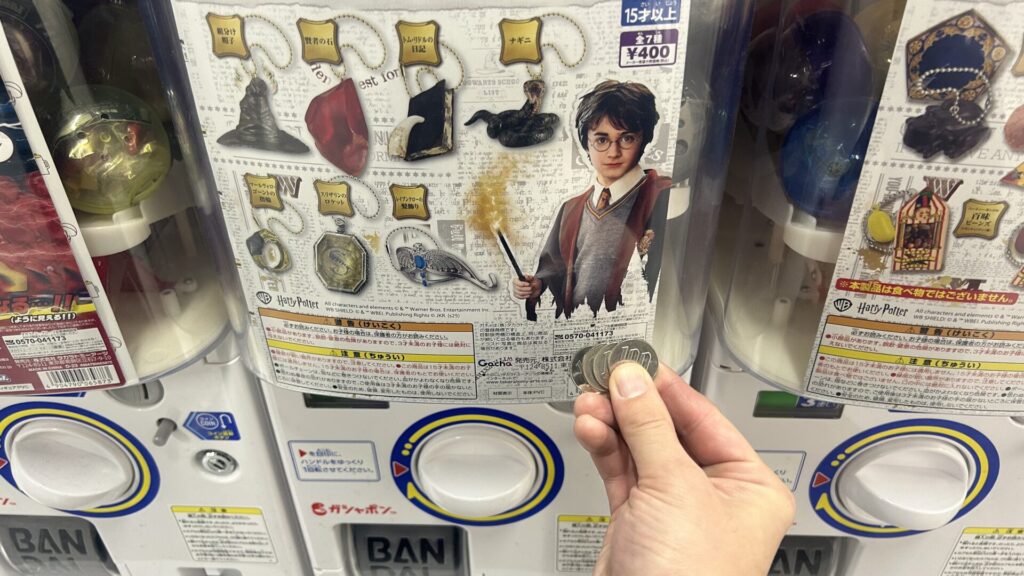
Step 2: Check Price & Stack Coins Check the price (usually 300–500 yen). Stack the required number of 100-yen coins and insert them into the slot slowly.
- Tip: Make sure to push the coins all the way in.
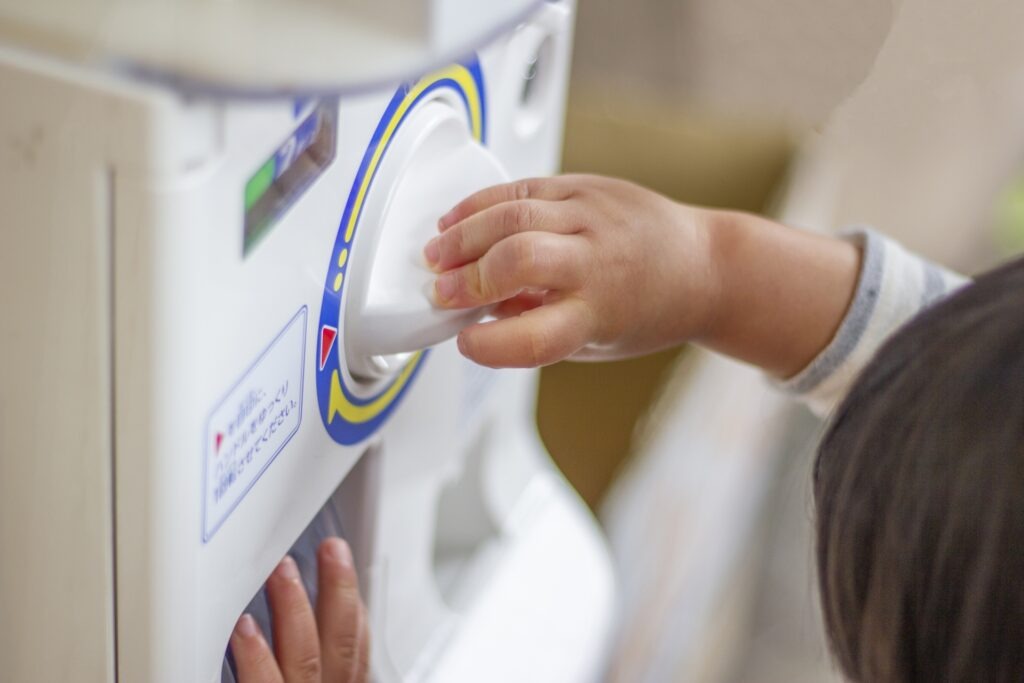
Step 3: Turn the Handle Turn the handle clockwise fully until you hear the “Gacha” sound and the capsule falls (“Pon”).
Step 4: Open the Capsule Retrieve your capsule from the bottom tray. Most capsules are sealed with clear tape.
- How to open: Peel off the tape first, then squeeze the center of the capsule to pop it open.
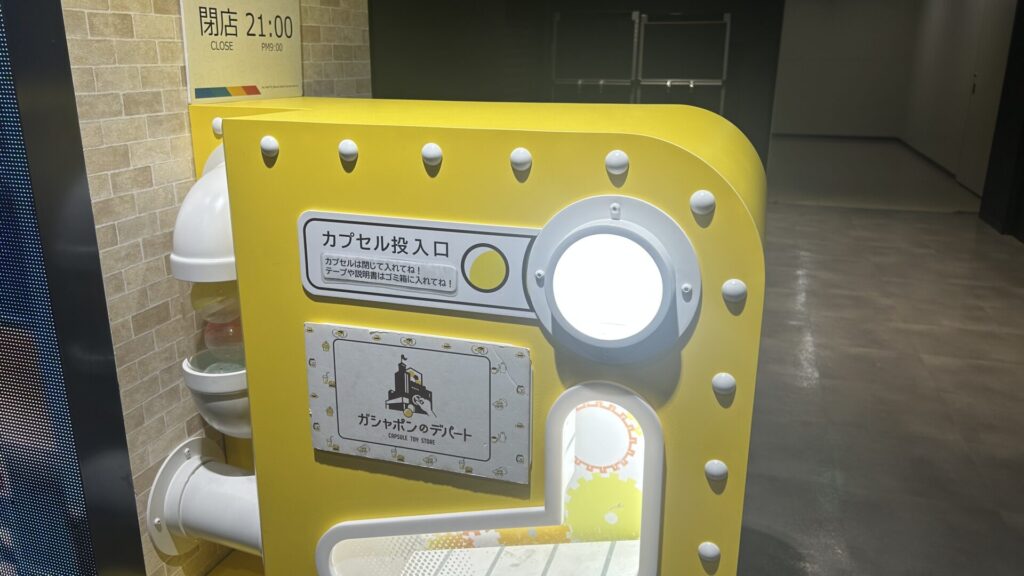
Step 5: Recycle the Capsule (Etiquette) Once you have your toy, please put the empty plastic shell in the designated return box next to the machines. Do not throw it in the regular trash.
Where to Find Gachapon in Japan
You can find Gachapon almost everywhere in Japan, but some areas are particularly famous:
1. Akihabara (Tokyo) A Gachapon paradise, especially the famous Gachapon Kaikan and the massive section at Yodobashi Camera.
💡 Recommendation: Explore with a Local Guide Akihabara is a maze of hundreds of shops. If you want to efficiently find rare Gachapon machines or deep-dive into the Otaku culture, we highly recommend the Akihabara Pop Culture Tour by ShibaInuTour. Their local guides know exactly where the hidden gems are located.
2. Ikebukuro (Tokyo) Home to the Gashapon Department Store in Sunshine City, which holds the Guinness World Record for the most machines in one location (over 3,000!).
3. Other Spots
- Kansai International Airport: Ideal for last-minute capsule fun before you leave Japan.
- Don Quijote Stores: Nationwide discount chains that often have Gachapon corners open late at night.
Online Gachapon: The Digital Capsule Toy Experience
If you can’t visit Japan, don’t worry—online Gachapon platforms let you enjoy the experience remotely. These services simulate real-life machines through digital interfaces and ship the capsules to your address.
These platforms offer themed drops, rarity tracking, and even virtual unboxing animations. Some let you spin specific series multiple times or trade within a community. It’s a great option for international fans who want the Gachapon thrill.
Is Gachapon Gambling? Ethics and Cultural Perception
Gachapon shares characteristics with gambling: random rewards and potential repeat purchases. However, it is generally not classified as gambling under Japanese law because every spin guarantees a prize.
Compared to Western loot boxes in video games, Gachapon are more transparent: odds are often posted, and no spin results in “nothing.”
Cultural attitudes in Japan view Gachapon as a fun, harmless pastime, not unlike sticker collections or trading cards. Some machines carry age recommendations, but no legal restrictions exist. Still, critics point out concerns over plastic waste and consumer impulse behavior.
Collecting Gachapon: Tips, Storage & Resale Culture
For collectors, Gachapon is more than a toy—it’s a passion. Organizing your collection can enhance both enjoyment and value.
Storage Tips
- Use clear display boxes or shadow frames
- Store series together for visual impact
- Label rare items for easy access
Trading & Resale
- Join collector communities on Instagram (#gachaponcollection)
- Visit trading spaces in Akihabara or Ikebukuro
- Sell duplicates on eBay or Japanese platforms like Mercari
Tracking rarity, especially for themed series or discontinued lines, can increase your collection’s worth over time.
Summary: Why Gachapon Captivates the World
Gachapon toys are a joyful blend of mystery, design, and pop culture. Their compact charm, affordability, and collectibility have helped them grow from local vending novelties to international phenomena. They offer a uniquely Japanese experience that balances surprise with artistry.
From bustling machines in Tokyo to digital platforms abroad, Gachapon represent a fascinating slice of modern consumer culture.