Utagawa Hiroshige art represents one of the most poetic and emotionally resonant achievements in Japanese visual culture. Celebrated for his atmospheric ukiyo-e landscape prints, Utagawa Hiroshige captured the rhythms of travel, weather, and seasonal change during Japan’s Edo period. His images—quiet roads in the rain, snow-covered bridges, twilight skies over rivers—continue to resonate with modern audiences and profoundly shaped Western art movements in the 19th century.
This in-depth guide explores who Hiroshige was, what defines his art, his most famous series, the techniques behind his woodblock prints, and why his legacy still matters today.


Who Was Utagawa Hiroshige?
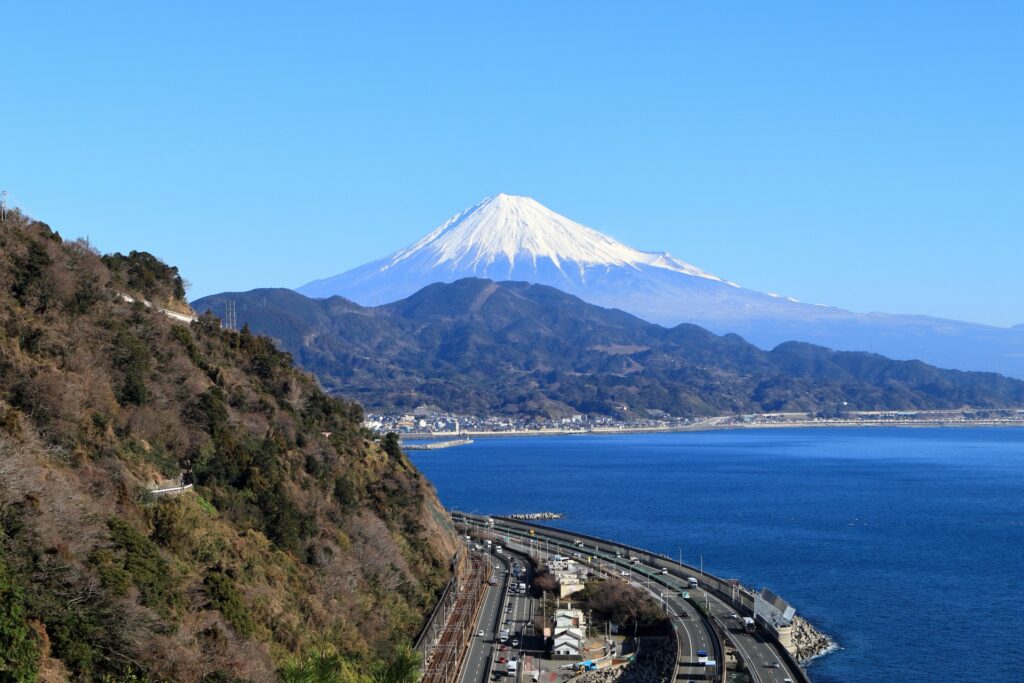
Utagawa Hiroshige was born in 1797 in Edo (modern-day Tokyo) under the name Andō Tokutarō. Raised in a samurai family of modest rank, he initially worked as a fire warden, a position that allowed him enough stability to pursue art. He later adopted the professional name Hiroshige after joining the Utagawa school, one of the leading ukiyo-e studios of the time. His career unfolded during the late Edo period, a time of urban growth, expanding travel culture, and rising literacy among common people.
Within the ukiyo-e tradition, Hiroshige stood apart. While many artists focused on kabuki actors (yakusha-e) or beautiful courtesans (bijin-ga), Hiroshige specialized in landscapes. His work coincided with a cultural shift: travel routes such as the Tōkaidō road became popular subjects, reflecting both physical journeys and inner contemplation. Compared with contemporaries like Katsushika Hokusai, Hiroshige favored lyrical subtlety over dramatic spectacle, emphasizing mood rather than monumentality.

What Defines Utagawa Hiroshige Art?
Utagawa Hiroshige art is defined by poetic realism—images grounded in real locations yet infused with emotion and atmosphere. Rather than idealizing nature, Hiroshige depicted the lived experience of being within it: sudden downpours, misty mornings, fading daylight. His compositions often feel intimate and immersive, inviting viewers to imagine themselves standing on a bridge or walking a roadside path.
A defining feature of his style is emotional restraint. Hiroshige rarely used exaggerated gestures or dramatic action. Instead, he relied on subtle color transitions, asymmetrical compositions, and carefully placed human figures to evoke reflection. This understated quality felt strikingly modern to Western audiences encountering Japanese prints in the 19th century, influencing painters seeking new ways to represent space, light, and everyday life.
Key Themes in Hiroshige’s Artwork
Several recurring themes unify Hiroshige’s work. Travel culture is central: roads, bridges, ferries, and inns symbolize both physical movement and life’s journey. Nature and impermanence—often described through the Japanese aesthetic concept of mono no aware—appear through fleeting moments like falling snow or blossoms at peak bloom. Humans are present but small, reinforcing harmony between people and environment.
Seasonality plays a powerful symbolic role. Rain suggests transience, snow conveys silence and stillness, and twilight hints at reflection. These motifs resonated deeply with Edo-period viewers and continue to feel universal today.
Famous Utagawa Hiroshige Art Series
Serialized print sets were central to ukiyo-e publishing, allowing artists to explore themes over time and build public anticipation. Hiroshige mastered this format, using repetition with variation to tell visual stories of travel and place. His series appealed to Edo audiences fascinated by famous routes and urban landmarks—places they might visit or dream of seeing.
The Fifty-Three Stations of the Tōkaidō
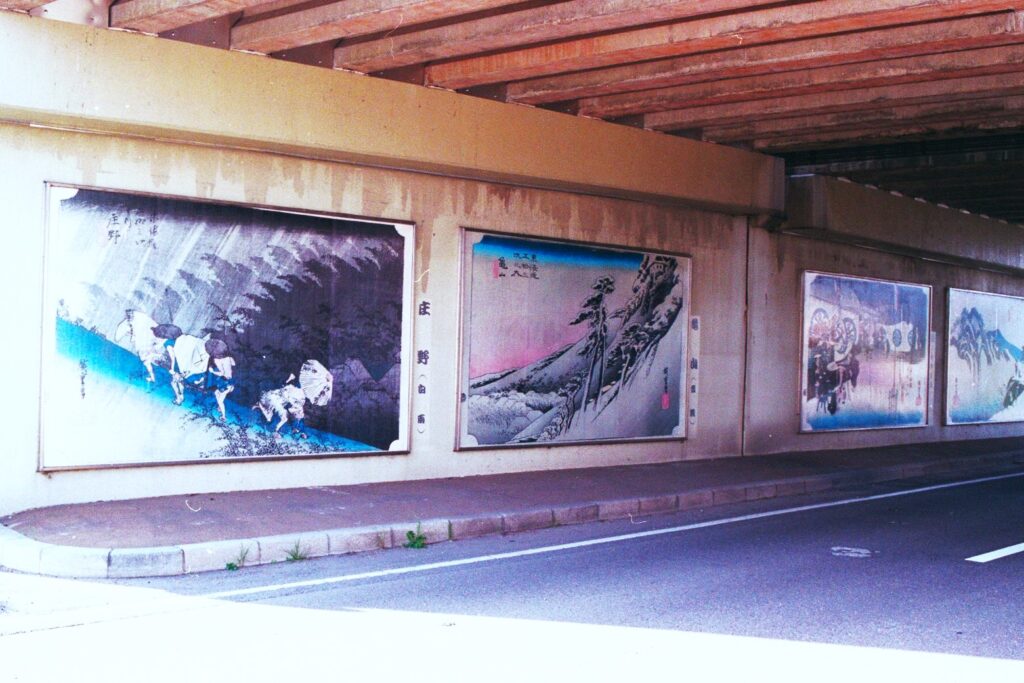
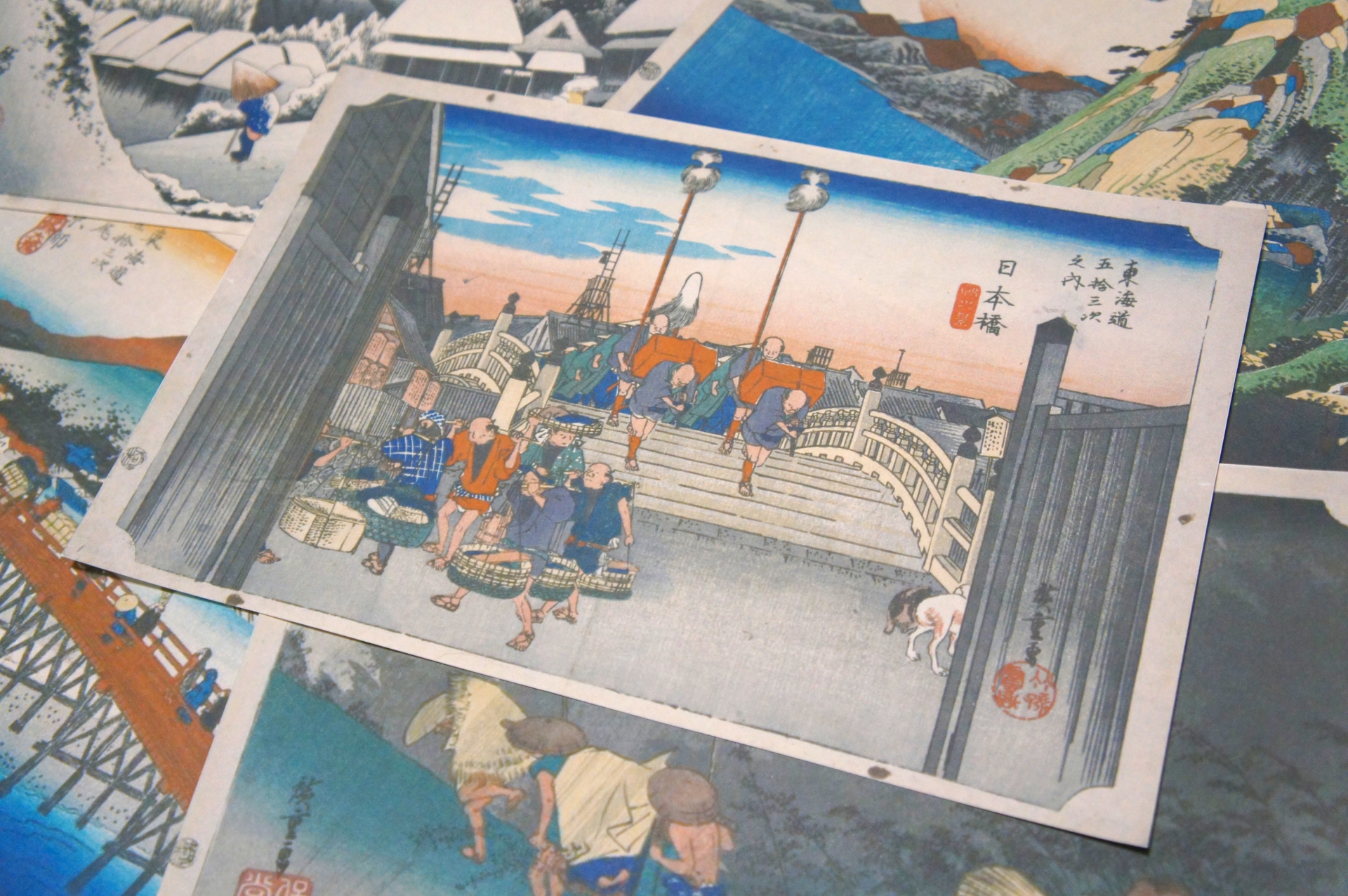
The Fifty-three Stations of the Tōkaidō is Hiroshige’s most famous work and the series that established his reputation. Depicting the official road connecting Edo and Kyoto, each print portrays a station along the route, blending topographical accuracy with poetic interpretation. Travelers appear caught in rainstorms, resting at inns, or crossing rivers, creating a sense of narrative continuity.
The series captured the imagination of the public and set a new standard for landscape ukiyo-e. Its success inspired numerous editions and imitators, cementing Hiroshige’s status as a master of the genre.
One Hundred Famous Views of Edo
Later in his career, Hiroshige created One Hundred Famous Views of Edo, a groundbreaking exploration of urban life. Using bold vertical formats and dramatic cropping, Hiroshige reimagined familiar locations from unexpected angles. Prints such as Plum Garden at Kameido became iconic and were later copied by Western artists.
This series demonstrates Hiroshige’s experimental spirit, pushing compositional boundaries while remaining rooted in everyday experience.
Techniques Behind Hiroshige’s Woodblock Prints
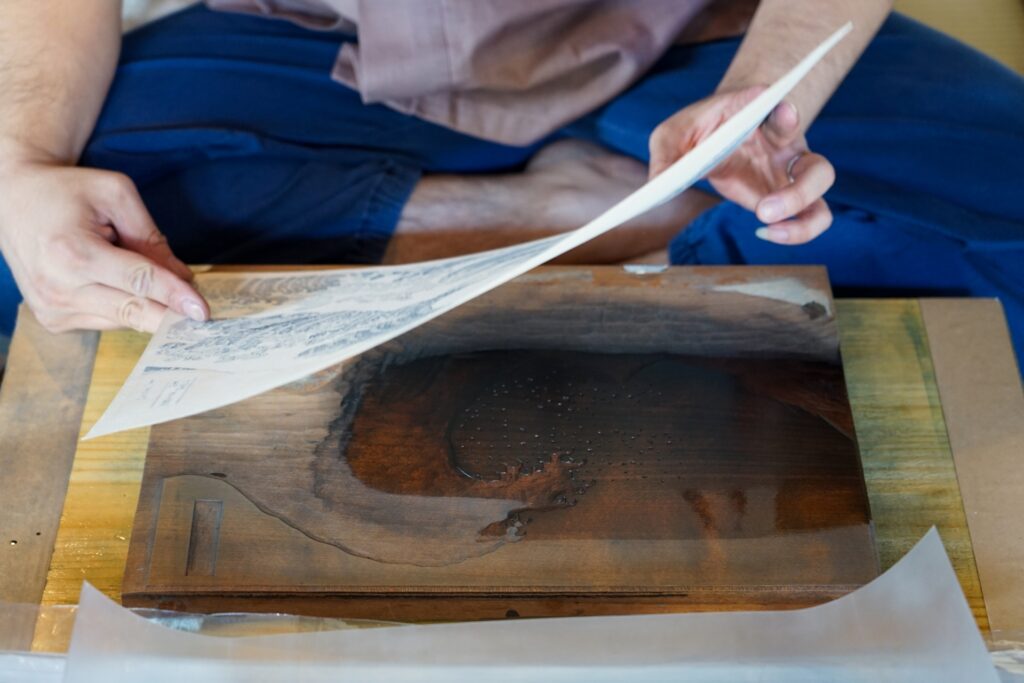
Ukiyo-e prints were collaborative creations involving a designer, carver, printer, and publisher. Hiroshige’s genius lay in his artistic decisions—how he used this system to achieve nuanced effects. He worked closely with skilled craftsmen to translate his designs into prints that balanced precision with expressive softness.
Rather than overwhelming viewers with detail, Hiroshige emphasized clarity and mood, allowing technical mastery to serve emotional impact.
Color, Bokashi, and Composition
One of Hiroshige’s signature techniques was bokashi, a method of color gradation that creates soft transitions between hues. Unlike flat color areas, bokashi adds depth and atmosphere, particularly effective in skies, water, and mist. Hiroshige also framed scenes using foreground elements—tree branches, bridges, boats—to guide the viewer’s eye and enhance spatial depth.
These innovations contributed to the immersive quality of his prints and influenced later developments in modern art.
Hiroshige’s Influence on Western Art
Hiroshige played a crucial role in the wave of Japonism that swept Europe in the 19th century. His prints reached artists seeking alternatives to academic realism, inspiring new approaches to composition and color. Impressionist and Post-Impressionist painters admired his asymmetry, flattened space, and focus on everyday scenes. Vincent van Gogh famously copied Hiroshige prints, translating their compositions into oil paint.
Through this cross-cultural exchange, Hiroshige helped reshape global art history.
How to Appreciate Utagawa Hiroshige Art Today
To fully appreciate Hiroshige’s art, view prints slowly and attentively. Notice how weather effects guide emotion, how perspective creates movement, and how small human figures anchor vast spaces. Many major museums worldwide hold outstanding collections, including the Art Institute of Chicago and Tokyo’s Ota Memorial Museum.
Hiroshige’s themes—travel, seasons, fleeting beauty—remain deeply relatable in a fast-changing world.
Summary: Why Utagawa Hiroshige Art Still Matters
Utagawa Hiroshige stands as a master of landscape ukiyo-e, redefining how everyday life and nature could be represented through print. His innovations in composition, color gradation, and emotional subtlety continue to influence artists and captivate viewers worldwide. By transforming ordinary journeys into moments of reflection, Hiroshige’s art invites us to slow down and appreciate the beauty of impermanence—an enduring value at the heart of Japanese culture and the Japambience philosophy.