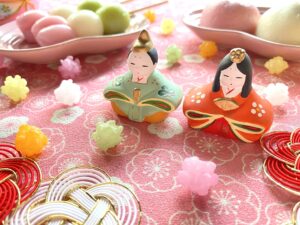
Hina dolls are one of the most iconic representations of Japanese seasonal culture. Displayed every spring for Hinamatsuri (Girls’ Day) on March 3, these elegant dolls are far more than decorative objects. They embody prayers for a daughter’s health, happiness, and prosperous future, while also preserving centuries of Japanese aesthetics, craftsmanship, and social values.
For readers searching “Types and Symbolism of Hina Dolls,” this guide offers a complete explanation—from historical origins and traditional doll types to symbolic meanings, regional variations, and modern adaptations. Whether you are a cultural enthusiast, a parent celebrating Hinamatsuri, or a collector hoping to deepen your understanding, this article will help you appreciate why Hina dolls remain such an enduring tradition.


What Are Hina Dolls?
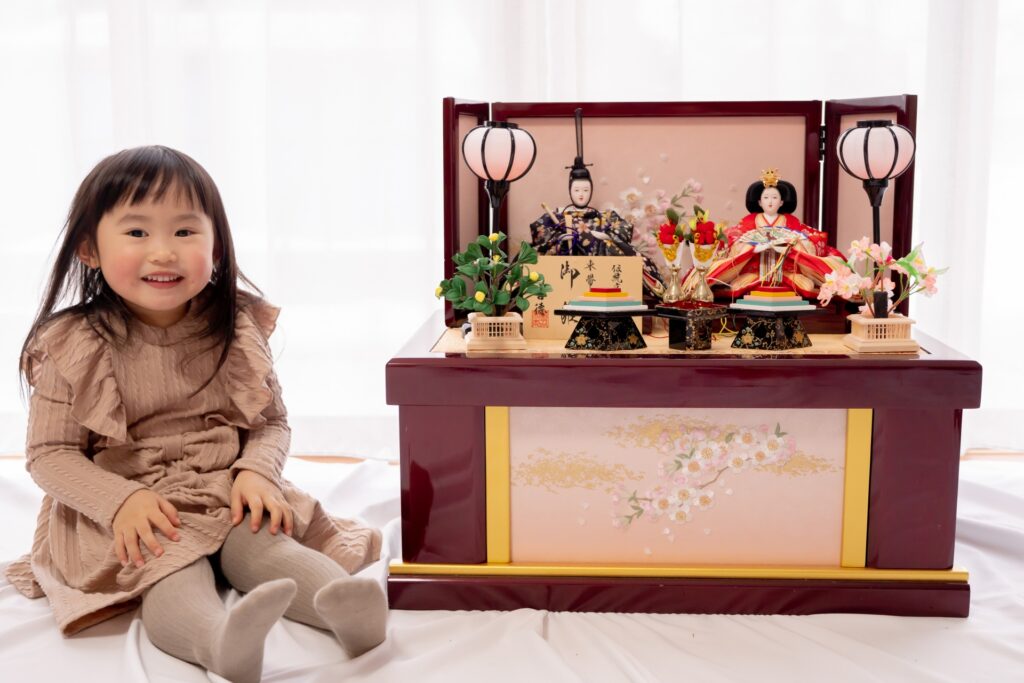
Hina dolls are ceremonial dolls displayed during Hinamatsuri, a traditional Japanese festival celebrating girls. Families set up these dolls as symbolic guardians, wishing for their daughters’ good health, emotional well-being, and a smooth, fortunate life path. Historically, the dolls were believed to absorb misfortune, protecting the child from illness or hardship.
The origins of Hina dolls trace back to the Heian period (794–1185), when aristocratic children played with paper dolls known as hina-asobi. Over time, these evolved into ritual objects. During the Edo period (1603–1868), the custom of displaying elaborate doll sets became widespread among samurai and merchant families. These displays gradually took on their current form, inspired by the refined court culture of ancient Kyoto.
Today, Hina dolls continue to serve as a bridge between past and present, honoring history while adapting to modern lifestyles.
Main Types of Hina Dolls
By Display Format
One of the most recognizable ways to classify Hina dolls is by how they are displayed.
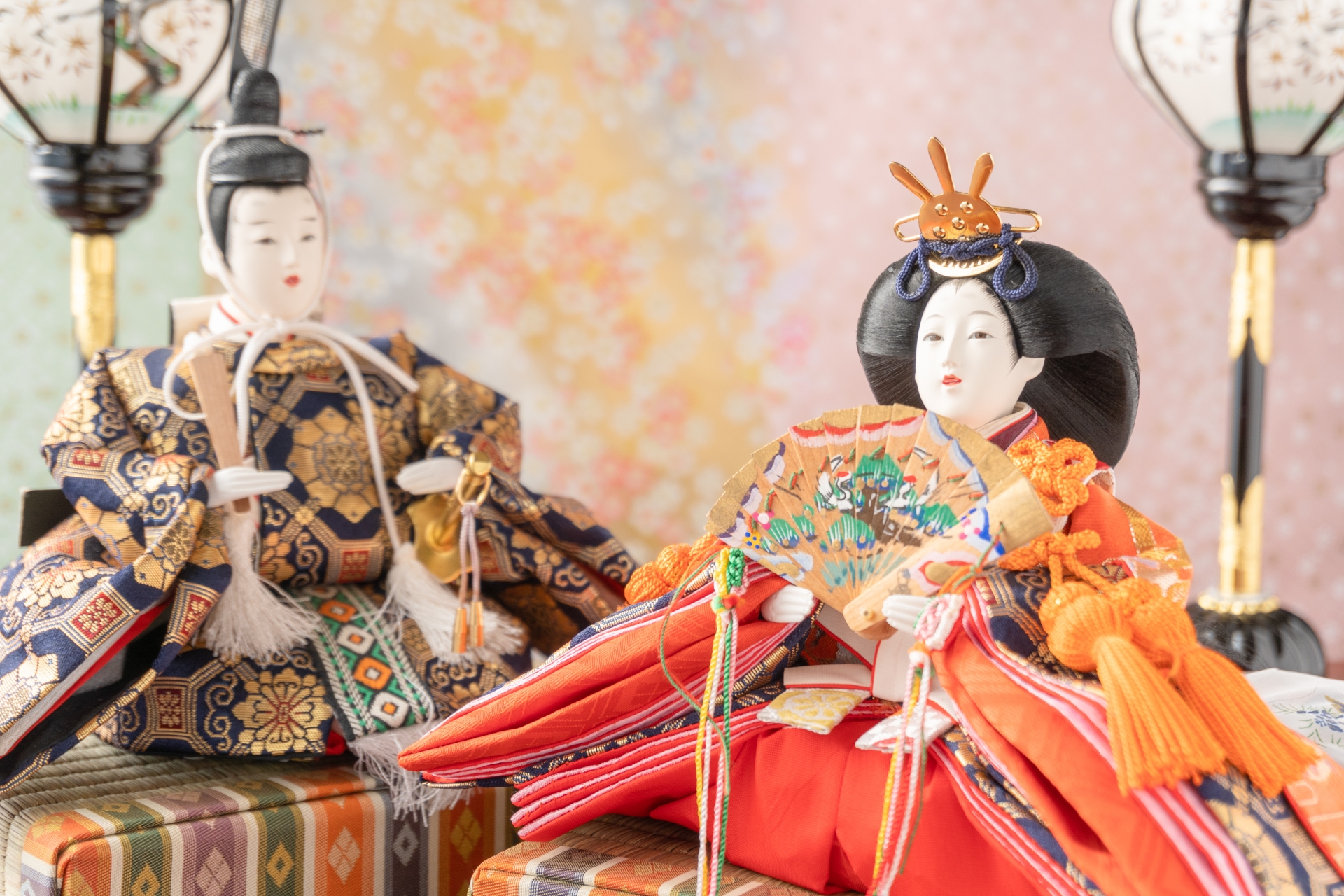
O-bina and Me-bina (Emperor & Empress Pair / 親王飾り)
This is the simplest and most popular format today. It features only the imperial couple seated in front of a gold folding screen. Compact and elegant, it suits modern homes while still preserving the core symbolism of harmony and prosperity.
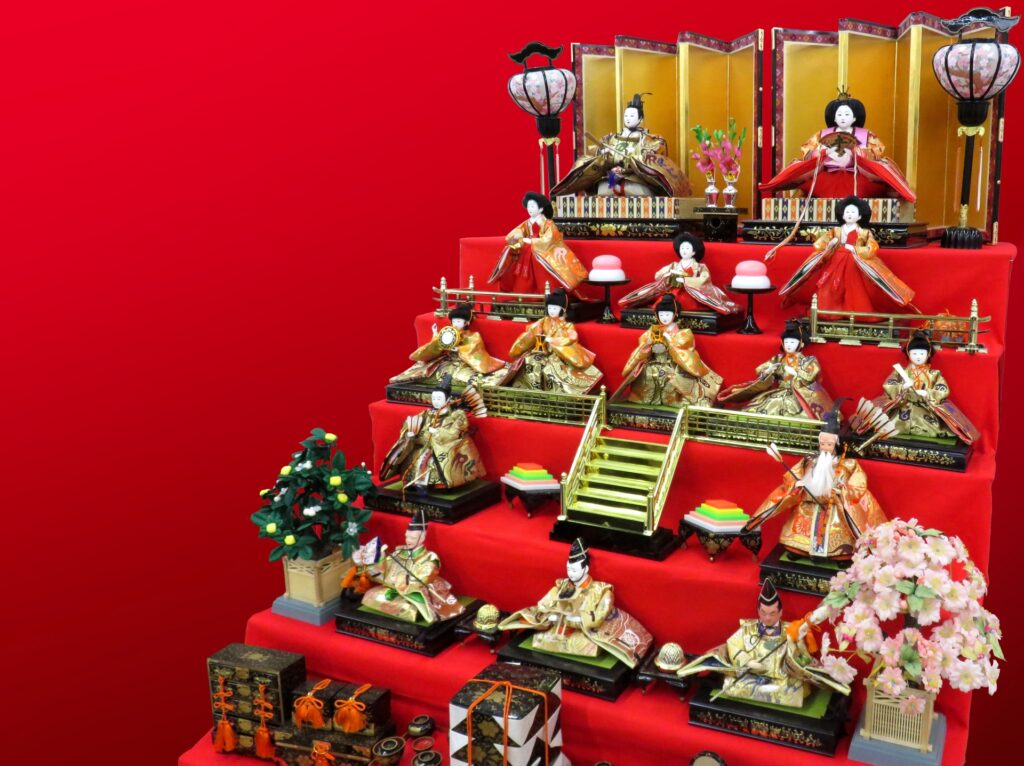
San-dan Kazari (Three-Tier Display / 三段飾り)
A step up in complexity, this display includes the imperial couple on the top tier, followed by court ladies and accessories below. It balances tradition with practicality and is often chosen by families who want symbolic completeness without needing a large space.
Shūnō Kazari (Storage Display / 収納飾り)
Designed for convenience, these dolls are stored inside the display platform itself. While modern in function, they often maintain traditional styling, making them ideal for contemporary households.
Tachi-bina (Standing Dolls / 立ち雛)
An older style rooted in early traditions, these dolls are shown standing rather than seated. They reflect ancient court aesthetics and are especially valued by collectors and museums.
By Craftsmanship Style
Beyond layout, Hina dolls are also classified by how they are made.
Ishō-gi Hina Dolls (Costume-Clad Dolls / 衣裳着人形)
These are the most luxurious and traditional type. The dolls wear layered silk kimono inspired by Heian court dress. Each garment is carefully sewn and arranged, giving the dolls depth, realism, and elegance.
Kimekomi Hina Dolls (木目込人形)
Kimekomi dolls are crafted by carving grooves into a wooden body and tucking fabric into them. They have a smooth, minimalist appearance and are often lighter and smaller. Their understated beauty appeals to modern tastes while still honoring tradition.
By Tier Configuration
The number of tiers (dan) in a Hina doll display also carries meaning.
Two-tier sets usually feature the imperial couple and accessories.
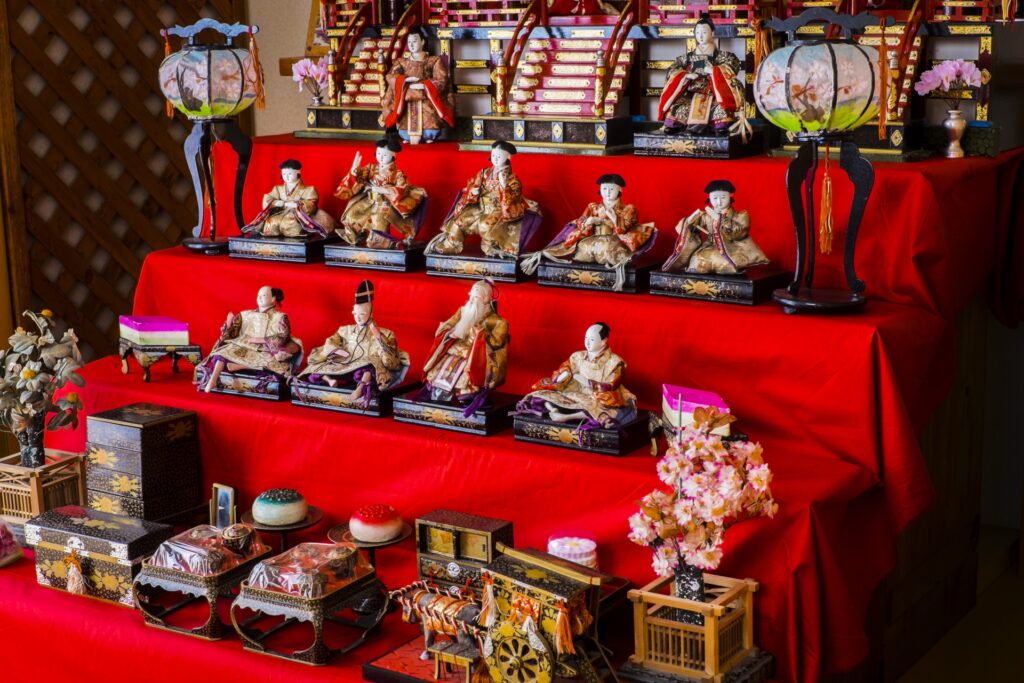
Three- to five-tier sets add court ladies, musicians, and household items.
Seven-tier displays are the most elaborate, showcasing the full imperial court with guards, servants, and symbolic furnishings.
Historically, larger tiered displays reflected wealth and status, but today families choose based on space, budget, and personal preference rather than obligation.
Symbolism of Each Doll
Emperor and Empress (O-bina & Me-bina)
The emperor and empress represent the ideal married couple, modeled after ancient imperial court figures. They symbolize harmony, stability, and a prosperous future. For families, they express hopes that their daughter will grow up surrounded by respect, balance, and loving relationships.
Court Ladies (Sannin Kanjo / 三人官女)
The three court ladies serve the empress and manage ceremonial sake. Their presence represents grace, social etiquette, and emotional maturity—qualities traditionally admired in adulthood. They also reflect the importance of community and support in one’s life.
Musicians (Gonin Bayashi / 五人囃子)
These five musicians play traditional instruments such as the flute and drums. They embody joy, celebration, and cultural refinement. Symbolically, they wish for a life filled with happiness, art, and emotional expression.
Guards and Servants (Zuijin & Shichō / 随身・仕丁)
The guards protect the court, while the servants handle daily tasks. Together, they symbolize security, responsibility, and resilience, reminding families that a good life is supported by both protection and hard work.
Accessories such as gold folding screens, red carpets, lanterns, and peach blossoms further reinforce wishes for elegance, protection, and seasonal renewal.
Symbolic Meaning and Cultural Significance
At its heart, the Hina doll tradition is about protection and transition. In ancient times, people practiced nagashi-bina, a ritual where paper dolls were floated down rivers to carry away misfortune. Over centuries, this evolved into indoor displays, preserving the spiritual meaning while adapting to safer, more permanent forms.
Peach blossoms, often placed beside the dolls, symbolize vitality and warding off evil, as peaches were believed to have protective powers in East Asian culture. Together, the dolls and decorations form a symbolic prayer for growth, health, and a bright future.
Modern Interpretations & Trends
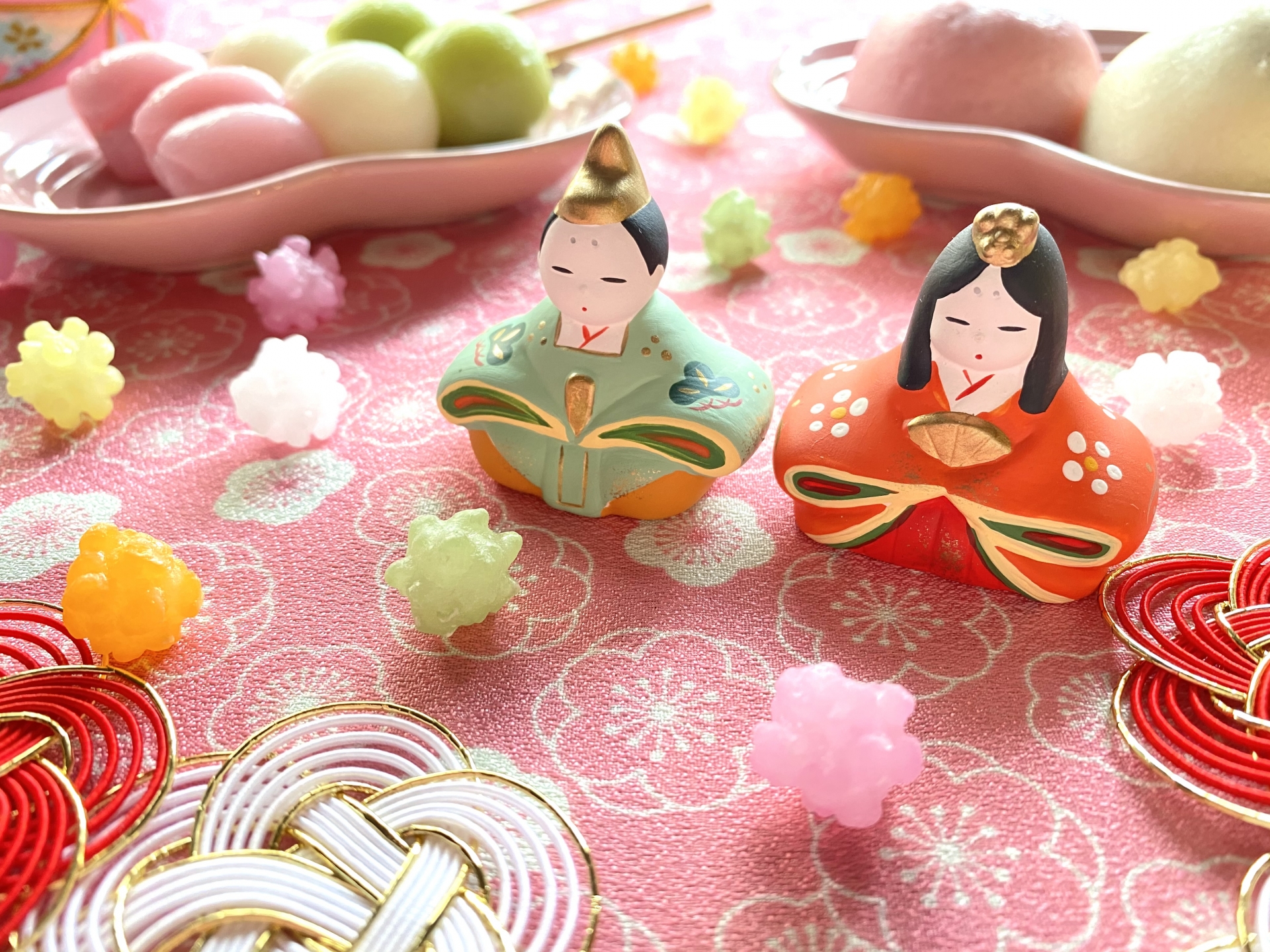
Modern Hina dolls reflect changing lifestyles. Many families now choose miniature sets, neutral color palettes, or Scandinavian-inspired designs that blend seamlessly into contemporary interiors. While the materials and aesthetics may evolve, the underlying symbolism remains intact.
Some artisans experiment with glass, ceramics, or abstract forms, proving that Hina dolls are not frozen in the past but continue to evolve as living cultural objects.
Practical Tips for Choosing and Caring for Hina Dolls
When choosing a Hina doll set, consider your available space, storage options, and how prominently you want to display it each year. There is no “correct” number of tiers—meaning comes from intention, not size.
For preservation, store dolls in a dry, cool place after Hinamatsuri ends. Proper ventilation prevents mold, and careful wrapping protects delicate fabrics. With good care, Hina dolls can be cherished heirlooms passed down through generations.
Conclusion
Understanding the types and symbolism of Hina dolls reveals why they hold such a special place in Japanese culture. From their historical roots and intricate craftsmanship to their layered meanings and modern adaptations, Hina dolls are both art and prayer, expressing hopes for happiness, protection, and a fulfilling life.
By learning what each doll represents and how different styles developed, we gain deeper appreciation for Hinamatsuri and the enduring values it celebrates.