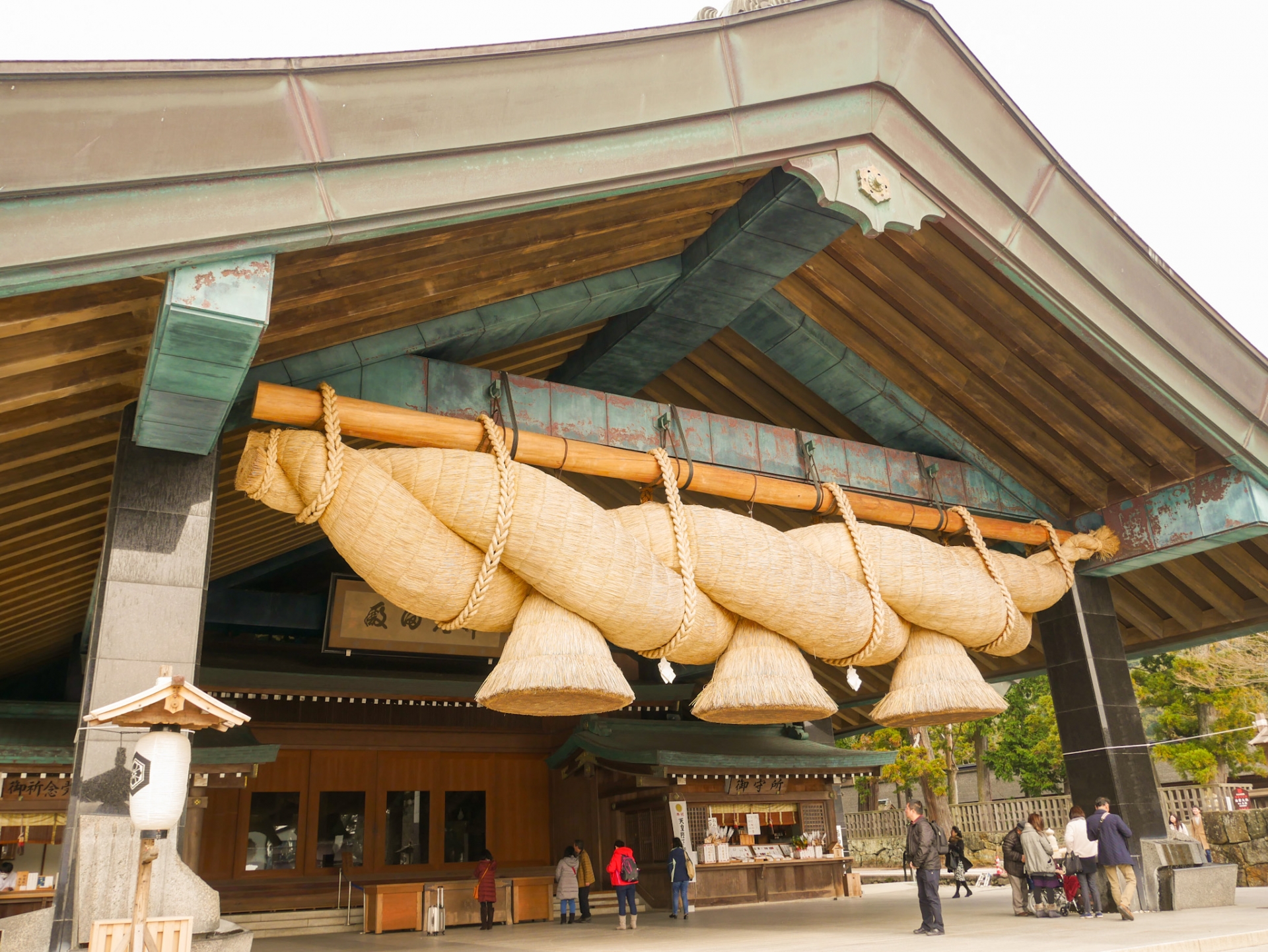
Shimenawa are far more than decorative ropes. Found at Japanese shrines, sacred trees, rocks, waterfalls, and especially during New Year celebrations, shimenawa mark spaces believed to be inhabited by kami—divine presences in Shinto belief. To many visitors, they raise immediate questions: What exactly are these ropes? Why are they sacred? Is it disrespectful to display one outside Japan?
This article offers a clear, culturally grounded explanation of shimenawa for English-speaking readers. You’ll learn what shimenawa are, how they function in Shinto, how they appear in everyday Japanese life, and how non-Japanese people can engage with them respectfully—whether for education, design inspiration, or spiritual curiosity.


What Is Shimenawa?
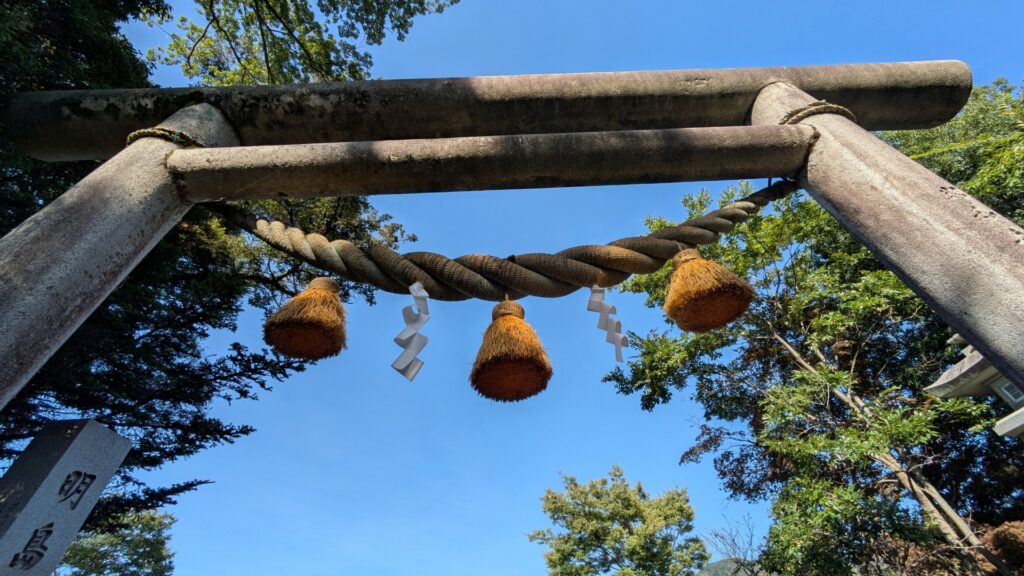
A shimenawa is a sacred rope used in Shinto to mark a boundary between the ordinary world and a space considered pure or spiritually significant. The word is pronounced shi-meh-nah-wah, and while it may look simple at first glance, its meaning is deeply symbolic.
Traditionally, shimenawa are made from twisted rice straw, a material associated with life, sustenance, and ritual purity in Japanese culture. Hanging from the rope are white zigzag paper streamers called shide, which signal that the space is ritually cleansed and suitable for the presence of kami.
The primary role of a shimenawa is not decoration, but demarcation. It tells people: this space is different. Crossing or touching it implies awareness and respect, similar to stepping onto consecrated ground in other cultures. Shimenawa can be thick and monumental—such as those at major shrines—or small and simple, as seen in homes and seasonal decorations.
“Shimenawa” and “Shimenawa” in Japanese Usage
In written Japanese, shimenawa can appear in different forms, all referring to the same object. The formal kanji is 注連縄, a visually complex set of characters often used in academic, religious, or traditional contexts.
In everyday life, however, shimenawa is very commonly written as しめ縄 in hiragana. This softer, more accessible script is especially common when referring to New Year decorations or household use. You’ll see しめ縄 frequently in shops, magazines, and instructions aimed at the general public.
For English readers, it’s helpful to know that these differences are stylistic, not conceptual. Whether written in kanji or hiragana, the meaning and cultural function remain the same. The choice of script reflects tone and context rather than a different type of object.
Religious and Cultural Meaning of Shimenawa
At the heart of shimenawa lies a core Shinto concept: the distinction between pure (sacred) space and ordinary (everyday) space. Shinto does not center on fixed doctrines or scriptures, but on maintaining harmony between humans, nature, and spiritual presence.
Shimenawa function as visible boundaries. They do not contain power themselves, nor are they worshipped. Instead, they indicate that a space has been purified and is suitable for kami. This emphasis on separation and cleanliness is fundamental to Shinto practice.
Importantly, shimenawa are about invitation, not exclusion. They don’t warn people away, but rather ask them to be mindful. The rope communicates respect, awareness, and intention—key values in Japanese religious culture.
Shimenawa and Kami in Shinto Belief
Kami are often translated as “gods,” but this can be misleading. In Shinto, kami are better understood as sacred presences or forces that inhabit natural phenomena, places, and sometimes ancestral spirits. They are not omnipotent creators, but localized, relational beings.
A shimenawa signals that a kami is present or welcomed in a particular space—sometimes temporarily, such as during a festival, and sometimes permanently, like at an ancient tree or rock. In this way, shimenawa resemble concepts such as consecrated altars or holy ground in Western traditions, while remaining distinct in their emphasis on nature and impermanence.
Where You See Shimenawa in Japan
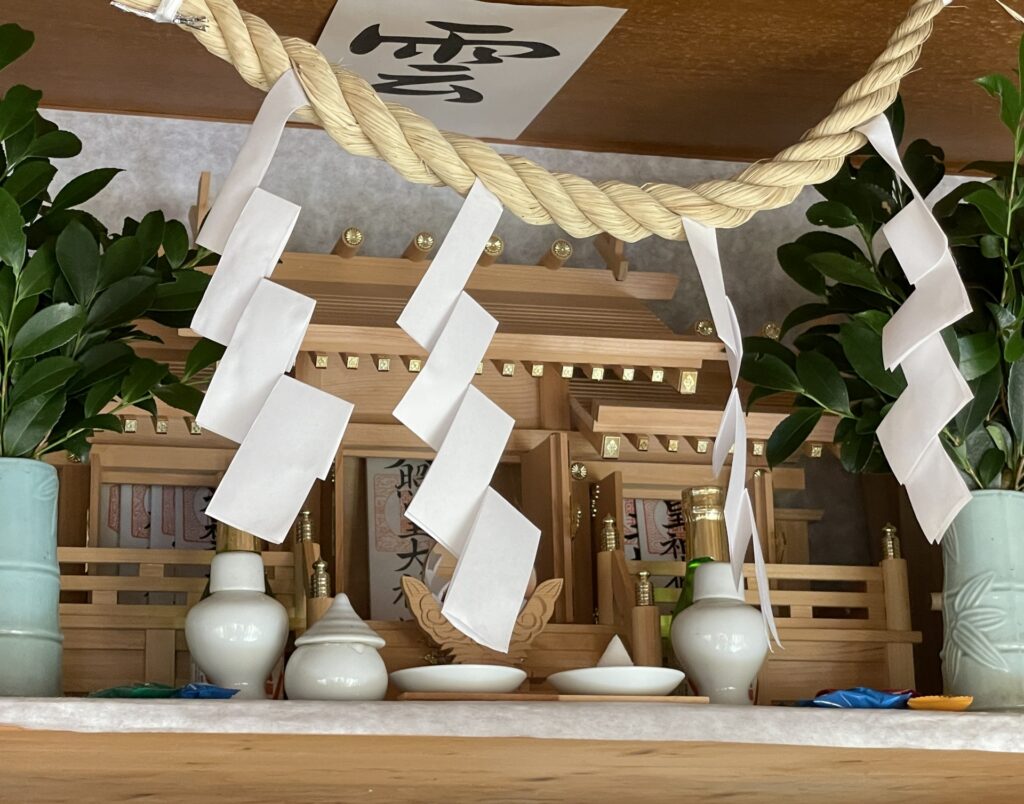
Shimenawa appear in a wide variety of settings across Japan, each with slightly different meanings depending on location and duration.
| Location | Meaning | Permanence |
| Shrines & torii gates | Marks sacred precincts | Long-term |
| Sacred trees, rocks, waterfalls | Indicates natural kami presence | Often permanent |
| Festival sites | Temporarily invites kami | Short-term |
| Homes (New Year) | Welcomes good fortune | Seasonal |
During New Year, shimenawa become especially visible, adorning entrances, altars, and businesses as symbols of renewal and purity.
Shimenawa at Shrines vs. Homes vs. Businesses
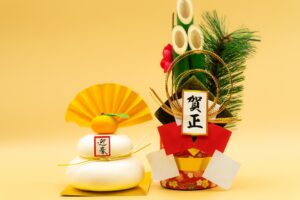
Shimenawa vary greatly depending on context. Shrine shimenawa are often large, thick, and minimally decorated, emphasizing solemnity and permanence. Household shimenawa, especially New Year decorations known as shimekazari, are smaller and may include oranges, fern leaves, or auspicious symbols.
In businesses, shimenawa are typically displayed at entrances during New Year to invite prosperity and ward off misfortune. The symbolic role shifts slightly—from marking sacred presence to expressing hope—yet the underlying idea of purity remains.
Cultural etiquette is simple: display them cleanly, intentionally, and for appropriate durations.
Shimenawa in the Home: Household Altars and Daily Life
Shimenawa are not limited to public religious spaces. Many Japanese homes have a kamidana (household Shinto altar), where a small shimenawa helps define a pure, respectful area within daily life.
In this setting, shimenawa support wishes for family safety, health, and prosperity. They act as gentle reminders of mindfulness rather than objects of constant ritual. Even in modern apartments, this practice reflects how Shinto integrates seamlessly into everyday living.
When Are Shimenawa Replaced?
Replacement timing depends on usage rather than strict rules. New Year shimenawa are replaced annually, typically in late December, before the year begins. Household altar shimenawa are also commonly renewed once a year.
At shrines, replacement follows ritual calendars or festivals, sometimes involving community participation. Across all contexts, the emphasis is on renewal and cleanliness, not rigid correctness.
How Are Shimenawa Disposed Of?
Because shimenawa mark sacred space, they are treated with respect even when no longer used. Common disposal methods include:
- Returning them to a shrine
- Ritual burning during New Year events such as dondoyaki or sagichō
If returning to a shrine is not possible, a respectful alternative is to clean the shimenawa with salt, wrap it in white paper, and dispose of it with gratitude. Intention matters more than technical perfection.
Can Non-Japanese People Use or Display Shimenawa?
This is a common concern. In general, sincere, informed use is not considered cultural appropriation. Displaying shimenawa for education, spiritual respect, or cultural understanding is widely seen as acceptable.
However, using them purely as exotic décor with no context or care may feel dismissive. A good guideline is simple: understand what it represents, and treat it respectfully.
Quick FAQ
- ✔ For learning or spiritual respect? Yes
- ✔ For mindful interior design with context? Often yes
- ✖ As random decoration with no meaning? Best avoided
Modern Interpretations and Design Uses of Shimenawa
Contemporary artists and designers increasingly reinterpret shimenawa in architecture, installation art, and minimalist interiors. These works often explore the tension between sacred symbol and aesthetic form.
While such reinterpretations can be powerful, completely stripping shimenawa of their spiritual context risks hollowing their meaning. The most successful modern uses acknowledge their origins while allowing new expressions.
Frequently Asked Questions About Shimenawa

What is a shimenawa?
A sacred Shinto rope marking pure or spiritually significant space.
Can shimenawa be used at home?
Yes, commonly at household altars or during New Year.
When should it be replaced?
Usually once a year, especially for New Year decorations.
How should it be disposed of?
By returning it to a shrine, ritual burning, or respectful disposal.
Conclusion: Understanding Shimenawa Beyond Decoration
Shimenawa are not ornaments—they are boundaries of meaning. They define sacred space, invite mindfulness, and reflect a worldview where spirituality flows naturally through daily life and nature.
By understanding shimenawa in their cultural and religious context, we move beyond surface aesthetics toward genuine cultural literacy. If this topic resonates with you, explore other Shinto symbols and Japanese traditions on Japambience, where depth and respect guide every story。