Hinamatsuri, also known as Japan’s Girls’ Day, is celebrated every year on March 3rd. Beyond the beautiful hina dolls, food plays a central role in the festival. Each dish served during Hinamatsuri carries symbolic meanings related to health, happiness, and prosperity for young girls. This article explores traditional Hinamatsuri foods, their cultural significance, regional variations, and how these traditions are enjoyed today—both in Japan and abroad.


What Is Hinamatsuri and Why Food Matters
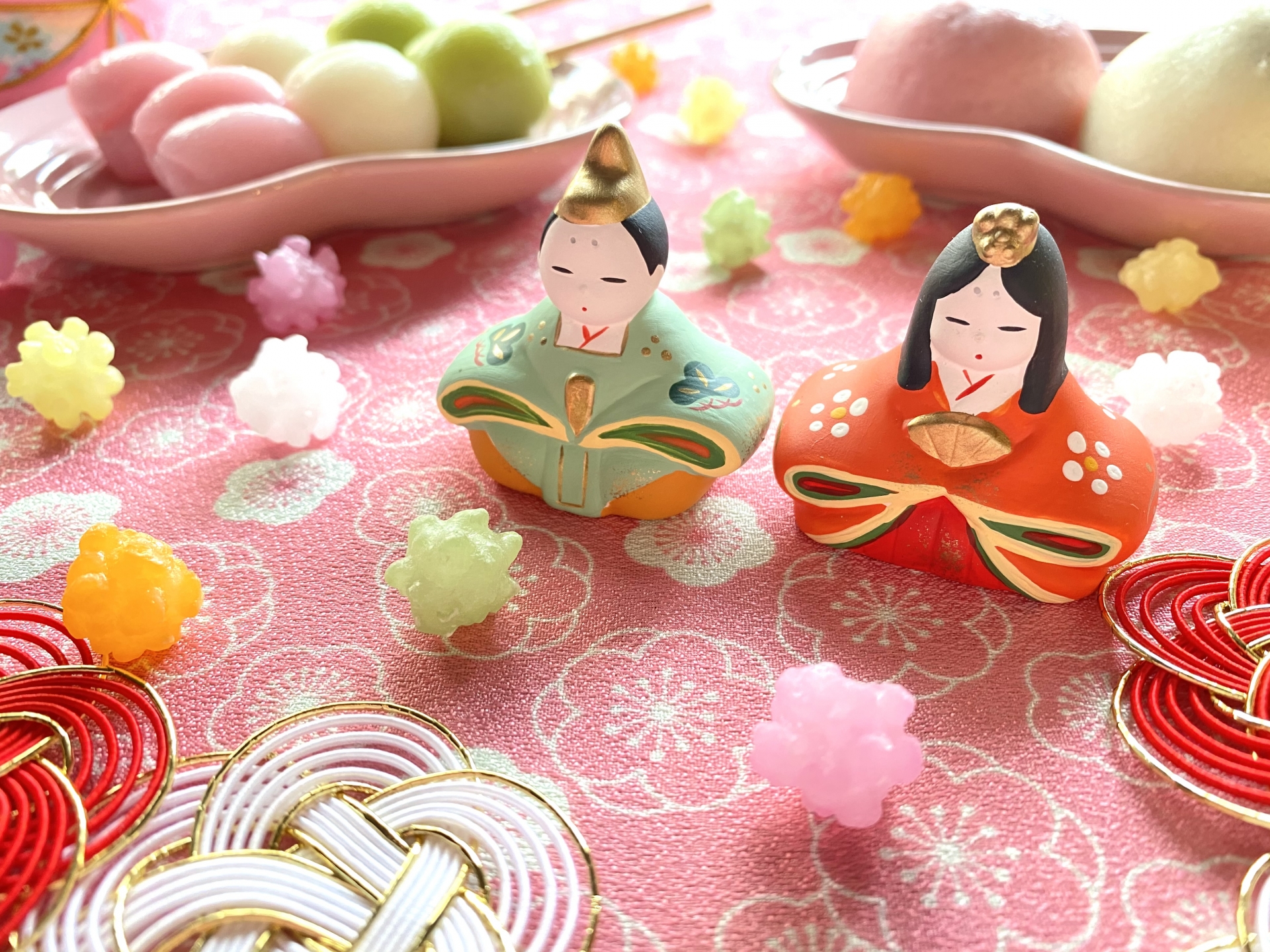
Hinamatsuri, often translated as Girls’ Day or the Doll Festival, is a traditional Japanese celebration held every year on March 3rd. Families with daughters display elegant hina dolls inspired by the imperial court of ancient Japan and offer prayers for their children’s health, happiness, and a bright future. While the dolls are the most recognizable symbol of the festival, food plays an equally important role in expressing these wishes.
In Japanese culture, food is more than something to eat—it is a way to communicate values, emotions, and hopes. This is especially true during seasonal festivals, when ingredients, colors, and presentation are carefully chosen to reflect nature and the passage of time. Hinamatsuri foods symbolize longevity, good relationships, protection from misfortune, and harmony with the seasons.
For cultural explorers and food enthusiasts, Hinamatsuri offers insight into how deeply meaning is woven into Japanese cuisine. For those celebrating outside Japan, these dishes provide a warm and accessible way to experience the spirit of the festival, even without traditional decorations.
Traditional Hinamatsuri Foods and Their Meanings
Hinamatsuri is associated with a small but meaningful selection of traditional dishes. Rather than focusing on extravagance, these foods emphasize symbolism and intention. They are typically served together as part of a family meal or small gathering, reflecting wishes for good fortune, seasonal balance, and the well-being of young girls.
Unlike festivals centered on street food or large-scale feasts, Hinamatsuri meals are carefully prepared and visually harmonious. Gentle flavors, soft colors, and seasonal ingredients are key elements. The dishes below form the foundation of Hinamatsuri food traditions and have been passed down for generations because of the messages they carry.
Chirashi Sushi (ちらし寿司)
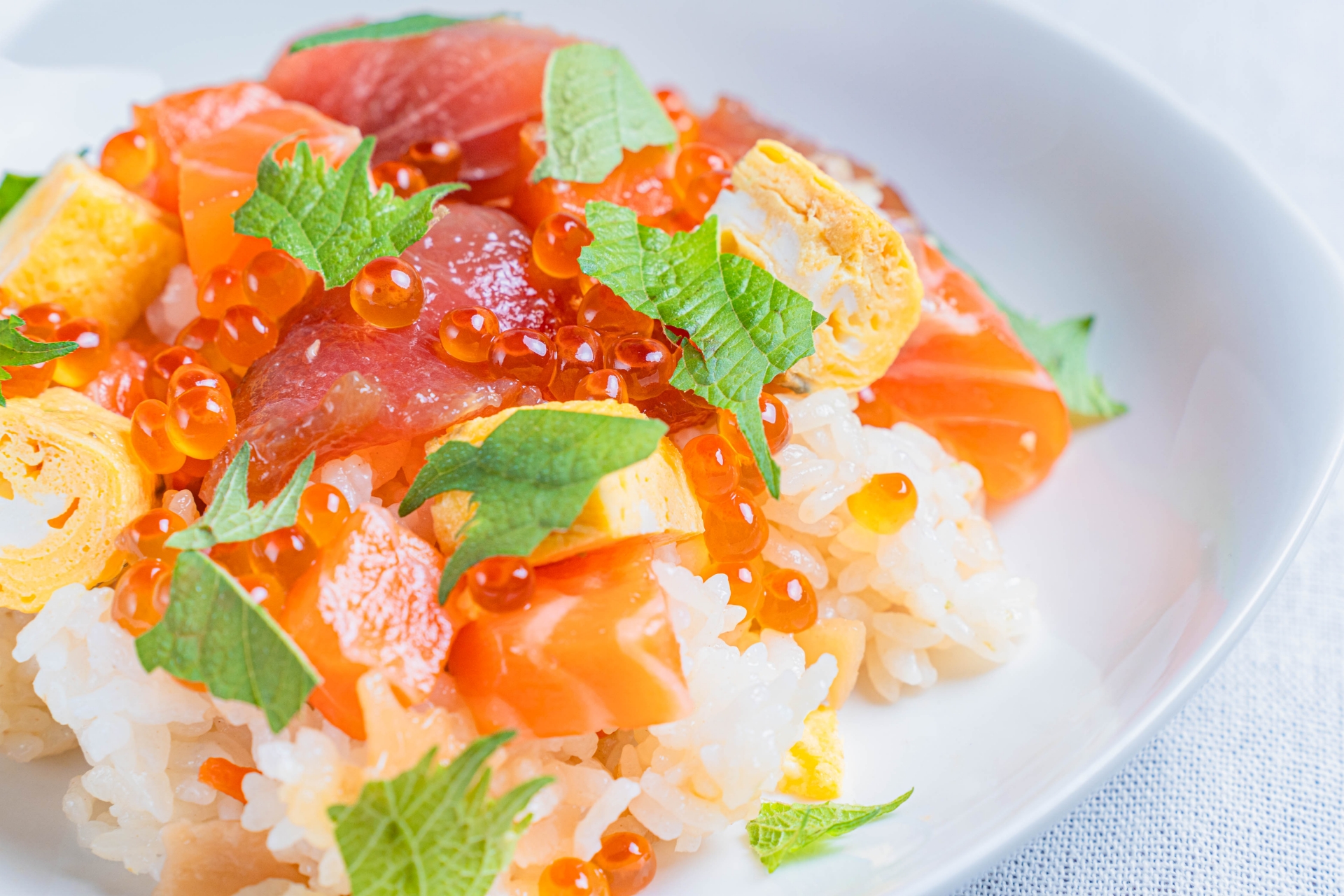
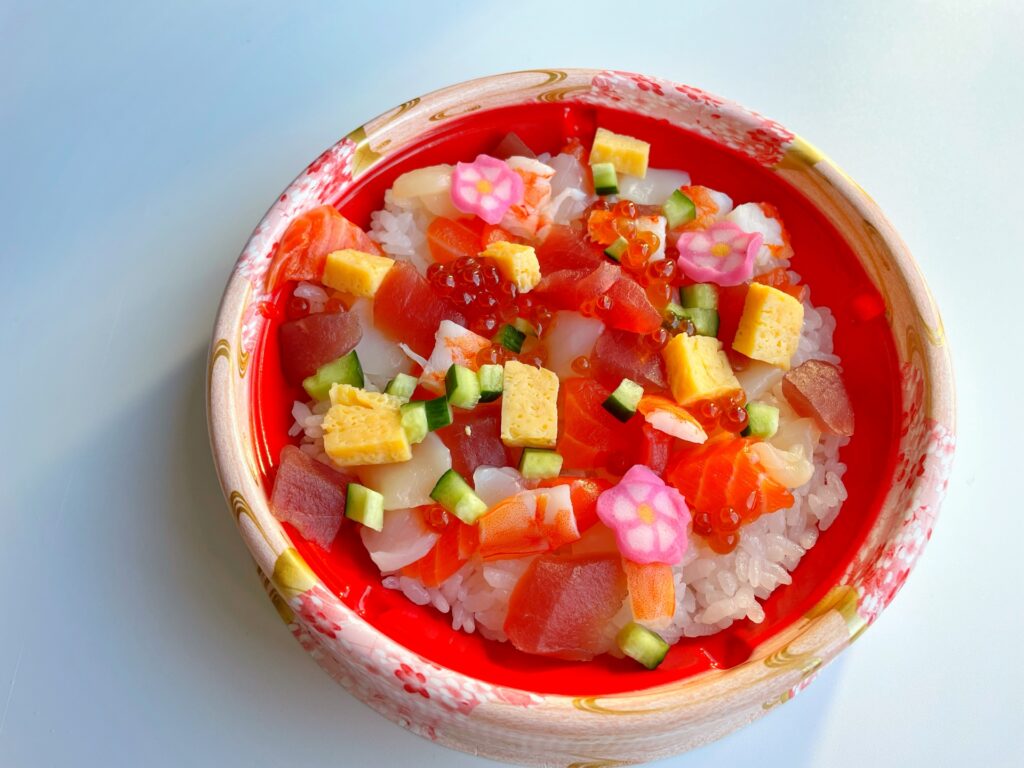
Chirashi sushi is the most iconic dish associated with Hinamatsuri. Instead of rolled or pressed sushi, this style features vinegared rice topped with a colorful assortment of ingredients, making it ideal for celebrations. Common toppings include shrimp, lotus root, egg, mushrooms, and seasonal vegetables, all arranged to create a visually festive presentation.
Each topping carries symbolic meaning. Shrimp, with its curved shape, represents longevity and a long life. Lotus root, which has visible holes, symbolizes foresight and the ability to see clearly into the future. Egg, often prepared as thin strips, is associated with prosperity, wealth, and new beginnings. Together, these ingredients express parents’ hopes that their daughters will grow up healthy, wise, and fortunate.
Chirashi sushi is also practical for home celebrations. It can be prepared in advance, easily shared, and customized to suit different tastes, making it a natural choice for family gatherings.
Clam Soup (Hamaguri no Osuimono)
Clam soup is a clear, delicately seasoned dish made with hamaguri clams. It holds one of the most well-known symbolic meanings in Hinamatsuri traditions. Hamaguri clams are unique because each shell pairs perfectly with only one matching half. For this reason, they have long symbolized harmony and lifelong partnership.
Serving clam soup during Hinamatsuri represents a wish for girls to one day find a compatible and supportive life partner. The soup’s light seasoning allows the natural flavor of the clams to shine, reflecting the Japanese culinary ideal of respecting ingredients rather than overpowering them.
Often served at the beginning of the meal, clam soup is especially common in households with daughters. Its clear appearance and gentle taste also suggest purity and emotional calm, reinforcing the festival’s theme of protection and well-being.
Hina-arare (ひなあられ)
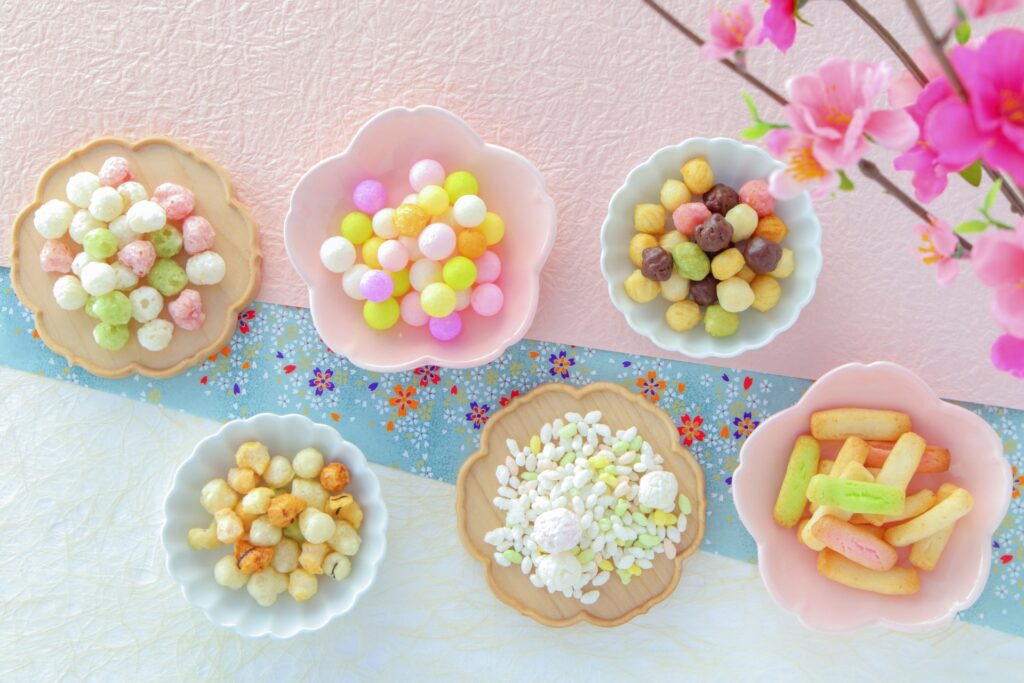
Hina-arare are small rice crackers or puffed rice sweets enjoyed specifically during Hinamatsuri. Their texture and flavor vary by region: eastern Japan tends to favor sweet varieties coated with sugar, while western Japan often prefers savory versions seasoned with soy sauce.
What makes hina-arare particularly meaningful is their colorful appearance. The traditional pink, white, and green hues are not decorative by chance. Pink is associated with vitality and the energy of life, white reflects purity and the quiet strength of winter, and green represents young leaves and the blessings of nature. Together, these colors express a wish for children to grow steadily and healthily as the seasons change.
Because hina-arare are easy to share, they are often offered to guests or placed near hina doll displays. This casual, communal quality highlights the importance of togetherness and shared joy during Hinamatsuri.
Hishi-mochi (菱餅)
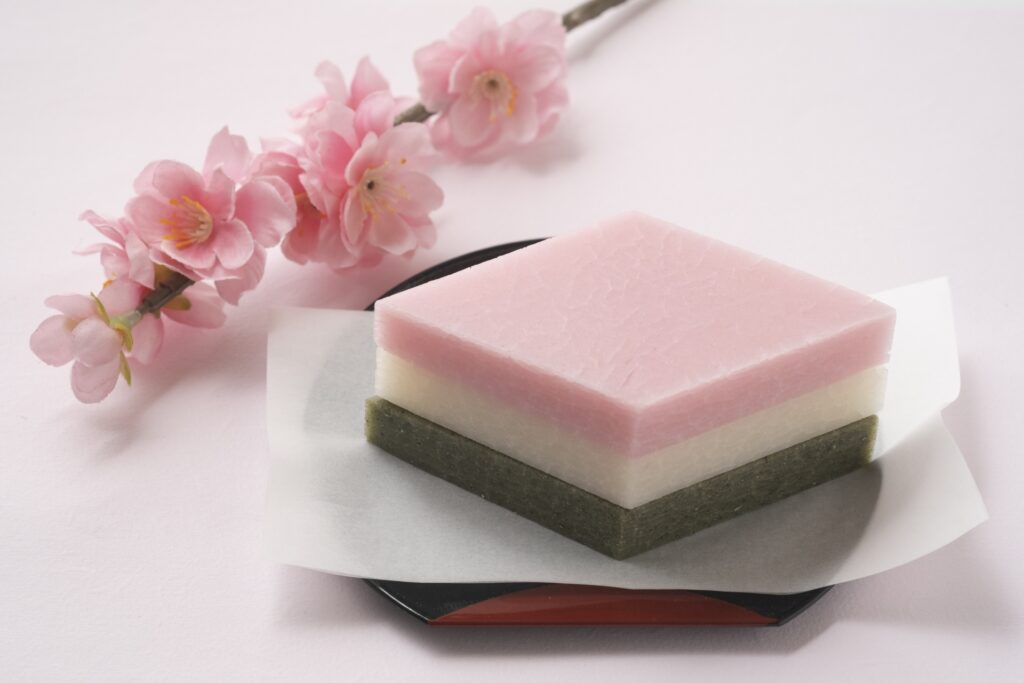
Hishi-mochi is a layered rice cake with a distinctive diamond shape. Traditionally, it is displayed as part of the Hinamatsuri decorations before being eaten. Like hina-arare, it features pink, white, and green layers, each carrying symbolic meaning. Pink is believed to ward off misfortune, white represents purity, and green signifies health and vitality.
The diamond shape itself is thought to symbolize growth and prosperity. Historically, hishi-mochi was made using seasonal herbs, further connecting it to nature and the cycles of the year.
Today, hishi-mochi often serves as a visual centerpiece during the celebration, but many families still enjoy it as a sweet treat. Its presence on the table reinforces the cultural messages at the heart of Hinamatsuri.
Traditional Drinks: Amazake and Shiro-zake
Hinamatsuri is also associated with traditional drinks, most notably amazake and shiro-zake. Amazake is a sweet fermented rice drink that is either very low in alcohol or completely non-alcoholic, making it suitable for children. Shiro-zake, by contrast, contains alcohol and was historically enjoyed by adults during the festival.
In modern celebrations, amazake is far more common, especially in households with children or in international settings. Its gentle sweetness and comforting warmth align well with the nurturing spirit of Hinamatsuri. Outside Japan, it is important to check labels, as alcohol content can vary depending on the fermentation method.
Regional and Modern Variations of Hinamatsuri Foods
While the core dishes remain consistent, Hinamatsuri food traditions differ by region. In the Kanto area, sweeter flavors and colorful presentation are often emphasized, whereas the Kansai region tends to favor lighter seasoning and more subtle tastes. These differences reflect broader regional characteristics of Japanese cuisine.
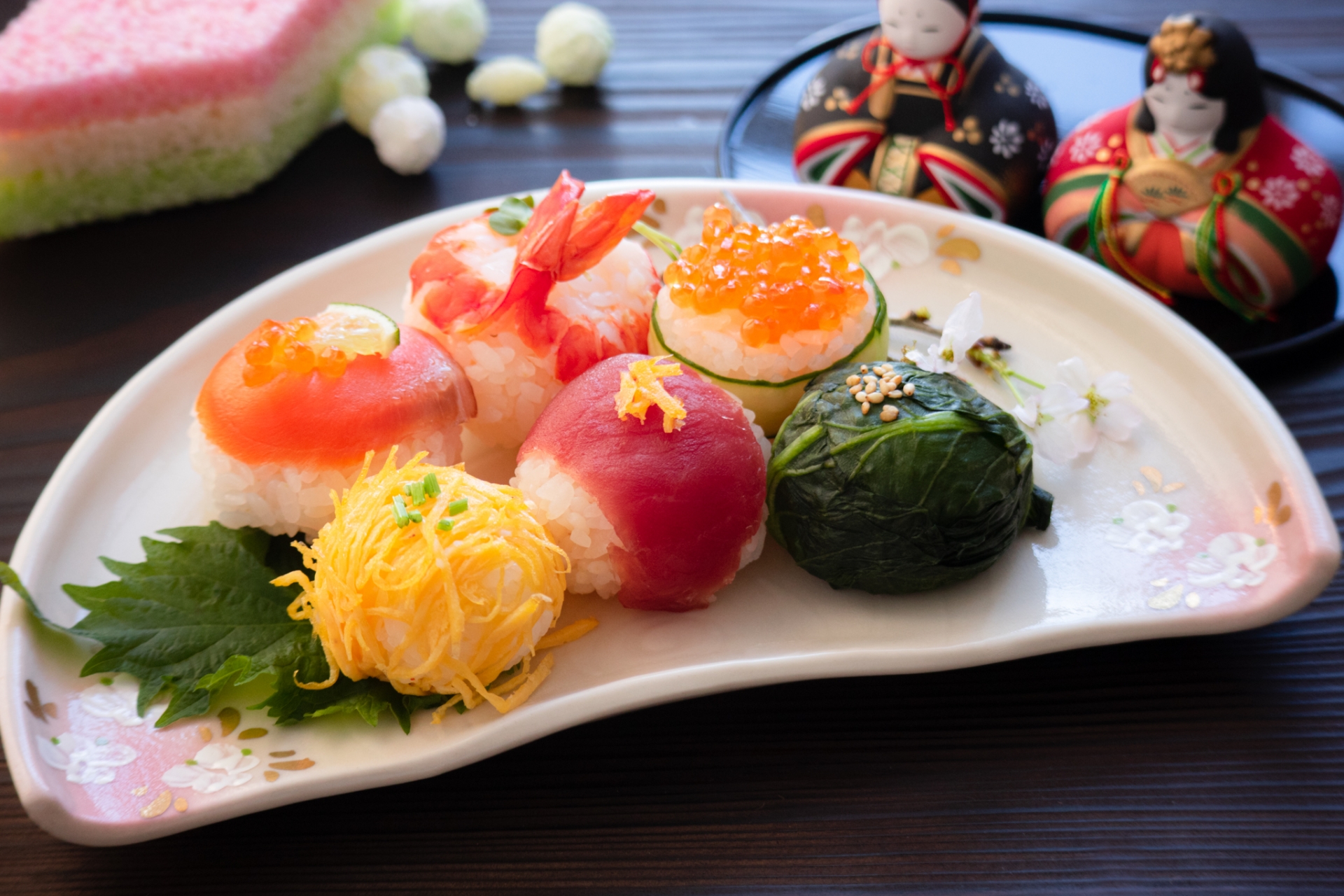
Modern families have also adapted Hinamatsuri meals to suit contemporary lifestyles. Bento-style presentations, temari (ball-shaped) sushi, and even Western-inspired desserts are becoming popular. These variations make the celebration more approachable while preserving its symbolic foundation.
How Hinamatsuri Food Traditions Are Celebrated Today
Today, Hinamatsuri is celebrated both at home and in restaurants. Home celebrations often focus on simplicity and family participation, while restaurants may offer limited-time seasonal menus with refined presentation. Outside Japan, many families recreate Hinamatsuri meals using locally available ingredients.
For beginners, preparing even one symbolic dish—such as chirashi sushi—can be enough to honor the tradition. The focus is not on perfection, but on intention and shared experience.
Tips for Enjoying Hinamatsuri Food Outside Japan
Celebrating Hinamatsuri abroad has become increasingly common. Many Japanese ingredients can now be found at Asian grocery stores or ordered online. When traditional items are difficult to obtain, substitutions such as using smoked salmon instead of shrimp are widely accepted in modern interpretations.
Presentation plays an important role as well. Incorporating soft pastel colors, seasonal motifs, and thoughtful plating can help recreate the atmosphere of Hinamatsuri, even far from Japan.
Conclusion: The Cultural Meaning Behind Hinamatsuri Food Traditions
Hinamatsuri food traditions beautifully illustrate how Japanese cuisine blends flavor, symbolism, and cultural values. Each dish—from chirashi sushi to clam soup and hina-arare—carries heartfelt wishes for girls’ happiness, health, and a hopeful future. By understanding these meanings, Hinamatsuri can be appreciated not just as a seasonal event, but as a living tradition that continues to evolve.
Whether celebrated in Japan or abroad, sharing Hinamatsuri foods offers a meaningful way to connect with Japanese culture and celebrate the universal hope for growth, harmony, and joy.