
Valentine’s Day in Japan is very different from how it is celebrated in Western countries. Instead of couples exchanging gifts, Japanese Valentine’s customs focus on women giving chocolates to men, followed by White Day a month later. This article explores the origins of Japanese Valentine’s Day, the meanings behind different types of chocolates, modern trends, and how these customs reflect Japanese society and culture.


Introduction – What Makes Valentine’s Day in Japan Unique

Valentine’s Day in Japan (February 14) may share a name and date with the Western holiday, but the customs surrounding it are strikingly different. Traditionally, women give chocolates to men, and the recipients are not limited to romantic partners. Coworkers, classmates, friends, and sometimes male relatives may also receive chocolates, depending on the relationship. As a result, Valentine’s Day in Japan is less about couples alone and more about navigating social connections through gifting.
One of the most noticeable features of the season is its strong association with chocolate. From late January through mid-February, department stores and shopping centers dedicate entire floors to Valentine’s chocolate fairs. Limited-edition assortments, premium brands, and beautifully packaged sweets turn the holiday into a nationwide chocolate event rather than a single romantic evening.
Another defining feature is that Valentine’s Day is only one half of a two-part tradition. On White Day (March 14), men are expected to return gifts to the women who gave them chocolates. This follow-up custom adds structure and social meaning to the season, making Japanese Valentine’s customs feel more rule-based and symbolic than their Western counterparts. Understanding this framework is key to understanding how Valentine’s Day functions in Japanese society today.
Origins and History of Valentine’s Day in Japan
Valentine’s Day in Japan did not develop from long-standing religious or folk traditions. Instead, it emerged through commercial promotion, particularly by confectionery companies and department stores. Early attempts to introduce Valentine’s chocolate are often associated with brands such as Morozoff, which promoted chocolate gifts to foreign residents in prewar Japan. However, these early efforts reached only a limited audience.
The real foundation of modern Japanese Valentine’s customs was laid after World War II. During the mid-to-late 1950s, department stores and chocolate manufacturers began experimenting with Valentine-themed campaigns aimed at Japanese consumers. Seasonal displays, in-store events, and advertising reframed Valentine’s Day as a chocolate-giving occasion. At first, sales were modest, but the idea gradually took hold.
By the 1960s and 1970s, giving chocolates on February 14 had become widely recognized across Japan. Importantly, the holiday developed not as a date-focused celebration, but as a gift-giving custom embedded in everyday social relationships. This commercial origin explains why chocolate—rather than cards, flowers, or dinners—became the central symbol of Valentine’s Day in Japan.
Valentine’s Chocolates and Their Meanings
Honmei-choco – Chocolate for True Feelings
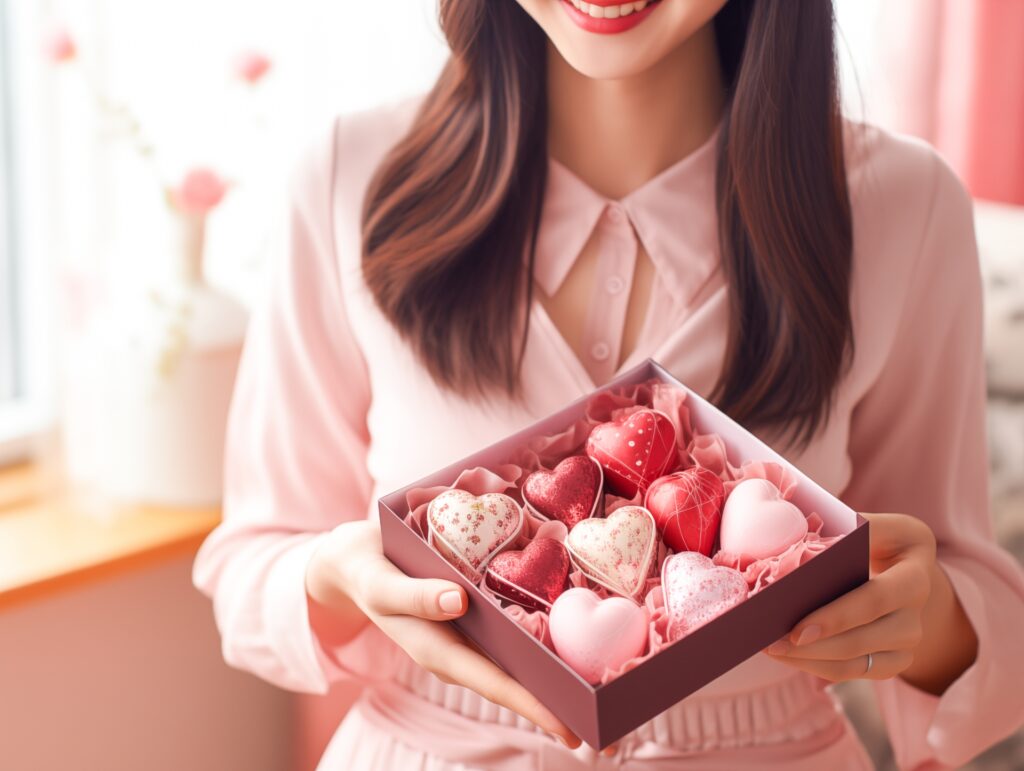
Honmei-choco (本命チョコ) refers to chocolates given to someone for whom the giver has genuine romantic feelings. This is the category most closely associated with love and confession in Japan. In popular culture, Valentine’s Day is often portrayed as a moment for kokuhaku—openly expressing romantic interest—and honmei-choco serves as a clear signal of that intention.
Because honmei-choco represents sincerity, people often choose high-quality or handmade chocolates. Premium brands, carefully designed packaging, and limited-edition items are common choices, as effort and presentation carry strong meaning in Japanese gift culture. Handmade chocolate, in particular, is valued for the time and care invested rather than its monetary cost.
Honmei-choco is typically given to a romantic partner, spouse, or someone the giver hopes to become closer to. Unlike other Valentine’s chocolates, it is not distributed casually or in groups. For visitors to Japan, understanding this distinction is important, as giving a single, elaborate box to one person may be interpreted as a romantic gesture.
Giri-choco – Obligation Chocolate
Giri-choco (義理チョコ) is known as “obligation chocolate.” Traditionally, it is given to male coworkers, bosses, classmates, or acquaintances to maintain polite social relationships rather than to express romance. The concept is rooted in giri, a Japanese cultural idea that emphasizes social duty, reciprocity, and harmony within groups.
For many years, giri-choco shaped the international image of Japanese Valentine’s Day. Women were expected to buy small, affordable chocolates in bulk for the workplace, while men prepared return gifts for White Day. However, this practice has increasingly been criticized for creating financial pressure and emotional obligation, particularly in professional environments.
In recent years, participation in workplace giri-choco has declined significantly. Many companies now discourage mandatory gifting, and younger generations are less inclined to view Valentine’s Day as a workplace responsibility. While the term giri-choco remains well known, it is no longer the default expectation in many modern offices.
Other Types of Valentine’s Chocolates
As social values have evolved, Japan’s Valentine’s vocabulary has expanded beyond romance and obligation. Three commonly used terms today are tomo-choco, jibun-choco, and gyaku-choco, each reflecting changing attitudes toward relationships and self-expression.
Tomo-choco (友チョコ) refers to chocolates exchanged among friends. Popular especially among students and close social groups, tomo-choco emphasizes friendship and appreciation without romantic implications.
Jibun-choco (自分チョコ) means “chocolate for yourself” and represents the growing acceptance of self-care and personal enjoyment. Many people now buy premium chocolates specifically as a treat for themselves.
Gyaku-choco (逆チョコ) describes cases where men give chocolates to women on Valentine’s Day, reversing the traditional gender role.
| Type | Japanese | Typical Recipient | Core Meaning |
| Honmei-choco | 本命チョコ | Partner / crush | Romantic feelings, confession |
| Giri-choco | 義理チョコ | Coworkers / acquaintances | Courtesy, social obligation |
| Tomo-choco | 友チョコ | Friends | Friendship and appreciation |
| Jibun-choco | 自分チョコ | Yourself | Self-care, personal treat |
| Gyaku-choco | 逆チョコ | Women (from men) | Reverse gifting, modern style |
In Japan, these labels help clarify the social meaning of a gift. Often, the category matters as much as the chocolate itself.
White Day – The Other Half of Japanese Valentine’s Customs
White Day, celebrated on March 14, completes Japan’s Valentine’s season. The basic idea is simple: men who received chocolates on February 14 return gifts one month later. These gifts commonly include cookies, chocolates, or small accessories, chosen according to the closeness of the relationship.
White Day emerged in Japan as a commercial follow-up to Valentine’s Day in the late 1970s, promoted by the confectionery industry as an “answer day.” Over time, it became widely recognized as part of the seasonal gift-giving cycle.
Although stereotypes sometimes mention strict “return rules,” such as giving back gifts worth more than the original chocolate, modern practice is far more relaxed. Many people choose modest items, and some skip White Day entirely, especially in non-romantic or workplace contexts.
Modern Trends and Changing Attitudes
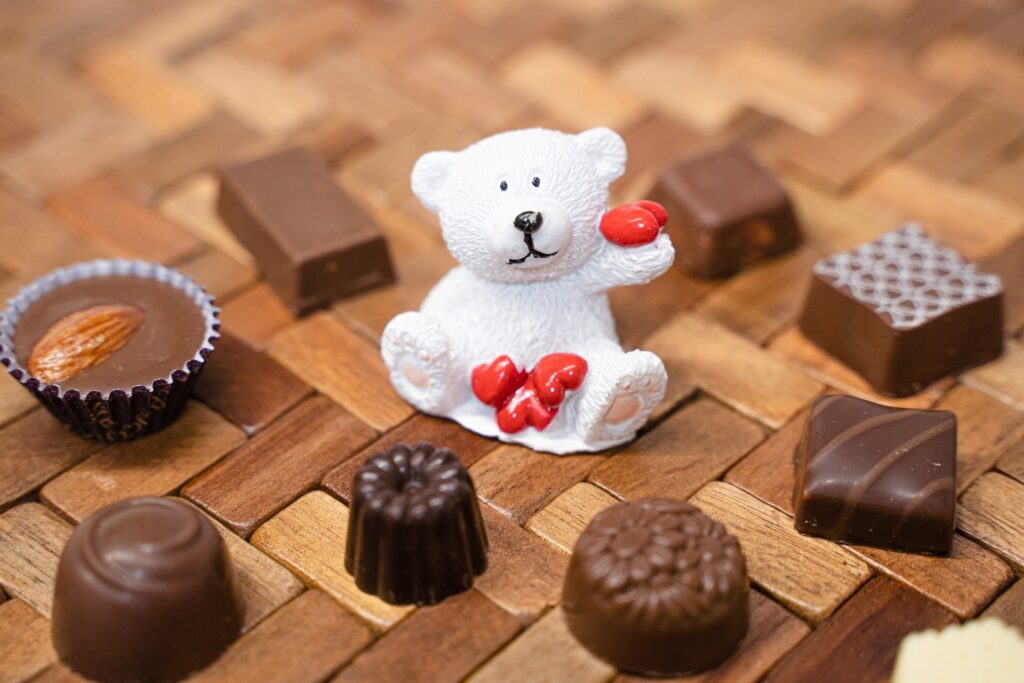
Japanese Valentine’s customs continue to evolve. One of the most significant changes is the decline of obligation-based gifting, particularly giri-choco in offices. Remote and hybrid work environments have reduced everyday social pressure, making mass workplace gifting less common.
At the same time, jibun-choco and tomo-choco are on the rise. Valentine’s Day is increasingly seen as an opportunity to enjoy seasonal sweets, celebrate friendships, or practice self-care rather than fulfill social duties. Shifting gender expectations also play a role, with some couples exchanging gifts mutually or ignoring traditional timelines altogether.
Economic factors matter as well. Rising chocolate prices and concerns about cost have encouraged more selective, meaningful gifting. Together, these trends show how Valentine’s Day in Japan is moving away from rigid norms toward more personal and flexible expressions.
Practical Tips for Visitors and Expats in Japan
For travelers in Japan during February, Valentine’s season is easy to enjoy without participating directly. Department stores, convenience stores, and major train stations host chocolate fairs that function like seasonal food events. Sampling or purchasing chocolates for personal enjoyment is perfectly normal.
Tourists are not expected to give chocolates. For expats working in Japan, workplace culture varies. Observing colleagues’ behavior is the safest approach. If you choose to participate, small individually wrapped chocolates shared with a group are generally interpreted as friendly rather than romantic.
A common mistake is sending unintended signals. A single high-end gift to one person may be seen as honmei-choco, while small items given to many people suggest giri- or tomo-choco. It is also increasingly acceptable to opt out entirely, especially in professional settings.
Japan vs Western Valentine’s Day – A Cultural Comparison
In the United States and many Western countries, Valentine’s Day focuses primarily on couples, with gifts such as flowers, cards, jewelry, and romantic dinners. Gift-giving is often mutual, though popular imagery still frequently shows men initiating.
Japan’s version is more structured. Traditionally, women give chocolates on February 14, and men respond on March 14. In addition, Japanese Valentine’s Day historically included non-romantic relationships, making clear distinctions between gift types socially important.
| Category | Japan | U.S. / Common Western Pattern |
| Main giver (traditional) | Women → men (Feb 14) | Often mutual |
| Typical gift | Chocolate | Flowers, cards, jewelry, dinner |
| Social range | Romance + coworkers/friends | Mainly romantic partners |
| Follow-up holiday | White Day (Mar 14) | None |
| Cultural feel | Relationship-coded, seasonal | Couple-focused celebration |
Conclusion – Understanding Japanese Valentine’s Customs
Japanese Valentine’s customs are not only about romance. They reflect how relationships are managed in a society that values harmony, reciprocity, and social awareness. The wide range of chocolate categories—honmei, giri, tomo, and jibun—exists because a single gift can carry many different meanings depending on context.
Historically shaped by commercial promotion rather than ancient tradition, Valentine’s Day in Japan developed into a chocolate-centered, two-part seasonal event. Over time, these customs became firmly embedded in everyday life, while continuing to adapt to social change.
Today, the trend is clear: obligation is fading, and personal choice is growing. Whether celebrated romantically, socially, or simply through enjoying good chocolate, Valentine’s Day in Japan remains a living tradition—one that continues to evolve alongside Japanese society.