Located along the Sea of Japan coast, the Tottori Sand Dunes are unlike anywhere else in the country. This article explains what makes them special, how to visit, what activities to enjoy, and how to plan the perfect trip—especially for first-time travelers to rural Japan.


What Are the Tottori Sand Dunes?

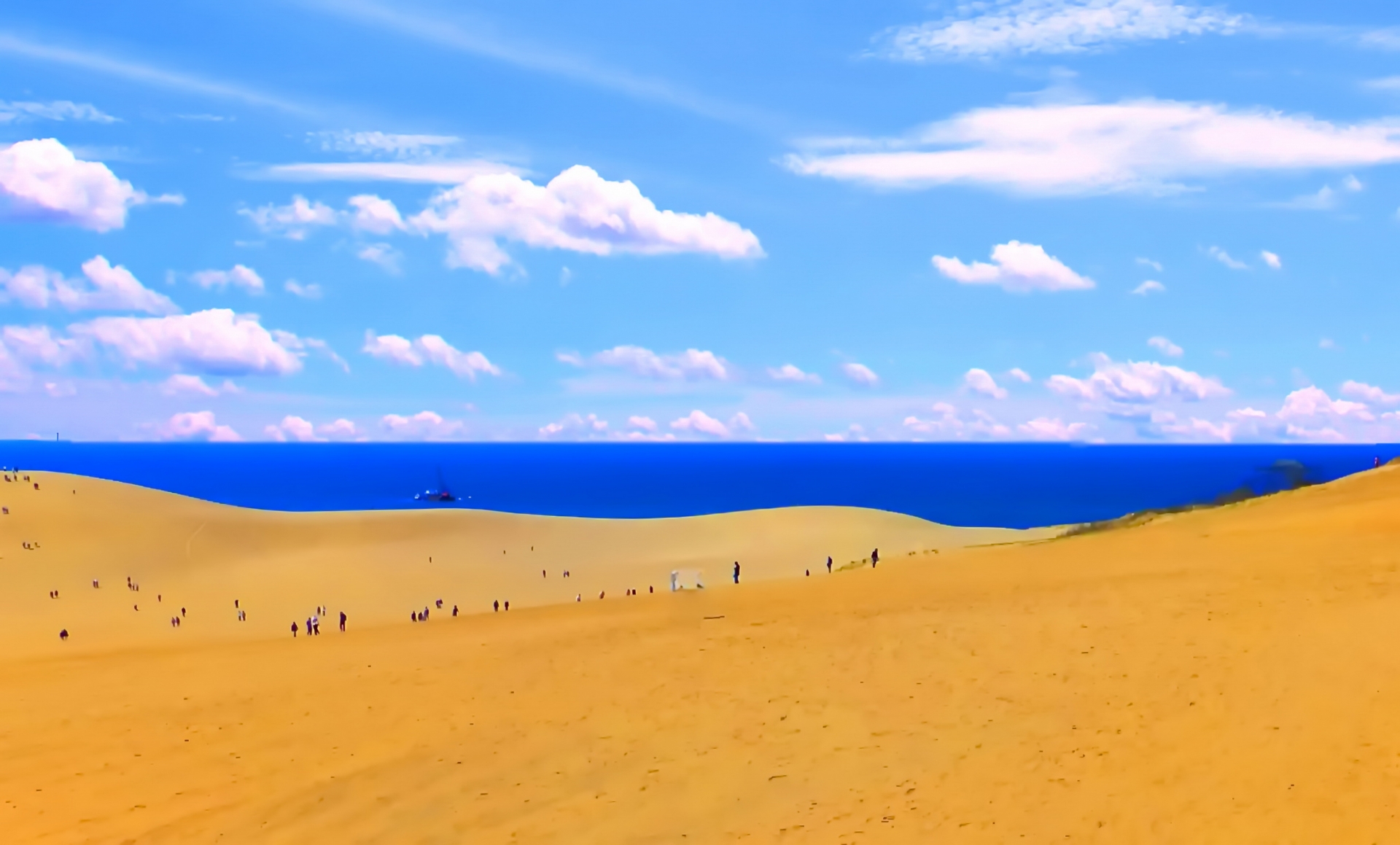
The Tottori Sand Dunes are Japan’s largest and most famous sand dune system, stretching for approximately 16 kilometers (10 miles) along the coast of the Sea of Japan. Unlike the small, protected dunes occasionally found elsewhere in the country, these dunes form a vast, open landscape of rolling sand hills, steep ridges, and wind-sculpted patterns that feel almost desert-like—an experience that surprises many first-time visitors to Japan.
The dunes were formed over thousands of years through a natural process involving sand carried from the Sendai River and shaped continuously by strong coastal winds. This constant interaction between river sediment, ocean currents, and wind has created dramatic slopes and ripples that change subtly from day to day. Because of this ongoing natural formation, no two visits to the dunes feel exactly the same, making them especially appealing to photographers and repeat travelers.
What truly sets the Tottori Sand Dunes apart is accessibility. They are fully open to the public, free to enter, and easy to explore on foot without guides or special permits. Visitors can walk directly from paved paths onto the sand, climb high ridges for panoramic views, or simply wander and appreciate the scale of the landscape. In a country known for dense cities and manicured gardens, the raw openness of the dunes feels refreshingly different and deeply memorable.
Where Are the Tottori Sand Dunes Located?
The Tottori Sand Dunes are located in eastern Tottori Prefecture, just outside Tottori City, along the coast of the Sea of Japan. From the city center, the dunes are only about 15–20 minutes away by bus or taxi, making them one of the most easily accessible natural attractions in rural Japan.
Geographically, the dunes sit within the San’in Kaigan National Park, a protected coastal area known for rugged cliffs, geological formations, and scenic beaches stretching across Tottori and neighboring prefectures. This designation highlights not only the beauty of the dunes but also their geological importance as part of a larger coastal ecosystem.
Because of their seaside location, the dunes offer a rare combination of desert-like terrain and ocean views. From higher ridges, visitors can see the deep blue of the Sea of Japan contrasting sharply with pale sand, especially on clear days. This unique setting—sand, sky, and sea all meeting in one open space—is a major reason the Tottori Sand Dunes are often described as unlike anywhere else in the country.
How to Get to the Tottori Sand Dunes
Reaching the Tottori Sand Dunes is straightforward, even for first-time visitors traveling independently in Japan. The closest major transport hub is Tottori Station, which is served by limited express trains from Osaka and Okayama.
From Osaka or Kyoto, travelers typically take a limited express train (such as the Super Hakuto) to Tottori Station, with total travel times ranging from about 2.5 to 3.5 hours depending on departure point and connections. From Tokyo, the journey is longer—usually around 5 to 6 hours—combining a Shinkansen ride to Okayama or Himeji followed by a limited express train to Tottori.
Once at Tottori Station, access to the dunes is easy. Local buses run regularly to the “Tottori Sakyu” stop near the dunes’ main entrance, taking about 20 minutes. Taxis are also readily available and are a convenient option for groups or travelers with limited time.
| Transport Option | Time from Tottori Station | Cost (Approx.) | Convenience |
|---|---|---|---|
| Bus | ~20 minutes | Low | Easy, frequent |
| Taxi | ~15 minutes | Moderate | Most convenient |
| Rental Car | ~15 minutes | Varies | Best for flexible itineraries |
This combination of rural scenery and simple access makes the dunes an ideal destination even for travelers unfamiliar with Japan’s countryside.

Things to Do at the Tottori Sand Dunes

The Tottori Sand Dunes offer far more than a scenic walk. Their scale and openness allow for a range of activities that appeal to adventure travelers, photographers, and nature lovers alike. Whether you want a relaxed stroll or a physically engaging experience, the dunes can easily fill several hours of exploration.
Walk the Dunes and Enjoy the Views
Walking across the dunes is the most popular and rewarding activity. The sand is soft and shifting, which makes even short distances feel adventurous. As you climb higher ridges, the landscape opens up dramatically, revealing sweeping views of sand patterns shaped by the wind and the Sea of Japan stretching beyond.
Several informal viewpoints are especially popular for photography, offering strong contrasts between light and shadow during different times of day. Unlike many scenic spots in Japan, there are no fences or strict paths once you enter the dunes, allowing visitors to explore freely. This sense of openness is rare and contributes greatly to the emotional impact of the experience.
Sandboarding, Paragliding, and Camel Riding
For travelers seeking something more active, the dunes are well known for adventure sports. Sandboarding—similar to snowboarding but on sand—is available seasonally and is suitable even for beginners. Paragliding offers an entirely different perspective, allowing participants to soar above the dunes and coastline under professional supervision.
Camel riding, while more tourist-oriented, remains a popular option for families and first-time visitors, adding a playful, almost surreal touch to the experience. Availability of these activities depends on weather and season, so it’s best to check locally on the day of your visit.
Visit the Tottori Sand Museum
Located right next to the dunes, the Tottori Sand Museum is one of the most unique museums in Japan. It is dedicated entirely to sand sculpture art, featuring massive, highly detailed works created by artists from around the world.
What makes the museum especially appealing is its annual theme system. Each year focuses on a different country or region, meaning the exhibits are completely rebuilt using only sand and water. This temporary nature adds urgency and excitement, as no exhibition is ever repeated in exactly the same form.
Visiting the Sand Museum after exploring the dunes provides a perfect contrast—moving from raw nature to refined artistry while staying within the same theme of sand. Together, they create a balanced and memorable half-day itinerary.
Best Time to Visit the Tottori Sand Dunes
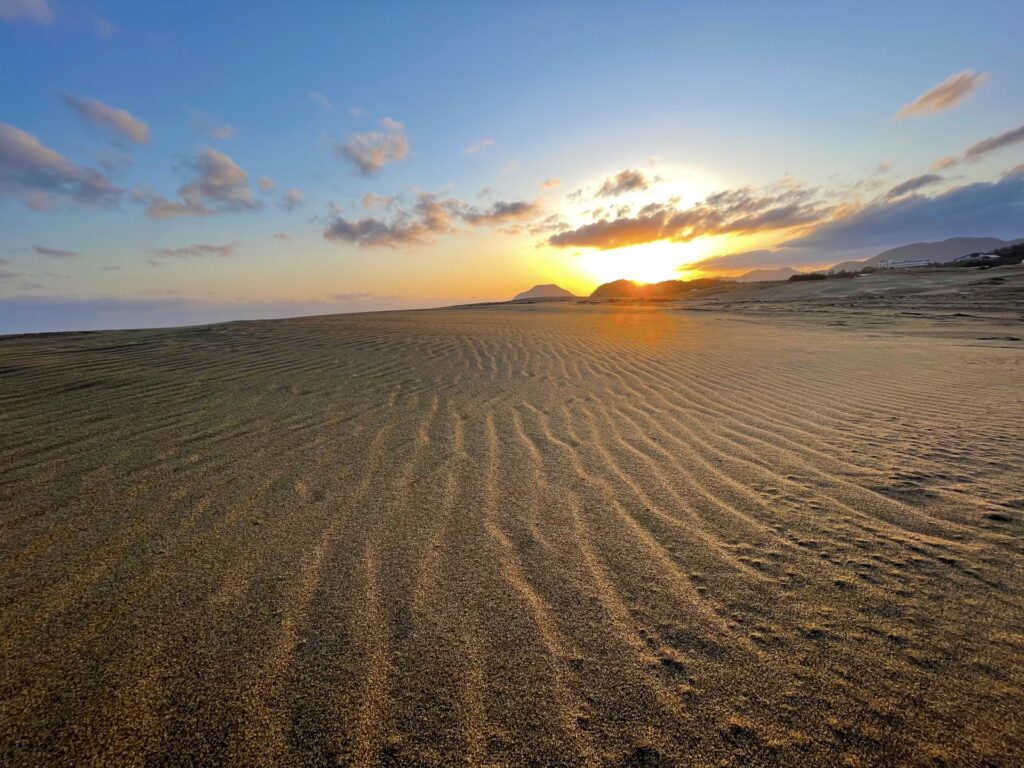
The dunes are open year-round, but each season offers a very different experience. Spring brings mild temperatures and comfortable walking conditions, making it one of the most popular times to visit. Summer features bright skies and vivid contrasts, though heat and reflection from the sand can be intense.
Autumn is ideal for those who prefer fewer crowds and cooler air, with soft light that enhances photography. Winter is the most surprising season—occasional snowfall transforms the dunes into a rare landscape where white snow rests atop pale sand, creating scenes found nowhere else in Japan.
Sunrise, Sunset, and Seasonal Highlights
Sunrise and sunset are widely considered the best times to visit, especially for photographers. Low-angle light emphasizes the dunes’ ridges and textures, while the changing colors of the sky add dramatic depth. Winter visits, while colder, reward travelers with quiet, almost surreal scenery that feels completely removed from everyday Japan.
Practical Tips for Visiting
Visiting the Tottori Sand Dunes is simple, but preparation makes a big difference. Wear comfortable shoes that can handle sand—sneakers are usually better than sandals. In summer, sun protection is essential, including hats, sunglasses, and plenty of water, as there is little natural shade.
Walking on sand is more physically demanding than it appears, especially when climbing steeper slopes. Take breaks and pace yourself, particularly if traveling with children or older companions. In winter, dress warmly and be cautious of slippery or compacted sand after snowfall.
Accessibility is limited on the dunes themselves due to the terrain, but viewing areas and nearby facilities are well maintained. Respect the environment by staying within permitted areas and avoiding actions that disturb the natural landscape.
Things to Do in Tottori Prefecture
Beyond the dunes, Tottori Prefecture offers a surprisingly rich mix of food, culture, and nature. Local cuisine is a major highlight, with fresh crab in winter, high-quality Tottori wagyu beef, and sweet nashi pears being regional specialties. Coastal hot springs provide relaxing views of the Sea of Japan, while scenic drives reveal quiet fishing villages and rugged cliffs.
Cultural attractions include historic temples, folklore sites, and small museums that showcase local traditions. These experiences make Tottori an excellent choice for travelers who want to slow down and experience a less commercial side of Japan.
Nearby Attractions and Itinerary Ideas
A one-day itinerary typically combines a morning at the sand dunes, lunch in Tottori City, and an afternoon at the Sand Museum or nearby coastal viewpoints. This is ideal for travelers passing through the region.
A two-day itinerary allows for a more relaxed pace, adding hot springs, local food experiences, and scenic coastal drives. Spending a night in Tottori lets you enjoy the dunes at sunrise or sunset, which many consider the highlight of the entire trip.
Frequently Asked Questions About the Tottori Sand Dunes
Is the Tottori Sand Dunes free to enter?
Yes. Entry to the dunes themselves is completely free and open to the public year-round.
How much walking is required at the Tottori Sand Dunes?
Walking time varies, but most visitors spend 1–2 hours exploring. Climbing steeper dunes can be physically demanding.
Is it very hot at the Tottori Sand Dunes in summer?
Yes. Summer temperatures and reflected heat from the sand can be intense, so hydration and sun protection are essential.
Can you visit the Tottori Sand Dunes in winter?
Yes. Winter visits are possible and can be beautiful, though cold weather and snow require extra caution.
Can you visit the Sand Museum and the dunes in one trip?
Absolutely. They are located next to each other, and most visitors see both in half a day.
Why the Tottori Sand Dunes Are Worth Visiting
The Tottori Sand Dunes stand out because they offer something truly rare in Japan: vast open space shaped by nature and left largely untouched. Their scale, accessibility, and ever-changing scenery create an emotional impact that contrasts strongly with Japan’s urban icons and crowded landmarks. For travelers seeking authenticity and quiet wonder, the dunes deliver an experience that lingers long after the visit ends.
Conclusion
The Tottori Sand Dunes are one of Japan’s most unexpected and unforgettable destinations. From dramatic coastal landscapes and adventure activities to world-class sand art and peaceful seasonal beauty, they offer far more than most travelers anticipate. If you’re looking for a side of Japan that feels unexpected, quiet, and unforgettable, the Tottori Sand Dunes deserve a place on your itinerary.