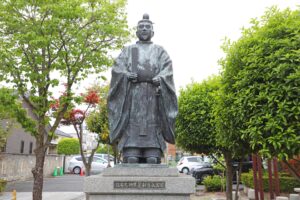
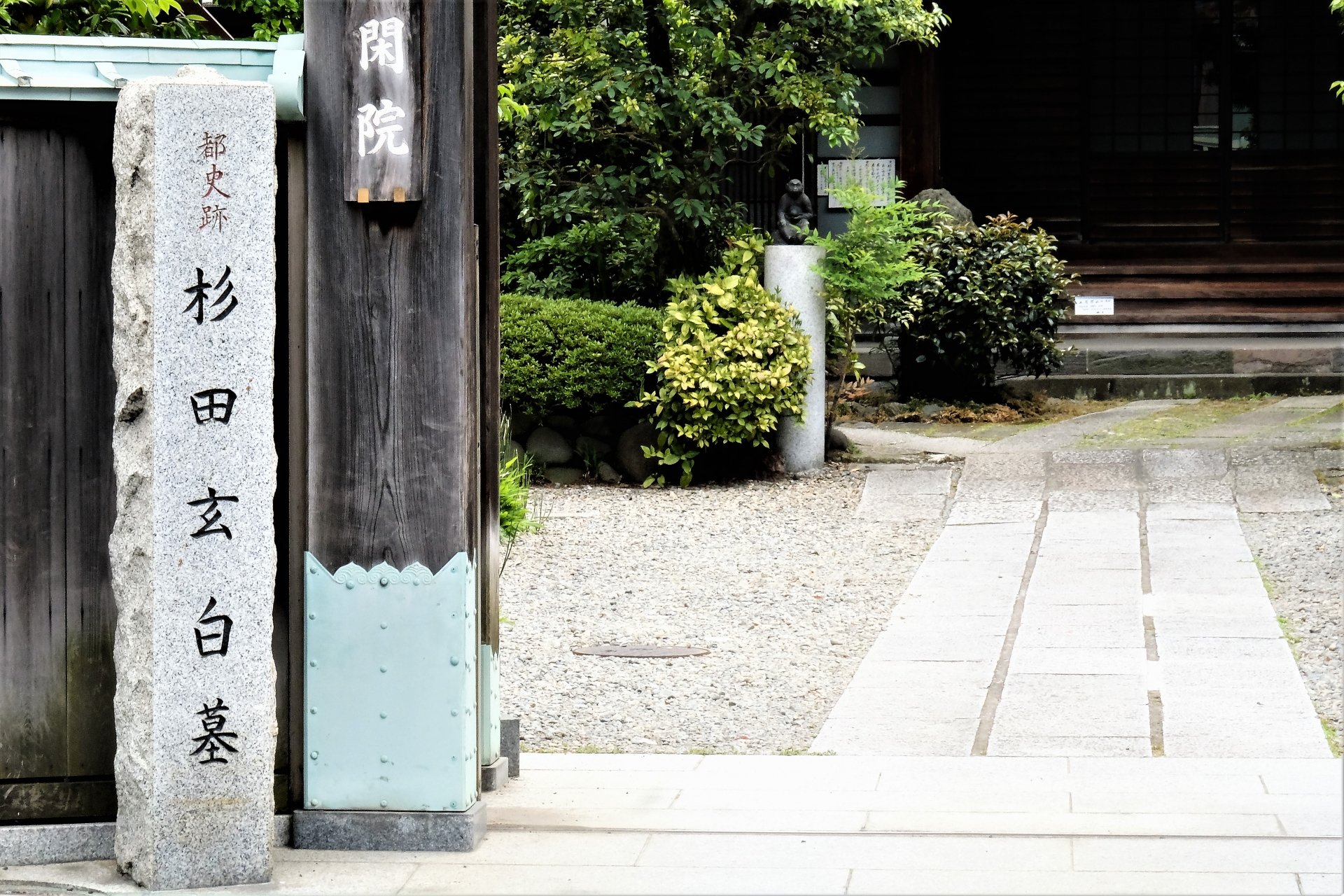
Sugita Genpaku was an Edo-period Japanese physician whose work fundamentally changed how the human body was understood in Japan. At a time when medical knowledge relied heavily on Chinese classical texts and theoretical models, Genpaku took a radically different approach: he trusted what could be seen, verified, and compared with reality. His leadership in translating Kaitai Shinsho, Japan’s first full Western anatomy book, marked a decisive shift toward empirical science and laid the groundwork for modern medicine in Japan.
Rather than being a lone genius, Genpaku acted as a catalyst within a network of Rangaku (Dutch Learning) scholars. He examined European anatomical texts, organized a translation team, and ultimately made the bold decision to publish knowledge that was still imperfect. This article traces that step-by-step process and explains why Sugita Genpaku became the most remembered figure among his collaborators.


Who Was Sugita Genpaku?
Sugita Genpaku was born in 1733 into a family of physicians serving the Edo shogunate. His early education followed the standard medical training of the time, which was based largely on traditional Chinese medicine. This system emphasized balance, theory, and classical texts rather than direct observation of the human body.
What distinguishes Genpaku historically is not simply that he translated a Western book, but that he redefined how medical knowledge should be evaluated. Instead of relying solely on inherited authority, he believed that knowledge must be confirmed through observation and comparison with reality. This attitude positioned him at the threshold between traditional medicine and modern scientific thinking. Over time, Genpaku became not only a physician, but also an organizer, editor, and communicator who understood that knowledge must reach society to have meaning.

Medical Knowledge in Edo-Period Japan
Before Western anatomy was introduced, Japanese medicine was deeply influenced by Chinese medical philosophy. Internal organs were understood conceptually rather than anatomically, and their functions were often described symbolically. While this system worked in many clinical situations, it lacked a precise understanding of physical structure.
Japan’s isolation policy further limited access to foreign scientific ideas. Human dissection was rare and socially discouraged, which meant that doctors had little opportunity to verify anatomical theories. As a result, anatomy remained largely theoretical. However, by the eighteenth century, some physicians began to question whether traditional models truly matched the human body, creating the intellectual conditions for change.

Encountering Dutch Anatomy Books
Within limited Rangaku circles, Genpaku encountered a Dutch anatomy book known in Japan as Tafel Anatomia. Its detailed illustrations and systematic organization were unlike anything found in East Asian medical literature.
Rather than accepting the book on authority, Genpaku approached it with skepticism. His central question was simple but profound: did these images and descriptions actually correspond to the human body? This question would determine whether Western anatomy was merely foreign theory or genuinely reliable knowledge.
Confirming the Accuracy of Western Anatomy
To answer this question, Genpaku took an unprecedented step for a physician of his background: he attended human dissections specifically to compare the Dutch anatomical illustrations with real human bodies. The purpose was not curiosity, but verification.
What he observed was decisive. Bone structures, organ placement, and internal systems matched the Western anatomy book with striking accuracy. This confirmation transformed Western anatomy in Genpaku’s mind from speculative foreign learning into empirically proven knowledge.
This realization marked the true turning point. If such accurate knowledge existed, Genpaku believed it could not remain confined to a small group of scholars. It had to be shared.
From Verification to Action: Beginning the Translation
Genpaku concluded that Western anatomical knowledge must be made accessible to Japanese physicians as quickly as possible. He chose action over perfection, believing that incomplete but accurate knowledge was better than no knowledge at all.
The challenges were immense. Dutch grammar was complex, technical vocabulary was undeveloped, and reference materials were scarce. Nevertheless, Genpaku initiated the translation project with a sense of urgency. His focus was practical impact rather than linguistic elegance.
The Translation Team Behind Kaitai Shinsho
Kaitai Shinsho was a collaborative achievement.
Maeno Ryotaku possessed the strongest Dutch language skills and handled the most difficult aspects of translation.
Nakagawa Jun’an contributed medical expertise and supported the translation process.
Sugita Genpaku served as the organizer, decision-maker, and publisher. He coordinated the team, resolved disagreements, and assumed responsibility for releasing the work. The project moved forward because each member played a distinct role within a shared purpose.
Why Maeno Ryotaku’s Name Does Not Appear in Kaitai Shinsho
Despite his major contributions, Maeno Ryotaku’s name does not appear as an author of Kaitai Shinsho. This absence was not due to conflict, but to a difference in philosophy.
Ryotaku was a perfectionist who believed that publishing a translation with unresolved ambiguities risked misleading readers. Genpaku, by contrast, believed that delaying publication would prevent vital knowledge from reaching society. Ryotaku continued to support the project privately, while Genpaku accepted responsibility for publication.
Why Kaitai Shinsho Became Associated with Sugita Genpaku
By choosing to publish, Genpaku placed his reputation on the line. He openly acknowledged the translation’s imperfections and later documented the entire process in his own writings.
Historical memory often favors those who take responsibility. Because Genpaku published the work, explained its significance, and left records of the experience, his name became inseparable from Kaitai Shinsho.
The Impact of Kaitai Shinsho on Japanese Medicine
The publication of Kaitai Shinsho transformed Japanese medicine. Accurate anatomical knowledge improved diagnosis and reshaped medical education. Visual learning and empirical observation gained legitimacy within the medical community.
Beyond medicine, the book accelerated the development of Rangaku and helped prepare Japan intellectually for later modernization. It demonstrated that foreign knowledge could be critically evaluated and selectively integrated rather than blindly accepted or rejected.
Sugita Genpaku’s Legacy Today
Today, Sugita Genpaku is remembered as a pioneer of evidence-based thinking in Japan. His story is taught in medical history and discussed in studies of scientific modernization.
For international readers, Genpaku’s legacy offers a universal lesson. Progress begins not with authority, but with verification—and it advances only when knowledge is shared with courage.
Frequently Asked Questions About Sugita Genpaku
Who was Sugita Genpaku?
An Edo-period Japanese physician who introduced Western anatomy through verification and translation.
What is Kaitai Shinsho?
Japan’s first comprehensive Western anatomy book translated from Dutch sources.
Why was Western anatomy important in Edo Japan?
Because it provided an accurate, observation-based understanding of the human body.
Why is Maeno Ryotaku not listed as an author?
Because he opposed publishing a translation he believed was incomplete, despite his major contributions.
Conclusion: Knowledge, Verification, and the Courage to Publish
Sugita Genpaku’s journey followed a clear progression: curiosity led to questioning, questioning demanded verification, verification required collaboration, and collaboration culminated in publication. His legacy does not rest on solitary brilliance, but on the ability to recognize reliable knowledge, act decisively, and ensure that it reached society.
Modernization does not begin with technology alone. It begins with evidence—and the courage to publish it.