The Jokyu War was brief, but its implications were enormous. In a society where the imperial court still held immense symbolic legitimacy, the conflict revealed a harder truth: real power belonged to the institutions that could mobilize warriors, secure supply lines, control roads and river crossings, and enforce political decisions with force. The war made visible what had been developing for decades—Japan’s center of gravity was shifting away from court aristocracy and toward a military government built on landholding and vassal networks.
If you have studied the Kamakura period, you have likely encountered the idea that medieval Japan operated with “two centers.” Kyoto remained the cultural and ideological heart of the realm, while Kamakura functioned as the operational headquarters of warrior politics. The Jokyu War is the moment that dual structure stopped being a theory and became an enforceable reality. After the conflict, the shogunate tightened oversight over Kyoto and expanded administrative reach into western provinces, accelerating the long transition toward samurai-led governance.


What Was the Jokyu War? (Historical Overview)
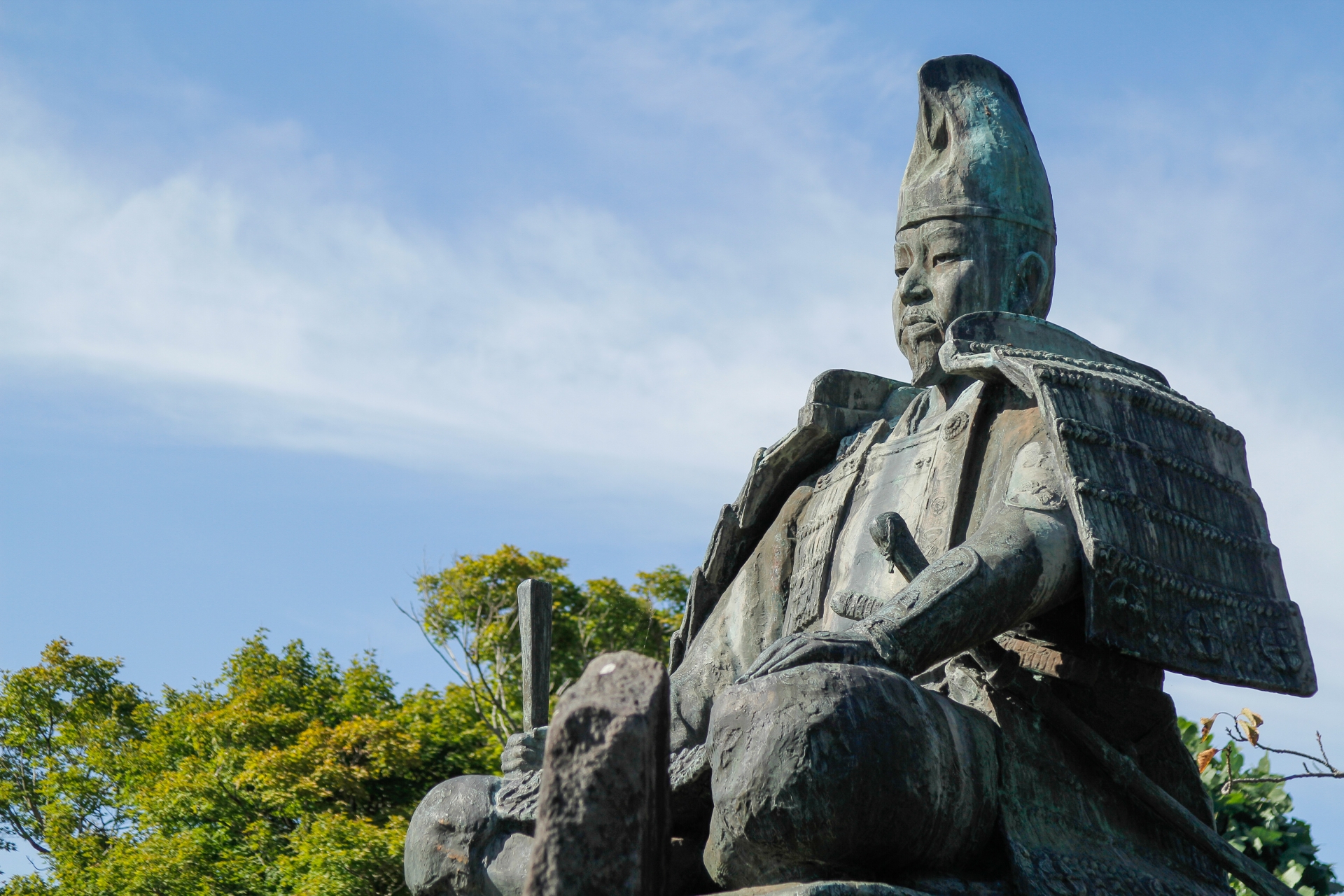
The Jokyu War (1221) was an internal conflict in which Retired Emperor Go-Toba attempted to overthrow the Kamakura shogunate. Although the shogunate was nominally headed by the shogun, real authority rested with the Hōjō leadership—especially Hōjō Yoshitoki, who served as shikken (regent). From the court’s perspective, striking at Yoshitoki and calling for his punishment could be framed as restoring rightful rule. From Kamakura’s perspective, however, it was a direct assault on the entire warrior government.
A key feature of this conflict is how quickly it escalated and how rapidly it ended. The court issued an order calling on warriors to join the anti-shogunate cause, hoping that legitimacy and court alliances would trigger a nationwide swing. Instead, the shogunate treated the proclamation as a crisis that demanded immediate mobilization and marched toward Kyoto in coordinated columns. The decisive phase of the fighting converged on the approaches to the capital, where river crossings became the final barriers before Kyoto fell. Once shogunate forces broke through, the court’s resistance collapsed and the war ended with severe punishment for the leaders of the rebellion.
Political Background: Japan Before the Jokyu War

Before 1221, Japan’s political order was not a simple “imperial government versus military government” binary. The imperial court retained enormous authority in ritual, titles, and legitimacy. Court culture shaped the ideals of governance, and imperial proclamations still carried weight across the realm. At the same time, the Kamakura shogunate had been building a practical system of rule rooted in warriors’ control of land and the obligations that bound vassals to their leaders. As the shogunate grew more capable of settling disputes and enforcing decisions on the ground, friction with the court became more likely.
Another important context is the sense of vulnerability that surrounded the shogunate at the time. The Minamoto line of shoguns had weakened and effectively ended, creating an impression—especially in Kyoto—that Kamakura’s authority might be easier to challenge. Yet that apparent weakness also created the opposite incentive inside the warrior government: Kamakura needed to prevent wavering among its vassals and demonstrate that it could respond decisively. The Jokyu War became a contest between court legitimacy and institutional capacity—between the ability to issue orders and the ability to convert orders into reliable military power.
Emperor Go-Toba and the Imperial Court’s Ambitions
Retired Emperor Go-Toba was not a ceremonial figure. He was politically engaged, culturally influential, and committed to restoring the court’s practical authority. From Kyoto’s viewpoint, the shogunate increasingly looked like a military administration that had begun to intrude into areas that ought to belong to the imperial state—appointments, estate administration, and national decision-making. It was not hard for the court to interpret this as an unacceptable inversion of the proper order: warriors were supposed to serve the throne, not overshadow it.
Go-Toba’s plan relied on a crucial assumption: if the court issued a call to punish the shogunate’s leadership, a significant portion of the warrior class would rally to Kyoto. The proclamation itself did create uncertainty—evidence that imperial legitimacy still mattered. But the war exposed the limitation of legitimacy when it is not matched by a durable mobilization mechanism. Warriors were not motivated by ideology alone; they weighed security, land rights, rewards, and local political realities. The court’s strategy struggled to offer a system that could bind those interests together as effectively as Kamakura’s established vassal structure.
The Hōjō Clan and the Kamakura Shogunate
The shogunate’s advantage lay in speed, organization, and the ability to reassert unity during a crisis. Kamakura understood that a court order could destabilize vassal loyalty unless the warrior government offered a compelling counter-narrative. In this context, the Hōjō leadership worked to reduce hesitation among the gokenin (vassals) and to frame the conflict as a defense of the political order created since Minamoto no Yoritomo. The result was not just military mobilization, but psychological and political consolidation.
The shogunate also demonstrated a strong operational grasp of geography and logistics. Forces advanced toward Kyoto along multiple major routes, applying pressure from different directions rather than relying on a single march. And the victory was not treated as an endpoint: after the war, the warrior government established stronger mechanisms to supervise Kyoto and manage western provinces. The conflict therefore illustrates how the shogunate translated battlefield success into institutional control, ensuring that a similar court-led challenge would be far harder to mount in the future.
Causes of the Jokyu War
The causes of the Jokyu War can be understood on two levels: long-term structural tensions and short-term political decisions. Structurally, the Kamakura period created overlapping jurisdictions and competing claims over estates, offices, and enforcement. The court retained authority in theory, while the shogunate increasingly exercised authority in practice—especially in legal disputes and land administration. That overlap made conflict more likely over time, because each decision about property or appointments also carried implications about sovereignty.
In the short term, Kyoto’s leadership decided that the shogunate could be defeated if the moment was seized. The weakening of the Minamoto shogunal line and the concentration of power in the Hōjō regency could be interpreted as signs of instability. The court therefore acted on the belief that a decisive proclamation—calling on warriors to oppose Kamakura—would flip the balance. But Kamakura interpreted the move as an existential threat and responded with coordinated, rapid action. Once both sides framed the conflict as a struggle over the right to govern, compromise became difficult and war became the path.
Major Battles and Military Strategy
Militarily, the Jokyu War is remembered less for prolonged fighting than for momentum. Shogunate forces moved quickly, won key engagements on the way to Kyoto, and prevented the court from building a stable defensive perimeter or coordinating allies across regions. The court attempted to create lines of resistance outside the capital, but the speed and coordination of the shogunate’s advance forced the struggle to contract toward Kyoto itself. When a defender cannot keep the fighting away from the political center, the stakes rise while options shrink.
The shogunate’s approach combined logistics, multi-route pressure, and decisive timing. By advancing along major highways and coordinating different columns, Kamakura reduced the court’s ability to concentrate forces at a single point. This style of warfare rewarded organization and command more than isolated acts of valor. In that sense, the Jokyu War highlights a transition in what “power” meant: not merely noble legitimacy or personal heroism, but the capacity to move men and supplies efficiently, to synchronize decisions across distances, and to turn political choices into operational outcomes.
The Battle Along the Uji River (1221)
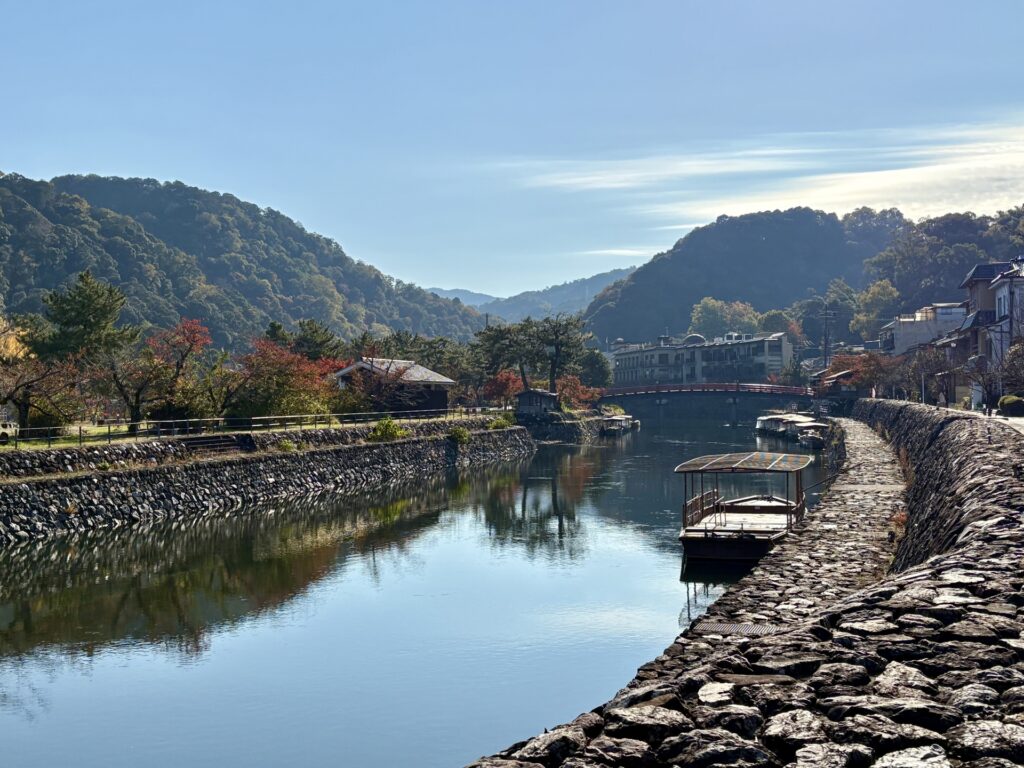
In the final phase, the approaches to Kyoto narrowed to key geographic chokepoints, and the Uji River became a critical barrier. The court’s defenders attempted to delay the shogunate’s entry into the capital by using both geography and engineering. Heavy rain and rising water levels made crossing dangerous, and the defenders tried to disrupt access by damaging the bridge. The aim was not only military—buying time could also create political space for alliances, negotiations, or reinforcements that might change the balance.
Ultimately, shogunate forces forced a crossing and broke through the defensive line. The significance of this breakthrough lies in what it unlocked: once the “last door” to Kyoto opened, the court’s command center was exposed, coordination faltered, and the psychological shock of imminent occupation encouraged defections and collapse. The Uji River fighting is remembered because it dramatizes how natural terrain and weather can shape a battle—while also underscoring that disciplined organization and superior numbers can overcome even formidable obstacles when timing and leadership align.
Why the Imperial Court Lost

The court lost because it could not reliably convert legitimacy into sustained military power. Go-Toba’s strategy depended on widespread warrior support, but many warriors calculated that their future security lay with the shogunate’s established order. Kamakura’s vassal system provided a framework for rewards, protection, and dispute resolution that warriors could depend on. In contrast, a return to court-centered governance offered fewer clear guarantees for land rights and local authority, especially in a turbulent moment.
There was also a crucial difference in crisis management. Kamakura moved first and moved fast—gathering forces, clarifying loyalties, and presenting the conflict as a defense of the political world created since Yoritomo. The court’s coalition was more varied, with less unified logistics and less consistent command. As the shogunate won key fights and approached Kyoto, the court’s strategic choices narrowed rapidly. Once the defensive line at the Uji River failed, the court’s position became untenable, and the war’s outcome followed quickly.
Consequences of the Jokyu War
The settlement after the war was severe and transformative. Retired Emperor Go-Toba was exiled, and the imperial side’s political freedom was sharply constrained. The shogunate’s victory also had a concrete administrative dimension: it strengthened mechanisms to supervise Kyoto and to prevent court politics from becoming a platform for future anti-shogunate military movements. In effect, the warrior government learned from the threat and redesigned the political environment to make a repeat far less likely.
Land was equally central to the aftermath. Defeat carried material consequences: estates connected to the losing side were confiscated and redistributed, and shogunate-aligned management expanded. This was not merely punishment—it was governance. By reallocating land and reinforcing the structures that tied warriors to Kamakura, the shogunate increased its capacity to mobilize reliably in the future. The Jokyu War therefore demonstrates how military victory can be converted into long-term political stability by reshaping incentives and control over resources.
How the Jokyu War Strengthened Samurai Rule
The Jokyu War is a turning point because it normalized the principle that warrior government could override court political initiative and then institutionalize that reality. After 1221, the shogunate expanded its presence around Kyoto and strengthened regional oversight in the west, making the court’s independence more limited in practice. Importantly, this did not require abolishing the imperial institution. The court’s symbolic and cultural authority remained valuable, but it was increasingly managed within boundaries set by the warrior government.
In the long arc of Japanese history, this helped deepen a division of roles: Kyoto continued to represent legitimacy and tradition, while the shogunate increasingly controlled enforcement and administration. The Jokyu War accelerated that separation and made it harder to reverse. Later medieval politics unfolded in a world shaped by the precedent that the shogunate could intervene decisively in Kyoto—and win.
Cultural and Historical Legacy of the Jokyu War
Even though the conflict was short, it left a long legacy in how Japanese history was remembered and debated. Wars generate narratives, and narratives shape reputations. The same event can be framed as a justified restoration of order, a tragic overreach driven by misplaced confidence, or a moral lesson about governance. These competing frames influence how key figures—Go-Toba, Yoshitoki, and Masako—are evaluated, and they remind us that history is not only a record of actions but also a contest over meaning.
The Jokyu War is also a useful case study for understanding the building blocks of medieval governance: information flows, mobilization, persuasion, road control, and postwar administration. When you study how Kamakura maintained unity among vassals, advanced along major routes, and then institutionalized supervision of Kyoto afterward, you are seeing a template that later warrior governments would refine. In that sense, the war’s legacy is not only what happened in 1221, but how it helped define what effective rule looked like in Japan’s warrior age.
Jokyu War Sites You Can Visit Today
For travelers who like “walkable history,” the Jokyu War is unusually tangible because it is tied to recognizable geography around Kyoto and Uji. The Uji River area and the setting of the bridge crossing help you visualize why the defenders leaned on natural obstacles and why forcing the crossing mattered so much. Seeing the river’s scale and the surrounding terrain makes the logic of chokepoints and approach routes far more intuitive than reading a summary on a page.
In Kyoto, the most rewarding way to explore the Jokyu War is not only to imagine the fighting but to think about what changed afterward—how the warrior government strengthened oversight and how the court’s political room narrowed. Framing your visit around “where victory became institutions” can be more satisfying than searching for a single battlefield marker. The war’s real impact was administrative and political, and Kyoto’s landscape—layered with centuries of governance—offers many ways to connect that story to place.
Conclusion – Why the Jokyu War Still Matters Today
The Jokyu War is often overshadowed internationally by later periods, but it is essential for understanding the structure of medieval Japanese power. The court attempted to destroy the shogunate, the shogunate crushed the challenge quickly, and then the victors reshaped punishment, land control, and Kyoto supervision in ways that made warrior rule more durable. This was not simply an accident of war—it was a crisis that updated a governing model.
The conflict also offers a broader lesson about politics: legitimacy can open doors, but institutions decide outcomes. In 1221, the imperial court still carried immense symbolic authority, yet it could not match a warrior government that was faster, better organized, and able to translate decisions into coordinated action. Understanding the Jokyu War therefore helps explain why “Kyoto versus the warrior government” stopped being an equal contest—and why later Japanese politics treated military-administrative networks as the true engine of rule.