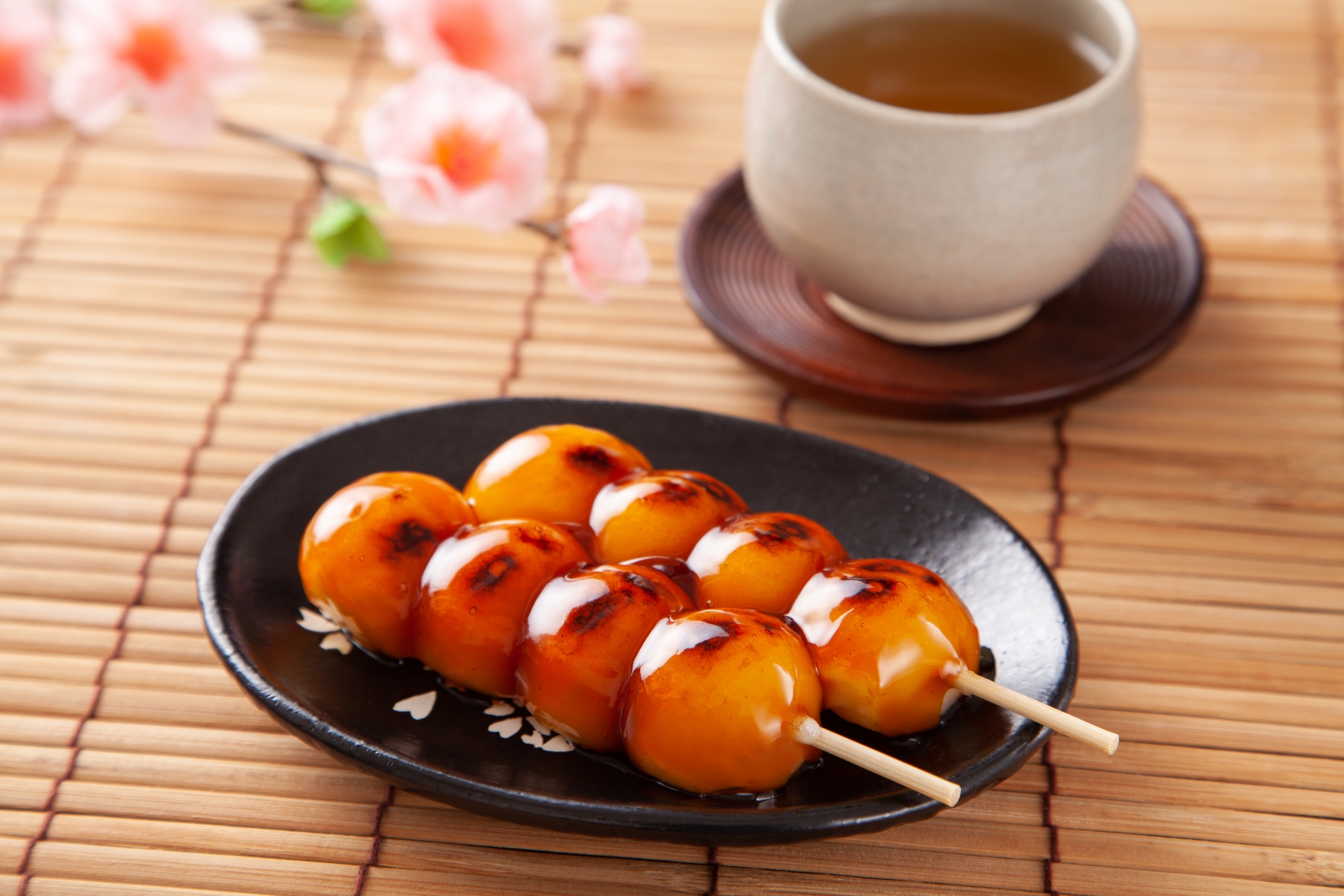
Mitarashi dango is one of Japan’s most beloved traditional sweets—and one that often surprises first-time tasters. At a glance, it looks simple: small white dumplings on a skewer. But one bite reveals a uniquely Japanese balance of flavors: chewy rice dumplings lightly grilled, then coated in a glossy soy-based sauce that’s both sweet and savory. For many Americans discovering Japanese food beyond sushi and ramen, mitarashi dango is an approachable and memorable introduction to wagashi (traditional Japanese sweets).
In this guide, we’ll explain exactly what mitarashi dango is, how it tastes, where it comes from, and how you can enjoy or even make it at home in the U.S.—even if you’re completely new to Japanese sweets.


What Is Mitarashi Dango?

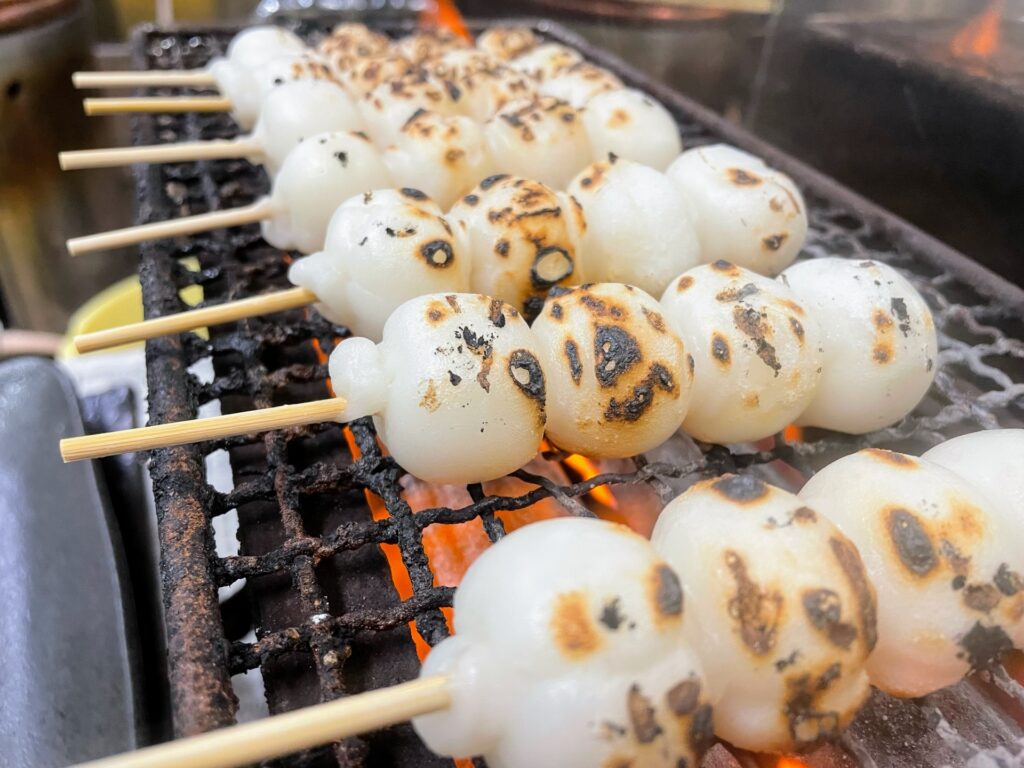
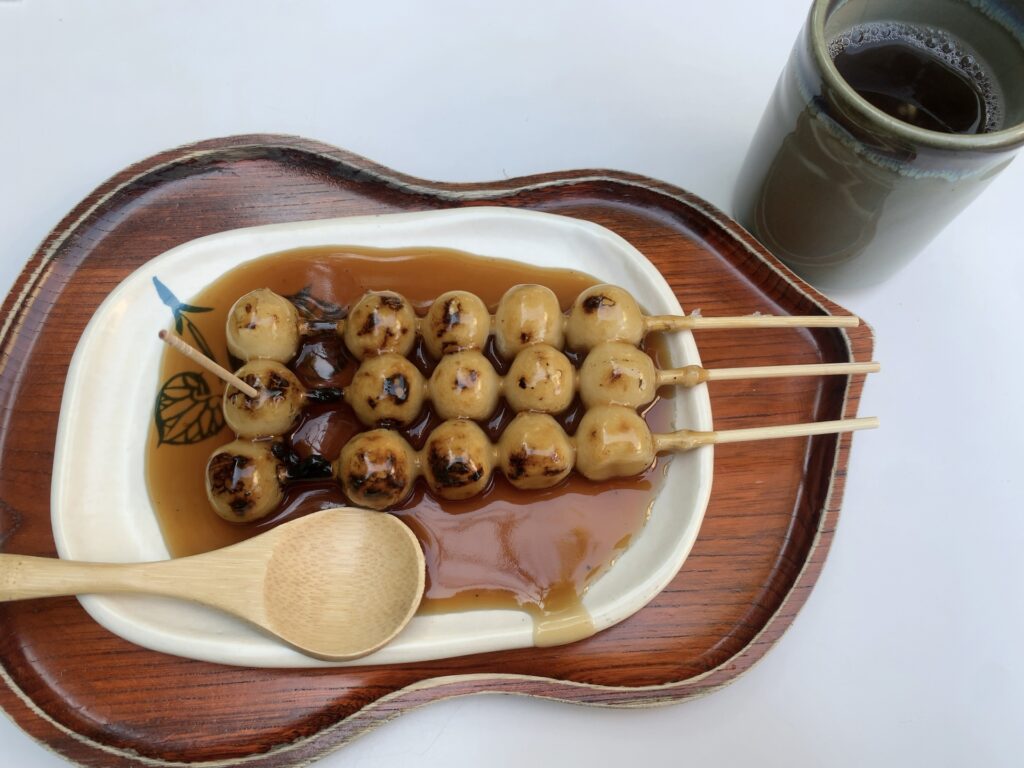
Mitarashi dango is a type of dango, which are Japanese dumplings made from rice flour and water. Unlike mochi, which is made from pounded glutinous rice, dango are formed from a dough and shaped into small, smooth balls. These dumplings are skewered (usually four or five pieces per stick), lightly grilled until aromatic, and then coated in a shiny sauce known as mitarashi sauce.
What makes mitarashi dango distinctive is this sauce. Instead of a purely sweet topping like red bean paste, mitarashi dango uses a soy sauce–based glaze thickened with starch and sweetened with sugar. The result is a sweet-salty flavor that feels closer to teriyaki than to a Western-style dessert sauce. Traditionally, the dumplings are brushed with sauce just before serving, giving them a sticky, glossy finish that clings to each bite.
For beginners, it’s helpful to think of mitarashi dango as Japanese street food rather than a cake-like dessert. You’ll often see it sold at festivals, temple approaches, and casual sweet shops—meant to be eaten warm, on the go, and enjoyed simply.
What Does Mitarashi Dango Taste Like?
The first thing most people notice is the texture. Mitarashi dango is chewy and springy, similar to soft gnocchi or a very tender bagel bite, but smoother. It’s not fluffy and not gooey—just pleasantly elastic, which is a hallmark of many Japanese rice-based foods.
Flavor-wise, mitarashi dango is defined by contrast. The dumplings themselves are mildly sweet and neutral, acting as a canvas for the sauce. The glaze delivers a balanced mix of sweetness and saltiness, with deep umami from soy sauce. For American readers, the closest comparison is a teriyaki-style glaze, but slightly lighter and more snack-like.
Grilling plays a key role here. Even a brief pass over a grill or pan adds a subtle smoky aroma and a lightly crisped surface, which keeps the dumplings from tasting flat. That combination—chewy rice, caramelized soy sauce, and a hint of char—is what makes mitarashi dango so appealing, even for people who don’t usually enjoy sweet desserts.
What Is Mitarashi Sauce Made Of?
Mitarashi sauce is simple but precise. Its classic version uses just a few pantry ingredients, each with a clear role:
- Soy sauce – Provides saltiness and umami depth
- Sugar – Adds sweetness to balance the soy
- Starch (potato starch or cornstarch) – Thickens the sauce into a glossy glaze
- Water – Adjusts consistency and prevents burning
When gently heated, the starch activates and turns the liquid into a shiny, sticky sauce that clings to the dumplings without dripping off completely. This glossy finish is a visual hallmark of mitarashi dango and signals that the sauce has been cooked properly.
Unlike some Western dessert sauces, mitarashi sauce is not heavy or buttery. It’s light, clean, and savory-leaning, which is why mitarashi dango is often enjoyed even by people who say they “don’t like sweet desserts.” In many ways, the sauce defines the dish—change it, and it’s no longer mitarashi dango.
The Origin of Mitarashi Dango (Kyoto & Cultural Background)
Mitarashi dango has its roots in Kyoto, Japan’s ancient capital and cultural heart. The name “mitarashi” comes from the Mitarashi Pond at Shimogamo Shrine, one of Kyoto’s oldest Shinto shrines. The pond is used for purification rituals, and bubbles rising from the water were said to resemble dumplings.
According to tradition, the original dango were shaped to mimic these bubbles, linking the sweet to spiritual symbolism. Over time, vendors near the shrine began selling skewered dumplings coated in soy sauce glaze, and the treat spread throughout Kyoto and beyond. Today, mitarashi dango is eaten all over Japan, but Kyoto remains its symbolic birthplace.
For travelers, this cultural connection adds depth to a simple snack. Eating mitarashi dango near a shrine or along a traditional street isn’t just about flavor—it’s a small, edible link to centuries of ritual, place, and everyday Japanese life.

Why Are There 4 or 5 Dumplings on One Skewer?
If you look closely, you’ll notice that mitarashi dango isn’t always skewered the same way. In the Kansai region (western Japan, including Kyoto), five dumplings per skewer are common, often said to represent the human body—head, arms, and legs. In the Kanto region (eastern Japan, including Tokyo), four dumplings are more typical.
Both styles are traditional and widely accepted. The difference helps experienced eaters recognize regional variations, but there is no single “correct” number. What matters most is the balance between dumpling and sauce, as well as freshness.
Mitarashi Dango vs Mochi (What’s the Difference?)
Although they look similar, dango and mochi are not the same, which is a common point of confusion for beginners.
| Feature | Dango | Mochi |
| Main ingredient | Rice flour and water | Pounded glutinous rice |
| Texture | Chewy and springy | Soft and stretchy |
| Shape | Small balls | Blocks or rounds |
| Typical uses | Skewered snacks, festivals | Sweets, soups, New Year dishes |
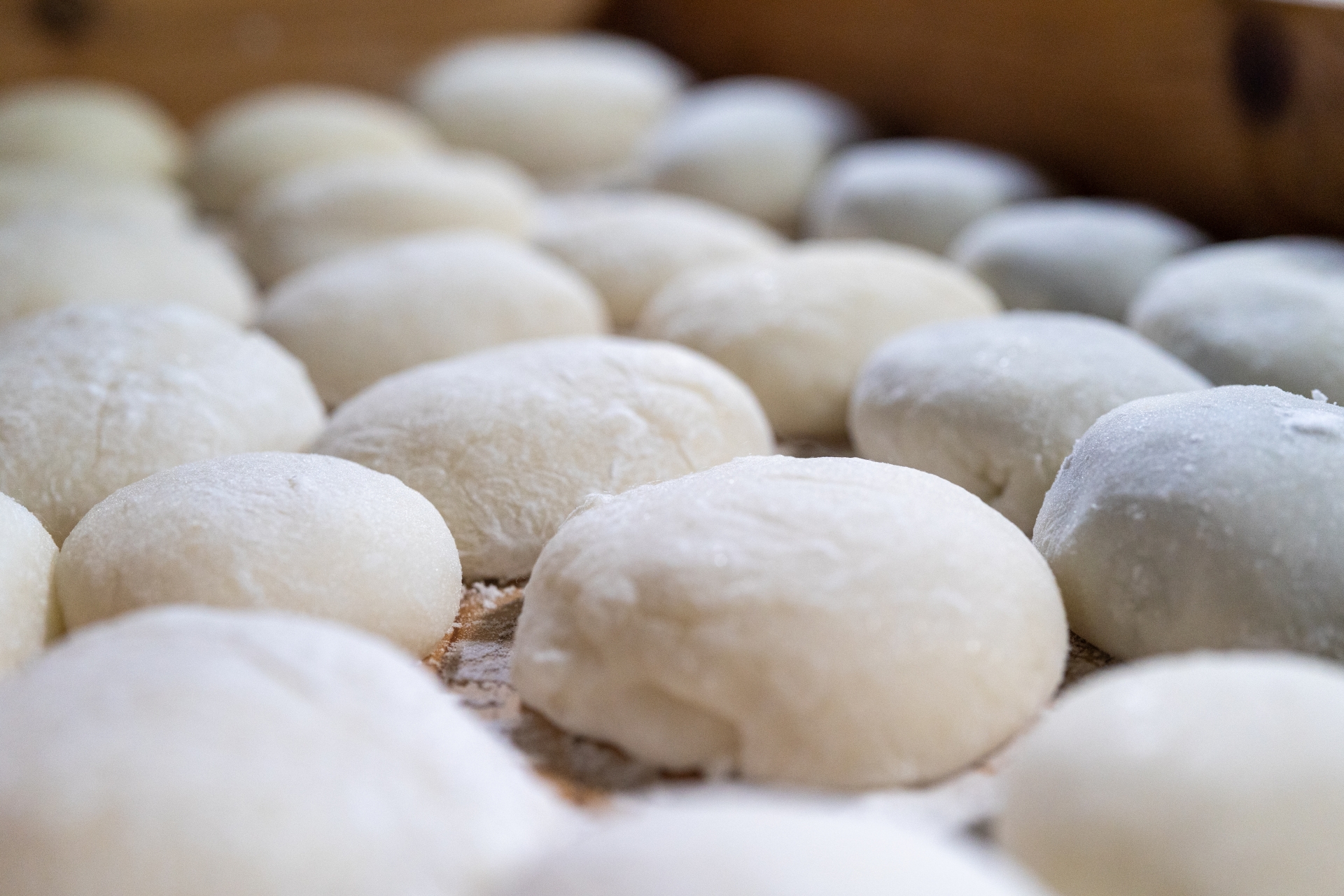
Mitarashi dango specifically uses rice flour dough rather than pounded rice. This gives it a firmer bite and allows it to hold its shape well on skewers, especially after grilling.
How to Eat Mitarashi Dango
Mitarashi dango tastes best when warm, shortly after it’s been grilled and glazed. Warmth enhances the aroma of the sauce and keeps the dumplings pleasantly soft. In Japan, it’s commonly paired with hot green tea, which balances the sweetness and cuts through the sticky glaze.
Because the sauce is glossy and thick, it can be messy. Locals often rotate the skewer as they bite, eating one dumpling at a time to prevent dripping. For first-time eaters, having a napkin on hand is always a good idea.
Where to Buy Mitarashi Dango in the U.S.
In the United States, mitarashi dango is available, but where you can find it depends on your location.
- Japanese grocery stores such as Mitsuwa or Nijiya often carry fresh or frozen versions
- Asian supermarkets may sell frozen plain dango that you can glaze at home
- Frozen food sections sometimes stock products labeled “dango” (団子)
Frozen dango is usually sold without sauce, which is ideal—you can grill and glaze it yourself for better texture and flavor. Fresh, ready-made mitarashi dango is less common outside major metropolitan areas, so availability can be limited.
Can You Make Mitarashi Dango at Home?
Yes, and it’s much easier than many people expect. Mitarashi dango requires no special equipment and only a handful of ingredients. Rice flours such as shiratamako or mochiko are commonly used, but similar products available at Asian grocery stores in the U.S. can work with minor adjustments.
For home cooks, this makes mitarashi dango an excellent entry point into Japanese sweets. Once you understand the right dough texture and sauce consistency, the process is forgiving and easy to repeat.
Common Mistakes When Making Mitarashi Dango
Why do my dango turn out too hard?
The dough likely lacked moisture or the dumplings were overcooked.
Why is the sauce runny?
The starch didn’t fully activate. Keep heating gently while stirring until it thickens.
Why don’t they smell grilled?
Skipping the grilling step removes an important layer of aroma. Even a frying pan can make a noticeable difference.
How to Make Mitarashi Dango (Simple Overview)
At a high level, the process looks like this:
- Mix rice flour with water to form a soft dough
- Shape into small balls and boil until they float
- Skewer the dumplings
- Lightly grill or pan-sear to add aroma
- Cook soy sauce, sugar, and starch into a thick glaze
- Coat the dumplings generously with the sauce
The steps are straightforward, making mitarashi dango approachable even for beginners.
Regional and Modern Variations of Mitarashi Dango
While the sweet-savory version is the most widely known, some regions—such as Takayama in Gifu Prefecture—serve a non-sweet, soy-grilled style that is also called “mitarashi” locally. Modern shops may add deeper char, thicker sauce, or seasonal presentations, connecting this humble snack to travel and local food culture.
Frequently Asked Questions About Mitarashi Dango
Is mitarashi dango sweet or savory?
It’s both—sweet and salty, with a strong umami flavor.
What is mitarashi dango made of?
Rice flour dumplings coated in a soy-based glaze.
Is it gluten-free?
The dumplings themselves are gluten-free, but soy sauce may contain wheat unless a gluten-free version is used.
Is mitarashi dango vegan?
Yes, if made with vegan-friendly sugar and soy sauce.
Is dango the same as mochi?
No. They use different ingredients and have distinct textures.
Conclusion – What Makes Mitarashi Dango Special?
Mitarashi dango stands out for its unexpected balance: chewy rice dumplings, a sweet-savory glaze, and deep cultural roots in Kyoto. It’s simple yet meaningful, casual yet traditional. For anyone curious about Japanese food culture, it’s an ideal introduction—easy to try, easy to enjoy, and rich in history.
Whether you taste it on a Kyoto street or make it in your own kitchen, mitarashi dango offers a small but authentic bite of Japan.