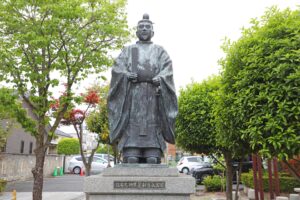
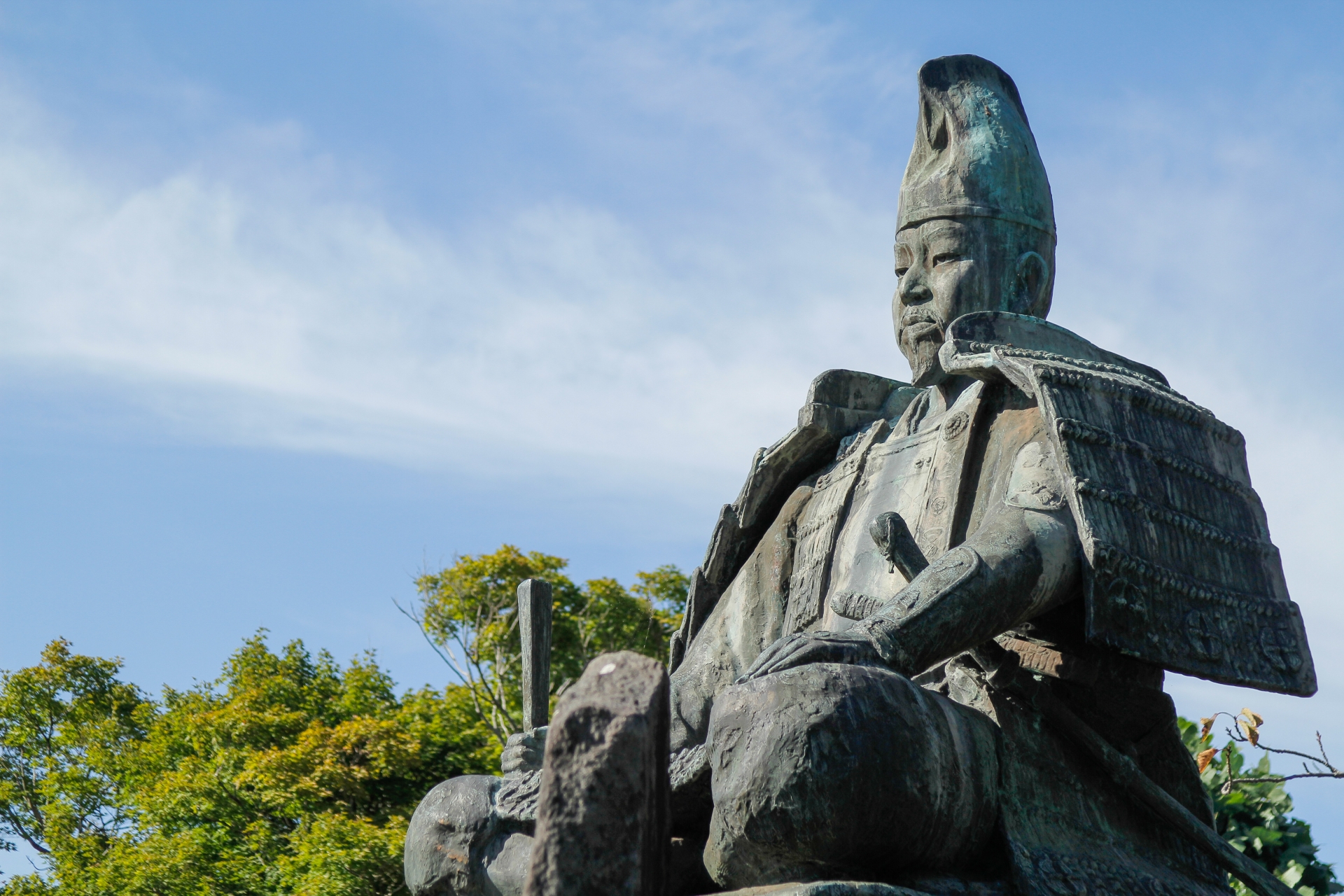
Minamoto no Yoritomo (1147–1199) stands as one of the most pivotal figures in Japanese history. As the first shōgun of Japan, he did more than lead a victorious clan — he fundamentally reshaped the nation’s political and social systems. His leadership, military strategy, and institutional reforms laid the foundations of a feudal government dominated by the samurai class. This article explores how Yoritomo changed the course of Japanese history and why his legacy still matters today.


The Life and Rise of Minamoto no Yoritomo
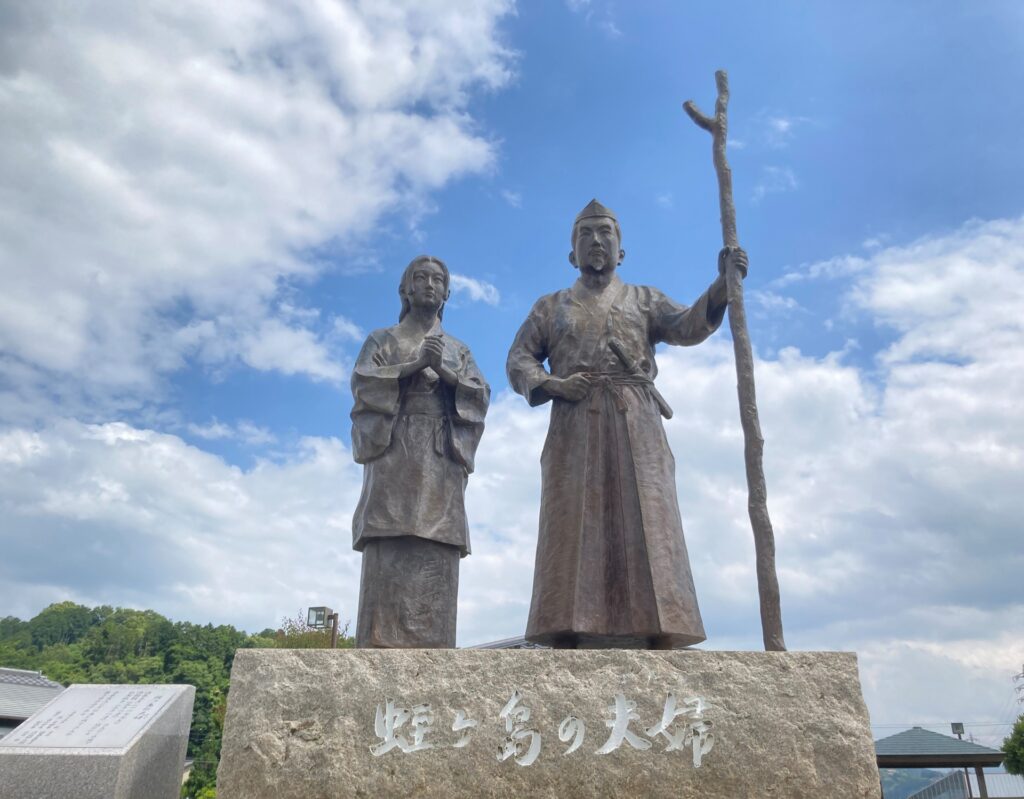
Minamoto no Yoritomo (1147–1199) was born into the prestigious Seiwa Genji branch of the Minamoto clan, a lineage tracing back to Emperor Seiwa. He grew up during the final century of the Heian period, a time marked by deep political tension between the imperial aristocracy in Kyoto and emerging warrior clans in the provinces. As the son of Minamoto no Yoshitomo, a powerful clan leader, Yoritomo was exposed early to the intense rivalries between his own family and the dominant Taira clan. These conflicts escalated during the Hōgen and Heiji disturbances, culminating in the near-annihilation of the Minamoto. After his father’s defeat in 1160, the young Yoritomo was spared execution but exiled to Izu Province — a punishment that would ironically set the stage for his political revival.
During his years in Izu, Yoritomo lived under close surveillance but gradually built connections with local warrior families, most notably the Hōjō clan. His marriage to Hōjō Masako strengthened this alliance and provided him with a reliable power base rooted in the eastern provinces. Exile also taught him restraint, patience, and the importance of calculated political strategy — qualities that would later define his leadership. When Prince Mochihito issued a call to arms in 1180 to challenge Taira dominance, Yoritomo seized the moment. He mobilized regional warriors who were frustrated by Kyoto’s distant aristocratic rule and leveraged his family name, strategic location, and eastern support network to rise as the Minamoto leader. These early alliances built in Izu and the Kantō region were essential foundations for the military and political system he would later establish in Kamakura.
From Civil War to Victory: The Defeat of the Taira Clan
By the late 12th century, the imperial court had weakened significantly as aristocratic factions relied increasingly on warrior clans for protection and enforcement. This shift in power created escalating tensions between the Minamoto and Taira families, culminating in the Genpei War (1180–1185). As the surviving heir of the Minamoto, Yoritomo assumed leadership and became the central organizer of the anti-Taira coalition. Unlike his younger brother Minamoto no Yoshitsune, who excelled in frontline tactics, Yoritomo focused on political and strategic coordination from his base in Kamakura. His ability to mobilize eastern samurai, secure loyalty through land grants, and establish stable command structures distinguished him from other war leaders of the era.
Yoritomo’s disciplined governance of the war effort allowed the Minamoto to exploit the Taira clan’s decreasing influence and internal instability. While Yoshitsune famously led battlefield victories — including the iconic naval Battle of Dan-no-ura in 1185, where the Taira suffered complete destruction — it was Yoritomo who converted military success into legitimate national authority. Dan-no-ura marked not only the end of the Taira as a political force but also the end of decades of civil conflict that had destabilized Japan. Yoritomo emerged as the uncontested leader of the samurai class, recognized by both warrior families and the imperial court as the one capable of unifying the country. This victory laid the essential groundwork for the establishment of Japan’s first military government.
Establishment of the Kamakura Shogunate and the New Political Order
In 1192, Yoritomo received the official title of Sei-i Taishōgun, becoming the first shōgun in Japanese history. This appointment formally acknowledged his authority and inaugurated the Kamakura Shogunate, a new political system that fundamentally altered Japan’s governance. Instead of centralizing power in Kyoto’s imperial bureaucracy, Yoritomo built a decentralized but highly organized warrior government based in Kamakura. His most influential institutional innovation was the establishment of the shugo (provincial military governors) and jitō (estate stewards) system, which placed loyal samurai in charge of local administration, law enforcement, and taxation.
These positions tied provincial warriors directly to the shogunate rather than the imperial court or aristocratic landowners, weakening the influence of Kyoto’s elite and strengthening the emerging samurai class. By creating a network of officials whose power depended on the shogun, Yoritomo ensured that the Kamakura government controlled the practical levers of military and economic authority. This decentralized model allowed for more effective regional governance and introduced a feudal structure in which loyalty was exchanged for land rights and protection. The Kamakura Shogunate became the blueprint for subsequent warrior governments and marked the beginning of nearly 700 years of samurai rule in Japan.
The Legacy: How Yoritomo’s Changes Shaped Japanese Society
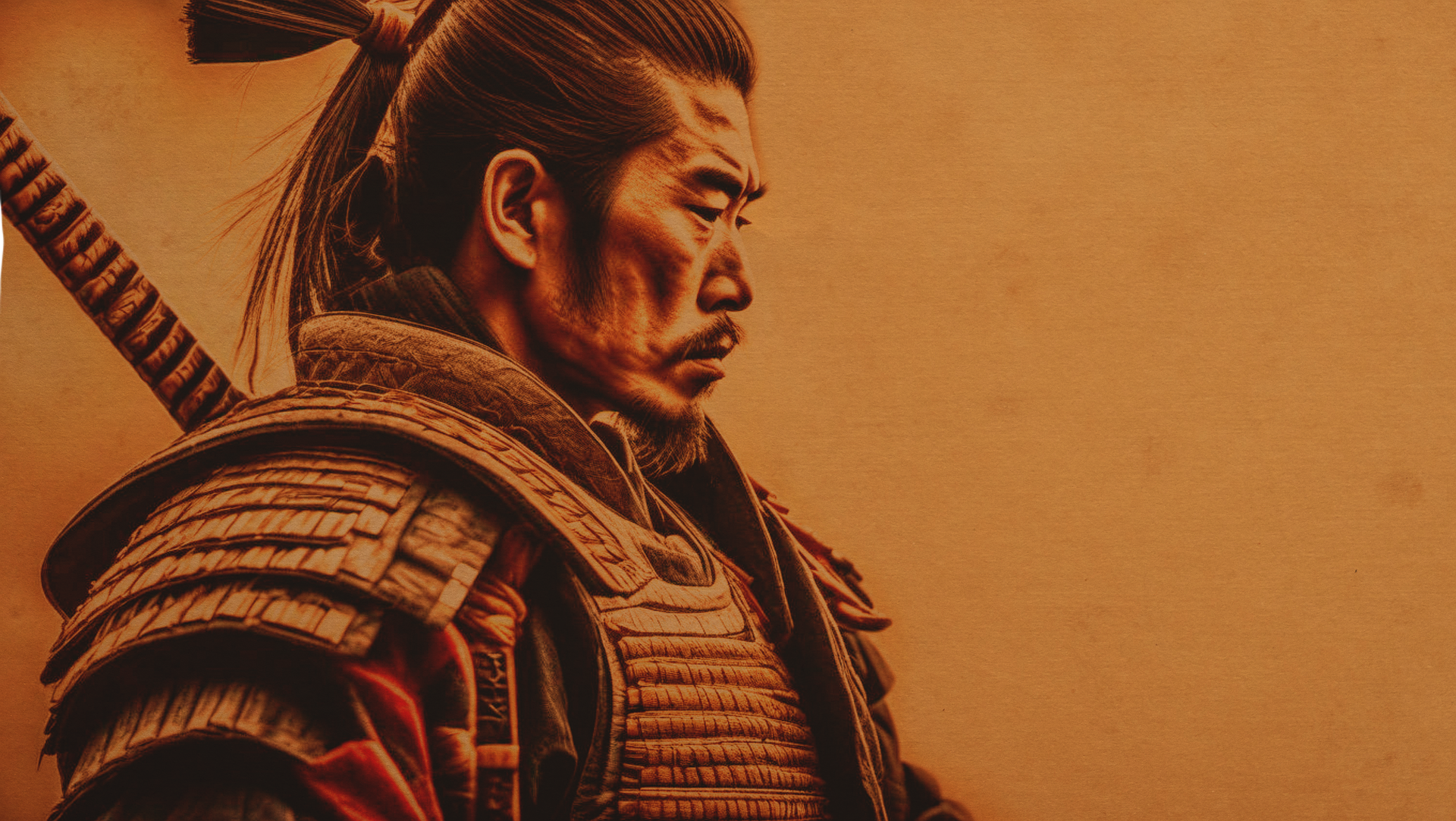
Yoritomo’s reforms reshaped Japanese society far beyond his own lifetime. The institutionalization of the samurai class as Japan’s ruling elite redefined social hierarchy, displacing the aristocrats of Kyoto and elevating warrior families throughout the provinces. His shugo–jitō system introduced a durable administrative framework that would be inherited and modified by later shogunates, including the Ashikaga and Tokugawa regimes. These structures ensured that military leaders, not the imperial court, held real governing authority for centuries.
A major cultural and political shift also occurred as the country’s power center moved from Kyoto to Kamakura. This eastward shift promoted the development of the Kantō region and encouraged a more regionalized political identity, contrasting with the previously centralized Heian court culture. The warrior ethos — emphasizing discipline, loyalty, and martial skill — became increasingly influential in arts, religion, and ethics, laying the foundation for what would later be recognized as samurai culture. Yoritomo’s government also empowered Buddhist monasteries aligned with warrior interests and influenced the spread of temple networks across eastern Japan. Understanding this shift from aristocratic to warrior rule helps explain not only Japan’s medieval political landscape but also its long-term cultural development.
Yoritomo’s Swords, Famous Quotes, and Cultural Legacy
Although many later legends attribute famous swords to Minamoto no Yoritomo, no surviving blade can be definitively verified as his personal weapon. This uncertainty is common for leaders of the late Heian period, as few personal artifacts remain. However, two legendary swords associated with the broader Minamoto lineage — Higekiri and Hizamaru — are frequently mentioned in historical texts and folklore. Higekiri, later renamed Onikiri (“Demon Cutter”), and Hizamaru, later called Usumidori, were traditionally passed down through Minamoto generations. While they cannot be confirmed as Yoritomo’s personal arms, their association symbolizes the clan’s authority and the cultural memory of samurai valor.
One well-known saying attributed to Yoritomo in later narratives expresses his philosophy of restraint and perspective:
“A wise leader does not blame others over trifles, nor does he turn small matters into great troubles.”
This reflects a mindset often associated with Yoritomo — staying focused on major goals and avoiding unnecessary conflict.
Yoritomo’s Final Years and Cause of Death
In his final years, Yoritomo focused on consolidating the shogunate’s authority and ensuring its continuity. His relationship with certain retainers grew increasingly strained, especially in the aftermath of conflicts with his brother Yoshitsune and other influential figures. Concerned about maintaining control, Yoritomo tightened oversight of provincial officials and worked to secure the future of his own lineage. These efforts reflected both his political shrewdness and the pressures inherent in building a new governing order.
Yoritomo died in 1199 under circumstances that have been debated for centuries. The most widely accepted explanation is that he fell from his horse while riding near Kamakura, an accident believed to have caused fatal injuries. Other theories propose death by illness — such as stroke or heart failure — based on accounts of declining health. More sensational theories suggest political assassination or internal conspiracy, though these lack strong historical evidence. Despite these uncertainties, the horse-riding accident remains the generally accepted account among historians. His death left the young Kamakura Shogunate in the hands of his widow’s family, the Hōjō, who soon became the true power behind the shogunate.
Key Locations Connected to Minamoto no Yoritomo
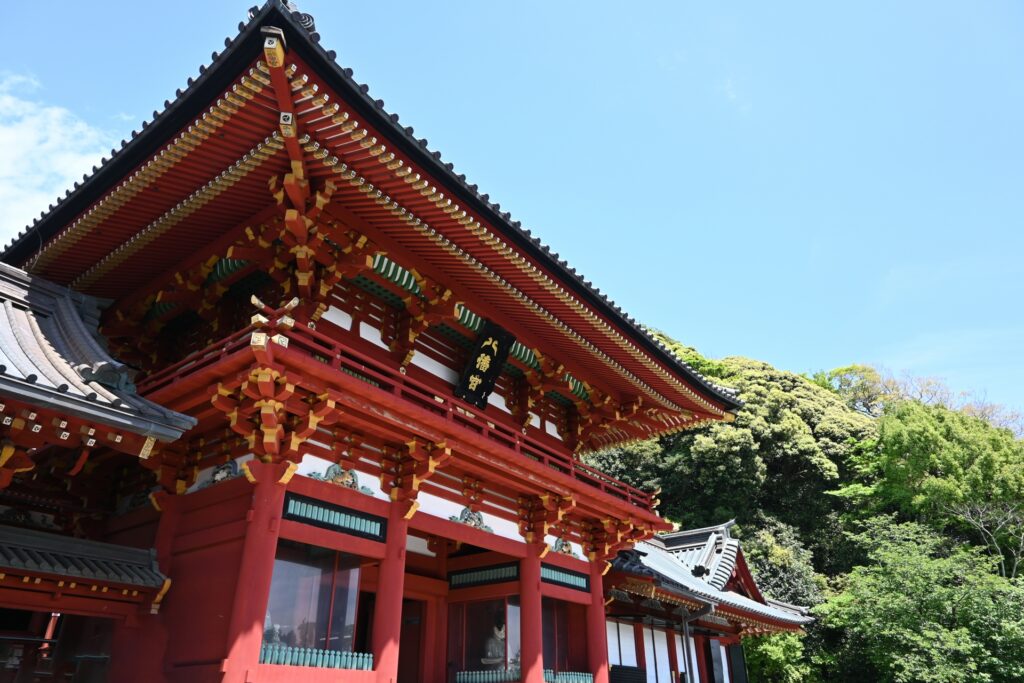
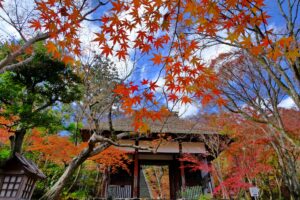
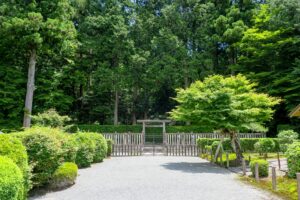
Several important locations across Japan are closely linked to Yoritomo’s life, military campaigns, and political activities. Kamakura, his headquarters, became the seat of the first shogunate and remains home to Tsurugaoka Hachiman-gū, a shrine central to Minamoto power and spirituality. Izu Province, the place of his exile, shaped his early political alliances and served as the foundation for his eventual rise. Kyoto, the heart of the imperial court, represents the authority he ultimately displaced through the creation of the Kamakura Shogunate.
Battle sites also play an essential part in understanding Yoritomo’s story. Ishibashiyama was where he suffered his first major defeat but managed to escape, marking the beginning of his comeback. Fujikawa witnessed a Minamoto victory when the Taira retreated amid confusion, a turning point in the early Genpei War. The decisive naval confrontation at Dan-no-ura in Yamaguchi brought the war to a close and cemented Minamoto dominance. Yoritomo’s political base in the Awa–Kazusa–Shimōsa region also highlights the importance of eastern warrior families who supplied the manpower and loyalty essential to his rise. A simple map showing Kamakura, Kyoto, Izu, and major battle sites can greatly help readers visualize the geographic scope of Yoritomo’s influence.
Conclusion – Why Minamoto no Yoritomo Still Matters Today
Minamoto no Yoritomo’s importance lies not only in his military victories but in the political transformation he engineered. As the founder of Japan’s first samurai government, he created institutions that shifted power from the imperial aristocracy to the rising warrior class. His establishment of the Kamakura Shogunate introduced a feudal structure that shaped Japan for nearly seven centuries, influencing everything from governance and social hierarchy to cultural values and regional development.
Understanding Yoritomo’s life helps modern readers appreciate how medieval Japan transitioned from court-centered politics to decentralized warrior rule. His legacy lives on in the foundations of samurai culture, the administrative systems adopted by later shogunates, and the continuing historical significance of Kamakura as a political and cultural center. Minamoto no Yoritomo did more than win a civil war — he reshaped the structure of Japanese government and society, making him one of the most important figures in Japan’s long history.